
As Bertha Russell prepares to host the most important presidential dinner of her life, Agnes van Rhijn watches the preparations with her usual sarcasm and announces: “Let the Russell extravaganza begin!” But there is another line in the trailer for the fourth season of The Gilded Age that deserves our attention: “The city is up in arms.” And if Julian Fellowes is drawing on history, as he has done so many times before, the remark may foreshadow a conflict far greater than the rivalry between the two women.
New York really was up in arms in 1886. That year, thousands of workers challenged the businessmen who controlled the city’s transportation system, took to the streets, and clashed with the police. The city was growing rapidly, accumulating extraordinary fortunes, and discovering that progress did not benefit everyone equally. While the Vanderbilts and the Astors competed for social standing, the working population was beginning to organize and challenge the men who had built their empires on exhausting working hours and low wages.
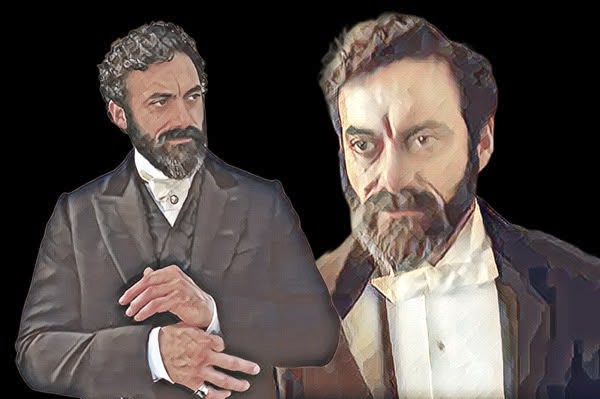
The fourth season of The Gilded Age unfolds against precisely this historical backdrop, and the upcoming episodes suggest that George Russell’s situation may become considerably more complicated. We already know that the businessman is facing difficulties, while his dependence on laudanum increasingly affects his behavior. If the series decides to incorporate the labor conflicts of 1886, it will have an opportunity to confront its characters with a reality that rarely makes its way through the doors of the Fifth Avenue mansions.
The Strike That Paralyzed New York
In March 1886, workers employed by New York’s streetcar companies went on strike, demanding better working conditions. Their shifts could last as long as 16 hours a day, while wages remained low. The stoppages disrupted urban transportation, sparked unrest, and led to confrontations between demonstrators and police officers sent to keep the streetcars running.
Contemporary newspaper illustrations show streets crowded with protesters, police attempting to clear a path for streetcars, and a population divided between support for the strikers and the desire to restore normality. Many workers were organized through movements such as the Knights of Labor, one of the most influential American labor organizations of the period.
It is important to remember that the city’s streetcars were not the same as the railroads carrying passengers and freight between cities and states. George Russell would not necessarily have owned the companies affected by the strike, but these conflicts were part of a nationwide labor movement that directly challenged the interests of major industrialists.
That spring, New York also participated in the national campaign for the eight-hour workday, which mobilized workers across the United States. In May, the explosion of a bomb during a labor demonstration in Chicago, in what became known as the Haymarket Affair, intensified tensions among unions, employers, and authorities.
The protests raised a fundamental question about American industrial capitalism: how far should an employer’s authority over workers extend? If the country was becoming wealthy through the labor of thousands of people, why were so many of those people still unable to support their families?
These were not comfortable questions for men like George Russell.

The Year Workers Challenged the Millionaires
The documentary The Gilded Age, produced by PBS for its American Experience series, devotes a particularly interesting section to the workers’ movement and New York’s mayoral election of 1886. What began with strikes, protests, and boycotts eventually produced one of the most surprising political campaigns in the city’s history.
Tired of relying on the traditional political parties, which they considered too closely aligned with big business, labor representatives decided to nominate their own candidate for mayor. Their choice was Henry George, a writer and economist who had experienced poverty himself and become famous for his book Progress and Poverty, published in 1879.
Henry George argued that poverty was not simply the result of individual failure, but also the consequence of an economic system that allowed wealth to become increasingly concentrated. His campaign challenged the power of major property owners and advocated tax reform, improved working conditions, and changes to the management of public services.
The result was surprising. In the November 1886 election, Henry George received more than 68,000 votes, finishing second behind Abram Hewitt and ahead of a young Republican named Theodore Roosevelt, who would become president of the United States years later.
The campaign demonstrated that workers were beginning to transform their dissatisfaction into political power. Millionaires still controlled much of the economy, but they could no longer completely ignore the people whose labor helped make them rich.
And that could be of considerable interest to Julian Fellowes.
The Statue of Liberty and the American Contradiction
The year 1886 also witnessed an event that remains one of the most important symbols of the United States. On October 28, President Grover Cleveland traveled to New York to dedicate the Statue of Liberty, France’s gift to the American republic.
The ceremony attracted thousands of spectators and transformed the harbor into a spectacle of ships, flags, and celebrations. Yet there was a contradiction between the image of freedom the country presented to the world and the reality experienced by much of its population.

In 1883, the poet Emma Lazarus wrote The New Colossus, the sonnet that would eventually transform the statue into a symbol of welcome for immigrants. Written to help raise funds for the pedestal, the poem would become internationally famous for its appeal on behalf of the poor and the exiled seeking a better life in America. The poem, however, would not be installed at the statue’s base until 1903.
Ric Burns’s documentary New York: A Documentary Film explores this transformation and shows how immigration helped build the modern city. Thousands of people arrived fleeing poverty, persecution, and a lack of opportunity, only to find themselves facing extremely harsh working conditions and inadequate housing.
This does not mean denying the promise of American social mobility, which genuinely transformed the lives of many families. The point is to understand that this promise coexisted with profound inequalities, and that the freedom officially celebrated remained far removed from the everyday experience of countless workers.
For The Gilded Age, this contrast is especially important. While Bertha competes for the privilege of entertaining the president, the city is passing through a period in which the relationship between wealth, power, and freedom is being questioned.
George Russell May Be Facing a Bigger Crisis Than He Realizes
In the fourth season, George Russell is engaged in a business dispute with Rockefeller and showing increasing signs of instability. His dependence on laudanum, introduced into the storyline, already appears to have moved beyond the boundaries of a private problem. In the trailers, we see George looking exhausted, irritable, and, in one particularly unsettling sequence, apparently on the verge of physically attacking his own son.
The synopsis for the fifth episode, Dinner Is Served, scheduled for November 29, reveals that Larry will discover the source of his father’s troubles and struggle to determine how to proceed. It also suggests that George’s continued determination will attract unwanted attention.
It is difficult to ignore the possible connection between this family crisis and the business environment of the period. A strike, a political dispute, or a controversial agreement would pose serious challenges to any railroad magnate. For someone whose judgment appears to be increasingly compromised by laudanum use, the pressure could have even more serious consequences.
We do not know whether the series will specifically incorporate the streetcar strike or another conflict inspired by the labor unrest of that year. But the historical setting offers a plausible explanation for the reference to a city up in arms.
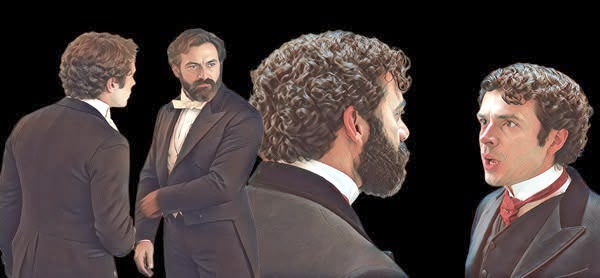
The images suggest that Larry will attempt to manage his father’s behavior before confronting him directly. George, meanwhile, appears to react aggressively, seemingly grabbing or threatening to grab his son by the lapels, as Bertha watches in horror. The exact sequence of events remains uncertain, but the trailer’s editing points toward an escalation that could ultimately jeopardize the presidential reception.
If that happens, we will witness an interesting reversal. The man who built the Russell fortune, whose wealth gave Bertha the power to secure her place in society, could become the greatest threat to the family’s social standing.
And Larry, who wants to establish his own independence, may find himself forced to assume responsibilities his father is not yet prepared to surrender.
Peggy Scott and the Opportunity to Tell a Different Story
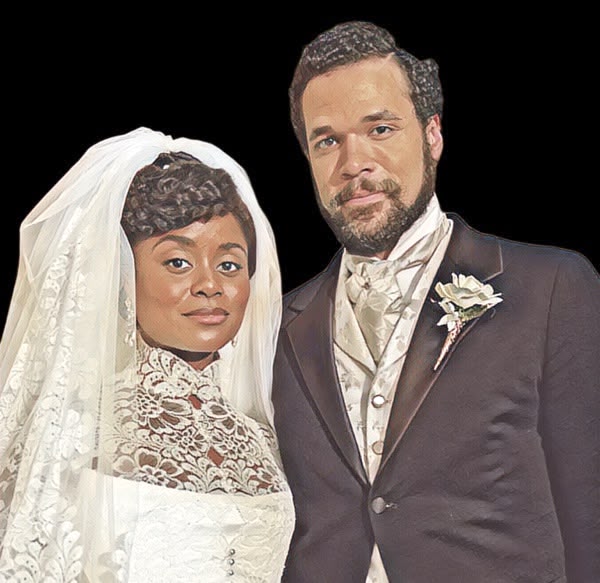
If there is one character who could benefit from the incorporation of the events of 1886, it is Peggy Scott. A journalist, writer, and now William’s wife, Peggy continues to struggle to reconcile her professional ambitions with the social expectations surrounding marriage.
The synopsis for the fourth episode, Good Taste, already foreshadows a disagreement between Peggy and William over her career. And a city experiencing social upheaval would offer precisely the kind of story that might force her to choose between domestic tranquility and her determination to continue writing.
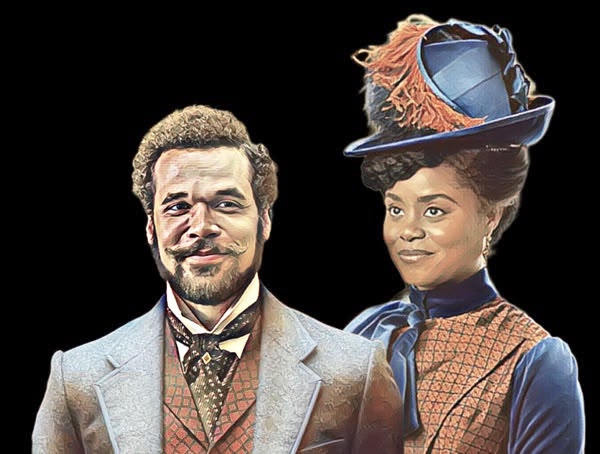
It would be interesting to see her covering the labor movement, the living conditions of immigrants, or Henry George’s political campaign. Even more so because Peggy could examine these struggles through her own experience as a Black woman in a country that had abolished slavery only two decades earlier but remained deeply marked by racial inequality.
The PBS documentary reminds us that industrial growth also created new opportunities for formerly enslaved people and their descendants, even as racial barriers continued to restrict access to wealth and full citizenship.
A Peggy Scott investigation into the labor movement would allow the series to bring together two stories it has often kept relatively separate: that of the millionaires who determine the city’s economic future and that of the people who must work to survive.
Jack Trotter and the Other Side of the American Dream
Another character who could face a particularly interesting conflict in this crisis is Jack Trotter. The former domestic servant has managed to turn an invention into an opportunity for economic advancement and has begun moving in a world previously reserved for his employers.
But making money is one thing; discovering what to do with it is another. Jack is beginning to understand the responsibilities, interests, and contradictions that come with becoming a businessman.
A strike could force him to confront this change in social position. After all, he understands the reality of working people, but he is beginning to share interests with those who employ them.

His journey represents one of the central promises of the period: the idea that any sufficiently determined American could become rich. The problem, as the PBS documentary demonstrates, is that the extraordinary success stories of men like Andrew Carnegie often concealed a far less generous reality for the majority.
It would be an interesting development for a character whose trajectory frequently provides an optimistic counterpoint to the millionaires’ struggles. Jack is achieving what so many workers dreamed of, but he may discover that social mobility also brings conflicts of identity and loyalty.
Larry, Marian, and the Price of Responsibility
There is another possible consequence that does not depend directly on the strikes, but on the way they might aggravate George’s situation.
Larry is already struggling to reconcile his ambitions, his family’s expectations, and his relationship with Marian. If he is forced to assume greater business responsibilities or protect his father’s reputation, he will have even less emotional availability to confront the problems he has left unresolved.
And the trailers seem to point in precisely that direction. Larry appears smiling and seemingly comfortable with Carrie Astor, while Marian looks uncomfortable witnessing their closeness. In other scenes, she is visibly distressed.
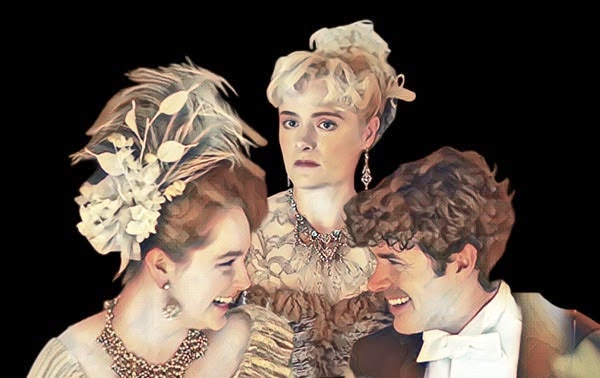
Perhaps Larry is not deliberately trying to make her jealous. He may simply be so absorbed in his own problems that he fails to notice how deeply his behavior hurts Marian. It would be an important emotional consequence of a crisis that begins with George but ultimately affects the entire family.
In a way, father and son might be repeating a similar pattern: consumed by their own conflicts, they fail to recognize the effect of their decisions on the people they love. The circumstances are very different, but the parallel would make for compelling drama.
Meanwhile, Bertha Prepares for Dinner
There is an irony here that cannot be ignored. While the real New York of 1886 was questioning the concentration of wealth and the power of industrialists, high-society women continued competing over invitations, seating arrangements, and social recognition.
Bertha is about to welcome President Grover Cleveland, who really did visit New York that year for the dedication of the Statue of Liberty. The dinner depicted in the series is fictional, but the presidential visit has an entirely plausible historical context.
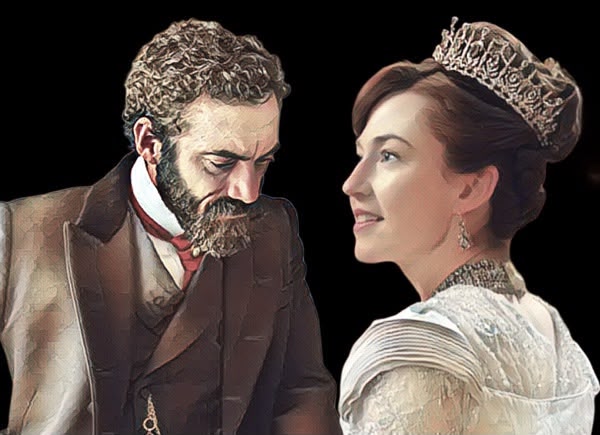
In the trailers, Agnes observes the Russell extravaganza with her customary sarcasm, while Bertha appears to lose control of a situation that should represent her greatest triumph. And perhaps this is one of the season’s most interesting possibilities: a woman who manages to win every social battle discovers that she cannot control her own husband.
The contrast also reveals something about the society of the period. The Russell fortune makes it possible to organize presidential receptions, acquire works of art, and compete for recognition among established families. But money does not guarantee family stability, nor does it entirely protect its owners from the economic and political transformations unfolding outside.
The Real Gilded Age
Both documentaries help recover an essential distinction that we often forget when we become enchanted by the costumes, palaces, and parties of The Gilded Age: gilded does not mean quite the same thing as golden. The word suggests a golden surface, a glittering layer concealing something far less attractive underneath.
It is precisely this contradiction that makes the period so fascinating. America was becoming wealthy at an extraordinary pace, building railroads, bridges, factories, and modern cities, but it was also producing profound inequalities and a concentration of power that was beginning to be challenged.
The movements that emerged during that decade helped prepare the ground for other major labor struggles, including the Homestead steel strike in 1892 and the New York garment workers’ uprising of 1909. Those events belong to later chapters of history, but they help us understand the importance of the demands already gaining strength in 1886.
That year, New York’s workers were no longer willing to silently accept the rules imposed by industrialists. They took to the streets, organized strikes, and built a political movement capable of surprising even those who believed they controlled the city.
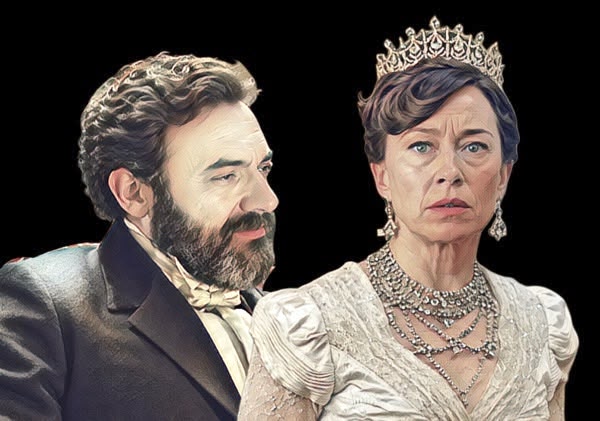
We still do not know whether Julian Fellowes will make this historical conflict an important part of the fourth season. The line in the trailer may refer to a strike, a business scandal, or another event we have yet to discover.
But while Agnes and Bertha compete for the privilege of hosting the president, it is worth remembering that, outside their mansions, thousands of New Yorkers were fighting for something much more fundamental: the right to earn a decent living from their own labor.
After all, the Gilded Age was not built only by the men who became millionaires. It was built, above all, by the people who worked for them.
Descubra mais sobre
Assine para receber nossas notícias mais recentes por e-mail.


1 comentário Adicione o seu