
Warning: Spoilers for Season 4 of The Gilded Age.
Writing a television series these days cannot be easy. There was a time when screenwriters mainly had to worry about ratings, studio executives, and professional critics. Today, critics have multiplied. They are in newspapers, on websites, YouTube, TikTok, Instagram, and, perhaps most importantly, discussion forums. And everyone, in one way or another, has become a screenwriter. They identify plot holes, question character arcs, retrieve dialogue from previous seasons, and propose solutions they consider better than those chosen by the people actually responsible for telling the story. When they dislike what they are given, they simply rewrite the narrative through their own theories.
I am not suggesting this is necessarily a bad thing. I am part of that world myself. I have been writing about The Gilded Age since its premiere in 2022, and I follow the discussions on Reddit. I also question Julian Fellowes’s decisions, criticize inconsistencies, and make no secret of my frustration when one character seems to be sacrificed so that another can grow. But something particularly curious is happening with Marian Brook (Louisa Jacobson): a portion of the audience is no longer simply criticizing her choices. They are refusing to accept the story the series is telling.
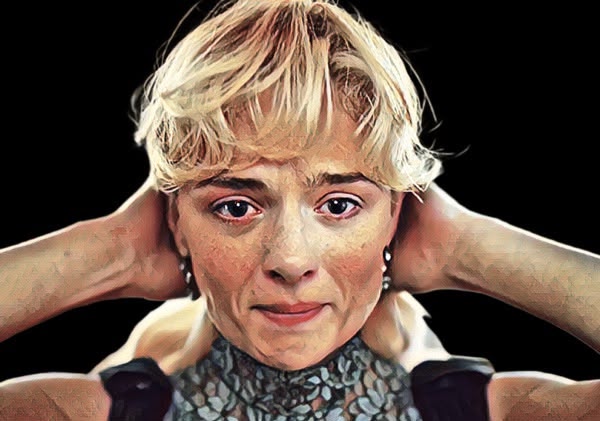
The fourth episode of Season 4, “Good Taste,” offers an almost perfect example. After weeks of speculation, Marian discovers that she is probably pregnant with Larry Russell’s (Harry Richardson) child. Or, at least, that is the revelation the scene was designed to convey. The suspicion emerges during a conversation with Virginia Saville (Elizabeth Marvel), the nurse Marian works with, who appears to be developing an important emotional connection with her. When Virginia asks about her menstrual cycle, Marian suddenly realizes something she had not considered.
It seemed fairly obvious. Even more so after the interviews published immediately following the episode. Yet part of the internet remains convinced that Marian has tuberculosis.
The Tuberculosis Fans Prefer to Pregnancy
The debate began even before the revelation. Marian had been experiencing nosebleeds, a symptom many viewers associated with a serious illness. In a period drama set in the nineteenth century, blood often signals impending tragedy, and tuberculosis quickly emerged as one of the leading theories.
The problem is that Sonja Warfield, an executive producer and writer on the series, explicitly told TVLine that she deliberately chose this symptom because she did not want viewers to immediately suspect pregnancy. The inspiration came from her own experience: she had nosebleeds during pregnancy and initially feared she might be seriously ill. The symptom is real, although relatively unfamiliar to many viewers.
Louisa Jacobson also spoke openly about the significance of the discovery and Marian’s vulnerability at that moment. The creators’ narrative intention could hardly be clearer, although the character has not yet received definitive medical confirmation on screen.
None of this has ended the debate. On Reddit, some viewers continue to argue that Marian has tuberculosis, while others suggest another illness or simply hope the pregnancy is a red herring. Some have even speculated about Marian dying. Others are already imagining ways to remove the baby from the story, whether by having another family raise the child or through a pregnancy loss.
It is important to acknowledge that many fans immediately accepted the revelation. Others had been expecting it ever since Marian and Larry spent the night together. The rejection is far from unanimous. What interests me, however, is the resistance among those who, even after the people responsible for the series have explained their intentions, continue to prefer an alternative interpretation.
Why?
Perhaps they are not really rejecting the pregnancy itself. Perhaps they are rejecting the future they believe it will impose on Marian.
When the Audience Takes Ownership of the Story
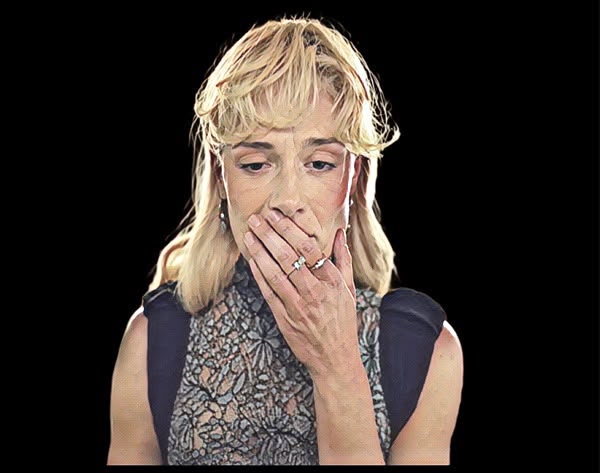
This phenomenon extends far beyond The Gilded Age. Social media has transformed the interval between episodes into an enormous collective laboratory for alternative scripts. Viewers no longer discuss only what happened. They want to anticipate what will happen next, explain why a particular decision was wrong, and establish how the problem should be resolved.
It is a very different relationship from the one audiences had with television when episodes aired weekly and discussions were largely confined to conversations among friends or reviews published in newspapers. Today, a scene is examined almost immediately, compared with dozens of earlier episodes, and subjected to the judgment of thousands of people who frequently remember details the characters themselves seem to have forgotten.
This can enrich the experience of following a story enormously. It can also create a complicated situation for writers, directors, and actors. Audiences become attached not only to characters but also to the versions of those characters they have constructed over the years. When a series decides to take a different direction, a conflict emerges between expectations and the work itself.
And the more popular a series becomes, the more intense that confrontation grows.
The Gilded Age is experiencing precisely that moment. After steadily expanding its audience, reaching new viewers, and securing a fifth season, HBO’s production has become a phenomenon that extends far beyond its original premise. What began as a confrontation between old-money and new-money families in New York has expanded into a narrative about economic ambitions, social transformation, family conflicts, and shifting power structures.
One of its greatest achievements has been expanding the presence of middle- and upper-class Black families, so frequently overlooked in traditional portrayals of the period. Peggy Scott (Denée Benton) has developed a story of her own, with professional ambitions, family conflicts, and a romantic relationship that does not depend on the dramas of the Russells or the van Rhijns. The series now presents a more complex New York than the one usually associated with the grand ballrooms of the Gilded Age.
But every expansion comes at a price. With an increasingly large ensemble, some characters lose space, certain storylines move forward rapidly, and others seem frozen in place. For years, I have complained about the way Agnes, for example, oscillates between her historical and familial importance and her role as the provider of witty remarks. Marian and Larry may be the clearest examples of characters who remain central to the audience’s interest without always receiving development proportional to the importance they have acquired.
And that is precisely why Marian has become so controversial.

Marian Brook’s Problem Did Not Begin with the Pregnancy
I have already written about what I consider the anachronism in some of Marian’s decisions, her insecurity, her financial dependence, and her struggle to reconcile her desire for independence with the society she inhabits. I have also questioned Larry’s behavior, a young man with good intentions who frequently displays the carelessness of someone raised with money and male privilege.
I do not intend to repeat that entire analysis. But it is impossible to ignore that the two remain trapped in a conflict the series seems unable to resolve without introducing another obstacle.
Marian loves Larry. At least, that is what the story has led us to believe. Larry also declares his love for her. She once wanted to marry him, broke off their engagement after discovering a lie, tried to rebuild the relationship, and was rejected at that moment. Later, they spent a night together, and Marian panicked over the consequences.
What frustrates me most is that they rarely manage to have a proper conversation. They run into each other by chance, exchange a few words, someone interrupts, or one of them has to leave. The fundamental questions remain unanswered. The series seems incapable of allowing them five minutes of an adult conversation.
That does not mean Marian is a character without psychological depth. Quite the opposite. She is a young woman without a fortune, an orphan, with little romantic experience and virtually no maternal guidance. Agnes mainly taught her what she must never do. Ada offered affection, but not always answers. Marian tries to challenge convention and then finds herself having to live with the fear that she has gone too far.
There is something profoundly lonely about this character. And perhaps that is precisely what her harshest critics fail to recognize.
Even Louisa Jacobson Had to Make Sense of Marian
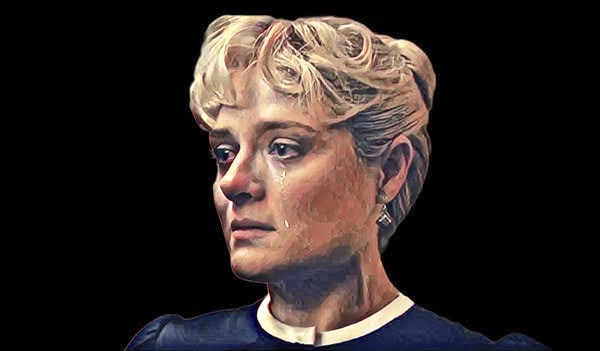
Louisa Jacobson herself acknowledged that she initially struggled with the material she received for Season 4. In an interview with People, she said she was frustrated when she discovered what would happen after Marian and Larry’s night together, but eventually approached the situation as a challenge: how to convey the gravity of the consequences a woman would face in 1886.
The actress recognized something many contemporary viewers find difficult to accept: Marian cannot react like a woman living in the twenty-first century. What might seem to us like an impulsive night with a former boyfriend could, for her, mean losing her reputation, her family’s protection, and her prospects for marriage.
Jacobson also emphasized Marian’s emotional isolation. When she realizes she may be pregnant, the character seems to lose all the confidence she has tried so hard to project. She is a young woman without a mother, without adequate sexual education, and without a family figure capable of helping her understand what is happening.
Harry Richardson, meanwhile, has acknowledged that Larry failed to appreciate the consequences of that night for Marian. This distinction is fundamental. He can continue his social life, work in the family business, and even flirt with Carrie Astor. Marian does not enjoy the same freedom.
I do not think it is fair to transfer all the frustration surrounding Marian onto Louisa Jacobson. I particularly enjoy her comic timing, especially in scenes with Agnes and Ada, and the way she conveys Marian’s discomfort without turning every emotion into a dramatic declaration. But I also believe the writing frequently lets her down, trapping her in brief encounters and conversations that end just as they begin to become interesting.
When an actress has to rely on interviews to explain her character’s behavior in such detail, perhaps there is a gap between what the writers intend to communicate and what actually reaches the audience.

Success Can Become a Trap, Too
It is interesting to observe that HBO helped expand The Gilded Age’s social media presence by bringing the series closer to content creators and fan communities. That strategy contributed to transforming a production initially perceived as a niche period drama into a recurring topic of television conversation.
But intense fan participation also changes the relationship with the work. Every viewer has a favorite couple, a favorite character, theories, and expectations. When the story fails to meet those expectations, the response can move beyond criticism and become outright rejection.
Marian is a particularly interesting case because she does not even dominate the screen time in Season 4. Yet she inspires passionate debates. Some viewers cannot stand her anymore. Others blame Larry for her insecurity. Some accuse the writers of sacrificing the couple, while others spend hours reconstructing events to prove that the story should follow an entirely different direction.
I am among those who defend Marian, although I certainly do not consider her choices beyond criticism. And I still find Larry charming, even as I become increasingly unwilling to excuse his carelessness.
But it is not up to fans to decide that the story is something else simply because they dislike the one being presented.
There is a difference between identifying inconsistencies in a script and rejecting an event because it contradicts our wishes. The first is part of criticism. The second reveals something about the degree of emotional investment a work has managed to generate.
And Now What?
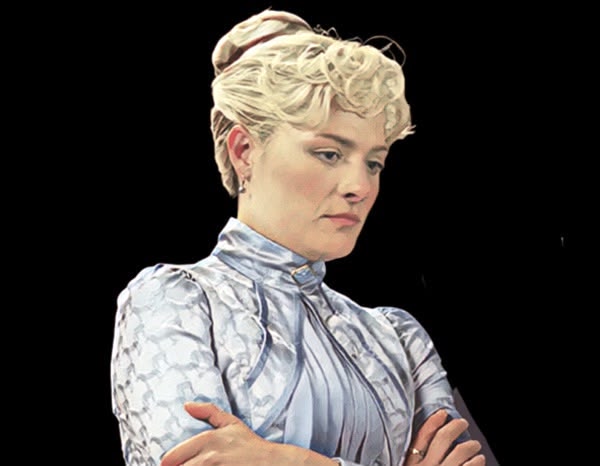
Marian Brook has reached a point where her story seems to belong less to the writers than to the expectations of those following it. Fans have already imagined practically every possible path for her future. Some want her to marry Larry immediately. Others would rather see her leave him. Some hope for a romantic reconciliation, while others already consider the couple beyond repair.
And now there is a pregnancy that part of the audience simply refuses to accept.
Sonja Warfield tried to surprise viewers by choosing an unexpected symptom. She succeeded. Perhaps she succeeded too well, because the deliberate misdirection has turned into a dispute over what the series itself intends to tell us.
Nothing prevents future episodes from introducing new information. After all, this is fiction, and plot twists are part of the game. But something is revealing about the insistence on turning pregnancy into tuberculosis, even after interviews explaining the intention behind the scene.
Perhaps the problem is no longer Marian Brook. Perhaps it is our contemporary difficulty in accepting that a story does not have to correspond to the one we have been writing in our heads while watching it.
That does not absolve Julian Fellowes and his team of inconsistencies, interrupted conversations, or characters occasionally sacrificed to keep the plot moving. Quite the opposite: the more passionate and attentive an audience becomes, the greater the responsibility to make narrative choices convincing.
But demanding coherence is one thing. Demanding obedience is another. And perhaps that is the new challenge facing television writers: telling a story to millions of viewers who are no longer content simply to follow it. They want to write it, too.
Marian is pregnant, at least according to the revelation the creators have chosen to present. Part of the audience would rather believe she has tuberculosis.
And now what? Who gets to tell the rest of the story?
Descubra mais sobre
Assine para receber nossas notícias mais recentes por e-mail.

