
Warning: spoilers for the first season of Carrie.
I often complain here at MiscelAna about the liberties Hollywood takes with literary classics, particularly when the justification is simply the need to “update” a story. But there is an important difference between changing a work because one fails to understand its essence and proposing a new interpretation because one has something different to say about it. Mike Flanagan apparently had quite a lot to say when he decided to revisit Carrie.
In an interview with The Hollywood Reporter published on Tuesday (24), the filmmaker revealed that the decision to keep Carrie White alive at the end of the first season of the Prime Video series was not a strategy to ensure the production’s continuation. Even if Carrie had been conceived as a limited series, its protagonist would have survived. It was a creative decision made during the development of the project, one that Stephen King himself enthusiastically supported.
Now, with the second season confirmed, Flanagan has already submitted the script for the first episode and is working with his writing team to continue the story. His intention remains to develop a three-part narrative with a beginning, a middle, and an end, although only two seasons have been officially guaranteed.
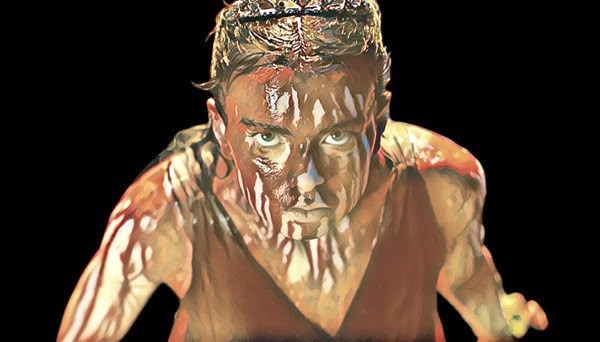
A tragedy that changed horror literature
Published in 1974, Carrie was Stephen King’s first published novel and the book that transformed his life forever. Two years later, Brian De Palma directed a film adaptation that not only became a horror classic but also earned Oscar nominations for Sissy Spacek and Piper Laurie, something particularly unusual for the genre.
The story of a teenage girl subjected to psychological abuse by her mother, religious fanaticism, and the cruelty of her schoolmates found in telekinesis an extraordinary metaphor for repression, the transformation of the female body, and the manifestation of aggression that could no longer be contained.
Carrie White was simultaneously a victim and an agent of the tragedy. Her revenge did not represent liberation but the culmination of a process of destruction that had begun long before we discovered her powers.
It is precisely this tragic dimension that Flanagan decided to change. And considering the nature of his previous work, particularly The Haunting of Hill House, Midnight Mass, and The Fall of the House of Usher, it is rather interesting that a filmmaker so fascinated by death decided that, this time, his protagonist deserved to live.
Summer H. Howell’s Carrie
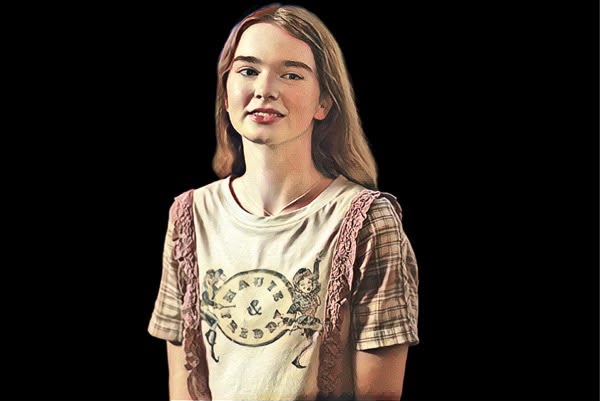
One of the most interesting revelations in the interview is that Summer H. Howell had never seen Brian De Palma’s film when she took on the role. Flanagan considered this an advantage and did not want the actress to familiarize herself with Sissy Spacek’s performance beforehand.
His intention was to prevent Summer from constructing the character as either a tribute or a reaction to the previous performance. He wanted her to have enough creative autonomy to discover her own Carrie White, without the obligation to reproduce one of the most iconic performances in horror cinema history.
It was a particularly intelligent decision when we consider how many remakes become trapped by the perceived necessity of reproducing precisely what made their predecessors unforgettable.
Flanagan conceived Summer’s Carrie as an inherently kind and curious young woman eager to discover the world. The more he developed this version of the character, the less sense it made to him to condemn her to the same fate as her predecessors.
Changing the ending, therefore, emerged organically during the development of the first season. It was not necessary to know what would happen to Carrie after she survives to recognize that she deserved the possibility of a future.
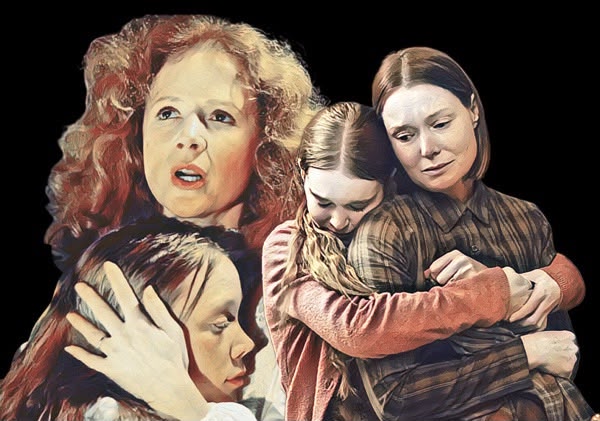
A female story told by women
Another aspect of the interview worth highlighting is the way Flanagan acknowledges the limitations of his own perspective. For him, Carrie is fundamentally a story about what it means to become a woman in a world that simultaneously fears and misunderstands that transformation.
As a man, the filmmaker recognized that he could not speak authoritatively about that experience on his own and sought to bring women into creative positions where they could genuinely influence the narrative.
I particularly appreciate that distinction. It is not simply about hiring women to legitimize a production, but about recognizing that they can offer perspectives the creator himself does not possess and allowing those perspectives to shape the story.
Puberty, menstruation, shame surrounding one’s own body, sexual repression, and the relationship between mothers and daughters are fundamental elements of Carrie. Supernatural horror has always been a means of externalizing conflicts that existed independently of it.
By altering Carrie’s fate, Flanagan also changes the meaning of that transformation. If the discovery of female power culminated in tragedy in the original story, there is now the possibility that Carrie might learn to live with what makes her different.
School violence and the limits of revenge
Flanagan’s most compelling justification for changing Stephen King’s ending relates to the contemporary context of school violence.
The filmmaker believes that the revenge tragedy was already told brilliantly in both the novel and De Palma’s film. He saw no need to reproduce it, particularly because his version was interested in exploring the tension between cruelty, empathy, and the human capacity to choose between them.
In that context, a story ending with a teenage girl killing her tormentors and subsequently dying herself was not the message he wanted to convey. And according to Flanagan, Stephen King shared his enthusiasm for taking a different direction.
It is a particularly interesting discussion because I do not believe that a work of fiction necessarily has an obligation to deliver a morally uplifting message. The power of tragedy lies precisely in its ability to confront us with what we wish would never happen. Carrie’s death in the original work does not represent an endorsement of revenge but an indictment of the consequences of violence, intolerance, and exclusion.
On the other hand, Flanagan is not simply replacing a tragic ending with a happy one. He is proposing a different question: what happens when someone survives what should have destroyed them?
From a psychological perspective, there is an entire fascinating narrative universe within that possibility. Surviving violence does not necessarily mean escaping its consequences. Carrie will still have to discover who she is outside her abusive relationship with her mother, develop emotional connections, come to terms with her own power, and find an identity that is not entirely defined by her experience as a victim.
Revenge can bring a tragedy to an end. Survival, however, marks the beginning of a much longer story.
And perhaps that is precisely the story Flanagan wants to tell.
Ten days at Carrie White’s prom
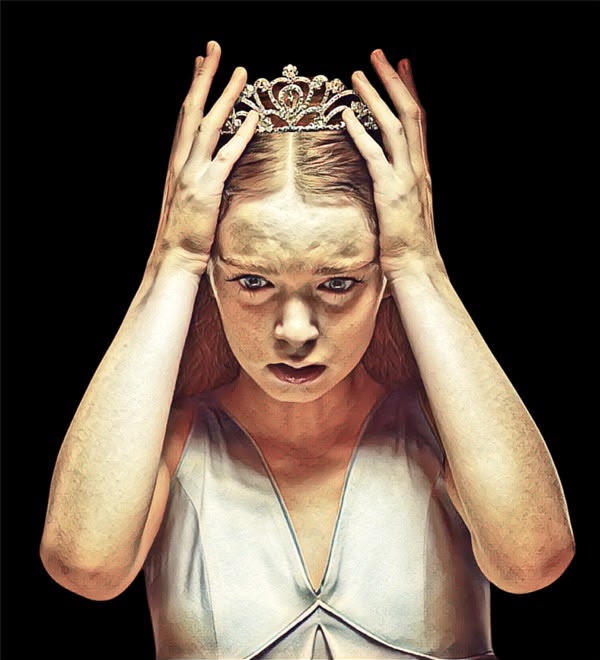
One of the adaptation’s greatest challenges, of course, was recreating the prom sequence immortalized by Brian De Palma in 1976.
Flanagan insisted on personally directing the sequence, which begins in the seventh episode and continues until approximately halfway through the eighth. It took ten days to film, and the filmmaker describes it as the most complex sequence of his career.
One of his first decisions was to deliberately avoid De Palma’s aesthetic choices, including the celebrated use of split screens. In his view, there was no reason to attempt to reproduce something that had already been executed so effectively.
But there is a particularly lovely anecdote Flanagan shares about the filming. At one point, looking at Summer Howell in her prom dress and all the extras gathered on the set, he realized that he was actually attending Carrie White’s prom.
He briefly interrupted filming and invited the entire crew to appreciate the significance of that moment. After all, they were recreating one of the sequences most deeply ingrained in our collective pop culture consciousness.
It is an anecdote that reveals Flanagan’s affection for the original material, even when his narrative choices depart from it.
Carrie’s future and the danger of prolonging a series
Although the second season is already in development, Flanagan still believes his version of Carrie should consist of three parts. For him, there is a clear narrative arc, and the greatest danger would be succumbing to the temptation to extend the production if it continues to be successful.
And here is another point with which I wholeheartedly agree. Contemporary television is filled with series that had excellent stories to tell but, faced with commercial success, were forced to invent reasons to continue existing long after exhausting their narrative possibilities.
Flanagan acknowledges that risk. For now, he hopes to begin production on the second season in 2027, but there is still no official release date, nor has a third season been confirmed.
What I am particularly curious about is what he will do with Carrie now that there is no longer a Stephen King novel determining her trajectory. The first season had a literary classic as its narrative framework, even if it took considerable liberties with it. The second will be the real test of this reinvention.
Saving Carrie White was a bold creative decision. Dramatically justifying her survival will be an even greater challenge.
If Flanagan manages to tell a story about rebuilding an identity after years of abuse, without simply turning Carrie into a supernatural heroine, he may have found a genuinely interesting way to revisit Stephen King.
Not because the original story needed correcting, but because, fifty years after Brian De Palma’s film, there was still another possible story for that teenage girl.
Descubra mais sobre
Assine para receber nossas notícias mais recentes por e-mail.

