
My first reaction to seeing Julia Garner in The Altruists was to wonder what they’d done to her teeth and nose. My second was to find out whether Caroline Ellison really talked like that. And because I love Anthony Boyle, I kept looking for some trace of Arthur from House of Guinness in his Sam Bankman-Fried. Good luck with that. He’s unrecognizable, too, though it took me longer to figure out why.
The two of them kept me watching Netflix’s eight-episode limited series, because The Altruists combines two things that almost always annoy me. The first is nonlinear storytelling. I have very little patience for a show that takes me to 2022, jumps back to 2016, then throws me back into the Bahamas before I’ve figured out what these people are doing together. The second is Hollywood’s fascination with mathematicians rattling off formulas as if they were reciting poetry. If you know nothing about financial markets and even less about Bitcoin, brace yourself. There are moments when everyone in the room seems enthralled by their own conversation, and you’re still trying to figure out whose money it is.
That, as it turns out, was the question that finally helped me understand the case. Whose money was it?
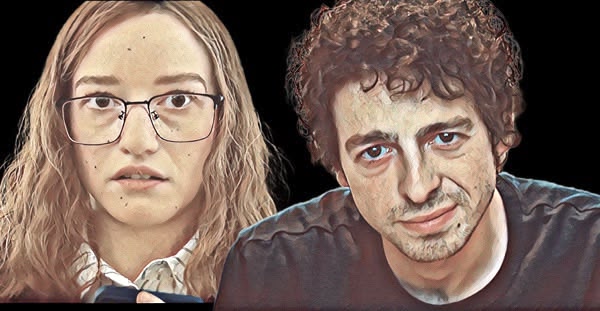
What is Bitcoin, and how did they make money from it?
Bitcoin is a form of digital money you can buy, sell, hold, and send to someone else. If I send you a bitcoin, the transfer goes into a public ledger maintained by computers across the network. That ledger is called a blockchain. For the purposes of the show, all you need to know is that you can buy bitcoin with ordinary money and that its price changes according to what people are willing to pay. And at the beginning of this story, the same bitcoin could cost a lot more in one country than in another.
Say a bitcoin costs the equivalent of $10,000 in the United States and $11,000 in Japan. If you can buy it in one market and sell it in the other, you make $1,000 before costs. It’s like buying something at one store and reselling it for more at another. In finance, that’s called arbitrage. It was one of the ways Alameda Research, founded by Sam in 2017, started making money. The trade could go wrong if the price changed before you sold. Still, the business is much less mysterious than the show sometimes makes it sound.
Sam and Caroline met at Jane Street, a trading firm. She joined Alameda later. Both identified with effective altruism, a movement that tries to figure out where time and money can do the most good. The idea that appealed to them was earning to give. You could choose a career that made you a lot of money and use some of it to fund good causes. In the series, the promise is so big that it justifies taking another shot every time. If you make twice as much tomorrow, you can give twice as much away. And if today’s bet goes wrong, there’s always tomorrow.

Where does the fraud begin?
In 2019, Sam and Gary Wang founded FTX. Think of it as a platform where you deposit money to buy and sell cryptocurrencies. One way the company makes money is by charging fees on trades. Alameda made trades of its own to turn a profit. FTX served a different purpose. It was where customers made their trades and kept their money and cryptocurrency.
Say I deposit $1,000 at FTX so I can buy bitcoin when the price goes down. I open the app and see my $1,000. While I’m waiting, Alameda uses the money to pay a debt of its own. The balance still shows up in my account. I’m still entitled to my $1,000, but FTX has already handed the money to Alameda. If I try to withdraw it, the exchange has to find the money somewhere.
Sam gave Alameda special privileges in the FTX system. It could keep taking money out even when its account balance was already negative. In 2022, when the market fell and Alameda’s lenders demanded repayment, Sam authorized the company to use billions of dollars in FTX customer funds to pay those debts. The customers had never agreed to finance Alameda. It’s entirely possible Sam believed he could still put the money back. By then, he’d already decided, on his own, what to do with other people’s money.
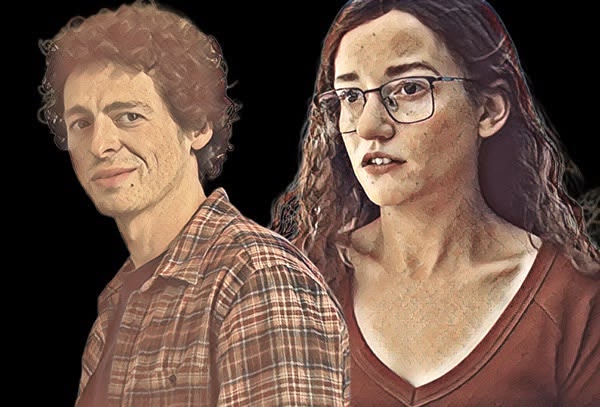
Did Caroline know how in love with her Sam was?
That was the question I came away with after the first episode. Anthony Boyle’s Sam seems so in love with Caroline that he wants to impress her in everything he does. She catches him off guard when she makes the first move sexually. He listens when she suggests going all in. And he seems especially happy that she’s the one person who believes he can change the world. Does Julia Garner’s Caroline realize the effect she has on him? I think she does. And the series seems interested in suggesting she knows how to use that influence. Just look at how closely the pilot links her confidence about sex and her confidence in a financial bet.
That’s where I felt the show was making a villain out of Caroline. The editing practically invites me to take her sexual frankness as further proof that she’s the one leading Sam into danger. Boyle is so good at making Sam seem vulnerable that, for a moment, I almost bought it. But watch who gets the final say when there’s an actual disagreement. In the pilot, after Tara Mac Aulay questions the risk they’re about to take, Sam is the one who leaves her off Alameda’s incorporation documents and pushes her out of the company, as the series tells it. Caroline can encourage him. Sam can get rid of a business partner.
In real life, the trial clarified who had the power to do what. Sam was the main architect of the fraud. Even after Caroline took over as Alameda’s co-CEO, he continued to direct major decisions. She knew where the money was coming from, took part in the scheme, and helped conceal the company’s financial position from lenders. She testified that, at Sam’s request, she prepared seven alternative versions of Alameda’s balance sheet. That’s the document that shows what a company owns and what it owes. Leave out a major debt, and the people who lent the company money can go on believing they’ll be paid back. Caroline admitted what she’d done and said Sam had directed her to commit the crimes.
The series can imagine that Caroline knew how to use Sam’s affection to get him to listen to her. The trial helps us understand what the two of them did with the money. As for what went on between them when they were alone, we have Garner and Boyle’s performances. They’re so convincing that it’s tempting to take that interpretation as fact.
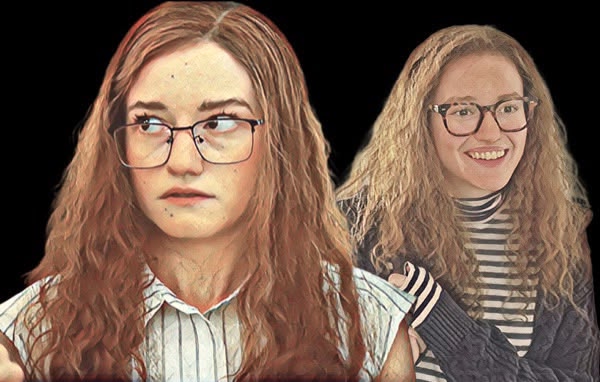
How did FTX collapse?
FTX had also created a digital asset of its own called FTT. Alameda held a lot of it and valued those holdings at the price FTT was trading for. Imagine you own thousands of copies of something that sells for $100 today. On paper, you’re sitting on a fortune. If everyone wants to sell tomorrow and hardly anyone wants to buy, good luck getting $100 apiece. That was an especially serious problem because FTT’s value depended on confidence in FTX itself.
On November 2, 2022, CoinDesk revealed how heavily Alameda relied on that asset. Binance, a rival exchange, announced it would sell its FTT holdings. The price dropped, and FTX customers rushed to withdraw their money. Binance considered buying FTX, took a look at the books, and backed out. On November 11, FTX filed for bankruptcy protection. The rush to withdraw exposed the shortfall. Customer money had already been used for some time.
Sam was arrested in the Bahamas, extradited to the United States, and convicted by a jury in 2023. He was sentenced to 25 years in prison in 2024. Caroline pleaded guilty, cooperated with prosecutors, testified against him, and was sentenced to two years. Gary Wang, FTX’s co-founder, also pleaded guilty and cooperated.
In order, it’s easy enough to follow. Alameda starts out making money from differences in the price of bitcoin. Sam opens FTX, which takes in customer deposits. Alameda gets access to those deposits and uses them. When customers ask for their money back, there isn’t enough. In the series, we get an early look at the disaster and wait a long time to understand the decisions that led to it. I would have liked the story to unfold in a way that let me grasp the gravity of each decision as it happened. Instead, I spent part of the time untangling the timeline and part of it listening to very clever people talk very fast.
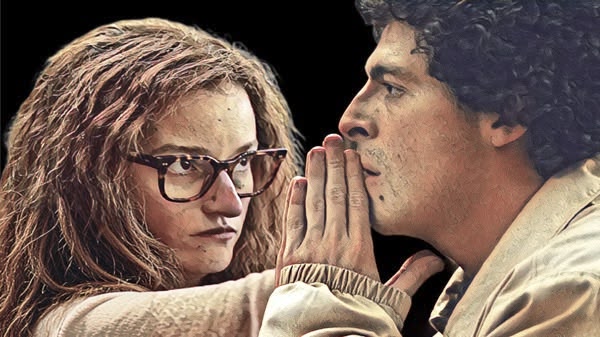
Julia Garner and Anthony Boyle kept me watching
Yes, Julia Garner wears a prosthetic nose and teeth. And that low voice that seems to crackle at the end of a sentence comes from the real Caroline. Garner had little material to study, essentially a half-hour interview and a recording of an Alameda meeting. She worked with a vocal coach and made her own choices about breath and rhythm. The detail that impresses me most is the little laugh that escapes in the middle of an order. She manages to sound as if she’s waiting for someone to overrule her at the very moment she’s telling them what to do. I started out looking at the teeth. Soon I was waiting to see whether she’d laugh or manage to finish the sentence.
Boyle had far more recordings of Sam to study. He listened to interviews as he walked around Vancouver and even practiced the voice and the way Sam avoids eye contact in comic book stores and at Magic: The Gathering events. What I like most about the performance is the way he moves from a plausible explanation to an absurd conclusion without changing his tone. Even with everything falling apart, Sam is still talking about the customers’ money as something he can pay back if the investment in Anthropic earns enough. Boyle makes it sound so mundane that you can imagine how exhausting it would be to argue with him. You haven’t finished raising an objection and he’s already come up with another scenario in which everything works out.
And they have chemistry. On paper, a romance between two people who flirt by discussing how to do the most good possible could be unbearable. With these two, you understand the joy of finding someone who can follow your reasoning and even laugh along with you. The trouble is that being understood feels so good, it becomes hard to accept that the person who understands you best might disagree with you. And the series makes us wait for exactly that moment.
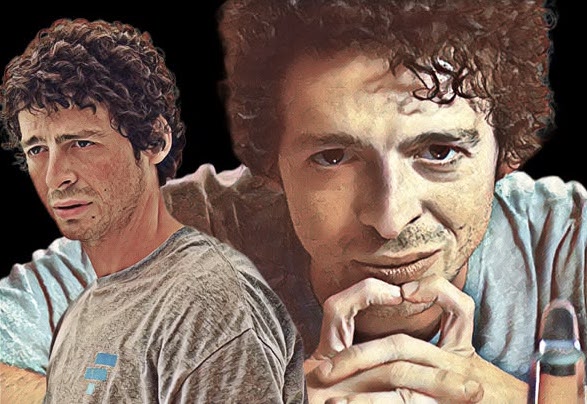
What the finale recreates and what it invents
Spoilers for the final episode below.
The meeting in which Caroline tells Alameda, employees, that the company had been using FTX customer funds really happened, and it was recorded. The series recreates it closely. The last phone call, in which she tells Sam she loves him after agreeing to cooperate with prosecutors, was written for the show. The testimony is real. The declaration of love is the writers’ answer to a question the trial could never settle.
I’m a little wary of the desire to turn this case into a grand tragic romance. The more time the series spends asking whether Sam and Caroline could have been happy, the easier it is to forget that those billions were real money to the customers. Still, the call works. Garner says what Caroline feels without asking Sam to forgive her. And Boyle, who has spent eight episodes playing a man always busy calculating his next answer, finally seems to be out of answers. I spent much of The Altruists paying attention to their voices. In that moment, I was listening to his silence.
Descubra mais sobre
Assine para receber nossas notícias mais recentes por e-mail.

