
Warning: spoilers for the first four episodes of Season 4.
The Larians are not the only ones divided over the fourth season of The Gilded Age. While Marian Brook (Louisa Jacobson) remains one of the most discussed characters on social media, she has gained an unlikely rival within her own family: her aunt, Ada Forte (Cynthia Nixon).
Interestingly, Peggy Scott’s (Denée Benton) happiness, Enid and Oscar’s marriage of convenience, and other narrative developments that have pleased fans are enthusiastically welcomed, but they do not generate discussions with the same intensity as those that spark outrage. Dissatisfaction seems to be driving social media engagement this season. After weeks of heated debates over Marian’s choices, it is now Ada’s turn to discover what happens when a character defies the audience’s expectations.
The problem is that Ada has crossed one of The Gilded Age’s most beloved characters: Agnes van Rhijn (Christine Baranski). And things are not going particularly well for her.
Since the series premiered in 2022, we have been practically encouraged to sympathize with Ada and laugh at Agnes’s arrogance. We rooted for the younger sister to find love, gain her independence, and finally emerge from the matriarch’s shadow. Now that she has, many viewers are discovering that perhaps they preferred the old Ada. And, curiously, the more freedom Ada gains, the more relatable Agnes becomes.
Following the broadcast of Good Taste, the fourth episode of Season 4, discussions specifically devoted to Ada’s behavior multiplied on Reddit. The disbelief of some fans, the irritation of others, and even comments from viewers confessing that they are beginning to dislike a character they once adored suggest that Julian Fellowes is tampering with a far more delicate dynamic than we might have imagined.
Has power changed Ada, or has it simply revealed aspects of her personality we had never seen before?
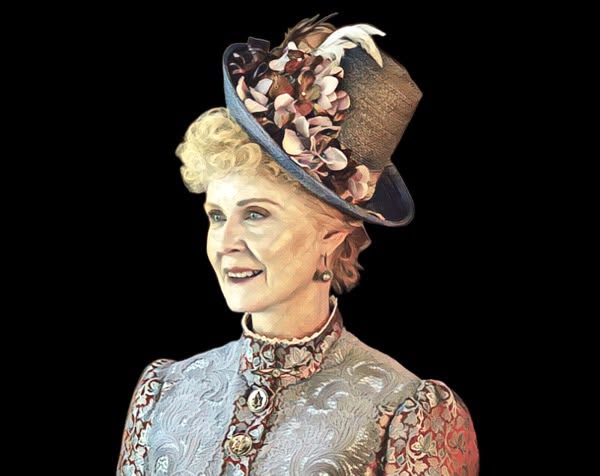
The perpetual younger sister
When we met Ada Brook in 1882, she was a mature woman who occupied an almost childlike position within her own household. Financially dependent on her sister, she had little autonomy over her daily life and was constantly reminded of her naivety. Agnes made decisions; Ada mediated. Agnes established the rules; Ada found ways around them. Agnes anticipated disasters; Ada believed everything would work out.
This dynamic did not emerge by chance. When the sisters found themselves financially vulnerable, largely because of the irresponsibility of their brother Henry, Marian’s father, it was Agnes who found a solution to ensure their survival: marriage to a wealthy man with whom, from what little we know, she was unhappy and who appears to have been abusive.
There is a story preceding the events of The Gilded Age that Julian Fellowes has told us only in fragments, and one I would love to see explored further. We do not know what the two sisters were like in their youth, what their respective expectations regarding marriage were, or how much of Agnes’s personality was shaped by the circumstances that forced her to assume responsibility for the family’s future.
Ada had the privilege of continuing to believe in love precisely because Agnes had given up waiting for it. She remained unmarried, protected, and comfortable, but paid for her security with her autonomy. Her older sister assumed an almost maternal role and, like some excessively protective mothers, never seemed to recognize that the person she cared for had grown up.
Understandably, Ada might have accumulated resentment over those decades. Agnes rarely missed an opportunity to dismiss her opinions, ridicule her naivety, or establish the limits of her freedom. Nothing that is happening now should erase that reality.
But it is also true that Agnes assumed a responsibility no one had assumed for her. Unlike Ada, she did not have an older sister to protect her from the consequences of her choices.
What we may not have considered is that Ada’s apparent docility was also a consequence of the position she occupied. After all, how well can we truly know the personality of someone who has never had the opportunity to exercise power?
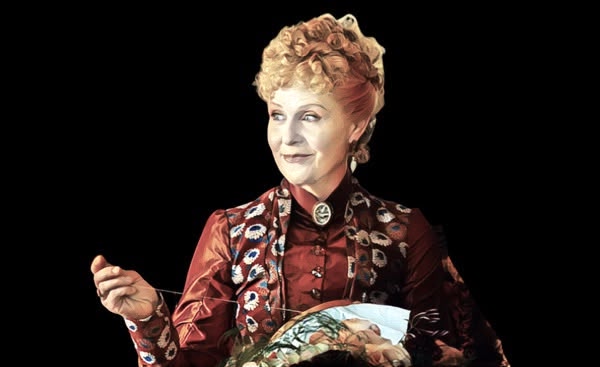
Ada, the mother Marian chose
Marian Brook’s arrival at her aunts’ home brought a new dimension to Ada’s life. Childless, she found in her niece an opportunity to experience a form of motherhood that had previously eluded her. She immediately offered affection, understanding, and companionship to the young orphan, establishing a relationship of trust that Agnes, given her temperament, could hardly replicate.
Marian found in Ada something of an adoptive mother, albeit informally. But looking back at their relationship over four seasons, I am beginning to question how effective Ada has actually been as a maternal figure.
She is an excellent confidante, but not always a good adviser. Her willingness to understand and support Marian is not necessarily accompanied by an ability to anticipate the consequences of her decisions. There is a difference between respecting someone’s autonomy and helping them develop the emotional resources necessary to exercise it.
In the first season, Agnes’s distrust of Tom Raikes seemed like another manifestation of her snobbery and obsession with social conventions. Yet she was right about her niece’s suitor. That does not mean Agnes is always right, as she subsequently demonstrated by supporting Marian’s marriage to Dashiell, a perfectly respectable match that would hardly have made the young woman happy.
Agnes struggles to believe that security and happiness can coexist. Ada struggles to recognize that happiness cannot necessarily dispense with security.
I do not think it is irrelevant that Marian, despite all the emotional support she receives from her aunt, continues to struggle considerably with managing emotional conflicts and making decisions without acting impulsively. Ada offers her niece a space in which she feels understood, but rarely confronts her with her own contradictions.
Interestingly, although Ada was so frequently infantilized by her sister, she may also derive some satisfaction from being needed by Marian. Their relationship is affectionate, but is Ada genuinely helping her niece mature, or is she simply offering her the understanding she always wished to receive from Agnes?
There is an important difference between acknowledging someone’s suffering and validating every reaction they have to it. And although Marian is an adult woman responsible for her own choices, the way Ada exercises this symbolic motherhood also deserves scrutiny.
Now, faced with the possibility of an unmarried Marian being pregnant, we may witness the greatest test yet of Ada’s maternal role. Her niece is dealing with a situation that requires far more than moral approval or disapproval. It requires discernment, the ability to make difficult decisions, and, above all, protection.
Will being loving be enough? And might Agnes, precisely under these circumstances, surprise us once again by proving to be the more effective of the two?
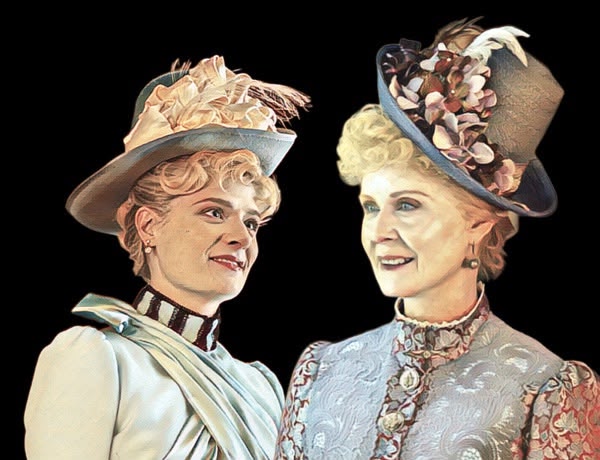
The love that transformed Ada’s life
Ada’s great moment of emancipation came in the second season, when she met the Reverend Luke Forte (Robert Sean Leonard). It was one of The Gilded Age’s most touching love stories, precisely because we rarely see older characters experiencing romance with the same intensity and anticipation reserved for younger protagonists.
Cynthia Nixon was particularly wonderful at conveying the enchantment of a woman who, after so many years, discovered that she could still be desired, loved, and chosen. For the first time, Ada was making a fundamental decision about her own existence, despite Agnes’s resistance.
Her older sister’s reaction to the romance revealed a less sympathetic aspect of her personality. Behind her objections lay the fear of loneliness, of losing her lifelong companion and, evidently, of losing the control she exercised over her. Agnes was losing a role she had performed for decades.
But it is important to remember that Agnes was capable of reconsidering her position. She attended the wedding and, when Luke fell ill, put aside their differences to support Ada. The sister who had so often ridiculed the other’s sensitivity proved capable of offering precisely the emotional comfort Ada needed.
Ada’s marital happiness was short-lived, but her transformation was permanent. Luke died of cancer, leaving his wife a fortune whose extent she had never imagined. Almost simultaneously, Oscar (Blake Ritson) lost virtually the entire van Rhijn fortune in a financial scam. In one of the series’ most effective twists, the woman who had been supported by her sister for decades suddenly became responsible for supporting the entire family.
It was an extraordinary opportunity for the two sisters to finally establish a relationship of equals. That is not exactly what happened.
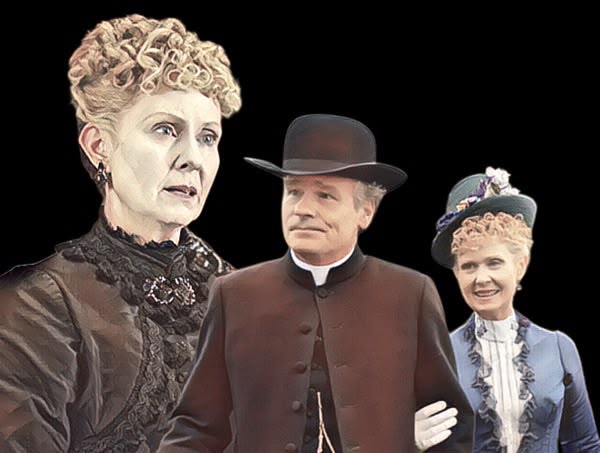
When kindness acquires authority
In the third season, we could still attribute some of Ada’s behavior to grief, insecurity about her new responsibilities, and the need to find a purpose following Luke’s death. Her involvement in the temperance movement, for instance, revealed a woman seeking to preserve the Christian values that had defined her marriage, but also discovering the pleasure of exercising authority.
There was considerable irony in watching Ada, who had spent decades resenting Agnes’s interference in other people’s lives, attempting to impose her own moral convictions within the household. The difference between the two sisters was beginning to seem less significant: while Agnes used tradition to justify her demands, Ada appealed to virtue.
In the fourth season, Ada is exercising her position as the family’s provider and leader with a considerably firmer hand than we might have anticipated. The hiring of servants, decisions regarding the management and decoration of the house, and even the fallout from the Ladies’ Home Journal article are exposing an increasingly uncomfortable family dynamic.
Obviously, Ada has every right to manage her own fortune and make decisions about the household she now supports. It would be absurd to expect her to continue asking Agnes for permission to do everything. The problem is that her independence seems to be accompanied by a growing inability to recognize her sister’s feelings.
There has been a succession of small instances in which Agnes has been undermined. Individually, they might seem insignificant, but collectively, they reveal a troubling lack of sensitivity.
What we once interpreted as naivety is beginning, under certain circumstances, to take on the characteristics of passive aggression. And if there was still any doubt about why fans were becoming uncomfortable with the “new” Ada, Good Taste practically eliminated it.
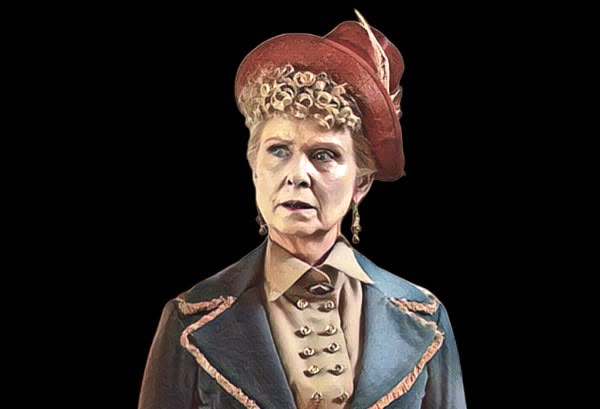
The dinner menu that outraged fans
If Julian Fellowes intended to spark a discussion about Ada’s transformation, he succeeded. Within hours of the fourth episode’s broadcast, forums devoted to The Gilded Age were flooded with expressions of outrage. Viewers who had spent years defending Ada against Agnes’s domestic tyranny were now questioning her loyalty, her sensitivity, and even her much-celebrated kindness.
And, frankly, they have good reason to.
To understand the significance of what happened during the dispute over the presidential dinner menu, we must remember that Ada was not on that committee by chance. Agnes had deliberately enlisted the participation of her sister, Marian, and Enid to strengthen her position against Bertha Russell (Carrie Coon). They all knew they were there as her allies. The issue was never simply which cook prepared the better meal. This is The Gilded Age, a series in which virtually every social activity is also a political one.
Incidentally, Bertha understands that better than anyone.
Ada, therefore, knew perfectly well what was at stake. Or, at least, she should have.
When the vote ended in a tie, with five votes for each menu, Ada attempted to abstain. Pressed to make a decision, she ultimately chose Bertha’s menu. Not only did she fail to fulfill the role for which she had been enlisted, but she handed her sister’s rival the victory Agnes had worked so hard to secure. And she did so in front of the other committee members, publicly exposing Agnes’s inability to count on the loyalty of her own family.
What is particularly upsetting is that Bertha did not have to defeat Agnes. Ada did it for her.
The argument that Ada simply preferred the food prepared by the Russells’ chef would be more convincing if there had been an extraordinary difference between the two menus, if the meal prepared by the van Rhijns’ cook had been inadequate, or if we were discussing a decision with meaningful ethical consequences. That was not the case. Both meals had been well received.
Ada was not being asked to compromise her Christian principles, cover up a crime, or harm someone for her sister’s benefit. She was being asked to support a family initiative in a social rivalry, having agreed to participate for that very purpose.
If she disagreed with Agnes’s strategy, she could have refused to join the committee. If she believed voting out of family loyalty was inappropriate, she could have made her position clear beforehand. Doing so at the last possible moment, when her vote was decisive, was particularly cruel, even if the cruelty was not deliberate.
There is another revealing contradiction within the episode itself. Earlier, Ada had reprimanded Agnes for failing to appreciate how important Marian’s work at the settlement house was to her. She demonstrated sensitivity toward her niece’s feelings but failed to apply that same reasoning when it came to considering her sister’s feelings. It was an inconsistency that did not escape the attention of fans.
And it is precisely this selectivity in Ada’s empathy that is becoming troubling.
For decades, Agnes supported her sister, ensured her financial security, and, despite all her objections to Ada’s marriage to Luke, stood by her when her husband fell ill. Ada does not have to spend the rest of her life repaying a debt of gratitude, but, surprisingly, she seems unable to recognize the extent of Agnes’s vulnerability at this particular moment.
We are talking about a woman who has lost her fortune, her domestic authority, and part of her social relevance. The presidential dinner represented an opportunity to demonstrate that she still possessed some influence, that her knowledge of society’s codes still mattered, and that she could achieve something on her own merits.
Agnes desperately needed a victory. And Ada, who understood her circumstances better than anyone, was the very person who prevented her from achieving it.
Did she really not understand what she was doing?
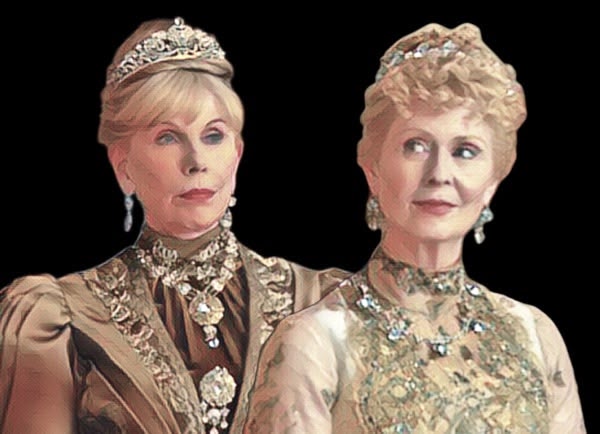
Independence or revenge?
One of the most interesting possibilities for the character’s development would be for Julian Fellowes to explore the resentment Ada may have accumulated over decades of living with Agnes. Understandably, a woman who spent so much of her life being infantilized and undermined might experience some satisfaction in finally defying the person who exercised authority over her.
From a psychoanalytic perspective, aggression does not simply disappear because it is incompatible with the image someone has constructed of themselves. Ada considers herself a Christian, generous, conciliatory, and loving woman. Acknowledging that she feels anger toward her sister, harbors resentment, and might even derive some satisfaction from watching her lose control would conflict with that identity.
Her hostility could, therefore, find indirect forms of expression, always accompanied by morally acceptable justifications. She is simply being honest, doing what she considers right, exercising her freedom, or trying to promote harmony. None of these justifications necessarily has to be false for an unconscious element of revenge to coexist with them.
There is also the possibility of identifying a form of identification with the figure who previously exercised power over her. Ada, who suffered so much from Agnes’s authoritarian behavior, is beginning to reproduce some aspects of that very behavior now that she occupies a similar position.
This does not mean she is consciously planning to humiliate her sister. The more interesting hypothesis is precisely that Ada may not recognize her own aggression and, consequently, does not feel responsible for it.
What makes Agnes, under certain circumstances, even more sympathetic is that she has never pretended to be particularly sweet. When she wants to defeat someone, we generally have no doubts about her intentions. Ada, however, seems incapable of acknowledging that she, too, can be cruel, even when her actions hurt the people she loves.
What bothers me is that we sometimes confuse kindness with naivety and naivety with innocence. A woman can be genuinely kind and simultaneously capable of cruelty. She can deeply love someone and still harbor resentment toward that very person. She can wish to do good and nevertheless derive satisfaction from exercising power.
Agnes, who has never claimed to be particularly sweet, may actually be more aware of her own contradictions.
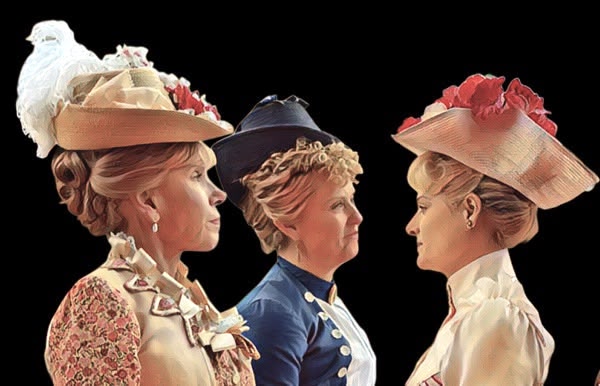
The mistake of underestimating Agnes
There is another factor that helps explain why audiences have reacted so negatively to Ada’s transformation. Agnes van Rhijn is far more popular than her position as the household antagonist in the early seasons might suggest.
Christine Baranski has made the character one of the great attractions of The Gilded Age. Her arrogance, extraordinary repertoire of cutting remarks, intelligence, and ability to discern other people’s motivations have won over audiences. And, over the seasons, we have discovered that the woman who appears most resistant to social change is also capable of surprisingly modern attitudes.
Her relationship with Peggy is the best example. Agnes recognized the young woman’s intelligence, competence, and education, hired her as her secretary, and refused to allow other people’s racial prejudices to determine her decisions. She developed an affection for Peggy that extended well beyond their professional relationship.
It is also important to recognize her affection for Marian, even though Agnes cannot express love as easily as Ada does. Her niece is far from indifferent to her, and her concern for the young woman’s future is probably connected to her own experiences.
Now that we know Agnes better, audiences are not necessarily willing to passively watch her humiliation. What was once funny, because Agnes occupied a position of security, takes on a different meaning when she no longer has the same resources to defend herself.
Ada is not simply defying the old authoritarian matriarch. She is defying a woman who, at this moment, has lost almost everything that gave meaning to her existence.
And, as viewers, we recognize a dimension of Agnes’s history that Ada apparently fails to consider: that of a woman who had to sacrifice her own happiness to ensure the survival of both sisters.
We do not need Ada to become submissive again to recognize that Agnes deserves more understanding. And I believe that is precisely what some fans are trying to say.
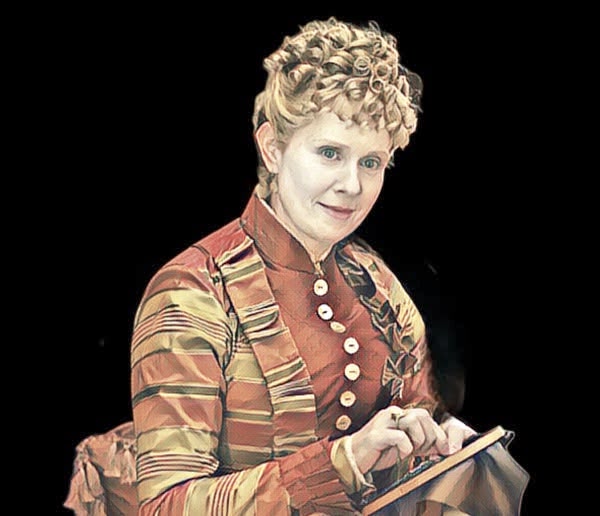
Is Ada ready for a new love?
Alongside the family tensions, Julian Fellowes has introduced the possibility of a new romance for Ada this season, this time with Dr. Reginald Harris, played by Dennis Haysbert.
The two met at Peggy and William’s wedding and encountered each other again in the fourth episode. Their growing connection revolves around philanthropy, an interest in women’s medical education, and literature. Harris introduces Ada to the poetry of Sarah Forten Purvis, a Black poet and abolitionist who, interestingly, published poems under the pseudonym Ada. The two establish an intellectual rapport and agree to correspond.
It is a potentially fascinating direction for the character, particularly because an interracial romance in 1886 would involve social consequences far greater than the obstacles Ada encountered when she decided to marry Luke.
Although New York did not legally prohibit interracial marriage at the time, discrimination and the possibility of social ostracism were considerable, even among educated and financially privileged elites. And there is an important distinction between socializing with Black people, supporting their professional or philanthropic endeavors, and publicly challenging social conventions through an interracial romantic relationship.
Ada now has the resources to make that choice. For the first time, she does not need her sister’s permission, a husband’s approval, or a man’s financial protection. She can choose with whom she wishes to share her life. But is she prepared for the consequences?
And, more importantly, how would Agnes react?
It would be relatively predictable to make Agnes the principal antagonist of this romance, but it would also be a shame to reduce the character once again to the caricature of a conservative aristocrat. Her relationship with Peggy has demonstrated that she is capable of surprising us. That does not mean she would naturally accept an interracial marriage within her own family, but there is room for a far more sophisticated conflict than simply contrasting a progressive sister with a prejudiced one.
In fact, it would be particularly interesting if Agnes, after some initial resistance, once again proved capable of protecting Ada against the hostility of New York society.
Perhaps Ada will discover that certain principles are easier to defend when one does not yet have to pay the social price for them. And perhaps a new love will allow her to develop an emotional maturity that financial independence alone has not guaranteed.
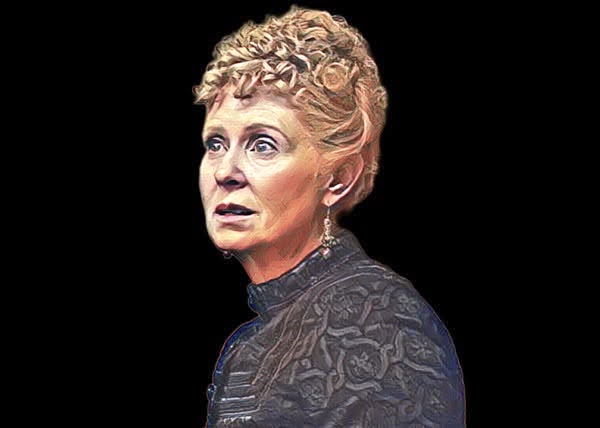
Cynthia Nixon and the art of defying expectations
Cynthia Nixon, of course, is no stranger to playing characters whose transformations provoke passionate reactions from fans. Few actresses have experienced this as intensely as she did with Miranda Hobbes in Sex and the City, particularly in And Just Like That…. The reinvention of the independent, rational, and frequently sarcastic lawyer, her insecurities, the end of her marriage to Steve, and her relationship with Che Diaz sparked a fierce debate between viewers and the people behind the series. Nixon herself publicly defended the character’s evolution on several occasions.
Miranda and Ada are worlds apart, but there is something particularly interesting about Cynthia Nixon’s ability to portray women who, later in life, discover possibilities they had never previously considered, even when doing so challenges the audience’s identification with them.
What I find remarkable about her performance as Ada is that Nixon preserves the character’s gentleness while conveying the exhilaration of a woman who, for decades, barely had a voice. Ada was the unmarried sister, the one who remained in the background, whose existence depended on someone else’s decisions. In a sense, she was a burden Agnes carried, and although Agnes might never have used that particular word, she rarely missed an opportunity to remind her sister of it.
For much of her life, Ada dreamed of a marriage she believed she would never experience. And just when she had probably given up on that possibility, she found a great love. She was desired, loved, and chosen, experienced marital happiness, endured the pain of widowhood, and discovered that she had inherited an enormous fortune. In a relatively short period, she went from being dependent to being the family’s provider, and the very woman who had always defined the limits of her existence became dependent on her.
That is a great deal to process emotionally. And Cynthia Nixon manages to convey Ada’s exhilaration without abandoning the qualities that have always defined the character. There is an almost childlike delight in being able to make decisions, express opinions, be heard, and, above all, discover that her choices have consequences. For the first time, she is the one who has the final say.
That does not necessarily mean there is malice behind her actions. Perhaps Ada is so captivated by the discovery of her own importance that she has yet to develop the ability to fully appreciate the impact of the power she now exercises over others. For decades, she knew only one side of that equation. Now she is discovering the other.
It is precisely this ambiguity that makes Nixon’s performance so effective. The gentleness remains, but it is no longer necessarily synonymous with submission. Sweetness coexists with authority, generosity with vanity, and sensitivity with a surprising inability to recognize certain vulnerabilities in others.
We are not watching an actress who has decided to play Ada differently. We are watching an actress who manages to show us the same woman experiencing radically different circumstances. And perhaps it is precisely because she preserves so many elements of the old Ada that the new one makes us so uncomfortable.
If we are irritated with the character, it is also because Cynthia Nixon remains utterly convincing.

Ada’s true emancipation
One of the most interesting aspects of Ada’s transformation is that, although she has achieved freedom at an age when few women of her generation had such an opportunity, she seems to be experiencing a belated form of emotional adolescence.
For decades, Agnes occupied the position of maternal authority. Defying her may now be Ada’s way of asserting her individuality. The problem is that, as long as she needs to establish her autonomy in opposition to her sister, she remains emotionally tied to the very structure from which she wishes to free herself.
Emancipation does not necessarily mean reversing a relationship of dependency but overcoming the need to reproduce it. Ada does not need to return to being the submissive sister we met in 2022, but neither does she need to turn Agnes into what she herself was for so many years.
There is also a particularly cruel dimension to this reversal. Agnes is growing older and experiencing an identity crisis. Ada found love, discovered new interests, gained financial independence, and may be on the verge of experiencing another romance. Agnes watches her sister’s life expand while her own seems to be shrinking.
If Ada really is the sensitive and empathetic woman we believed we knew, should she not be capable of recognizing that?
I do not think Fellowes has necessarily turned Ada into a villain. I find it far more interesting that he may finally be allowing us to discover her imperfections. Cynthia Nixon is an extraordinary actress, capable of sustaining all these contradictions, and it would be a waste to preserve the character as something of a saint whose kindness absolves her of any emotional responsibility for her actions.
But there is a narrative risk in this transformation. If Ada continues to hurt Agnes without demonstrating any ability to recognize the impact of her actions, audiences may lose the affection the series has spent four seasons cultivating.
As is happening with Marian, fans are beginning to question not only Ada’s choices but also the consistency between those choices and the character they believed they knew. And, as we have already discussed here at MiscelAna, it cannot be particularly easy for a showrunner these days to manage the expectations of an audience that analyzes, discusses, and questions every narrative decision, often quite willing to rewrite the stories of its favorite characters.
Nevertheless, I consider Ada’s transformation one of the potentially richest storylines of this season. We do not have to like everything a character does to appreciate the complexity of her arc. We do, however, need to understand why she does what she does and feel that the narrative itself acknowledges the contradictions in her behavior.
For decades, Agnes protected Ada, even though she did not know how to love her without exercising control. Now that Ada is in a position to protect Agnes, will she know how to do so without perpetuating the same harmful dynamic?
Ada’s true emancipation may not lie in taking her sister’s place, but in discovering that she no longer needs to compete with her for it.
And if there is one thing this fourth season of The Gilded Age is demonstrating, it is that the characters’ happiness may satisfy viewers, but outrage is what mobilizes them. Marian has already discovered that. Now it is Ada’s turn.
Descubra mais sobre
Assine para receber nossas notícias mais recentes por e-mail.

