
Warning: spoilers for “Queens,” the sixth episode of Season 2.
If we spent the entire first season of All’s Fair debating whether Ryan Murphy was aware of the absurdity of the series he had created, we can finally put that discussion to rest. In “Queens,” the sixth episode of the second season, he practically parodies his own production.
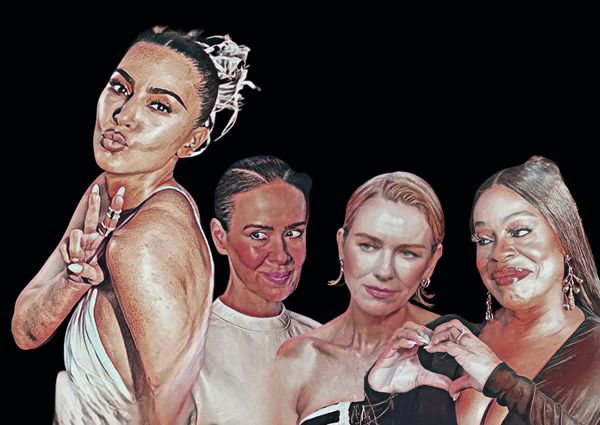
There is something rather wonderful about the fact that, to make the characters played by Sarah Paulson, Glenn Close, Naomi Watts, Niecy Nash-Betts, and Kim Kardashian even more exaggerated, the series had to turn to the world of drag queens. After all, the costumes, wigs, nails, dialogue, and grand entrances were practically there already.
I have long noticed how some writers “respond” to criticism on air. This episode is entirely devoted to addressing opinions that have circulated on social media and in the entertainment press. It is an unfiltered response, venomous to the last drop and even cruel to its own actresses, who are not spared criticism that is at times misogynistic, deeply resentful, and prejudiced. No one is spared: Generation X, millennials, Gen Z, and, above all, women. As a woman, knowing that the episode was written by a gay man (as acknowledged in the episode itself), I kept the receipts. Cruelty disguised as comedy is as old as humanity itself, and however legitimate some of the frustrations expressed may be, the way they are articulated is, once again, simply mean-spirited.
That said, let’s get to the venom.

Reese Has a Breakdown
The newly hired head of Human Resources, Reese, provides our perspective in this episode. Overwhelmed by the lawyers’ demands, she begins to see them as drag queens in an alternate reality where all the characters’ most absurd traits are amplified.
In other words, everything we see is actually happening, just in a less dramatic, less tacky, and less exaggerated fashion than Reese presents it to us. The narrative device turns every scene into a relentless barrage of accusations, insults, and provocations. So, for this recap, I will stick to the facts first before returning to the way the writers have chosen to tell the story — which, in this particular case, reveals far more than the story itself.
The guest appearance by Bob the Drag Queen is entirely consistent with Ryan Murphy’s universe, and the device gives him an opportunity to play with both the show’s language and generational conflict.
Reese represents a generation that grew up learning to identify abusive behavior in the workplace. Her bosses, meanwhile, belong to a generation that had to survive those very same behaviors to attain positions of power.
The problem, naturally, is that surviving an abusive system does not necessarily prevent someone from reproducing its dynamics once they acquire power.
And we are talking about a law firm that could probably use an entire Human Resources department devoted exclusively to Carrington Lane.
A Charity Party to Restore the Firm’s Reputation
Following the shooting that damaged the firm’s public image, the lawyers decide to organize a Christmas charity party to benefit seriously ill children. Naturally, the responsibility for organizing the event falls to Reese.
It is one of the most interesting contradictions in All’s Fair: women who have built their careers defending other women frequently demonstrate very little empathy for the people who work for them.
The series could explore this contradiction in some depth, but we are in Ryan Murphy’s universe. Naturally, there will be a party, extraordinary costumes, and situations entirely disproportionate to the original problem.
Milan and Chase: Another Divorce
Milan returns as a client of the firm, seeking a divorce from Chase (Matthew Noszka), who is now struggling with gambling problems.
Well, there you go. Allura’s ex-husband continues to generate business for the lawyers.
It is almost a running joke about the series’ very premise: men come and go, but their indiscretions keep these women in business.
Milan’s return also offers an opportunity to revisit the consequences of Chase’s choices, as his storyline continues to revolve around his inability to control his own impulses.
Dina Is in a Coma, but She Keeps Talking
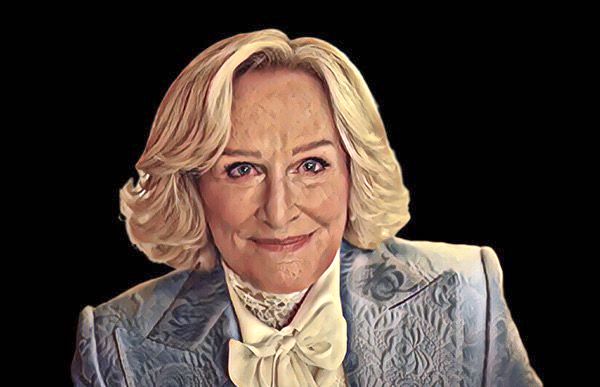
If anyone was worried about Glenn Close’s absence while Dina remains hospitalized, Ryan Murphy found a particularly creative solution. In Reese’s fantasy, she can telepathically hear the lawyer’s thoughts, reinforcing the reference I pointed out in my previous recap: a parody of Reversal of Fortune (1990), the film in which Close plays Sunny von Bülow, who narrates her own story despite being in a coma.
Here, even unconscious, Dina never misses an opportunity to give orders and deliver venomous remarks. At least Ryan Murphy had the good sense not to waste Glenn Close.
The situation takes an even more macabre turn when the idea of Reese bringing about Dina’s death is introduced.
It is important to remember that we are experiencing reality through Reese’s distorted perception, rather than necessarily witnessing literal events within the main narrative.
There is something deliciously perverse about turning one of the firm’s most respected figures into a presence capable of exercising authority even while unconscious.
Not even a coma can give Dina a break.
Carrington Versus Gen Z
The episode’s big moment is reserved, as is almost always the case with All’s Fair, for a version of Sarah Paulson’s Carrington Lane.
Standing on the conference table, Reese’s imagined Carrington launches into an attack on the younger generation, delivering a speech that combines resentment, provocation, and generational differences, culminating in a theatrical fall through the table.
What is interesting is that the series presents us with both Reese’s perception of older, powerful women who are unwilling to reconsider their behavior and a caricature of how those women perceive younger professionals.
The generational conflict is legitimate. Its representation is completely insane.
But the question is how much of what we are hearing actually belongs to these characters and how much reflects the frustrations of the people writing for them.
Using Reese’s distorted perception as a narrative device allows the writers to voice their grievances without necessarily taking responsibility for the opinions being expressed. And there is certainly no shortage of grievances.
Between Camp and Cruelty
There has always been an element of camp in Ryan Murphy’s productions. Deliberate excess, theatricality, artificiality, and the transformation of bad taste into an aesthetic expression are all part of his signature. And there are some genuinely inspired moments in “Queens,” particularly when the series acknowledges and embraces its own absurdity.
But there is a difference between having a sense of humor about yourself and using humor to attack those who dared to laugh at you. And in this episode, the distinction becomes dangerously blurred.
The choice of drag queens is particularly interesting because it highlights how caricatured the portrayal of femininity in All’s Fair already was. The wigs, costumes, nails, gestures, and grand entrances hardly needed to be radically reinvented. What bothers me is that, in attempting to ridicule the criticism directed at the series, the writers end up reinforcing precisely what their critics had pointed out.
And there is a contradiction that is difficult to ignore: a series that markets itself as a celebration of female empowerment turns its own female protagonists into instruments of a resentful response. Not even the actresses are spared. Physical appearance, age, sexuality, professional competence, and generational differences are all turned into ammunition.
We can appreciate the intelligence of some of the references, laugh at certain situations, and still question the nature of the humor. One does not invalidate the other. After all, isn’t the ability to entertain conflicting opinions precisely what distinguishes criticism from resentment?
“Queens” may be the most revealing episode of All’s Fair so far, not necessarily because of what it tells us about its characters, but because of what it reveals about the people who write for them.
And let’s face it: for a series about lawyers who specialize in conflict, it is rather ironic that its writers seem to have so much difficulty dealing with their own frustrations.
Descubra mais sobre
Assine para receber nossas notícias mais recentes por e-mail.

