
Warning: spoilers for “Frenemies,” the seventh episode of Season 2.
If Ryan Murphy wanted to find an explanation for the particularly dysfunctional relationship between Dina Standish (Glenn Close) and Carrington Lane (Sarah Paulson), he found one. And since we are talking about All’s Fair, naturally, he opted for a solution worthy of the best — or worst, depending on our mood — soap operas. Carrington is indeed Dina’s daughter. Well, there you go.
After two seasons of watching the hostility, manipulation, humiliation, and displays of affection between these two women, we finally have a piece of information that retrospectively changes our perception of their relationship.
And Glenn Close is finally back.
Dina Gets a Second Chance
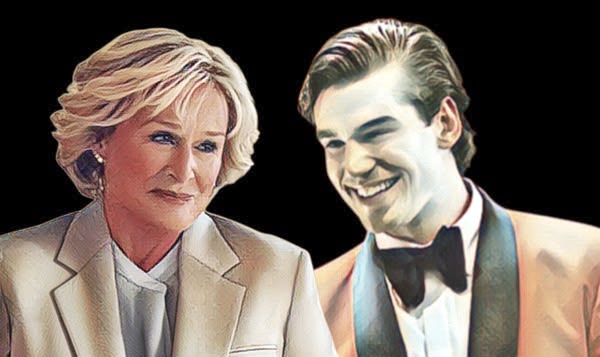
After spending time in a coma, Dina regains consciousness and has an opportunity to reconsider her priorities. The woman we have come to know has always been deeply identified with her career. The law firm, her professional relationships, and her position as a mentor to the lawyers constituted a significant part of her identity. But coming close to death offers a different perspective on what she still wants to experience in life.
Her relationship with Brody, therefore, takes on a dimension that goes beyond the eccentricity of a romance between an older woman and a younger man. Dina has the opportunity to choose a life that is not entirely defined by work, obligations, and other people’s expectations.
Curiously, a series so obsessed with portraying powerful women through their ability to accumulate money, influence, and outrageously expensive clothes should find in Dina an opportunity to explore another definition of freedom.
The freedom of no longer having to prove anything to anyone.
Carrington Is Dina’s Daughter
The big revelation in “Frenemies” is that the relationship between Dina and Carrington was never exclusively professional. What we had previously interpreted as a relationship between mentor and protégé, marked by rivalry, resentment, and a seemingly insatiable need for recognition, takes on a familial dimension. And here, naturally, we enter the territory that interests me most.
Carrington has always demonstrated a need to provoke reactions in the people around her. She never seems satisfied with simply winning an argument. She needs the other person to acknowledge her victory, her intelligence, and, above all, her existence.
The revelation that Dina is her mother offers a new perspective from which to analyze the character. The possibility that Carrington’s hostility is associated with a need for maternal recognition makes her relationship with Dina particularly interesting.
It does not justify her behavior, of course. But it allows us to understand that behind so many displays of aggression there may be a woman for whom being ignored is far more unbearable than being hated.
It is also an extraordinary opportunity for Glenn Close and Sarah Paulson, two actresses who hardly need the amount of explanatory dialogue Ryan Murphy tends to write to convey the complexity of their characters.
The End of the Friendship Between the Partners?
All’s Fair has undergone significant changes in its second season. Kim Kardashian, who was essentially the show’s lead, barely appears, while Sarah Paulson and Naomi Watts have progressively taken center stage. More significant, however, is the personal falling-out between the partners.
Ever since the first season, Liberty has been whining about feeling excluded from the friendship between Allura and Emerald. We have gone through most of the second season with the same complaint, but now there is clearly a personal rupture between the three women.
Is it justified? I don’t know. The series has never entirely convinced me that Liberty was being marginalized by her friends to the extent that she felt rejected by them.
There is a difference between being excluded and feeling excluded, and it would be interesting if the writers were genuinely interested in exploring that distinction. After all, to what extent has Liberty’s need for her friends to constantly reaffirm her importance contributed to the very distance she resents?
What is curious is that a series whose original premise was the alliance of women who broke away from a male-dominated professional structure and built their own law firm is now dismantling that friendship without necessarily offering anything more interesting in its place.
Did Liberty Actually Listen to Carrington?
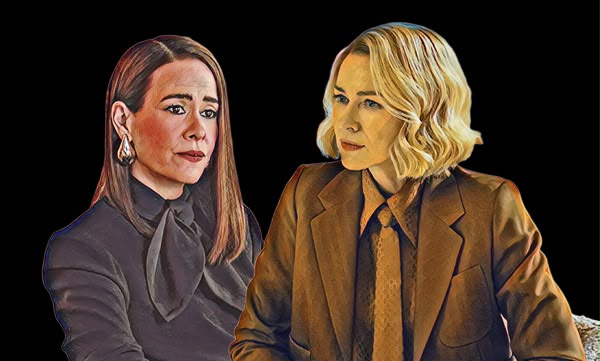
I must confess that I am having trouble embracing the romance between Liberty and Carrington with the enthusiasm the series apparently expects from us. And not because of the relationship itself, but because, in the previous episode, Carrington confessed that she had planned to marry Liberty to acquire an ownership stake in the firm.
Now, with Dina’s decision to leave the partnership and transfer her 25 percent stake to Carrington, that financial motivation has apparently disappeared. But has Carrington genuinely abandoned her plan, or has she simply obtained what she wanted through another route? And did Liberty pay enough attention to what Carrington confessed to her?
Had Allura and Emerald overheard that conversation, they would probably already have their answer to some of the questions surrounding the relationship.
I am not necessarily dismissing the possibility that Carrington fell in love with Liberty along the way. It would actually be interesting if a woman who has always relied on manipulation as a survival strategy ended up being surprised by her own feelings. But for that to work dramatically, we need to witness that transformation, rather than simply accept it because we now have a marriage proposal. Involving a noodle, no less. Because, after all, this is All’s Fair.
There is also something interesting about Liberty, who has spent practically two seasons complaining about not being sufficiently valued by her friends, finding in Carrington the very person who gives her the attention she has been demanding.
But are being desired and being loved necessarily the same thing? Particularly when the person who desires her has already admitted to having a financial interest in their relationship?
Emerald Gets an Opportunity, Too
Emerald (Niecy Nash-Betts) attracts the attention of an unlikely suitor, adding another romantic possibility to the storylines that should find some resolution in the final episode.
It is curious how the second season has progressively shifted its focus away from legal cases and toward the lawyers’ own romantic lives.
What began as a series about women who help other women end their relationships has turned into a series about women who need to learn how to build their own.
In that respect, Emerald deserves more screen time. Niecy Nash-Betts is an actress capable of moving between comedy and drama with remarkable ease, even when the scripts do not offer all the leading actresses the same opportunities.


Where Do We Go From Here, All’s Fair?
We have reached the penultimate episode of the second season of All’s Fair with a very different feeling from the one we had last year. The series remains tacky, excessive, and absolutely committed to its aesthetic, but it has lost something that, however precariously, still sustained the narrative: a storyline that made us want to find out what would happen the following week.
Kim Kardashian, around whom the series was originally built, has become almost a supporting player in her own show. The friendship between the partners has been fractured, the legal cases are increasingly incidental, and many of the personal conflicts are heading toward resolutions that, frankly, inspire very little curiosity.
The revelation that Carrington is Dina’s daughter offers an extraordinary opportunity for Sarah Paulson and Glenn Close, but a revelation, however surprising, is not necessarily a storyline. What the writers choose to do with that information is what could justify our continued interest.
Curiously, after devoting an entire episode to responding to the criticism directed at the series, All’s Fair approaches its season finale facing a far more relevant question than its tackiness, its costumes, or Kim Kardashian’s acting abilities: what story does it still want to tell us?
Because it was never the tackiness that bothered me about All’s Fair. The problem now is the lack of a story that makes me want to keep watching all that tackiness.
Let’s see what they deliver next week, shall we?
The second season finale of All’s Fair arrives on Disney+ on December 2.
Descubra mais sobre
Assine para receber nossas notícias mais recentes por e-mail.

