
After a year of reporting and conversations with more than 100 sources, journalist May Jeong published an article in Vanity Fair that apparently sought to deconstruct Taylor Swift’s public image. Titled The Mastermind, a reference to one of the singer’s own songs, the piece arrived amid considerable anticipation but, curiously, ended up provoking a more heated discussion about journalism than about its central subject. Variety was particularly scathing in dismissing Jeong’s work, employing sarcasm that, at times, struck me as every bit as personal as the approach it criticized. I am not necessarily on either side.
I read the article trying to understand what the great revelation was supposed to be. What lie, once exposed, would fundamentally change our perception of Taylor Swift? That she desperately wanted to be famous? That she was born into a privileged family? That she is an ambitious, strategic, competitive woman who appears rather reluctant to forget perceived offenses? That the sweet girl who conquered the world with songs about broken hearts is not necessarily as sweet as she once seemed?
I don’t know about you, but none of this particularly surprises me. And not because I obsessively follow Taylor’s life. Listening to her discography should suffice.
What interests me about the article is precisely what it touches upon but fails to fully explore: the contradiction of a woman who built a billion-dollar empire on a narrative of vulnerability and who, despite having acquired extraordinary power, continues to find in the position of the wronged woman one of her most effective ways of communicating with her audience.
What happens when the victim becomes more powerful than her alleged villain?
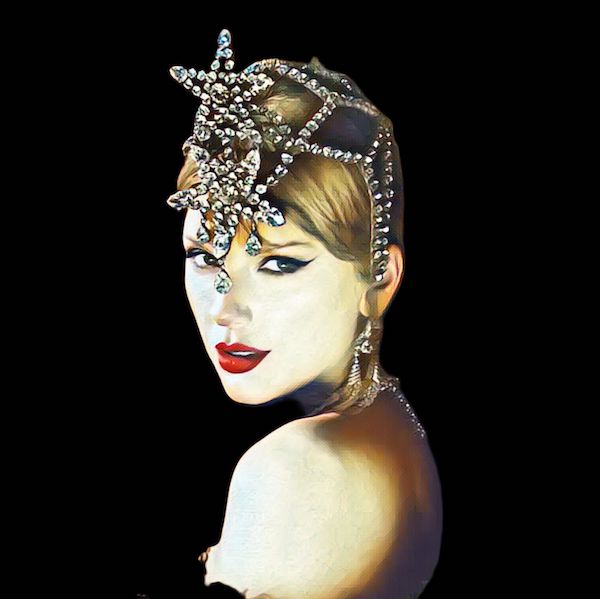
An article about Taylor Swift written for Swifties
May Jeong is neither an inexperienced journalist nor a celebrity gossip specialist. With a distinguished career as an investigative reporter, including years of coverage in Afghanistan and work exploring social inequality, violence, and structures of power, she has a background that should, in principle, make her investigation into one of the most powerful women in entertainment particularly interesting.
Which is precisely why I found her approach puzzling.
The Mastermind is a distinctly millennial piece, constructed around references, codes, and inside jokes that assume a rather specific knowledge of Taylor Swift’s universe. The singer is never identified by name, instead being referred to as The Star. Scooter Braun is The Manager, Charli xcx is The Brat, Katy Perry is The California Girl, and Travis Kelce is Redwood. The narrative is divided into Side A and Side B, presenting the idealized version of the singer’s journey and what is supposedly the reality behind it.
There is also an Easter egg: seemingly random capital letters inserted into words throughout the article that, when put together, spell out the title of Swift’s 2017 song Look What You Made Me Do. It is a device Taylor herself used in her album liner notes and one that helped establish a very particular relationship with her fans, who are constantly encouraged to look for hidden messages in everything she produces.
In other words, to deconstruct Taylor Swift, May Jeong wrote a very Taylor Swift article.
It is a curious stylistic choice. If the intention was to investigate the singer’s economic and cultural power for a broader audience, why require readers to possess such specific knowledge of her mythology? And if the intention was to encourage Taylor’s own fans to reconsider their perception of her, why resort to the very mechanisms that fuel their relationship with the artist?
The article also presents relatively few named sources for a piece that involved conversations with more than 100 people. Jeong reports that many people were afraid to speak, something that should not be dismissed and that could, in itself, constitute an interesting subject for investigation. Source anonymity is a legitimate and often indispensable tool in investigative journalism, but the difficulty of obtaining on-the-record statements does not automatically turn suspicions into evidence.
Some allegations deserve thorough investigation, such as the claim that artists close to Taylor avoid collaborating professionally with her rivals and that people who cross her face social ostracism. These are relevant questions because they concern the exercise of power within an industry. Yet the journalist herself acknowledges that she has not established whether Taylor explicitly ordered such exclusions.
It is unfortunate that, in this context, one of the article’s great revelations ended up being the number of pairs of Ugg boots the singer owned as a teenager.
The country girl who wanted to conquer the world
There is, indeed, one dimension of Taylor Swift’s story that her public narrative has never particularly emphasized: economic privilege.
Taylor was not a poor girl who, against all odds, managed to fulfill her dream. I do not recall, however, her ever claiming that she was. The story of the girl who grew up on a Christmas tree farm acquired a pastoral quality that helped construct her image as an ordinary young woman, particularly when combined with accounts of rejection at school and songs about unrequited love.
What the article brings back into focus is the less romantic dimension of that journey. Her father was a successful financial professional; her parents had the resources, connections, and time to invest in their daughter’s career, and the family mobilized to ensure that she had access to the opportunities she wanted. There was planning, investment, and strategy.
Taylor wanted to be famous. Perhaps that is one of the most significant differences between the two versions presented in the article.
It is one thing to tell the story of a sweet, talented girl who loved music, worked hard, and ended up conquering the world. It is another to tell the story of a girl who wanted to conquer the world and who, possessing both talent and resources, worked toward that goal.
Lana Del Rey’s statement, quoted by Jeong, strikes me as far more interesting than several of the former classmates’ accounts: Taylor had reportedly told her repeatedly that she wanted fame more than anyone else.
There is a difference between wanting to create and wanting to be admired for what one creates, although the two desires can perfectly well coexist. Taylor appears to have understood very early on that she wanted to be not merely a singer, but a star. I see no moral transgression in that.
Nobody builds a billion-dollar empire without focus, determination, support, encouragement, discipline, and strategy. How many girls were born into similar financial circumstances, had parents equally committed to their careers, and achieved what Taylor Swift has achieved?
Acknowledging her privileges does not diminish her talent. Likewise, acknowledging her talent does not require overlooking her privileges.
But there is an interesting cultural question in the need to soften female ambition. Why couldn’t a woman simply admit that she wanted to be rich, famous, admired, and powerful? Why does her success have to take on the contours of a fairy tale in which recognition is a spontaneous reward for her goodness and perseverance?
Taylor could acknowledge all those ambitions without diminishing her accomplishments. It might, however, alter the emotional contract she established with an audience that has always identified with the girl who was never chosen.
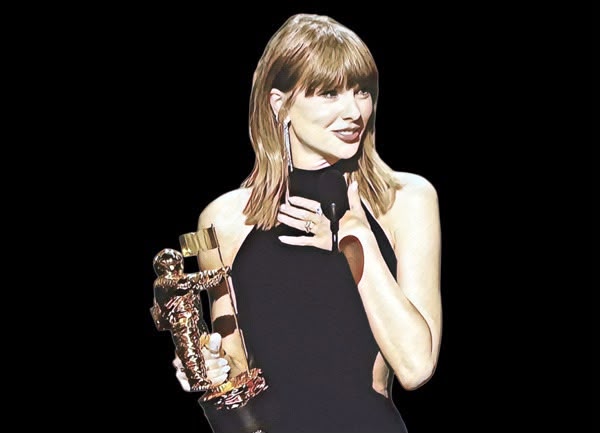
On boots, popularity, and rejection
One of Taylor’s former classmates interviewed by Vanity Fair recalls that the singer owned three pairs of Ugg boots, while her own mother could not afford to buy her a single pair. It is an account that reveals quite a lot about economic inequality and the experiences of two teenagers living very different realities.
But what, exactly, does it reveal about Taylor Swift’s character?
I own two pairs of Uggs, one brown and one black. Yes, they are expensive, but they last. I am not sure what conclusions can be drawn about my personality from that information.
Nor do I find it necessarily contradictory that Taylor belonged to the popular crowd at school and, at some point, felt rejected by her peers. The experience of belonging during adolescence is particularly unstable, and being considered popular does not mean someone is permanently protected from exclusion.
There is, moreover, a distinction between what happens and what we subjectively experience. Two people can live through the same event and construct entirely different memories of it without either necessarily lying.
This does not mean that Taylor’s version should be accepted as indisputable truth. It simply means that a former classmate’s version is not sufficient to invalidate her experience altogether.
What would be interesting to investigate is why that experience of rejection, whether actual or perceived, became so central to the construction of the singer’s public identity.
And why, even after achieving virtually everything she ever wanted, Taylor continues to find such powerful emotional resonance in the narrative of the girl who was not chosen.
The persona is not necessarily a lie
Taylor Swift is 36 years old, a billionaire, and runs one of the most successful commercial operations in the entertainment industry. She is no longer the teenager crying over a high school boyfriend. Why would we expect her to be?
The concept of the persona, developed by Carl Gustav Jung, helps us understand this question. The persona is the face we present to the world, a kind of interface between our individuality and social expectations. We all have one, and artists, particularly those whose personal image is inseparable from their work, must manage it professionally.
The persona is not necessarily a lie, although it can become problematic when an individual identifies excessively with it or when it is mistaken for the entirety of that person.
Taylor built a relationship with her audience around fairly universal emotional experiences: rejection, insecurity, passion, jealousy, betrayal, and the fantasy of encountering someone who once dismissed us when we are happier, more attractive, or more successful. Her extraordinary skill as a songwriter lies precisely in translating those experiences into songs that millions of people feel were written exclusively for them.
Naturally, she knows whom she is singing to. Part of her devoted audience is still experiencing the romantic disappointments she began transforming into music as a teenager. Others grew up alongside her and continue to find elements of identification in her songs.
Why should her artistic output strictly follow the chronology of her personal life? And since when has drawing upon one’s own experiences as raw material for artistic creation constituted an accusation?
Writers, composers, playwrights, and filmmakers have been doing it for centuries. Who hasn’t?
The same applies to some of Vanity Fair’s other supposed revelations. Taylor’s extremely close relationship with her mother, which could be interpreted as symbiotic based on what we know publicly, has hardly been a secret. It would be interesting to investigate the boundaries between maternal protection, the management of a career that began in adolescence, and the autonomy of an adult woman. But that is not what the article actually does.
Nor am I surprised that Taylor’s friendships are predominantly with other celebrities. Fame considerably restricts opportunities for social interaction, complicates the establishment of trust, and creates a life experience that relatively few people can share. The superficiality of some of those relationships, if it indeed exists, would hardly be unique to the singer.
Jeong suggests, for instance, that Taylor platonically courted Charli xcx, attempting to bring her into her inner circle after Charli opened for her in 2018. Another source claims that Taylor appeared to be ordering friends from a catalog.
These observations may reveal something about how she establishes relationships, but taking the initiative in pursuing a friendship is not, in itself, evidence of manipulation. One would need to demonstrate what happens when those people cease to meet The Star’s expectations.
And here, finally, we arrive at a question I find interesting.
Wounded pride as raw material
I have never thought of Taylor Swift as particularly innocent, and part of what makes her discography interesting is precisely the presence of barbs, sarcasm, and a rather sophisticated ability to transform resentment into music.
From Picture to Burn, on her debut album, through Better Than Revenge, Mean, Bad Blood, Look What You Made Me Do, This Is Why We Can’t Have Nice Things, Karma, and The Smallest Man Who Ever Lived, there is a recurring fantasy of repairing wounded pride.
I am too good for you. You failed to appreciate me. You deceived me. Now you want me, but I no longer want you. You will regret it. I will triumph despite you. And so on.
Taylor did not invent this emotional repertoire. Popular music is full of it. But few artists have established such a particular relationship between the autobiographical dimension of their songwriting and their audience’s investigation into the identities of the people who inspired it.
Fans enjoy looking for the digs, identifying references, cross-checking dates, retrieving photographs, and trying to establish who each line is directed at. The investigation itself is part of the Taylor Swift experience.
From a psychoanalytic perspective, there is something fascinating about this dynamic. Narcissistic injury, understood as an experience that threatens our idealized image of ourselves, is not exclusive to people with predominantly narcissistic personality functioning. We are all vulnerable to it. Romantic rejection is one of its most common manifestations.
Under certain circumstances, however, the need to restore wounded self-esteem may involve devaluing the person who rejected us, attributing responsibility for our suffering to someone else, and fantasizing that their regret or punishment would restore some kind of balance.
Narcissism, in its various manifestations, is hardly uncommon in the artistic world either. The desire for recognition, admiration, and external validation can coexist with extraordinary talent. Art can even constitute a productive and socially valued means of working through those experiences.
I am not diagnosing Taylor Swift, which would be impossible and irresponsible based on her songs or a magazine article. But it is possible to recognize mechanisms of emotional processing in her artistic output and discuss how they resonate with her audience.
There is also a fundamental difference between being a victim and subjectively experiencing oneself as a victim. Someone’s suffering may be genuine without their interpretation of events necessarily corresponding to an objective injustice.
Ending a relationship, for instance, is not, in itself, a moral transgression. Nobody is obligated to continue loving someone.
But what happens when one of the parties has the power to immortalize their version of events through art and mobilize millions of people around it?
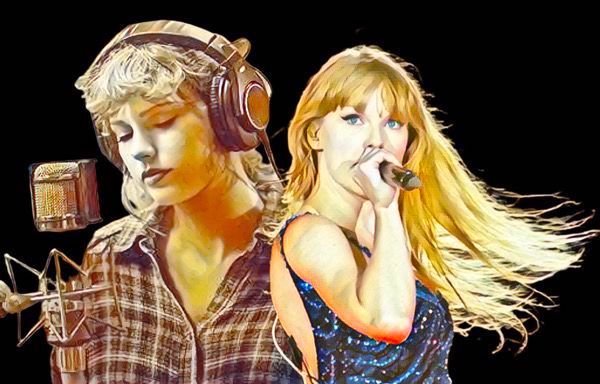
Jake Gyllenhaal’s eternal red scarf
Jake Gyllenhaal had a brief relationship with Taylor Swift in 2010. More than 15 years later, people are still discussing what happened to the famous red scarf from All Too Well, one of the singer’s finest and most celebrated compositions.
The song was originally released in 2012 on the album Red. In 2021, when Taylor rerecorded the album, she presented a ten-minute version of the song, accompanied by a short film she directed, starring Sadie Sink and Dylan O’Brien.
Taylor has never explicitly confirmed that Jake was the subject of the song, but the association is so firmly established among her fans that it has virtually become part of popular culture. Even Maggie Gyllenhaal, the actor’s sister, has had to publicly answer questions about the scarf, saying she had no idea what people were talking about.
It would be an almost comical situation were it not for the proportions it has acquired.
The rerecording triggered a renewed wave of hostility toward Jake, more than a decade after the relationship ended. Their age difference, the alleged circumstances of their breakup, the song’s narrative elements, and the visual choices in the short film were all subjected to a kind of collective trial.
We do not know exactly what happened between Taylor and Jake. What we know is an artistic interpretation, presented from a perspective that inspired enormous emotional identification.
The actor himself, in a 2022 interview with Esquire, acknowledged artists’ right to draw inspiration from their personal experiences but raised a question that I find far more relevant than much of what we encounter in the Vanity Fair article: a celebrity’s responsibility when their admirers become aggressive on their behalf.
Jake does not have to have been an exemplary boyfriend for that question to be legitimate. We do not even have to like him.
Taylor has every right to transform the experience of a broken heart into a beautiful song. But the other person involved has the right not to remain eternally imprisoned in the role assigned to them in that narrative.
The relationship ended. The public punishment, apparently, did not.
Regina George in sheep’s clothing
The comparison between Taylor Swift and Regina George, Rachel McAdams’s character in Mean Girls, appears in May Jeong’s article, but it is hardly new.
In September 2014, after Taylor revealed to Rolling Stone that Bad Blood had been written about a rival in the music industry, Katy Perry posted a message on what was then Twitter warning people about a Regina George in sheep’s clothing.
The rivalry reportedly originated in a professional dispute involving three dancers who left Taylor’s tour to work with Katy. A professional disagreement acquired the dimensions of a personal betrayal.
The music video for Bad Blood, released in 2015, brought together a veritable army of Taylor’s famous friends. The symbolism was fairly obvious: the betrayed protagonist, surrounded by powerful allies, preparing her revenge.
Katy attempted to respond artistically with Swish Swish in 2017, but she ultimately took the public initiative in seeking reconciliation. She sent Taylor an olive branch accompanied by an apology in 2018 and, the following year, appeared in the video for You Need to Calm Down, in which the two publicly made peace.
I do not know whether we can say Katy acknowledged defeat, but it is interesting to observe that even the public resolution of that conflict was ultimately incorporated into Taylor’s artistic output.
Even more interesting is remembering who created Regina George: Tina Fey.
In 2013, while hosting the Golden Globes, Tina Fey and Amy Poehler made a joke about Taylor’s eventful romantic life, suggesting that the singer stay away from Michael J. Fox’s son and spend some time focusing on herself.
Taylor did not find it funny. In an interview, ironically enough, with Vanity Fair itself, she criticized the sexist treatment she received for writing about her relationships and invoked a saying about there being a special place in hell for women who do not help other women.
There was, of course, a legitimate argument in her criticism of the double standard applied to men’s and women’s romantic lives. Male songwriters draw upon their romantic experiences without necessarily being subjected to the same kind of judgment.
But since when does female solidarity mean being unable to criticize, satirize, or disagree with another woman?
It is a discussion May Jeong attempts to revisit when she suggests that Taylor has transformed individual criticism into collective attacks against women. It is a relevant question, particularly when we consider that feminism should not function as a mechanism of personal immunity.
Disagreeing with Taylor Swift is not necessarily misogyny. Just as criticizing May Jeong’s work is not necessarily an expression of misogyny.
When the victim is more powerful than the villain
Perhaps Vanity Fair’s greatest missed opportunity was investigating the transformation of vulnerability into power.
A teenager who feels rejected and writes a song about it is working through an emotional experience. A billionaire who transforms a similar experience into a composition capable of mobilizing millions of people possesses an entirely different degree of power.
The feeling may remain the same. The imbalance of power does not.
The subjective position of victimhood does not necessarily disappear when someone acquires objective power. And Taylor has built a relationship with her audience in which her victories can take on the meaning of collective reparation.
Who has never been rejected? Who has never wished an ex-partner would regret leaving? Who has never fantasized about triumphing in front of those who failed to recognize their worth?
Taylor offers that experience through music. Her victory is also, symbolically, the victory of everyone who identifies with her narratives. In attacking Jake Gyllenhaal, a fan may be projecting onto him their own experiences of rejection, their own romantic frustrations.
The problem does not lie in the fantasy, which is entirely human, but in the possibility of turning real people into permanent targets of that collective reparation.
Taylor does not necessarily need to explicitly encourage her fans to attack anyone. The culture of Easter eggs, character identification, and lyrical investigation has created a dynamic that can operate independently of any direct instruction from the singer.
It is a kind of outsourced retaliation, even if it is not always deliberately encouraged by her.
And we know Taylor is aware of this dynamic. In 2023, ahead of the rerelease of Speak Now, she publicly asked her fans not to attack people online whom they believed she had written songs about at the age of 19. The statement preceded a performance of Dear John, a song widely associated with John Mayer.
It is important to mention this episode so as not to reproduce the very selectivity we are questioning in Jeong’s article. Taylor has demonstrated that she can recognize the problem and attempt to moderate her admirers’ behavior.
But the question remains: what responsibility does an artist bear for the foreseeable consequences of a dynamic she helped establish, from which she benefits commercially, and over which she possesses considerable influence?
This is not about suggesting that Taylor should censor her artistic output to protect former boyfriends or rivals. It is about recognizing that her current position in the cultural industry is vastly different from the one she occupied when she first began writing about them.
The vulnerability of the protagonist coexists with the extraordinary power of her army.
That strikes me as a far more revealing contradiction than discovering that Taylor Swift owned three pairs of Ugg boots.

The article that became part of the narrative
There is also a broader question in May Jeong’s attempt to investigate Taylor Swift as a billionaire. Her article addresses the concentration of wealth, puts the value of her charitable donations into perspective, questions the extravagance of her wedding, and mentions the professional activities of one of her guests.
These are potentially relevant subjects, but they appear alongside accounts from former classmates, rivalries with other singers, and observations about The Star’s personality.
It is not entirely clear whether Jeong intended to expose a structure of power, deconstruct a public image, question the existence of billionaires, or simply demonstrate that Taylor Swift is not as pleasant as some people imagine.
Perhaps she intended to do all of those things. Nor do I consider the article entirely without merit. Bringing certain pieces of information together allows for a reinterpretation of Taylor’s trajectory, particularly regarding the strategic dimension of her rise, the selective construction of her autobiographical narrative, and the relationship between her emotional experiences and the power she has acquired. What we do not know is whether that was the effect the author intended or whether she envisioned a more significant revelation, capable of substantially changing our perception of the singer.
If the goal was to generate attention, she certainly succeeded. If it was to unmask Taylor Swift, the initial reaction suggests that the discussion has shifted toward a different subject: the article itself.
And there is an irony in that which is difficult to ignore. May Jeong criticizes a woman who allegedly has an extraordinary need to control her narrative, assign the roles of victims and villains, and mobilize public opinion around her version of events. To do so, she constructs a narrative in which she assigns her own roles of victim and villain, resorts to insinuations, establishes a moral hierarchy, and offers her audience a secret code to decipher.
Even the conclusion of the article, with its image of a falling blade and the ax of public opinion, suggests something closer to the anticipation of a public judgment than an effort to understand its subject. The journalist chose to hide the phrase Look What You Made Me Do in her article. Perhaps it would have been more interesting to investigate the very logic contained in that phrase: attributing responsibility for one’s own retaliation to someone else.
Taylor Swift does not need to be a fairy-tale princess for me to admire her talent. Nor does she need to be Regina George for me to acknowledge the contradictions of her public image. She can be generous and competitive, vulnerable and powerful, talented and privileged, ambitious and resentful. We are all, in varying proportions, made up of contradictions.
Humanizing Taylor Swift does not require unmasking her. It requires abandoning the expectation that she must be as extraordinarily good as she is extraordinarily successful.
In attempting to dismantle the singer’s mythology using precisely the mechanisms that made it so effective, May Jeong may have ended up offering Taylor exactly what her narrative has always known how to feed on: a new antagonist, a new conflict, and another opportunity to mobilize her fans.
After a year of investigation, Vanity Fair published an article that sought to explain Taylor Swift but may have inadvertently demonstrated why she is so powerful. And who knows? It may even have provided material for another song.
Descubra mais sobre
Assine para receber nossas notícias mais recentes por e-mail.

