
Warning: spoilers for “Orodruin,” the seventh episode of Season 3.
It took four years and three seasons to reach the moment that largely justifies The Lord of the Rings: The Rings of Power. Sauron (Charlie Vickers) finally forges the One Ring, the small object that, thousands of years later, will lead a Hobbit back to Mount Doom to destroy what we have now witnessed being created.
Curiously, although we know the Ring’s ultimate fate, its origins still leave considerable room for imagination. J.R.R. Tolkien established what Sauron did, where he did it, and why, but never described the precise mechanics of its creation. It was, therefore, a golden opportunity (no pun intended) for the Prime Video series’ writers. Naturally, they could not resist the temptation to introduce a few controversies into the mythology.
And who would have thought that, in 2026, we would be debating whether a Balrog should speak?
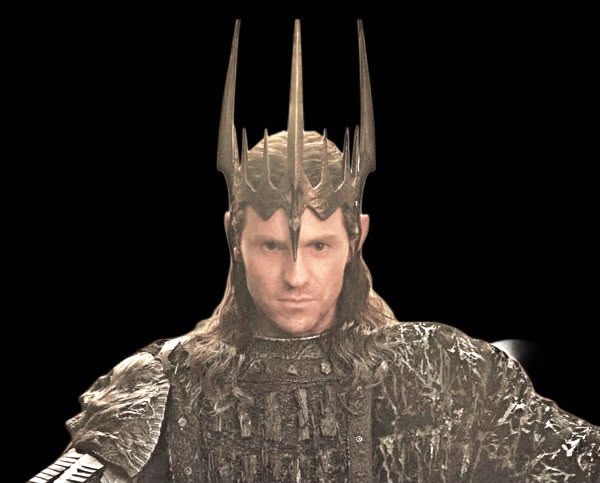
Mount Doom rejects Sauron
The first attempt to create the One Ring fails. The fires of Orodruin prove too powerful even for Sauron, who loses his accompanying Orcs and is forced to retreat.
Presenting a Sauron who still needs to discover how to accomplish his great project is an interesting decision because, despite knowing his supernatural nature, we often forget that he is not omnipotent. His ambition is precisely to overcome the limitations of his own power.
While the Dark Lord searches for a solution, however, his absence from Barad-dûr gives Galadriel (Morfydd Clark) an opportunity to rescue Celeborn (Jamie Campbell Bower).
Galadriel rescues Celeborn, but Theo remains in danger
With Theo’s (Tyroe Muhafidin) help, Galadriel enters Sauron’s fortress, where she discovers Celebrimbor’s (Charles Edwards) remains. Even in death, the Elf bears witness to the cruelty of the individual in whom he placed his trust.
Galadriel finds Celeborn and uses Nenya to heal him. Their reunion, however, does not erase the consequences of his psychological torture. Celeborn remains shaken by having been deceived by Sauron, who assumed his wife’s appearance to obtain information about the Three Rings.
If there was any doubt that the writers intended to explore the consequences of Galadriel’s connection with Sauron on her marriage, it disappears here. Jamie Campbell Bower’s presence brings an emotional dimension that had been missing from Galadriel’s journey.
Rather than a potential love triangle, what we have is the difficulty two people who love each other face in recovering their intimacy after traumatic experiences they did not share. Sauron exploits precisely that distance.
Before leaving with Celeborn to warn the Elves about a trap, Galadriel persuades Theo to attempt to destroy his Ring. He apparently succeeds, but once alone, discovers that the jewel has survived the molten metal and falls under its influence once again.
It is one of the most interesting ironies of this story: wanting to free oneself from a Ring’s power does not necessarily mean being able to do so. Gollum and, subsequently, Frodo will teach us quite a bit about that.
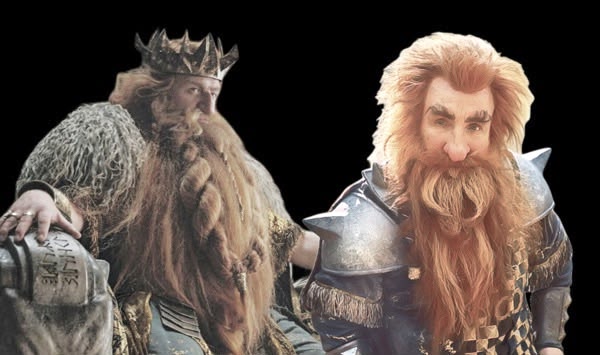
Durin and Disa are banished from Khazad-dûm
In Khazad-dûm, Thráin (Eddie Marsan) no longer conceals his submission to Sauron. The Seven Rings are his bargaining chip with the Dark Lord, who also demands access to the kingdom’s depths.
Narvi (Kevin Eldon), however, proves that he remains loyal to Durin (Owain Arthur). The family is eventually captured, and Thráin discovers that the Rings were concealed inside the pieces of a board game.
Durin, Disa (Sophia Nomvete), and their children are banished, setting out toward Rivendell. What Thráin does not know is that young Gerda (Amber Mendez-Martin) has kept one of the pieces, preserving one of the Seven Rings.
What makes Durin and Disa’s story particularly interesting is that they represent one of the series’ strongest relationships. Disa is the person capable of reminding Durin who he is when power threatens to make him forget.
This entire family struggle for the throne is an invention of the series. In Tolkien, the Dwarves’ resistance to Sauron’s domination is associated with their very nature. The Rings intensify their greed and desire for wealth but cannot enslave them in the same way they enslave Men.
Míriel marries Pharazôn
In Númenor, Tar-Míriel (Cynthia Addai-Robinson) goes through with her marriage to Ar-Pharazôn (Trystan Gravelle), despite Elendil’s (Lloyd Owen) attempt to dissuade her.
The marriage allows the rival factions to unite militarily, with Elrond (Robert Aramayo) officiating the ceremony. The Númenórean fleet sets sail to confront Sauron, but Elendil does not share whatever optimism the alliance might inspire. As far as he is concerned, the island is already lost.
Here we have one of the most significant departures from Tolkien. In the Akallabêth, Pharazôn takes Míriel as his wife against her will and usurps the throne that rightfully belongs to her. The series turns their union into a political decision by the Queen, who sacrifices her personal happiness in the hope of preserving Númenor.
It is a change that grants the character greater agency but also alters the nature of Pharazôn’s violence in the original story.
For those familiar with Númenor’s fate, Míriel’s decision is particularly tragic. What she believes to be a solution to save her people is part of the path that will lead to the destruction of their civilization.
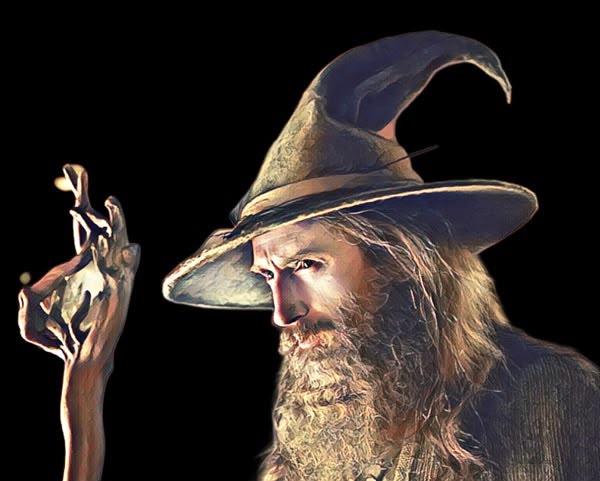
Gandalf tries to redeem Pallando
As the army of Rhûn approaches Mordor, Gandalf (Daniel Weyman) continues his efforts to redeem Pallando (Ciarán Hinds), who still considers an alliance with Sauron a strategic alternative.
The debate between the two Wizards raises one of the fundamental questions of Tolkien’s work: is it possible to fight evil using the same instruments as the enemy we wish to defeat?
It is precisely the trap that the One Ring will represent for characters such as Boromir and Saruman in the Third Age. The conviction that one can master Sauron’s power without being mastered by it is itself a manifestation of temptation.
Gandalf’s presence at this point in history remains one of the adaptation’s major chronological changes. According to Tolkien’s best-known chronology, Gandalf arrives in Middle-earth as one of the Istari only in the Third Age, although later writings offer different possibilities for the arrival of the Blue Wizards.
The talking Balrog
Sauron descends into the depths of Khazad-dûm to consult the Balrog, now voiced by Simon Pegg. The creature displays no reverence for Morgoth’s former servant. On the contrary, it despises his pretensions.
Sauron needs to learn how to withstand the fires of Orodruin and promises to interfere with the fate of the Dwarves in exchange for the Balrog’s assistance.
Both belong to the same order of spiritual beings, the Maiar, although they assumed different forms and roles in Morgoth’s service. The possibility of communication between them is therefore not necessarily incompatible with Tolkien’s cosmology. What does not exist in the books is this encounter, much less the Balrog’s involvement in the creation of the One Ring.
It is also worth remembering that, in the original chronology, the Balrog of Moria remains hidden until the year 1980 of the Third Age, when it kills Durin VI. The series has brought its awakening forward by thousands of years.
The problem with certain creative liberties is not simply that they contradict Tolkien. It is whether these changes are dramatically necessary. Did we really need to turn the Balrog into something of a mentor to Sauron?

Finally, one Ring to rule them all
Sauron returns to Mount Doom, this time alone. The creation of the Ring involves heat, vibrations, metal, and the Dark Lord’s own blood. Even Fëanor’s hammer is discarded into the flames.
Pouring his essence into the jewel nearly destroys his physical form. When the Ring reaches his finger, Sauron regains his strength.
The musical dimension of its creation is particularly relevant to Tolkien’s universe. After all, Arda itself originated in the Music of the Ainur, and the use of vibrations to represent magic establishes a visual connection with that mythology.
Patrick McKay revealed to TV Insider that the sequence required approximately a year of post-production, in addition to physically exhausting work from Charlie Vickers.
The most fascinating aspect of the One Ring’s creation, however, remains the one established by Tolkien: to increase his power, Sauron must invest a considerable part of himself in something that exists outside him.
In attempting to become invulnerable, he creates his greatest vulnerability.
It is a wonderful paradox that explains why the story of the One Ring remains so powerful. The obsession with absolute control ultimately produces absolute dependence.
The Elves realize what has happened
Gil-galad (Benjamin Walker), Círdan (Ben Daniels), and Galadriel hear Sauron and realize that their own Rings have been compromised. All three remove their jewels.
This is one of the moments most faithful to the essence of the original story. The Elves immediately understand that they have been betrayed and that the power of the Three can no longer be safely used while Sauron possesses the One.
In Tolkien’s chronology, the One Ring is forged around the year 1600 of the Second Age. The war between Sauron and the Elves begins approximately a century later. The series, as we know, compresses thousands of years of events to allow characters from different periods to coexist.
The greatest challenge facing The Rings of Power has always been balancing the visual grandeur of its production with the philosophical depth of the work it adapts. Perhaps no scene better represents that challenge than the creation of the One Ring.
It is not merely a jewel. It is the embodiment of Sauron’s inability to accept that other creatures possess a will of their own. It is the transformation of his ambition into a prison from which not even he will be able to escape.
Now, finally, we have The Lord of the Rings.
Descubra mais sobre
Assine para receber nossas notícias mais recentes por e-mail.

