
Warning: spoilers for “The Doom of Men,” the eighth episode of Season 3.
After so much investment in the creation of the One Ring, who would have thought that we would end the third season of The Lord of the Rings: The Rings of Power with Sauron (Charlie Vickers) voluntarily removing the jewel from his finger and kneeling before a mortal? For those familiar with J.R.R. Tolkien’s work, it was precisely what we expected, although perhaps not at this particular point in the narrative.
Curiously, a series that has taken so many liberties with the original mythology should end its season by respecting one of the most important events of the Second Age. Once again, the problem lies in the path chosen to get there.
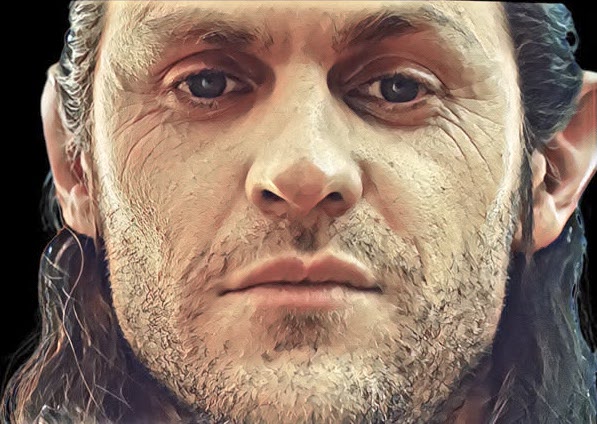
We spent eight episodes preparing for a great battle, only to discover, when the confrontation finally arrives, that the war Sauron is truly interested in will be fought far from the battlefield. And let’s face it: rarely has Charlie Vickers been as effective in conveying the essence of his character as he is with that final smile.
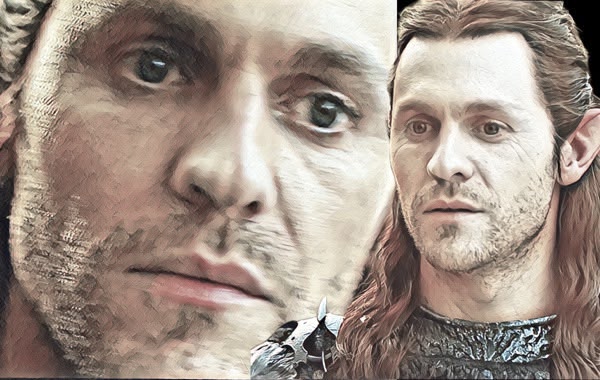
Pharazôn wants to defeat a god
Ar-Pharazôn’s (Trystan Gravelle) fleet arrives at Umbar. Elrond (Robert Aramayo) advises caution, but the King of Númenor has not crossed the sea to retreat.
Galadriel (Morfydd Clark) and Celeborn (Jamie Campbell Bower) reach their allies, bringing news of Arondir’s death and information about the enemy’s military superiority.
Pharazôn begins to understand the magnitude of the challenge. Trystan Gravelle’s performance is particularly interesting because, however arrogant his character may be, he is no coward. And it is precisely this combination of courage, ambition, and vanity that makes him so vulnerable to Sauron.
Pharazôn does not simply want to win a war. He wants to secure a place in history above every man who came before him.
And Sauron will know how to exploit that.
The last temptation of Gandalf
In Mordor, Gandalf (Daniel Weyman) is presented to Sauron by Khamûl (Zubin Varla). The Dark Lord attempts to seduce the Wizard with the prospect of using his power to protect Middle-earth, offering him a Ring.
It is one of Sauron’s most interesting characteristics: he rarely presents evil as evil. His specialty is offering a moral justification for submission.
Gandalf rejects the proposal, but Sauron persists, even assuming the appearance of Nori (Markella Kavenagh). Just as he did with Celeborn by impersonating Galadriel, he attempts to turn his victim’s affection into an instrument of manipulation.
Gandalf sees through the deception and remains faithful to his mission.
The sequence takes us directly to the Third Age, when Gandalf will refuse to accept the One Ring offered to him by Frodo. The Wizard knows that his good intentions would not be enough to protect him from corruption.
In Tolkien, Gandalf’s true wisdom lies precisely in recognizing the limits of his own power. It is no coincidence that he is one of the most important characters in a mythology so deeply concerned with the dangers of ambition.
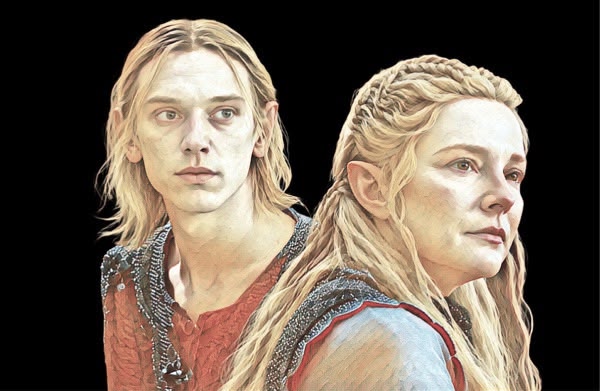
Galadriel and Celeborn: finally, the Lord and Lady of Lórien
If there is one thing the third season has accomplished, it is turning Celeborn’s seemingly inexplicable absence during the first two seasons into an opportunity for Galadriel’s character development.
The approaching battle forces them to confront the fear that they have permanently lost the happiness they knew before their separation. Elrond speaks with Galadriel, while Gil-galad (Benjamin Walker) helps Celeborn reconsider the future of his marriage. When they appear together again, they are recognized as the Lord and Lady of Lórien. Finally!
I must confess that Celeborn’s presence offers a far more interesting alternative to the writers’ obsession with the supposed romantic tension between Galadriel and Sauron. Not because Galadriel needs a husband to justify her journey, but because her relationship with Celeborn allows us to discover a dimension of the character that the series practically ignored for two seasons.
The warrior we met in 2022 is beginning to resemble the figure Cate Blanchett immortalized on screen: someone whose authority does not depend exclusively on her ability to wield a sword.
It is also a reminder that growing older and wiser does not necessarily mean recovering who we once were. Galadriel and Celeborn must build a relationship that accommodates the people they have become after everything they have experienced.
Elrond and the true meaning of mortality
One of the series’ best contributions to Tolkien’s mythology is its exploration of Elrond’s relationship with Númenor.
Confronted with the soldiers’ fear, Elrond invokes the memory of his brother, Elros, the island’s founder and first king. The two brothers were allowed to choose their destinies: Elrond remained among the Elves, while Elros chose the mortality of Men. It is a story we know from the books, but its emotional dimension gains strength through Robert Aramayo’s performance.
For Tolkien, death was not originally a curse imposed upon Men. It was a gift from Ilúvatar, allowing them to leave the circles of the world, unlike the Elves, whose existence remained bound to Arda. The problem was that Men came to fear what they did not understand.
Númenor, despite its extraordinary longevity, became progressively obsessed with immortality. The more powerful the civilization became, the less willing its rulers were to accept their own mortality.
And it is precisely within this contradiction that we find the key to understanding the episode’s title.
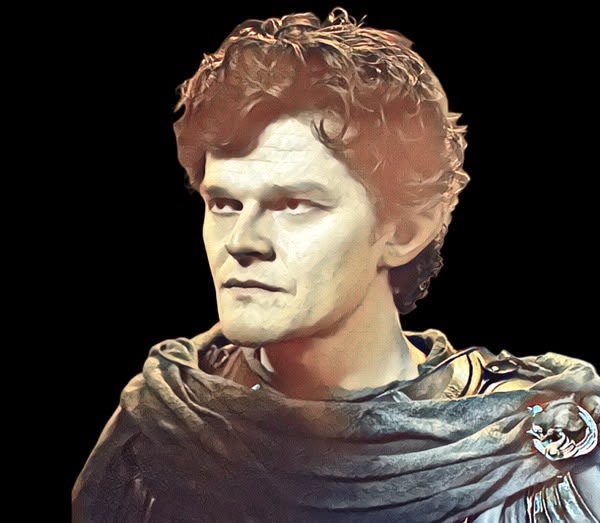
The redemption and death of Pallando
Sauron offers Pallando (Ciarán Hinds) one of the Nine Rings, promising him a position of extraordinary power. Gandalf, however, manages to remove the jewel and regain the other Wizard’s trust.
Together, they confront Khamûl, who mortally wounds Pallando before being thrown from the tower. The Blue Wizard’s death unleashes a manifestation of light that reaches his followers and contributes to the withdrawal of Rhûn’s forces.
What interests me about this resolution is the distinction Gandalf establishes between fighting evil and inspiring good. The Istari were not sent to Middle-earth to replace Sauron as rulers. Their mission was to assist the free peoples without subjecting them to their own will.
Pallando’s downfall, therefore, lies not simply in choosing the wrong side, but in mistaking his mission for authorization to exercise power over others. His redemption becomes possible when he recognizes that difference.
As far as Tolkien is concerned, however, we are in territory almost entirely invented by the writers. Pallando is one of the Blue Wizards mentioned by the author, but his fate remains uncertain across different versions of the mythology. There is no account of this alliance with Sauron, nor of his death in Barad-dûr.
Khamûl, meanwhile, is one of the few Nazgûl about whom Tolkien left individualized information. We know that he will play an important role in the search for the One Ring during the Third Age. It would therefore be premature to consider his journey over.
Tom Bombadil and another Ring mystery
Rory Kinnear returns as Tom Bombadil, who receives the Ring previously worn by Pallando from Gandalf and apparently makes it disappear. Well, there is another question for Tolkien fans to debate over the next two years.
In the books, Tom Bombadil is one of Middle-earth’s most enigmatic figures. The One Ring has no power over him, and Tom manages to make it temporarily disappear when Frodo visits his home. That, however, does not mean he is capable of destroying a Ring of Power. The distinction matters because, if Tom could simply eliminate these jewels, much of the story of The Lord of the Rings would lose its reason for existing.
Furthermore, we still need to arrive at the Nine Ringwraiths. The disappearance of one of the jewels intended for Men raises a question that the writers will have to resolve in subsequent seasons. For now, we do not know whether the Ring has been destroyed, concealed, or simply taken out of circulation.
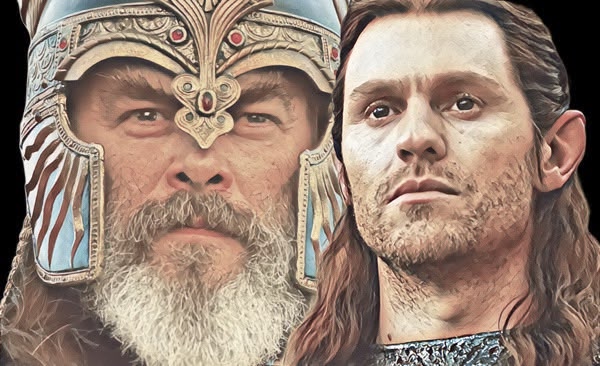
Sauron surrenders to Pharazôn
The withdrawal of the Eastern forces changes the military balance. Pharazôn challenges Sauron, claiming supremacy over Men for Númenor. And the Dark Lord, who has only just created the instrument intended to rule all the other Rings, decides to remove it.
Sauron presents himself before Pharazôn and kneels. The King and his soldiers celebrate, while the Elves realize that there is something profoundly wrong with this victory. Sauron’s smile closes the season.
Charlie Vickers understands perfectly that the character is more frightening when he does not need to demonstrate his strength. Sauron’s intelligence lies in his ability to recognize his opponents’ deepest desires and transform them into instruments of destruction.
With Celebrimbor, it was the desire to create something extraordinary. With Galadriel, it was the possibility of repairing the evils of Middle-earth. With Pharazôn, it will be the promise of overcoming the limitations of the human condition.
The King of Númenor believes he has conquered Sauron when, in reality, he has just offered him access to the heart of his civilization.
What did Tolkien write about Sauron’s surrender?
In the original chronology, Sauron forges the One Ring around the year 1600 of the Second Age. His surrender to Ar-Pharazôn takes place only in 3262, more than 1,600 years later. The series’ chronological compression therefore reaches one of its most remarkable examples here.
In Tolkien, Pharazôn lands at Umbar with an army so powerful that Sauron realizes he cannot defeat it militarily. The Dark Lord allows himself to be taken to Númenor as a prisoner, where he quickly earns the King’s trust and becomes his adviser.
From that point onward, he transforms the fear of death into a political and religious instrument. Sauron encourages the worship of Morgoth, the persecution of the Faithful, and ultimately convinces Pharazôn that the Númenóreans could conquer immortality by invading the Undying Lands.
The result will be the destruction of Númenor, recounted by Tolkien in the Akallabêth, one of the most fascinating sections of The Silmarillion. The series has not reached that point yet, but Charlie Vickers’ final look practically announces the next chapter.
A season that ends where another should begin?
I have mixed feelings about “The Doom of Men.” Sauron’s surrender is entirely consistent with Tolkien and, dramatically, offers an excellent starting point for the fourth season. But it is difficult to ignore the imbalance of an episode that devotes so much time to Gandalf and Pallando after spending weeks building anticipation for a confrontation between Númenor and Mordor.
We did not necessarily need another spectacular battle. Tolkien never reduced his mythology to warfare, and it would be unfair to demand from the adaptation precisely what so often impoverishes major fantasy productions: the replacement of dramatic conflict with visual spectacle.
The problem is that the series invested in the anticipation of that spectacle. When it decided to abandon it, it needed to offer an emotional resolution proportional to that investment.
The third season had moments far superior to those of its predecessors. Charlie Vickers remains its greatest asset, Robert Aramayo continues to discover new depths in Elrond, and Jamie Campbell Bower finally allows Galadriel to exist beyond her obsession with Sauron.
Now, with the fourth season confirmed, we arrive at what may be the most mature story of the entire Second Age: the destruction of a civilization that possessed practically everything but could not accept that there was something it could never possess: Eternity.
Pharazôn believes he has defeated a god. Sauron knows he has found a man who wishes to become one. And that is why he smiles.
Descubra mais sobre
Assine para receber nossas notícias mais recentes por e-mail.

