
It is difficult to explain to younger generations what Rob Lowe represented in the 1980s. Those who know him from Parks and Recreation, 9-1-1: Lone Star, or even The West Wing probably have a very different perception of the man who, for many women of my generation, was simply the most handsome in the world.
The blue eyes, dark hair, virtually perfect features, and that smile combining innocence and mischief made Rob Lowe a phenomenon. And we are talking about an era when magazines, posters and films fuelled our fantasies.
For a while, Lowe seemed destined to occupy the position Tom Cruise would eventually claim. But before turning 30, he found himself at the centre of one of Hollywood’s most notorious sex scandals, involving a 16-year-old girl and a video camera.
Nearly four decades later, at 62, he revisits his career in Rob Lowe: The Outsider, a documentary directed by Chris Smith, available on Netflix since November 24. Through archival footage, personal recordings,s and interviews with family and friends, including Demi Moore and Gwyneth Paltrow, the production revisits a story of fame, excess, addiction, and reinvention.
But are we once again watching a press release disguised as a documentary?
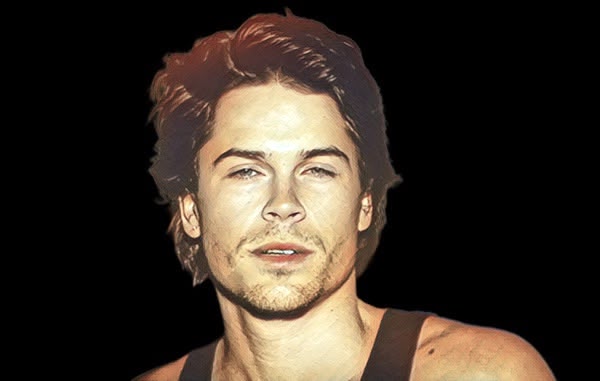
When Rob Lowe Was the Most Handsome Man in the World
In 1983, Francis Ford Coppola assembled an extraordinary cast of young actors to adapt S. E. Hinton’s novel The Outsiders. Patrick Swayze, Matt Dillon, Ralph Macchio, Emilio Estevez, C. Thomas Howell, Tom Cruise and Rob Lowe: virtually an entire generation of Hollywood in a single film.
Lowe played Sodapop Curtis, the handsome and affectionate brother in the central family. One of the most bitter memories he shares in the documentary is discovering, at the premiere itself, that much of his footage had been cut.
But his beauty was difficult to ignore. Along came Class, Oxford Blues, The Hotel New Hampshire, St. Elmo’s Fire and About Last Night, opposite Demi Moore.
In 1985, journalist David Blum published an article in New York magazine that would label a group of young actors the Brat Pack, an unflattering reference to Frank Sinatra’s Rat Pack.
For audiences, those actors represented our generation. Within the industry, the nickname came to suggest an association between youth, privilege, and irresponsibility.
It is interesting that, more than 40 years later, Lowe still expresses resentment towards the article. Andrew McCarthy had already explored the issue in his 2024 documentary Brats. The members of the group wanted to be recognised individually as serious actors, while Hollywood discovered the commercial value of selling them as a generational phenomenon.
Stories From a Hollywood That No Longer Exists
The most entertaining moments of The Outsider revisit a pre-internet Hollywood. Lowe recalls developing an interest in a girl named Jennifer as a teenager, only to discover that her father was none other than Cary Grant.
He also revisits his tumultuous relationship with Melissa Gilbert, best known as Laura Ingalls in Little House on the Prairie, and recounts a conversation with Warren Beatty that led him to suspect the actor had been involved with his then-girlfriend. These are, naturally, Lowe’s recollections and interpretations.
There was also his romance with Princess Stéphanie of Monaco and countless stories of parties and romantic conquests.
To understand the Rob Lowe phenomenon, we need to revisit the cultural environment in which he emerged. Male sexual conquests were celebrated as evidence of virility, the excesses of stars were treated as entertaining anecdotes, and the privileges afforded by fame were rarely discussed in terms of power imbalances.
Until a camera changed everything.
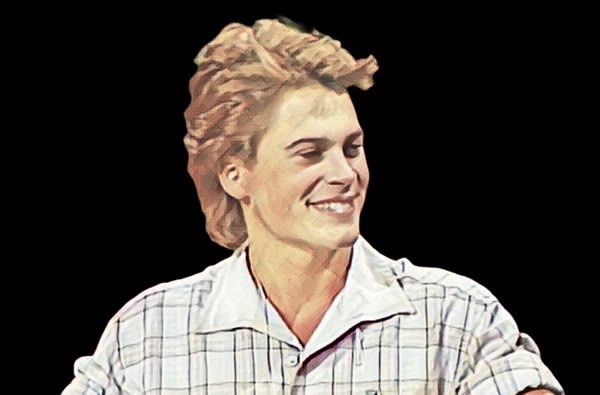
The Scandal That Nearly Ended His Career
In July 1988, at 24, Rob Lowe was in Atlanta attending the Democratic National Convention. While there, he made an intimate recording involving two young women, one of whom was just 16. The recording began circulating publicly in 1989.
Lowe maintained that he had been unaware of the teenager’s age, having met her in an establishment intended for people aged 21 and over. Her mother filed a civil lawsuit that ended in an out-of-court settlement. The actor also reached an agreement with Georgia authorities that included community service. He was not criminally convicted.
In the documentary, Lowe claims that the recording was taken from his possession without permission and that he received financial demands to prevent its release. His brother, Chad, recalls the actor’s isolation and the family’s concern about his emotional state.
The scandal preceded the intimate recordings involving Paris Hilton and Kim Kardashian by more than a decade, but there is a fundamental difference: a minor was involved.
In 1989, much of the coverage focused on the destruction of Rob Lowe’s public image. Today, it would be much more difficult to ignore questions surrounding the teenager’s age, consent, the responsibility of the adult, and the power imbalance between those involved.
Acknowledging that Lowe himself was exposed through the unauthorised circulation of the recording does not eliminate those questions.
And nearly four decades later, we are still predominantly hearing the story of the man whose career was threatened, rather than that of the teenager whose privacy was also violated.
The documentary does not hide the scandal, but addressing it does not necessarily mean confronting it.
The Reinvention of Rob Lowe
As if the sex scandal were not enough, 1989 also marked one of the most disastrous performances in Academy Awards history: Rob Lowe singing alongside an actress dressed as Snow White in a musical number conceived by producer Allan Carr.
In a remarkably short time, the object of desire of an entire generation had become the target of jokes and questions about his conduct.
Lowe sought treatment for addiction in 1990 and has been sober ever since. He married make-up artist Sheryl Berkoff in 1991, had two sons and found an opportunity to rebuild his career through comedy.
In Saturday Night Live, Wayne’s World and the Austin Powers franchise, he discovered that his impeccable appearance could work particularly well in the service of humour. The man who was too handsome to be taken entirely seriously discovered the advantage of not taking himself too seriously.
In 1999, Aaron Sorkin restored his dramatic credibility by casting him as Sam Seaborn in The West Wing. Then came Brothers & Sisters, Parks and Recreation, The Grinder, 9-1-1: Lone Star and Unstable, alongside his son John Owen.
It was not the career he seemed destined to have in 1983, but it was one that few members of that generation managed to sustain for so long.
And it would be unfair not to acknowledge his personal and professional achievements.

Was Rob Lowe Really an Outsider?
The documentary’s title references Coppola’s film, but also suggests that Lowe never felt entirely integrated into the world he inhabited.
It is a curious interpretation. We are talking about a man who, from a very young age, had access to some of the most important figures in the film industry, moved within privileged circles, dated celebrities and members of royalty, and received successive professional opportunities, even after a scandal that could have ended his career.
Privilege does not immunise anyone against suffering, insecurity or addiction. But there is a difference between feeling like an outsider and actually occupying a marginal position within a system.
Chris Smith, who demonstrated in Fyre and Tiger King his ability to investigate the contradictions between public image and reality, could have explored that distinction more thoroughly.
International critical reception has been mixed. RogerEbert.com observes that those familiar with Lowe’s career will find relatively little new information, while What’s on Netflix, which awarded the production two and a half stars out of five, regrets the lack of deeper introspection.
The entertainment press, on the other hand, found abundant material for headlines in the stories about Melissa Gilbert, Warren Beatty, Tom Cruise and the 1988 recording.
Why Rob Lowe, and Why Now?
The most immediate answer lies in Netflix’s commercial calendar.
On December 2, the platform releases In a Holidaze, a Christmas comedy featuring Lowe. The following day, the video version of his podcast, Literally! With Rob Lowe, premieres. The actor is also preparing his third memoir.
A documentary, a Christmas film and a podcast are arriving on the same platform within ten days. We cannot claim that this was the production’s sole motivation, but it would be naive to disregard the promotional context.
There is also the appeal of nostalgia. The young stars of the 1980s are now in their 60s, and the audiences who grew up following their careers have matured alongside them. We revisit those actors because, in some way, we are revisiting ourselves.
But what troubles me about this growing trend of celebrity documentaries is the disappearance of the distance between the subject of an investigation and its narrator.
Instead of being investigated, the celebrity is interviewed. Friends replace independent sources. Personal archives replace competing accounts. And intimacy is marketed as synonymous with authenticity.
Access is not independence. Confession is not necessarily self-criticism. Vulnerability is not necessarily transparency.
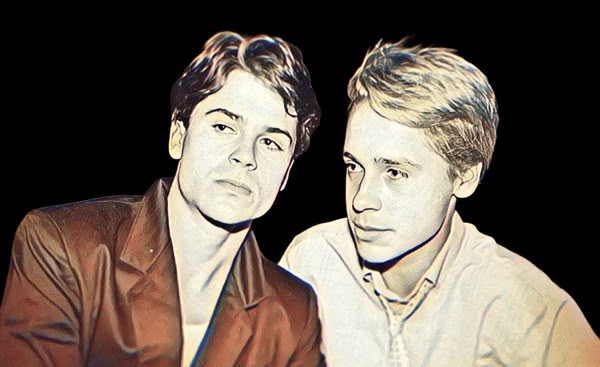
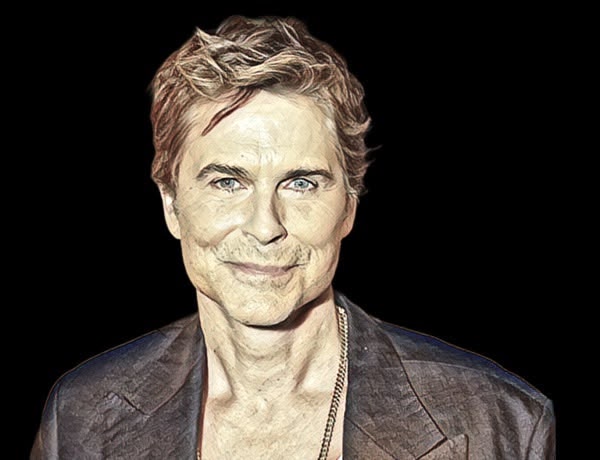
Rob Lowe has already published two memoirs. We are hardly dealing with a man who has never had the opportunity to tell his side of the story.
In 1989, a recording that escaped his control nearly destroyed his career. In 2026, it is through carefully selected recordings that he once again tells his own story.
And as he painfully learnt from Francis Ford Coppola in 1983, what is left out of the final cut can be just as important as what we decide to show.
We, as viewers, should be equally interested in what was left on the cutting-room floor.
Descubra mais sobre
Assine para receber nossas notícias mais recentes por e-mail.

