
Ever since Apple launched Stick in 2025, comparisons with Ted Lasso have been inevitable. After all, here was another sports comedy starring a charismatic, seemingly optimistic but emotionally fragile man who found an opportunity to rebuild his life through his relationships with a rather eclectic group of people. We traded football for golf, Jason Sudeikis for Owen Wilson, but the formula seemed essentially the same.
In its second season, however, Stick is beginning to find its own identity. And, interestingly enough, it is doing so by dismantling part of the narrative structure that sustained the first.
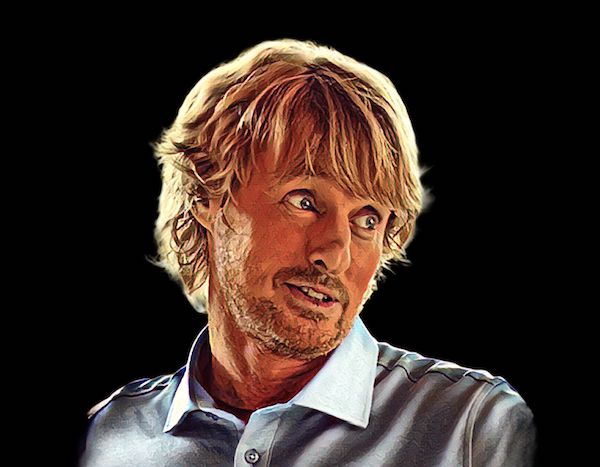
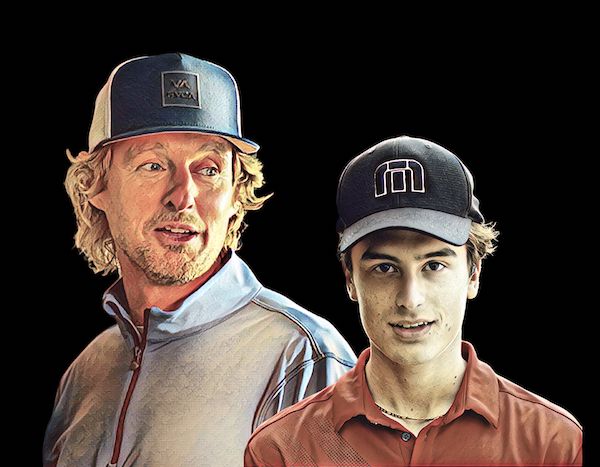
With five of its ten episodes already available on Apple TV, the series created by Jason Keller is introducing an interesting reversal. While Santi Wheeler (Peter Dager) attempts to establish himself in professional golf, Pryce Cahill (Owen Wilson) stops investing exclusively in the teenager’s future and starts investing in his own again. At 55, the golfer intends to accomplish a seemingly impossible feat: becoming the oldest player to win one of the sport’s major championships.
And as if returning the spotlight to Owen Wilson were not enough, the series has added Rhea Seehorn to its cast. It is difficult to imagine a more inspired combination.
Warning: spoilers for the first five episodes of Season 2.
When Helping Others Is a Way of Running Away From Yourself
In the first season, we met Pryce as a man who had lost virtually everything. His professional career had ended disastrously, his marriage had not survived the death of his four-year-old son, Jett, and his personal life seemed to be a succession of poor decisions.
Meeting Santi represented an opportunity for emotional repair. Pryce recognised an extraordinary talent in the teenager, but he also found an opportunity to experience a father-like relationship again.
What I always found interesting about that dynamic was how difficult it was to distinguish between Pryce’s genuine interest in Santi’s success and his need for that success to give his own existence some meaning. One does not necessarily exclude the other, but the emotional dependency that develops in relationships of this nature can become problematic for both parties.
Helping someone can be an extremely rewarding experience. It can also be a remarkably effective way of avoiding our own conflicts.
Pryce needed Santi to believe in him, but perhaps he needed even more to believe that he was indispensable to Santi.
The second season begins precisely when that position is threatened.
Is Santi Becoming Insufferable?
Well, yes. The teenager who initially needed to be convinced of his talent now seems convinced that he no longer needs the people who helped him develop it.
While Pryce considers his entry into the professional circuit premature, Santi is impatient to take advantage of the opportunities coming his way. Their disagreement drives them apart, and the young golfer’s professional debut does not go quite as he imagined.
Agents, sponsors, and commercial commitments begin to occupy the space previously reserved for the makeshift family that contributed so much to the charm of the first season.
In the fifth episode, “Go Time!”, Santi replaces Zero (Lilli Kay) with a professional caddie. It is not necessarily a bad decision, particularly since she has professional ambitions of her own, but he also fails to attend the presentation of Zero’s fashion collection because of commercial commitments.
Even Elena (Mariana Treviño), his mother and manager, begins to lose her influence over decisions concerning her son’s career. Jeremy questions her ability to manage Santi’s business affairs and essentially suggests that she return to being just his mother.
There is a considerable difference between developing autonomy and dismissing the people on whom we depended throughout our process of growing up.
Santi has every right to want to build a career independently of Pryce, just as he has every right to seek more experienced professionals to advise him. The problem lies in how he begins to treat people when they seemingly cease to be useful to his ambitions.
And the irony is that the teenager is beginning to display some of the very behaviours that contributed to undermining his mentor’s career.
Timothy Olyphant and the Deconstruction of the Rival
Another particularly welcome change is the expanded role of Timothy Olyphant, who has been promoted to series regular this season.
Clark Ross, who initially served as Pryce’s arrogant and successful counterpart, gains new dimensions when we discover that his life is not quite as well organised as it appeared. He, too, has made poor decisions, lost money through unsuccessful investments, and needs to reconsider his plans for the future.
It is Clark who encourages Pryce to return to professional golf, a proposition that ultimately transforms their relationship.
Male rivalry, particularly in sports narratives, tends to revolve around the need to establish who is better. But what happens when two men who have spent much of their lives comparing themselves to each other discover that neither is quite where he imagined he would be?
Maturity allows that comparison to take on different meanings. And Olyphant, who has an extraordinary ability to make arrogant characters seem simultaneously charming and ridiculous, finds an excellent scene partner in Owen Wilson.
The dynamic between Clark, Pryce and Mitts (Marc Maron) is one of the great strengths of the second season. Here are three men who need to reconsider their expectations about success, ageing, money and relationships, without the series necessarily losing its sense of humour.
Rhea Seehorn Is the Season’s Best Addition
After watching Rhea Seehorn for years in Better Call Saul and, more recently, in Pluribus, it is particularly enjoyable to see her in a production that allows her to explore a lighter and more romantic side.
She plays Amanda Lydecker, the daughter of Butch (Rex Linn), Pryce’s former coach. The two have known each other for decades and were romantically involved in 1995.
Amanda is an exceptionally competent coach and, unlike Santi, does not need to be convinced of Pryce’s talent. She knows him well enough to recognise his vulnerabilities, his avoidance mechanisms and his ability to use his charm to escape uncomfortable situations.
Initially, she is not particularly interested in coaching him. When she accepts the challenge, she establishes a dynamic that reverses the relationship we followed throughout the first season.
Now it is Pryce who must learn to listen, accept boundaries, tolerate frustration, and recognise that talent alone does not necessarily guarantee success.
But the best thing about Seehorn’s arrival is the chemistry between the two actors. There is something particularly refreshing about watching a love story between adults who share a history, professional experiences, disappointments and responsibilities. Hollywood frequently seems to forget that people over 50 are still capable of experiencing desire, insecurity, passion, and even that adolescent awkwardness of not knowing exactly what the other person is feeling.
In the fifth episode, when Butch asks his daughter whether she is still in love with Pryce, Amanda does not answer.
Does she need to?
The Boog: When We Are Our Own Worst Enemy
The most interesting aspect of the second season, however, is the opportunity to better understand Pryce’s self-destructive behaviour.
Amanda brings back an expression her father used to describe the golfer’s tendency to undermine his own performance: The Boog. Something interferes with his ability to sustain success precisely when circumstances begin to work in his favour.
It is what we commonly call self-sabotage, although the expression itself describes a behaviour without necessarily explaining its origins.
The fifth episode provides a particularly important piece of information.
In a flashback to 1981, we meet Pryce as a child and discover that his father exploited his golfing talent for financial gain. He would take the boy out of school to participate in golf games involving bets, even inventing deaths in the family to justify his absences.
The most revealing detail of that sequence is that Pryce wanted to stay at school. He was interested in his science class.
Until then, it was relatively easy to attribute much of the character’s self-destructive behaviour to Jett’s death. Losing a child is a devastating experience, and the first season established a connection between that grief and his inability to rebuild his life.
Now we discover that his conflicted relationship with success predates that tragedy.
And that raises a question: when did golf stop being something imposed on him by his father and become something he genuinely desired?

The Difficulty of Sustaining One’s Own Success
From a psychoanalytic perspective, it is interesting to consider that failure does not always stem simply from the fear of not being good enough. Under certain circumstances, success itself can represent a threat.
When a child receives recognition predominantly because of their performance, they may develop a rather ambivalent relationship with the very thing they do well. The talent that earns them attention and approval is also what subjects them to the expectations of others.
It would hardly be surprising, therefore, if Pryce experienced both pleasure and resistance in relation to golf.
Freud explored this phenomenon as early as 1916, in his essay Those Wrecked by Success, examining the apparent contradiction of individuals who develop psychological conflicts precisely when they achieve something they have long desired. Under certain circumstances, an achievement can mobilise unconscious feelings of guilt and conflicts that were less apparent while the goal remained out of reach.
In Pryce’s case, we might also consider self-sabotage a paradoxical attempt to regain control. If he is the one responsible for his own failure, at least he is not entirely exposed to the possibility of failing for reasons beyond his control.
We do not yet know whether the series intends to explore this issue further, but the revelation about his childhood adds a new dimension to his relationship with Santi.
Pryce was a child whose talent was commercially exploited by his father. Now he is watching a teenager being transformed into a commercial product managed by agents and sponsors.
Perhaps his resistance to Santi’s early entry into professional golf has far less to do with the sport than with his own personal history.
The challenge, naturally, is recognising that Santi is not him. Protecting the teenager from repeating his trajectory does not mean preventing him from forging his own.
Mitts and Elena: The Fear of Growing Older
While Pryce decides to challenge the expectations associated with ageing, Mitts seems prepared to sacrifice his present happiness because of a future suffering that has yet to materialise.
In love with Elena, he begins calculating the implications of their age difference. When he is 80, she will be only 62. What if, instead of being his partner, she ends up becoming his caregiver?
His concern is legitimate, but there is something contradictory about the way Mitts deals with it. In trying to protect Elena from a situation that may never happen, he effectively deprives her of the opportunity to decide what she wants for her own life.
It is Clark who encourages him to talk to the woman he loves rather than make the decision for her.
Once again, the series explores the difficulty of accepting that we cannot control every variable in an emotional relationship. And that, in trying to avoid every possibility of suffering, we may also deprive ourselves of the possibility of being happy.
Stick Is Finding Its Own Identity
I still think the comparisons with Ted Lasso are understandable, but they are becoming less relevant in this second season.
Ted needed to learn that he could not solve every problem faced by the people he loved. Pryce needs to discover who he is when he is not trying to fulfil his dreams through someone else.
The difference is significant.
Golf remains a setting in which relationships are formed, but it also becomes a space where family conflicts, parental expectations and the need for recognition are played out again.
While Santi is discovering what it means to be successful, Pryce is trying to understand why he has had such difficulty sustaining his own success.
And Owen Wilson, whose career has largely been built around characters who use humour and charm to navigate uncomfortable situations, is particularly effective as a man who is beginning to recognise the limitations of those very tools.
The presence of Rhea Seehorn, Timothy Olyphant’s expanded role and the greater narrative independence of the supporting characters are making Stick a more interesting series than it initially appeared to be.
You do not need to like golf to enjoy it. In fact, increasingly, golf seems to be the least of these characters’ problems.
Pryce’s greatest challenge is not proving that he can still play as well as he did two decades ago. It is discovering whether, for the first time, he is playing simply because he wants to.
And perhaps that is the greatest achievement we can aspire to in maturity: finally distinguishing what we genuinely desire from what we have been taught we should desire.
The second season of Stick is available on Apple TV, with new episodes released on Wednesdays through December 30.
Descubra mais sobre
Assine para receber nossas notícias mais recentes por e-mail.

