
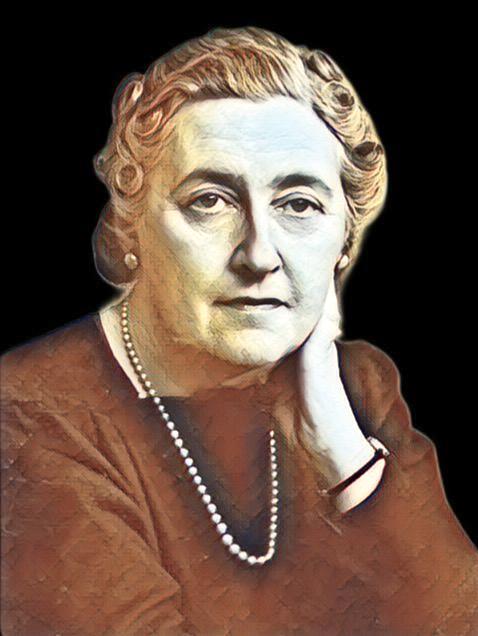
In December 1926, Agatha Christie, a writer who was beginning to gain international recognition for her ability to solve mysteries through fiction, became the subject of an enigma that remains without a definitive answer. For 11 days, she disappeared, mobilizing the police, the press, and thousands of people. When she was found in a hotel in Harrogate, England, she was presenting herself under another name and, according to the explanation offered at the time, was suffering from amnesia.
A hundred years later, we are still debating whether Agatha Christie genuinely lost her memory, intended to take revenge on her unfaithful husband, or experienced an emotional crisis that temporarily compromised her relationship with her own identity.
From a psychoanalytic perspective, however, perhaps there is a question that precedes all these others: what happens to us when the losses we experience threaten not only our emotional relationships but also what we recognize as part of ourselves?
The intention here is not to establish a retrospective diagnosis of the writer. We have no access to her subjective experience, her associations, or the elements necessary for a clinical assessment. But the circumstances of her disappearance offer an opportunity to reflect on grief, helplessness, defense mechanisms, and the complexity of our unconscious motivations.
What Do We Lose When We Lose Someone?
In 1926, Agatha Christie was experiencing a paradox. Professionally, she had just published The Murder of Roger Ackroyd, a novel that would revolutionize crime fiction. Personally, she was facing two significant losses: the death of her mother, with whom she had enjoyed a particularly close relationship, and the impending end of her marriage to Archibald Christie, who was in love with another woman.
Within a few months, Agatha lost two important emotional anchors. Although we frequently associate grief with death, the experience of loss is not restricted to someone’s physical absence. We can grieve the end of a relationship, the loss of a social position, an unrealized project, or even an image of the future we had constructed for ourselves.
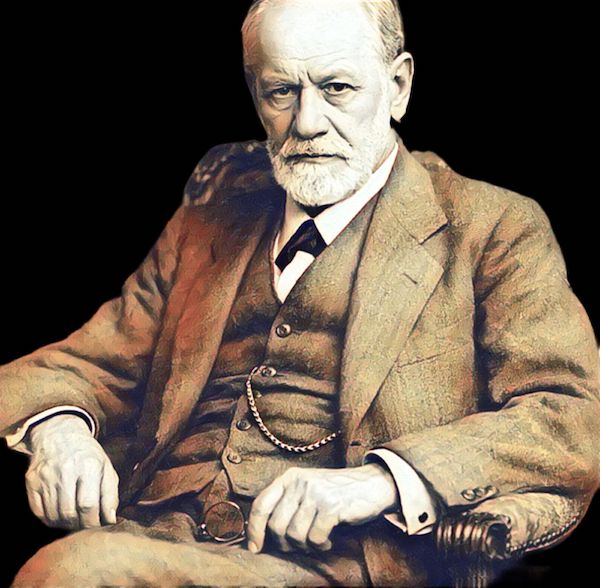
In Mourning and Melancholia, published in 1917, Sigmund Freud expands precisely this understanding. Mourning may result from the loss of a loved person, but also from the loss of something that occupied a significant place in our psychic life.
The work of mourning involves a process of acknowledging and working through absence. We do not simply lose someone. We also lose shared experiences, expectations, points of reference, and future possibilities associated with that relationship.
There is, therefore, a dimension of identity in our losses. Who are we when we no longer occupy a particular place in someone’s life? How do we reorganize our existence when a relationship that helped sustain our identity ceases to exist?
The death of her mother confronted Agatha with an irreversible absence. Her husband’s abandonment added another dimension to her suffering: the experience of no longer being chosen. These are distinct losses that may mobilize equally distinct conflicts. And, in the writer’s case, they occurred almost simultaneously.
When Losing Another Also Means Losing Ourselves
Freud distinguishes mourning from melancholia by examining, among other aspects, the subject’s relationship with the ego. Whereas in mourning it is the world that appears impoverished by the absence of the loved object, in melancholia this impoverishment affects the ego itself.
This does not mean that every experience of grief accompanied by feelings of diminished self-worth constitutes melancholia. But the distinction helps us understand why certain losses can so profoundly compromise our perception of ourselves.
From a psychoanalytic perspective, our emotional relationships are not established exclusively with people external to us. They also involve psychic investments, identifications, fantasies, and expectations.
The way we are recognized by others participates in the construction of what we recognize in ourselves. This is why the end of a romantic relationship can mobilize a narcissistic injury. Narcissism, in this context, should not be understood in the popular sense of vanity or egocentrism, but in its constitutive dimension within psychic life.
Being loved, desired, and recognized can help sustain our self-esteem. When that recognition is withdrawn, we may find ourselves confronted with questions that extend beyond the loss of the relationship: why am I no longer loved? What does the other person have that I do not? What does this rejection say about who I am?
We do not know whether Agatha asked herself these questions. But we do know that, at the very moment she needed to work through her mother’s death, she was also being confronted with her husband’s desire to build a life with another woman.
The person to whom she might have turned in the face of one loss was precisely the person whose absence she also needed to process.

Helplessness in the Face of What We Cannot Control
Interestingly, it was in the very year of Agatha Christie’s disappearance that Freud published Inhibitions, Symptoms and Anxiety, a work in which he develops important reflections on anxiety and helplessness.
The experience of helplessness occupies a fundamental place in psychoanalytic theory. From the beginning of life, we depend on others for our physical and psychic survival. Although acquiring autonomy modifies this dependence, it does not entirely eliminate our vulnerability.
Throughout life, certain situations may once again confront us with our inability to control what happens to us. We cannot prevent the death of those we love. We cannot determine another person’s desire. We cannot guarantee the permanence of a relationship simply because we have invested in it. And acknowledging these limitations is not always a straightforward process.
An experience may acquire a traumatic dimension when its intensity exceeds, at that particular moment, the psychic resources available to work through it. This depends not exclusively on the objective severity of events but also on the individual’s history, capacity for symbolization, and circumstances.
This is why there is no universal response to abandonment, death, or separation. What one person is able to work through may have a profoundly destabilizing effect on another. And the same person may respond very differently to similar losses at different moments in life.
Psychic suffering does not necessarily obey the logic through which we rationally evaluate events.
The Desire to Disappear
On the evening of December 3, 1926, Agatha Christie left her home. Her car was found abandoned the following morning. During the days she was missing, she stayed in a hotel, participated in social activities, and apparently retained much of her ability to interact with others. But she did not present herself as Agatha Christie. She used the name Teresa Neele, adopting the surname of the very woman with whom her husband was in love.
The possibility of dissociative amnesia accompanied by fugue has been considered by various scholars examining the episode. Dissociation can involve disruptions in the usual integration of memory, consciousness, identity, and emotional experience without necessarily compromising all of an individual’s other functions.
It is important to distinguish dissociation from psychosis and from the Freudian concept of repression. These are not equivalent phenomena, although they can be discussed, within different theoretical frameworks, in relation to the psyche’s responses to suffering.
We cannot establish whether Agatha genuinely experienced a dissociative episode. But this possibility allows us to reflect on something particularly interesting: the difference between wanting to cease to exist and wanting to cease to exist in the way we do at a particular moment.
The desire to disappear may symbolically express an attempt to interrupt a reality that has become unbearable. It may represent a fantasy of suspending responsibilities, expectations, conflicts, and the positions we occupy in other people’s lives.
How often, in moments of emotional exhaustion, does someone express the wish to disappear for a few days? To have no one to answer to, not to be found, not to have to explain what they are feeling?
This does not necessarily indicate a desire to die, although it is essential not to minimize that possibility when warning signs are present. Under certain circumstances, what may be at stake is the desire to interrupt a particular experience of oneself. Not necessarily to cease being, but to cease being in that particular way.

The Mystery of Assuming Another Woman’s Identity
One of the arguments frequently used to challenge the hypothesis of Agatha Christie’s amnesia is precisely her choice of the surname Neele. If she had lost her memory, how could she remember the name of her husband’s mistress?
The question presupposes a more linear conception of memory and psychic functioning than human experience actually reveals. A dissociative disturbance of memory does not necessarily involve the indiscriminate erasure of all autobiographical information. The choice of name, in turn, also allows for different interpretations.
From a psychoanalytic perspective, we might consider identification with the woman who occupied the position of the object of Archie’s desire. Not necessarily because Agatha wanted to be Nancy Neele, but because that woman represented an emotional position she was losing: that of being chosen. We might also consider ambivalence, rivalry, hostility, or the possibility of an indirect expression of marital conflict. And, naturally, we cannot rule out the possibility of a deliberate choice.
What is interesting is that these possibilities are not necessarily mutually exclusive. One of the fundamental concepts of psychoanalysis is overdetermination. A psychic manifestation may be associated with multiple processes, conflicts, and investments, both conscious and unconscious.
We can love and hate the same person. We can desire recognition and, simultaneously, wish to withdraw. We can want to provoke a reaction in someone without fully understanding why that reaction is so important to us.
Contradiction is not necessarily evidence of deception. It is part of the complexity of psychic life.
When What We Cannot Say Emerges Through Action
Another avenue for reflection lies in the relationship between words and actions.
Within the psychoanalytic tradition, particularly through the contributions of Jacques Lacan, we can distinguish acting out, which involves a dimension of address to the Other, from passage à l’acte, which is associated with an exit from the scene in which the subject finds themselves.
These are complex clinical concepts that cannot automatically be applied to every impulsive or seemingly inexplicable behavior. Agatha Christie’s disappearance, however, allows us to consider this tension between showing something and withdrawing from the scene.
She did indeed leave her family environment, distance herself from the relationships that organized her daily life, and begin presenting herself under another name. At the same time, her disappearance generated an extraordinary mobilization around her absence.
The woman who was no longer being chosen by her husband became, during those days, the woman everyone was looking for. It is a symbolically significant reversal. But recognizing its meaning is not the same as asserting that it was planned by the writer. If there was an element of address in that behavior, to whom was it directed? Her husband? Her family? The woman who would take her place? Someone from whom she expected recognition? We do not know.
What we can understand is that what we are unable to work through or express in words does not necessarily cease to manifest itself. It may find other forms of expression, including actions whose meaning is not entirely accessible to the individual performing them.
Our Need to Find Someone to Blame
Perhaps as interesting as Agatha Christie’s disappearance itself is the collective difficulty in accepting the absence of a definitive explanation.
Since 1926, the writer has been accused of manipulation, revenge, and opportunism. The hypothesis that she disappeared to promote her books gained traction even in the face of evidence that she was experiencing a period of intense emotional suffering.
It is curious how frequently we seek to establish a conscious intention behind behavior we cannot understand.
If Agatha planned an act of revenge, we have an organized story: a betrayed woman, an unfaithful husband, a deliberate action, and specific consequences. We may approve of her or condemn her, but we believe we have understood what happened.
The possibility that she herself did not fully understand her motivations is more uncomfortable.
Because it confronts us with one of the central questions of psychoanalysis: we are not entirely masters of our own psychic lives.
The existence of the unconscious implies recognizing that our actions are not determined exclusively by conscious will. This does not mean that we bear no responsibility for what we do, but it challenges the assumption that we always know why we do what we do.
It is also necessary to consider the historical and social dimensions of the reaction to her disappearance. A woman abandoned by her husband, grieving her mother’s death, and emotionally vulnerable was quickly suspected of manipulation.
Why should the possibility of genuine suffering exclude the existence of anger? Why would hostility necessarily invalidate the experience of helplessness? Why do we need to choose between a woman who suffers and a woman who feels resentment?
Psychic life accommodates simultaneously feelings that, rationally, we would prefer to keep separate.

The Possibility of Reconstruction
The subsequent course of Agatha Christie’s life demonstrates that those 11 days did not define the rest of her existence.
She divorced, resumed traveling, married again, established new relationships, and continued writing. Over the following decades, she produced some of her most important works and became one of the most widely read authors in history.
From a psychoanalytic perspective, artistic creation can be understood as a possible avenue for working through and sublimating psychic conflicts. Writing may offer a space for the representation of conflicts, affects, and experiences that are difficult to express in other contexts.
We should not, however, reduce Christie’s extraordinary literary production to the events of her personal life. Her narrative intelligence and her ability to understand human contradictions preceded the events of 1926. But it is interesting to observe how themes related to memory, hidden identities, romantic relationships, and the reconstruction of the past recur throughout her work.
In fiction, Agatha Christie constructed stories in which seemingly inexplicable events eventually acquired meaning. Contradictions could be reorganized, gaps filled, and the truth finally revealed. In life, we do not always find that possibility.
Working through a loss does not necessarily mean finding a satisfactory explanation for it. Nor does it mean forgetting what happened or restoring the identity we had before. The work of mourning also involves the possibility of establishing new emotional investments and new ways of existing, recognizing that certain experiences transform us.
The Right Not to Explain Everything
Agatha Christie wrote an extensive autobiography, published after her death in 1977. In it, she revisited her childhood, family relationships, marriages, travels, and literary career. She did not directly describe those 11 days. We could interpret her silence in countless ways. But perhaps it is equally important to recognize her right not to turn a personal experience into a permanent subject of public investigation.
In psychoanalysis, the purpose of listening is not to impose a coherent narrative of their own history upon the subject. It is not about finding an explanation at any cost, but about providing the conditions through which what causes suffering may acquire representation, be worked through, and take on new meanings. And those meanings do not need to correspond to the ones others expect to find.
A hundred years later, we continue trying to solve Agatha Christie’s disappearance as though we were reading one of her detective novels. We search for clues, examine contradictions, discuss motivations, and await a revelation capable of organizing all the events. But the unconscious does not operate like a Hercule Poirot novel. There is not necessarily a single hidden answer waiting to be discovered.
Perhaps the most interesting contribution psychoanalysis can make to this mystery lies not in explaining why Agatha Christie disappeared, but in helping us understand why a loss can so profoundly threaten our sense of identity — and how, even afterward, we can discover other possibilities for existence.
Mourning does not require us to stop loving what we have lost. It requires psychic work that enables us to continue living despite the absence. And perhaps that is the greatest mystery of grief: discovering who we can become after losing what we believed was indispensable to remaining ourselves.
Descubra mais sobre
Assine para receber nossas notícias mais recentes por e-mail.

