
In nearly three decades of existence, Grand Theft Auto has sparked debates about violence, crime, misogyny, censorship, and the boundaries between reality and fiction. Who would have thought that, in 2026, one of the franchise’s biggest controversies would involve romantic fidelity?
Released on November 19, after 13 years of anticipation, Grand Theft Auto VI, better known as GTA VI, arrived on PlayStation 5 and Xbox Series X/S as one of the year’s biggest entertainment events. The game transcends the boundaries of its own industry, engaging the worlds of cinema, music, social media, and a fan community that spans generations.
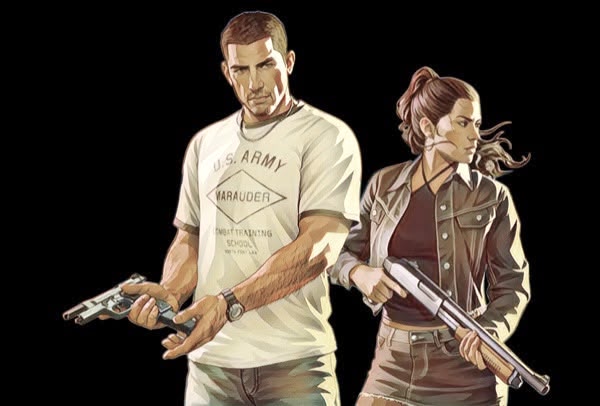
This time, however, Rockstar Games made a particularly interesting narrative choice. In a universe where virtually anything seems permissible, its protagonists, Jason and Lucia, can commit crimes together but cannot pursue romantic relationships with other people.
And that has upset some players.
How GTA Became a Cultural Phenomenon
For those unfamiliar with the world of video games, it is important to understand what Grand Theft Auto represents and why such a seemingly minor decision by its developers has generated so much discussion.
Created by the Scottish studio DMA Design, which would later become Rockstar North, the franchise debuted in 1997. Its very name refers to motor vehicle theft, and its original premise already overturned a traditional entertainment convention: instead of pursuing criminals, players assumed the role of one.
Visually rudimentary by today’s standards, the original GTA featured a top-down perspective, with small figures navigating cities where players could complete missions or simply explore their surroundings while breaking the rules.
Freedom was not exactly a novelty in video games, but the combination of urban exploration, criminal activity, irreverent humor, and player autonomy established the foundations of an identity that would evolve over the following decades.
The real revolution came in 2001 with Grand Theft Auto III. The transition to a three-dimensional universe transformed the gaming experience. Liberty City, inspired by New York, became a freely explorable environment populated by characters, vehicles, radio stations, and a narrative that drew heavily on the cinematic universe of Martin Scorsese.
It was almost like stepping into a gangster movie and deciding what to do once inside.
In 2002, GTA: Vice City immersed players in the aesthetics of 1980s Miami, with unmistakable references to Scarface and Miami Vice. Two years later, GTA: San Andreas incorporated hip-hop culture, California’s racial and social tensions, and cinematic references such as Boyz n the Hood.
In 2008, GTA IV introduced Niko Bellic, an Eastern European immigrant whose pursuit of the American Dream took on considerably more melancholic overtones. The franchise was already demonstrating that there was room for complex characters, moral dilemmas, and stories that went beyond celebrating transgression.
But it was in 2013, with GTA V, that Rockstar consolidated its cultural and commercial dominance.
Featuring three protagonists — Michael, Franklin, and Trevor — the game allowed players to switch between different perspectives within the same story. It was a crime narrative, a satire of American society, and an entertainment platform that endured for more than a decade.

A Community That Never Stopped Playing
One of the most extraordinary aspects of GTA is that, although 13 years elapsed between the release of its fifth and sixth installments, the franchise never ceased to be part of contemporary culture.
With GTA Online, launched in 2013, players began sharing that virtual universe. The experience no longer depended exclusively on the characters and stories created by Rockstar. Users started producing narratives of their own.
The phenomenon of GTA RP (roleplay) expanded this dimension even further. On customized servers, players assume characters and perform different roles within a virtual society. They can be criminals, police officers, doctors, taxi drivers, business owners, or simply citizens trying to build a life.
Friendships, rivalries, romances, marriages, and conflicts emerge through interactions between participants. Some audiences follow these stories through Twitch and YouTube streams, almost as if they were watching an improvised soap opera without a predetermined script.
In Brazil, GTA RP has also attracted a substantial community of players and content creators.
Understanding this dimension is essential to appreciating the anticipation surrounding GTA VI. These are not simply consumers waiting for a new product, but people who have spent years inhabiting, transforming, and, in a sense, claiming ownership of a fictional universe.
As happens with fans of major film and television franchises, there is a sense of belonging that frequently becomes confused with ownership. Fans do not merely expect something new: they believe they know what that universe should or should not allow.
What Has Changed in GTA VI?
The sixth installment returns to Vice City, now in a contemporary and significantly expanded version, within the fictional state of Leonida, inspired by Florida.
Where Rockstar once satirized television, advertising, consumerism, and celebrity culture, it now also incorporates constant exposure on social media, digital influencers, and the contradictions of contemporary culture.
Technological advances enhance the richness of environmental details, the complexity of interactions, and the opportunity to experience everyday activities that have little to do with criminal behavior.
But perhaps the most significant change is not technological.
For the first time, the franchise places a playable couple at the center of its narrative. And not simply as occasional partners in criminal adventures: the relationship between Jason and Lucia is an important part of the emotional experience Rockstar intends to offer.
Who Are Jason and Lucia?
Jason Duval grew up surrounded by criminals and con artists. He served in the Army but eventually returned to the world he had apparently been trying to escape. He is a man looking for a less complicated life, although his choices frequently lead him in the opposite direction.
Lucia Caminos has just been released from prison when the story begins. From an early age, she learned to fight for her own survival and is determined to build a different life, even if the means of achieving her goals are questionable.
Lucia also represents an important change in the franchise’s history. Although GTA featured playable female characters in its earliest titles, a woman has never occupied such a central narrative position in one of the series’ major three-dimensional installments.
When a criminal job goes wrong, Jason and Lucia become entangled in a conspiracy that increasingly forces them to rely on each other.
The cinematic references are unmistakable. It is virtually impossible not to think of Bonnie and Clyde, the 1967 classic starring Warren Beatty and Faye Dunaway, or the countless other films that have explored the dynamics of couples involved in crime.
And, as in cinema, the dramatic tension lies as much in the external threat as in the relationship between the protagonists. How far can they trust each other? What are they willing to sacrifice to stay together? Is there a possible future for them?
A Romance That Depends on the Player
One of GTA VI’s new features is the opportunity to invest in the couple’s intimacy.
Jason and Lucia can share leisure activities and develop the emotional dimension of their partnership. The extent to which players invest in the relationship influences the narrative experience.
However, engaging with the romantic aspect is not mandatory. Those who prefer to focus on criminal missions and exploring the city can still do so.
What is unavailable is the option of pursuing another romantic relationship.
In previous games, protagonists could hire sex workers, and some installments allowed players to manage multiple relationships. In San Andreas, for example, Carl Johnson could have several girlfriends. GTA IV also offered dating opportunities.
These alternatives have been reduced in the sixth installment, which concentrates the possibilities for romantic involvement on the relationship between Jason and Lucia.
It is a narrative decision, not necessarily an expression of moral conservatism. After all, we are talking about a story involving two criminals.
Nevertheless, the reaction was immediate.
When Fidelity Became Controversial
Some players questioned the inability to cheat on their partner. For them, removing a possible course of action contradicts precisely what has always defined the franchise: freedom.
It is a discussion that immediately reminds me of what we have been witnessing within film and television fandoms. Audiences no longer simply react to the choices made by creators; they frequently claim the right to determine what those choices should be.
In the case of a video game, this discussion takes on an even more complex dimension because consumers actively participate in constructing the narrative.
Curiously, another controversy was already circulating on social media before the game’s release.
Some people began questioning whether their partners, by developing the virtual romance between Jason and Lucia, might be committing a form of infidelity in real life.
There were expressions of jealousy toward Lucia and discussions about what it means to invest emotionally in a fictional relationship.
We therefore have two almost opposing reactions to the same cultural product.
On one side, players frustrated because they cannot be unfaithful within the fictional universe. On the other, people uncomfortable with the idea that their partners can become romantically involved with someone within that very same universe.
In both cases, the boundary between fiction and reality appears less obvious than we might have imagined.
When the Fantasy Is a Stable Relationship
There is something fascinating about a franchise built around transgression finding one of its most surprising propositions in the possibility of building a relationship.
Cinema has always explored the contradiction of criminals who demonstrate absolute devotion to the people they love. Loyalty among morally questionable characters is one of the dramatic engines of gangster narratives. Why should video games be any different?
Jason and Lucia’s fidelity does not necessarily make them virtuous people, just as their criminal behavior does not render them incapable of love.
Perhaps it is precisely this contradiction that makes them more interesting characters.
But the players’ reactions also invite us to reflect on how we understand freedom in contemporary relationships.
Have we become so accustomed to normalizing infidelity that we have begun to see fidelity as a restriction on freedom?
And why can the possibility of transgression be so important, even when we have no intention of acting on it?

Desire and Freedom Through the Lens of Psychoanalysis
From a psychoanalytic perspective, desire is constitutive of the subject. It is part of who we are. But experiencing desire does not necessarily mean that we must translate our desires into actions.
In fact, it is precisely the tension between what we desire, what we can do, and what we allow ourselves to do that interests psychoanalysis.
Since Freud, the conflict between our desires, the demands of reality, and the boundaries we internalize has been understood as part of the human experience.
Loving someone does not eliminate our capacity to desire other people. Making a commitment does not make us immune to fantasies or contradictions. However, there is a difference between what we desire and how we deal with our desires.
And it is within this context that we can reflect on emotional responsibility.
Regardless of whether a relationship is monogamous, acknowledging the existence of another person means understanding that our choices can have consequences beyond our own experiences.
Emotional responsibility does not mean ceasing to desire, nor does it mean guaranteeing that the other person will never suffer. It means recognizing that we are not the only subjects involved in that relationship.
And here lies a fundamental distinction between video games and real life.
Jason and Lucia cannot pursue certain relationships because the developers have not programmed that possibility into the game. In real life, however, we can make choices, break agreements, renegotiate them, or decide to respect them.
It is precisely the possibility of transgression that gives meaning to the choice.
GTA VI’s Great Provocation
I do not believe Rockstar is trying to teach its players about emotional responsibility. Nor would it be reasonable to interpret fans’ dissatisfaction as unequivocal evidence of difficulties in their own romantic lives.
But culture has this extraordinary ability to confront us with questions its creators may never have intended to raise.
GTA VI arrives at a time when we are constantly encouraged to keep our options open. Dating apps, social media, and the abundance of possible connections reinforce the feeling that there might always be someone more interesting, a better experience, or another opportunity.
In this context, choosing also means relinquishing something. And renunciation seems to have acquired a particularly negative connotation.
Perhaps one of the most interesting discussions sparked by Jason and Lucia is precisely this: does freedom lie in the ability to do everything, or also in the ability to choose not to?
After nearly three decades of exploring the fantasy of transgression, GTA has found a new provocation in the possibility of building an emotional bond.
And what if, in a culture obsessed with endless possibilities, romantic commitment has become one of our most subversive fantasies?
Descubra mais sobre
Assine para receber nossas notícias mais recentes por e-mail.

