
Pedro Pascal is one of the most beloved actors of the past decade, in the United States and around the world. Born in Chile to parents who fled the country as political exiles, he has so much charisma and talent that it’s hard to believe Hollywood took so long to “discover” him. Pascal was already 39 when he appeared as Oberyn Martell in Game of Thrones. In 2027, his career could take another turn. His performance in Tony Gilroy’s Behemoth! has put him in the Best Actor Oscar race, and he’s making the rounds to promote the film.
That’s what brought him to The New York Times. But his conversation with Lulu Garcia-Navarro is making the rounds for a different reason. Pascal speaks with rare candor about the years when he could barely find work, being separated from his parents as a baby, and the death of his mother, Verónica Pascal Ureta, by suicide. Lulu comes to the interview knowing both the film and his career in depth. She knows how to ask a difficult question and give Pedro time to figure out how he wants to answer it.
When the recording ended, Pascal went to the bathroom to collect himself. He had cried while talking about his mother. Lulu had been moved to tears, too. When he came out, he asked the producer if she was okay. “ME!” the journalist wrote on X, still surprised that he had worried about her in that moment. The interview begins in Spanish. What happened minutes after it ended helps explain why it’s worth watching from the start.
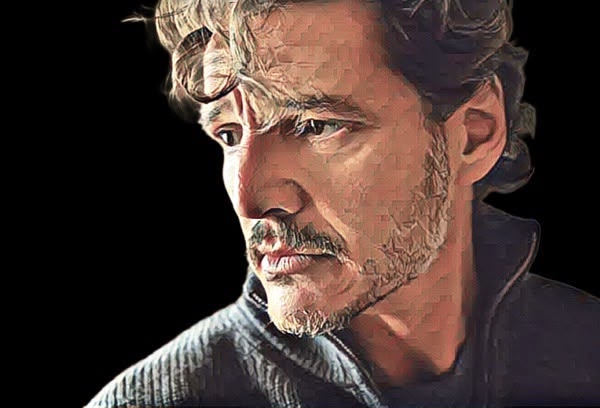
Watch Pedro Pascal’s full interview with The New York Times
The First Question Is in Spanish
It’s a pleasure to watch a reporter who has done her homework this thoroughly. Lulu had watched Pascal’s Spanish-language interviews, including one he gave a cousin in Chile. She knew his theater work and the play in which he met Oscar Isaac. She had watched Behemoth! closely enough to ask how he conveys so much when his character barely speaks. She had also noticed how Pedro’s way of speaking changes when he switches languages. She starts in Spanish because she wants to know what changes for him. Pedro hears her accent and asks if she’s Cuban American. Within minutes, the interviewee is asking questions of the interviewer.
Lulu’s parents left Cuba as political refugees. Pedro’s fled Chile during Augusto Pinochet’s dictatorship. They had sheltered a wounded man, were denounced, and had to go into hiding. Pedro was a baby. He and his sister stayed with their aunts for about six months. In the story passed down through the family, an aunt once took him to the embassy where his parents had taken refuge so they could see him through a window. The window is a striking detail. His parents had the relief of seeing their son. For the baby, the ordinary experience of being with them was still missing.
Lulu says her mother holds on to possessions because she lost everything so young. Having grown up with her, Lulu feels the urge to get rid of everything. I like how she gets to generational trauma through a habit at home. Mother and daughter respond in opposite ways to the same history. One needs to hold on. The other feels better when she can let go. The daughter grew up with the way her mother had learned to live with loss and found a response of her own.

What a Baby Experiences Before Memory
Pascal says he’s been in therapy on and off for most of his adult life. The separation came up again when he tried to understand a sleep problem he’d had for years. When he told the story of his parents going into hiding, he had to clarify that he and his sister had stayed with their aunts. He spent six months away from his mother. The person treating him drew his attention to something so basic he had never thought of it quite that way. For a baby, a mother is also a scent, a voice, a way of being picked up and held. Pedro reacts with the bewilderment of someone who has just learned something and hardly knows what to do with it. How do you work through something you don’t even remember?
I thought of Melanie Klein and Winnicott. For Klein, psychic life starts very early. In their first relationships, babies already experience the satisfaction of being cared for and the anxiety of having to wait for something they depend on. Over time, these experiences help shape an inner world. A baby experiences absence long before they can have any idea why someone left or when they’ll come back. The relationships available to them in that period matter, too. In Pedro’s story, there were aunts who held him, cared for him and his sister, and kept everyday life going as best they could while his parents were in hiding.
Winnicott helps us think about that continuity. He calls the support offered by a caregiver holding. It includes being held in someone’s arms, as well as the regularity with which someone responds to hunger, fright, or discomfort. That’s how a baby begins to experience the world as a place where they can rest because someone is attending to needs they can’t yet express. A separation can leave a mark on that early experience even when, as an adult, you know what happened only through other people’s accounts. What moved me was hearing Pedro ask the question in terms of his own experience. What do those first months have to do with how he feels in his own body today? It’s a question he’s still working through, including when he talks about sleep.
That was when the interview reminded me of a psychoanalytic session. Pascal talks about how he sometimes feels he’s made progress in therapy and then finds himself going backward. He understands the process and recognizes how hard it is to accept its pace. Lulu listens as he makes connections between what he’s learned about his childhood, what he feels now, and what he’s just experienced as an actor. The camera keeps rolling, but for a few minutes it feels like we’re listening to someone think without knowing where he’ll end up.

The Hardest Question
Lulu says she’s going to bring up something painful. She tells him she’s sorry and speaks directly about Verónica Pascal Ureta’s death by suicide in 2000, when Pedro was 24. Her question is open and precise. How does he understand the loss of someone he was so close to, after already living through that first separation? The reporter’s preparation shows in the order of her questions, too. By the time she gets to Verónica’s death, we’ve already heard about the mother Pedro was separated from and the son who’s still trying to understand what that separation meant.
He answers carefully because people he loves are still alive and are part of the story. Verónica met his father at 15. By 22, she was a refugee in another country with two children. When she went back to Chile, Pedro was trying to land a regular television role. A contract would give him the money to invite her to live with him in the United States, if she wanted to. That detail changes how we hear the story of those auditions. At that point, finding work was also the way he’d imagined getting to be close to her again.
Pedro speaks of his mother with compassion and resists the ease with which people look for a label to explain a death. Then he says he knows the intensity of that pain himself and that he asked for help. It’s the revelation that moves them both. He cries, Lulu tears up, and Pedro still manages to joke about doing this on a public platform of that size. The joke comes just as he needs to catch his breath. Then he says he’s grateful he got to talk about it. Hearing the joke and the gratitude together gives you a sense of the trust that had developed between them.
What Fans Took Away From the Interview
By Sunday, Lulu’s post on X about what happened after the recording had passed half a million views. The fan account Pedro Pascal Daily shared the full video, calling it “such a beautiful interview.” Another fan shared Lulu’s behind-the-scenes account and made a point of thanking the reporter by name. “This interview is special. Thank you, Lulu.” In the press, People, TheWrap, and Brazil’s Splash focused on his mother’s death and the moment Pascal said he had asked for help himself.
The thank-you to Lulu caught my attention. Pedro asking how she was after crying on camera gives people who already like him another reason to like him. And that fan made a point of thanking the person who asked the question. I understand why. A clip can show the moment he cries. In the full conversation, you can see what came before. A reporter starts in Spanish, talks about her own family’s exile, says she’s about to bring up something painful, and waits for the answer. Pedro shares something he’s still trying to understand, and Lulu stays with him. That’s what moved me.
From Peter to Pedro Pascal
Exile makes itself felt in another way in the conversation. The family left Chile when Pedro was nine months old, spent time in Denmark, and ended up in Texas. Then came California. At 18, he went to New York. Around his family, he says, he immediately slips back into a Chilean accent from an earlier generation, the accent of his aunts, with expressions that even other Chileans tease him about. At school in California, he asked to be called Peter because he was afraid people would make fun of Pedro. The boy who held on to an older Chile at home learned at school to soften the very sound that identified him.
Years later, at auditions, that negotiation came at a price. An actor named Pedro was unlikely to be considered for a Trevor. At the same time, he was seen as too white for what casting people expected of a Latino actor named Pedro. He tried Alex and Alexander. As Alexander, he landed the role of Oswald in Ibsen’s Ghosts, exactly the kind of part he wanted. But hearing someone call him Alex felt strange. If even the name you introduce yourself with has to change depending on the room you enter, which room feels like somewhere you can stay?
After his mother died, José Pedro Balmaceda Pascal went back to using Pedro and chose his mother’s surname. Pascal was easier to pronounce. It was also hers. I find the choice so moving because he had already tried changing his name to fit what others expected of him. Now he could use it to say where he came from. Exile had required his family to learn to live in other places. As an adult, Pedro found ways to take what felt like his with him, in his name, his accent, and the relationships he built.

He went back to New York, to his friends, to the theater, and to waiting tables. He met Oscar Isaac in Nilo Cruz’s The Beauty of the Father. He speaks gratefully of the friends and family who helped him keep going, and he admits to feeling a little embarrassed that he’s still experiencing certain things for the first time at 51. But when Lulu asks what he learned during that long wait, he has plenty to say. He talks about the community he found in the theater, the pleasure of seeing other people’s work, and the movies his father took him to as a boy. When she suggests art saved him, he agrees. He says it had already saved him in childhood. Later, talking about how hard it is for him to put down roots, he says that home, for him, is people. After listening to him talk about his aunts, his friends, and the theater, you hear everything that’s in that sentence.
The Cellist Who Decides to Turn Left
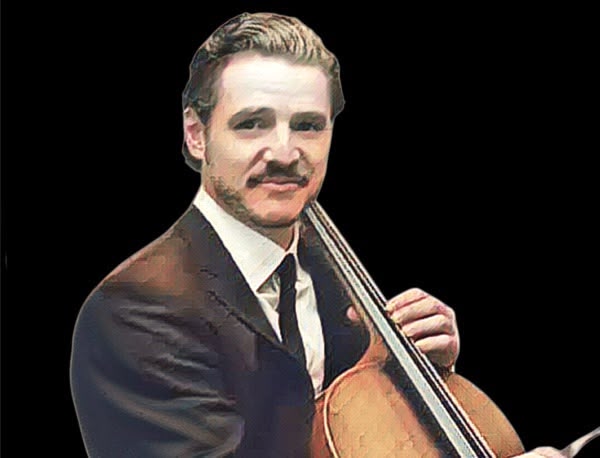
In Behemoth!, which opens in the United States on December 4, Pascal plays Alex Serian, a cellist who grew up a prodigy in a family of musicians. After years on the road, he returns to Los Angeles to record film scores and deal with unfinished family business. Music brings back memories and gives shape to an inner life Alex rarely puts into words. Lulu sees a story about interrupting generational trauma. Pascal likes that reading and says he only recognized what the character was trying to do while they were shooting. The film lets those discoveries come gradually, as Alex makes them himself.
Pedro picks a detail to explain how he sees it. At a stop sign, Alex signals right. Then he switches to the left. To Pascal, that almost ordinary gesture is one of the first moments when a man who’s been a passenger in his own life chooses which way to go. He grew up amid his parents’ conflicts, with a talent his family had invested with its own expectations. Now that he’s beginning to understand what he inherited, he can decide what to do with it. That’s what Pedro means when he talks about ending a cycle of pain. The earlier story is still part of Alex. The next choice can be his.
In their second conversation, Lulu thanks Pedro for his openness and rather gleefully changes the subject. She wants to talk about sex on screen. She starts with Oberyn Martell, whom we meet in a brothel in Game of Thrones, and gets to Alex, another character whose intensity she wants to understand. Pascal talks about safety on set and how a physical gesture can communicate as much as a line of dialogue, a fight, or music. Then he talks about flirting as a way to give someone your attention without expecting anything in return. Lulu suggests it’s an invitation. He agrees and adds that sadness can invite someone closer, too.
Maybe that’s Pedro Pascal’s art. He welcomes questions and answers them with a generosity we rarely see on a publicity tour. After an hour, we know what it was like to be Peter, why he wanted to keep his mother’s surname, and what still moves him when he thinks of the boy he was. His romantic life remains his own. The intimacy comes from hearing how he arrived at what he was able to say. And Lulu, who had done so much research to know what to ask, knew how to listen for what she could only discover there. When the recording ended, it was Pedro’s turn to ask how she was.
Descubra mais sobre
Assine para receber nossas notícias mais recentes por e-mail.

