
It is difficult to fully appreciate what it means to celebrate Sir Peter Wright’s 100th birthday. We are not merely talking about one of the greatest producers of classical ballets, nor simply about an artist whose extraordinary longevity deserves recognition. We are talking about a man who is the living link between some of the greatest figures in dance of the 20th and 21st centuries.
Peter Wright worked with Kurt Jooss, Ninette de Valois, Frederick Ashton, John Cranko, and Kenneth MacMillan. He witnessed the artistry of Galina Ulanova, taught Margot Fonteyn and Rudolf Nureyev, followed the development of Marcia Haydée and Lynn Seymour, helped shape generations of dancers, and reached the age of 100 watching Carlos Acosta direct the company he himself established in Birmingham.
Take a moment to consider the magnitude of that journey.
When Wright was born, on November 25, 1926, Sergei Diaghilev was still alive, and the Ballets Russes still existed. Anna Pavlova continued to enchant audiences around the world, George Balanchine was only 22, and Rudolf Nureyev had yet to be born. It was also in 1926 that Frederick Ashton presented his first choreographic work and Ninette de Valois founded the school that would become the Royal Ballet School.
A century later, Peter Wright is still with us.
On Wednesday, his 100th birthday, Birmingham Royal Ballet celebrated its Founding Director Laureate with a tribute accompanying a performance of The Nutcracker, one of the ballets that best represents his extraordinary contribution to dance. There could hardly have been a more appropriate choice, although, personally, I have a particularly emotional connection with another of his great productions: Giselle.
After all, it was Peter Wright’s Giselle that we came to know during one of the great periods in the history of the ballet company of Rio de Janeiro’s Theatro Municipal.
To understand the importance of this Englishman, who never seemed particularly concerned with being regarded as a revolutionary choreographic genius, we must also understand the history of ballet in the 20th century. And few people could tell us that story with such authority, knowledge, intellectual independence, and, it must be said, a delightful lack of reverence for the profession’s greatest egos.

The boy who wanted to dance without ever having seen a ballet
The son of an accountant, Peter Wright grew up in a family that did not enthusiastically embrace his decision to become a dancer. What is particularly curious is that, when he decided to pursue the profession, he had never actually seen a ballet performed live.
A student at Bedales School, he discovered dance through the books in the library. He was fascinated not only by photographs of dancers but also by their biographies and the sometimes less-than-edifying stories surrounding them.
In 1943, his mother took him to see the International Ballet. The programme included Michel Fokine’s Les Sylphides, a work that, ironically, represented a conception of dance rather different from the one with which Wright would begin his professional career.
His father regarded his career choice as disastrous. Wright, however, never regretted having had to fight for what he wanted. On the contrary, he believed that the resistance he encountered at home had been instrumental in developing his determination.
While still a teenager, he became involved with the German choreographer Kurt Jooss, one of the great figures of European expressionist dance and the creator of The Green Table, first performed in 1932. Jooss had left Nazi Germany and established his company in Britain. His art combined elements of classical dance with a theatrical language deeply committed to the expressive possibilities of movement.
Wright began by doing practically everything. He made tea, helped transport scenery and costumes, worked backstage, and learned about lighting. Before establishing himself as a dancer, he discovered the mechanisms that made a performance possible. This is no insignificant detail in his biography.
One of the most interesting aspects of Wright as a producer has always been his understanding that ballet is not merely a succession of steps. Scenery, lighting, costumes, music, interpretation, and even the organisation of rehearsals are all instrumental in determining the artistic result.
It is also revealing that his first major influence was a choreographer who understood dance as a theatrical language. Jooss was not interested exclusively in the beauty of movement, but in what movement could communicate.
Decades later, it would be precisely this concern that distinguished Peter Wright’s productions of the classics.
Ninette de Valois and the making of British ballet
Today, when we think of the Royal Ballet, we think of an established institution with a distinguished tradition, an extraordinary repertoire, and an immediately recognisable artistic identity. Peter Wright knew British ballet when all of that was still being built.
Ninette de Valois, who had danced with Diaghilev’s Ballets Russes, was the principal architect of a national ballet tradition in Britain. Around her were figures such as Frederick Ashton, composer and musical director Constant Lambert, Robert Helpmann, Alicia Markova, and, subsequently, Margot Fonteyn.
The institutional journey that led to the creation of the Royal Ballet involved different companies, schools, theatres, and artistic projects. In 1946, Sadler’s Wells Ballet established itself at the Royal Opera House in Covent Garden, while a second company developed its own artistic and touring activities.
That second company, Sadler’s Wells Theatre Ballet, would become fundamental to Wright’s career. He danced with the company and, in 1957, created his first ballet for it, A Blue Rose, at the instigation of Ninette de Valois. He also worked as a teacher at the Royal Ballet School.
Wright never concealed his admiration for De Valois’s ability to build an institution. She was demanding, authoritative, and possessed an extraordinary understanding of what a ballet company needed to survive.
Later, when he became a director himself, Wright demonstrated how much of that vision he had absorbed. A company cannot be built exclusively around stars, nor can it survive solely on box-office successes. It needs repertoire, training, discipline, artistic diversity, opportunities for its dancers, and, above all, a vision.
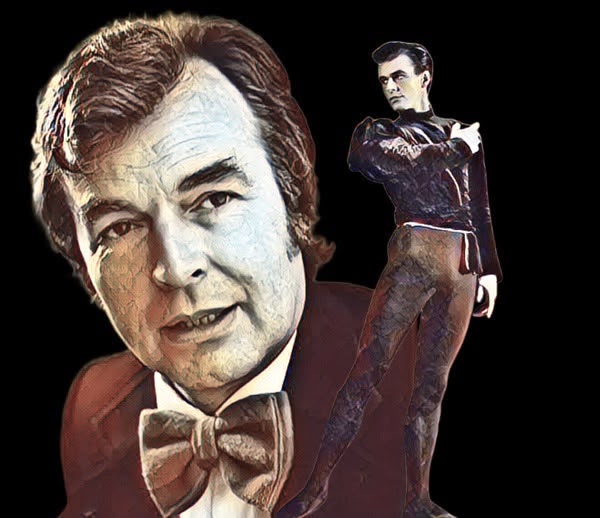
His admiration for De Valois was such that, in his memoir published in 2016, Wright offered a particularly outspoken assessment of the directors who succeeded her at the Royal Ballet, reserving special praise for Monica Mason, who led the company between 2002 and 2012.
For Wright, directing a company was a talent as specific as creating choreography. And great choreographers were not necessarily great directors.
He would personally encounter several examples of that distinction.
John Cranko, Kenneth MacMillan, and the great narrative ballets
It is impossible to understand Peter Wright without discussing John Cranko and Kenneth MacMillan. All three belonged to a generation that would profoundly transform British dance, although part of that transformation took place outside England.
Cranko and MacMillan possessed an extraordinary ability to explore the psychological dimensions of their characters through dance. Their ballets were not limited to the stories of princesses, fairies, and enchantments that had traditionally dominated the classical repertoire. They told stories of desire, frustration, jealousy, violence, loneliness, social alienation, and complex human relationships.
In 1961, Wright was invited by John Cranko to work as a teacher and ballet master with the company he was developing in Stuttgart. What Cranko achieved in Germany is one of the most extraordinary stories in 20th-century ballet. He transformed a company that lacked the international prominence of the great Russian, French, or British ensembles into a centre of artistic excellence. His work attracted dancers such as Marcia Haydée, Richard Cragun, Egon Madsen, and Birgit Keil, who would become the standard-bearers of a very particular interpretative tradition.
It was in Stuttgart that Cranko consolidated his reputation as one of the great creators of narrative ballets, with works such as Romeo and Juliet, Onegin, and The Taming of the Shrew. Wright was closely involved in that process, including working with Cranko on the development of Onegin.
He also explored another of his passions: television. He trained at the BBC and understood remarkably early the potential of the audiovisual medium to document and disseminate dance. Among the projects in which he participated were a television adaptation of Onegin, featuring Marcia Haydée, Ray Barra, Lynn Seymour, and Egon Madsen, and a recording of Kenneth MacMillan’s Las Hermanas.
The value of these recordings extends beyond historical interest. They document a way of interpreting dance that could hardly be recovered through choreographic notation alone.
His relationship with Cranko was one of admiration and collaboration, but it was not without friction. Wright recalled, for example, that Cranko did not enthusiastically welcome his decision to leave Stuttgart. He also never entirely understood why Namouna, a ballet he had created for the company, disappeared from its repertoire.
And, while acknowledging his colleague’s genius, he did not consider all his productions equally successful. Wright always had opinions of his own. Thankfully.
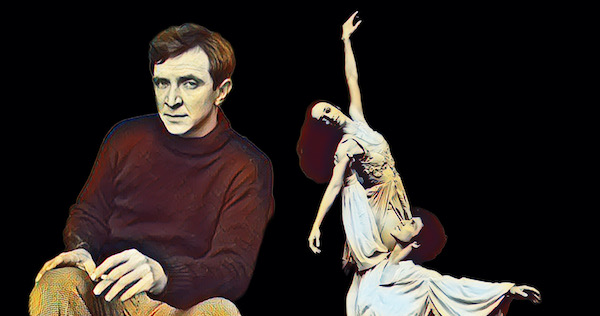
Kenneth MacMillan and the challenges of directing the Royal Ballet
In 1969, Peter Wright returned to England to join the management of the Royal Ballet. Following an administrative reorganisation and the departure of John Field, he became an important collaborator of Kenneth MacMillan, assuming responsibilities for both the main company and its touring counterpart.
Their friendship went back much further.
In an interview with The Telegraph in 2022, shortly before his 96th birthday, Wright recalled an incident from the days when they were working with Cranko.
During a performance of Beauty and the Beast, the two dancers were assigned to help with a scenic effect. Wright, who had not yet finished dressing for the Spanish dance he would perform later, was wearing only his boots and a jockstrap when the scenery that was supposed to conceal him collapsed onstage.
Faced with the audience, he did what any properly trained ballet dancer should do in an utterly absurd situation: assumed an elegant pose, offered his arm to MacMillan, and the two walked offstage as though everything had been choreographed.
It is a wonderful story, but their professional relationship became considerably more complicated years later.
Wright deeply admired MacMillan’s choreographic talent. Admiring the artist, however, did not necessarily mean considering him equipped to manage an institution such as the Royal Ballet.
MacMillan struggled with insecurities, found certain administrative responsibilities difficult, and had experienced considerable professional strain, particularly during his time in Berlin.
In the early 1970s, Wright found himself in a position where he had to meet the demands of both companies. According to his own recollections, the pressure was so intense that he developed a stomach ulcer.
He also had to lead the main company through difficult circumstances, including an American tour featuring Anastasia, one of MacMillan’s most ambitious works, whose reception did not live up to expectations.
The lack of clarity in the division of responsibilities, institutional pressures, and financial difficulties revealed that the Royal Ballet, despite its extraordinary artistic prestige, was not immune to the problems faced by any major cultural organisation.
When MacMillan stepped down as artistic director in 1977, remaining associated with the company as a choreographer, Wright officially took over the directorship of Sadler’s Wells Royal Ballet.
It was not simply a departure from the Royal Ballet. It was an opportunity to build an artistic project of his own, directing a company that needed to find its identity beyond its association with Covent Garden. And it was precisely there that Peter Wright made one of his greatest contributions to British dance.

Why Birmingham?
The existence of two companies associated with the Royal Ballet had always presented challenges.
The Covent Garden company enjoyed greater visibility, more international prestige, and priority in selecting young talent emerging from the Royal Ballet School. The touring company, meanwhile, had to establish its place, develop its repertoire, and work with comparatively limited resources. Wright did not want to direct a lesser version of the Royal Ballet. He wanted a great company with a personality of its own.
One of his first priorities was to improve standards and expand the opportunities available to his dancers. In this respect, he recalled with particular gratitude the cooperation of Anthony Dowell, who understood the difficulties faced by the company. Darcey Bussell, who would become one of the Royal Ballet’s greatest stars, began her professional career with the company directed by Wright.
He also believed that touring provided extraordinary training for young dancers. Performing different programmes, adapting to different theatres, and winning over varied audiences developed qualities that would hardly be acquired by remaining in the same environment.
His repertoire naturally included the classics, but also works by Frederick Ashton, Kenneth MacMillan, George Balanchine, Kurt Jooss, and Agnes de Mille, among others.
Wright understood that an artistically healthy company needed to offer its dancers different kinds of challenges. Dancing Balanchine required qualities distinct from those necessary to interpret a MacMillan character. A dramatic ballet by Jooss demanded resources different from those required by Petipa. And there was a physical problem: Sadler’s Wells Theatre no longer provided facilities suited to the company’s ambitions.
Princess Margaret, the company’s president and a great supporter, shared his dissatisfaction with the building. According to Wright, she made no secret of her desire for the company to find another home. Birmingham presented an opportunity.
The city authorities and Birmingham Hippodrome were interested in establishing a major artistic institution in the city. There was a willingness to invest in facilities, studios, administrative infrastructure, and working conditions that the company could hardly have secured by remaining in London.
The move took place in 1990. Sadler’s Wells Royal Ballet became Birmingham Royal Ballet. It was a bold decision. Leaving the British capital meant relinquishing some proximity to a centre of cultural power, but it also meant no longer having to exist permanently in the shadow of another company.
Birmingham gained an artistic institution of international standing. And Peter Wright gained the opportunity to consolidate a project he had been developing for years. As a gesture of gratitude to the city, he presented it with a new production of The Nutcracker.
Thirty-six years later, the ballet remains one of Birmingham’s great Christmas traditions.
Giselle: The ballet Peter Wright did not like
It is a delightful irony that one of the greatest producers of the 19th-century classics was not always particularly enthusiastic about them. In 2024, at the age of 98, Wright was still provocative when discussing poorly constructed stories, unconvincing mime scenes, and characters who danced without their motivations being understood. Giselle was one of those ballets.
Giselle was one of those ballets.Wright could not truly engage with its characters until he saw the extraordinary Galina Ulanova during the Bolshoi Ballet’s historic London season in 1956.
Ulanova belonged to an interpretative tradition in which the personality of the ballerina and the emotional development of the character were as important as her technical ability. Her Giselle revealed dramatic possibilities to Wright that he had previously failed to find in the work.
In 1965, when Cranko asked him to prepare a production for Stuttgart, Wright began investigating the ballet, its history, and, most importantly, the reasons why its characters behaved as they did.
Created in Paris in 1841, with music by Adolphe Adam, a libretto by Théophile Gautier and Jules-Henri Vernoy de Saint-Georges, and choreography by Jean Coralli and Jules Perrot, Giselle is one of the supreme expressions of Romantic ballet.
The version we know today also bears the influence of Marius Petipa’s Russian revivals, among other contributions accumulated over nearly two centuries. Its seemingly simple story accommodates countless interpretations.
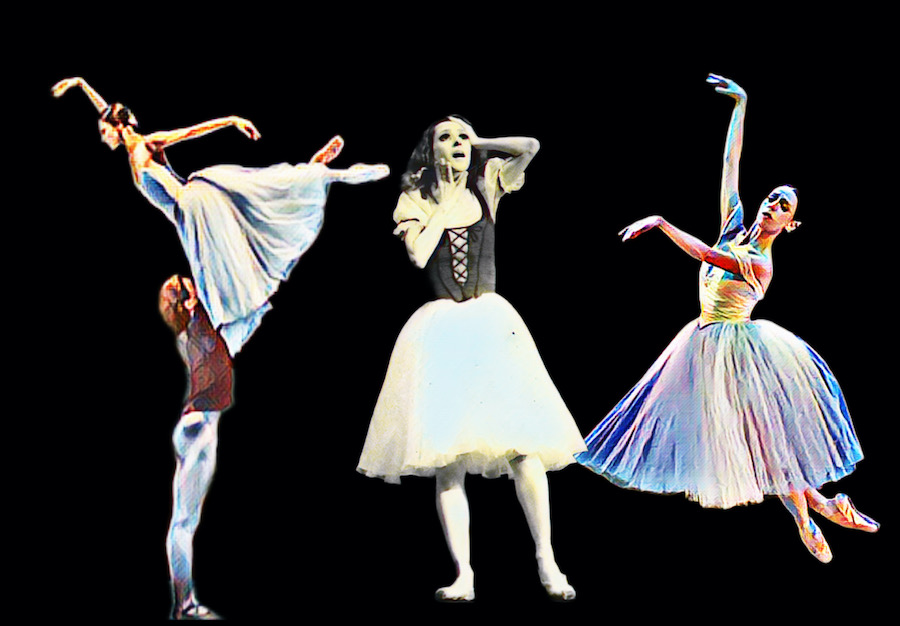
Giselle, a young peasant girl who loves dancing, falls in love with Albrecht, an aristocrat who conceals his true identity and his engagement to Bathilde. Hilarion, who is in love with Giselle, exposes the deception. The young woman loses her mind and dies.
In the second act, she joins the world of the Wilis, the spirits of women who died before marrying and who, under the command of Myrtha, force the men they encounter to dance themselves to death.
Giselle, however, protects Albrecht. Why?
It is precisely in that question that we find Peter Wright.
The psychology of Giselle’s characters
Does Albrecht love Giselle? Is he merely amusing himself? Is he a cruel man or someone incapable of understanding the consequences of his actions? Is Hilarion really the villain? Is Bathilde a victim of circumstances or an aristocrat who would never consider Giselle her equal? And what happens to Giselle when reality destroys her romantic fantasy?
Wright understood that unless the dancers found answers to these questions, audiences might admire the dancing without necessarily believing in the story.
One of his most important choices was to favour the interpretation that Giselle takes her own life. In other versions, the protagonist dies of heartbreak or as a consequence of her fragile heart. For Wright, suicide offered a dramatic explanation for the young woman being buried outside consecrated ground, a circumstance that helped establish the logic of the second act. Nor did he necessarily regard Hilarion as the villain of the story. And, frankly, it is difficult to disagree with him.
Hilarion is in love with Giselle and reveals that the man with whom she is involved is lying. Jealousy, resentment, and self-interest may inform his actions, but he did not create the situation that destroyed the young woman. Yet it is Hilarion who loses his life at the hands of the Wilis.
By humanising this character and allowing Albrecht to have genuine feelings for Giselle, Wright makes the ballet dramatically more compelling. We are no longer simply watching the story of a wicked seducer, an innocent victim, and a jealous rival. We are watching characters who desire, choose, lie, believe, suffer, and must confront the consequences of their actions.
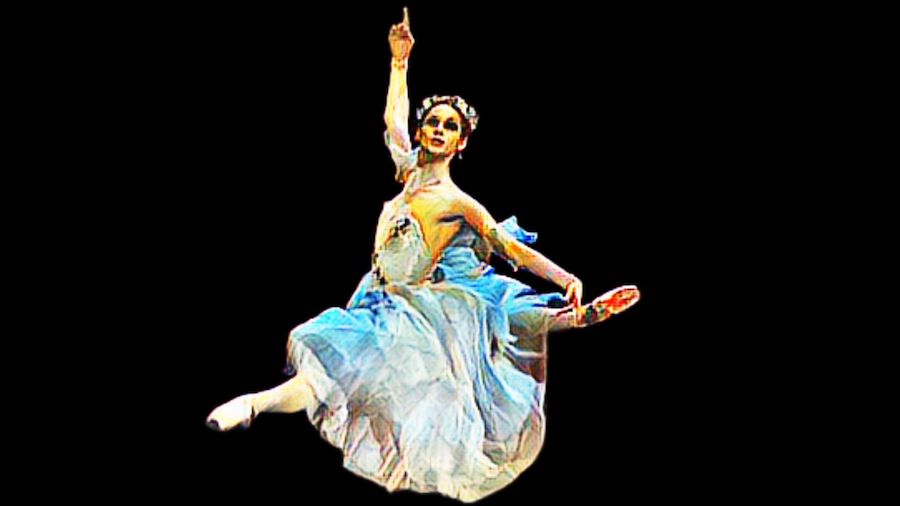
Social class also becomes particularly significant. The aristocracy to which Albrecht belongs is not merely a detail in the libretto. It is what makes the fulfilment of his relationship with Giselle practically impossible.
The mime performed by Berthe, Giselle’s mother, is another essential element of the production. By recounting the legend of the Wilis, she establishes the conditions under which the supernatural world of the second act becomes comprehensible. And the Wilis, however beautiful their collective movements may be, must be frightening.
Rather than simply constituting an impeccably synchronised corps de ballet, they are women whose supernatural existence is organised around revenge. Giselle is different from them. Her love for Albrecht, regardless of how we interpret that love after his betrayal, allows her to break free from the need to punish him.
That is why Giselle is so much more than a love story. And it is also why Peter Wright’s conception remains so fascinating.
Our Giselle at Rio de Janeiro’s Theatro Municipal
For Brazilians who have followed ballet for several decades, Peter Wright holds a particularly emotional significance. His production of Giselle entered the repertoire of the ballet company of Rio de Janeiro’s Theatro Municipal in 1982, with scenery and costumes by Peter Farmer.
It is important to establish that date because we frequently associate Wright’s version with the Royal Ballet’s 1985 production, featuring scenery and costumes by John Macfarlane. His conception, however, had already been performed by international companies for many years.
Rio de Janeiro encountered his Giselle during a particularly rich period in the history of our classical ballet company, when the Theatro Municipal presented major international productions and offered its dancers the opportunity to interpret the repertoire in stagings of extraordinary quality.
Programmes preserved in the theatre’s archives document the original production and subsequent revivals, including the one staged by Maria Luisa Noronha during the 1999 season.
In 2008, the company once again opened its ballet season with Wright’s version. It did so again in 2011. For those of us who grew up following ballet at the Theatro Municipal, talking about Peter Wright does not mean talking about a distant artistic reality confined to London seasons or the great European theatres.
It also means talking about our own history. It is curious to think that many Brazilians became familiar with his interpretation of Giselle without necessarily realising that the dramatic choices that moved us so deeply belonged to an Englishman who had originally not even liked the ballet.
What distinguishes Wright from other great ballet producers?
If there is one characteristic that identifies Peter Wright’s productions, it is his ability to renew the classics from within.
Mary Skeaping, whose 1971 production of Giselle remains a benchmark for English National Ballet, devoted herself particularly to recovering the historical characteristics of Romantic ballet, from its choreographic language to musical passages and interpretative traditions that had been altered over time. Rudolf Nureyev, in his various approaches to the classical repertoire, frequently expanded the importance of male characters, granting them greater dramatic and choreographic autonomy. Mats Ek, in his revolutionary 1982 Giselle, replaced classical language with a contemporary conception, transforming the supernatural world of the second act into a psychiatric institution.
More recently, Akram Khan found in the story an opportunity to explore issues relating to economic exploitation, exclusion, and social inequality. These are different ways of engaging with a work that remains alive precisely because it accommodates new interpretations. Peter Wright did not need to abandon classical language to question the content of Giselle.
Nor did he believe that preserving the ballet meant mechanically reproducing every choice made by his predecessors. By working on character motivation, mime, social context, and dramatic coherence, he discovered a modernity that did not depend on updating the period in which the story took place. His signature lies less in what he conspicuously added to a work than in what he enabled us to understand about it.
It is an apparently discreet but profoundly transformative contribution.

The Nutcracker: Two ballets, two perspectives
If Giselle is arguably Peter Wright’s greatest artistic achievement, The Nutcracker is undoubtedly one of his most popular. What not everyone knows is that Wright created two major British productions of the ballet, one for the Royal Ballet in 1984 and another for Birmingham Royal Ballet in 1990. They are not simply two versions of the same staging.
In one, the fantasy originates in Drosselmeyer’s intentions. In the other, it emerges from Clara’s inner world. And that difference reveals a great deal about Wright as an artist. The Nutcracker, which premiered in St Petersburg in 1892, with music by Pyotr Ilyich Tchaikovsky, presents a dramatic problem that has challenged choreographers for more than a century.
Inspired by E.T.A. Hoffmann’s story through an adaptation by Alexandre Dumas, the ballet has a relatively uneven structure. The first act establishes characters, conflicts, and events. The second consists largely of a succession of dances in a fantastical world.
How do you sustain the audience’s attention when the characters who have driven the narrative practically disappear from the action?
Who is Clara? A child enchanted by Christmas toys? An adolescent beginning to discover love? And who is Drosselmeyer? An eccentric magician? A manipulator of dreams? A lonely man who needs a young girl’s help?
Depending on the answers, we find ourselves watching emotionally very different ballets.
The Royal Ballet’s Nutcracker: Drosselmeyer’s story
When preparing his production for Covent Garden in 1984, Wright recovered elements from Hoffmann’s story that allowed him to construct a more coherent narrative.
In his version, Drosselmeyer has a specific objective: to free his nephew Hans-Peter, who has been transformed into a Nutcracker doll by a spell.
Clara is essential to making that happen.
Consequently, everything we see has a reason to exist. Drosselmeyer is not simply providing a child with an evening of entertainment. He is creating the conditions for her to participate in a mission.
Wright saw a melancholic dimension in the character. Drosselmeyer is a lonely man whose appearance may frighten children, but who carries a profoundly human concern.
Once we understand his motivations, the ballet acquires another emotional dimension.
The London production, with Julia Trevelyan Oman’s extraordinary scenery and costumes, also emerged from a concern with choreographic tradition. Wright used historical records of the original production to recover aspects of Lev Ivanov’s choreography, particularly in the magnificent snowflake scene.
Over the years, he continued to revise the production.
Among his concerns was the participation of Clara and Hans-Peter in the second act. By incorporating them more directly into the dances, he sustained the audience’s emotional investment in the protagonists’ journey.
He also found a way to return Clara to the everyday world while suggesting that her fantastical experience might have some connection with reality.
It is a particularly beautiful solution because it does not need to explain the nature of the magic excessively. What matters is that Clara returns transformed by the experience.
Birmingham’s Nutcracker: Clara’s awakening
Six years later, when creating a new production as a gift to Birmingham, Wright found another way of telling the story.
This time, he placed Clara at the centre of the fantastical experience.
The world she visits is associated with her imagination, the emotions awakened by the Christmas party, and the discovery of feelings that extend beyond childhood.
There is a more pronounced dimension of romance and coming of age.
Wright was not attempting to offer a psychoanalytic interpretation of the ballet, although such a reading is certainly possible. He simply wanted to tell the story of a young girl whose emotional experience transforms what she sees and imagines.
Clara is also presented as a young ballet student, which adds another dimension to her fantasy.
John Macfarlane’s scenery and costumes contributed decisively to the identity of this production.
The transformation of the room as the Christmas tree grows is one of the great moments of theatrical magic in the contemporary repertoire. It is not merely the tree that grows. Our perception of the entire environment changes, as though we were experiencing the shifting scale of Clara’s world alongside her.
Wright particularly admired this achievement by Macfarlane.
The success of the Birmingham production even influenced the revisions he subsequently made to the London staging. In the choreographer’s view, certain aspects of the narrative flowed more naturally in the second version.
And it is fascinating that the same artist was able to find two different solutions to the problems presented by the same work.
Peter Wright, Balanchine, and Nureyev: Different Nutcrackers
George Balanchine, who created his celebrated version for New York City Ballet in 1954, helped establish The Nutcracker as an American Christmas tradition.
His production is deeply associated with the enchantment of childhood. Marie and the young Prince are played by children, while the grand pas de deux remains associated with the Sugar Plum Fairy and her Cavalier.
Rudolf Nureyev, on the other hand, explored the psychological possibilities of the story, often associating Drosselmeyer with the Prince and transforming Clara’s fantasy into an experience of maturation, desire, and confrontation with her anxieties.
Wright found his own territory between these different possibilities.
He did not abandon the childhood dimension or the beauty of the divertissements, but sought to establish emotional continuity between events.
In London, the action is organised around Drosselmeyer’s desire to recover his nephew. In Birmingham, it revolves around Clara’s subjective experience.
His principal concern was not to produce the most radical interpretation, but to ensure that Tchaikovsky’s extraordinary music, the dancing, and the story complemented one another.
That is also why his productions manage to appeal to such different audiences.
A child can follow the adventure and be enchanted by the magic. An adult can recognise Drosselmeyer’s loneliness, the passage from childhood to adolescence, or the nostalgia associated with memories of Christmas.
And ballet lovers continue to find the beauty of the classical tradition.
Swan Lake: Siegfried’s tragic destiny
Peter Wright also created, in collaboration with Russian ballerina Galina Samsova, an important production of Swan Lake in 1981 for Sadler’s Wells Royal Ballet, subsequently incorporated into the artistic identity of Birmingham Royal Ballet.
Tchaikovsky’s work is perhaps the best-known example of how different productions can radically alter our understanding of a classical ballet.
There are versions with happy endings, others that are profoundly tragic, and some in which everything that happens can be interpreted as a psychological projection of the Prince.
Wright and Samsova opted for a dark conception, with an atmosphere strongly shaped by the Gothic romanticism of Philip Prowse’s scenery and costumes.
Siegfried is a young man subjected to the conventions of his social position. His encounter with Odette represents the possibility of an emotional existence different from the one imposed upon him.
The tragedy results from his inability to preserve that possibility.
It is interesting to compare this perspective with that of Nureyev, who, in his production for the Paris Opera Ballet, transformed Siegfried into the psychological centre of the work, exploring his fantasies and his relationship with authority.
Wright preserves the Romantic and supernatural dimensions more directly, but understands that the story must also be the Prince’s tragedy.
Odette and Siegfried’s love matters because their characters have motivations that extend beyond the necessity of dancing together.
The Sleeping Beauty and Coppélia: Between tradition and comedy
In The Sleeping Beauty, one of the works that best represents Marius Petipa’s extraordinary choreographic architecture, Wright encountered a different kind of challenge.
The production created in 1981 for Dutch National Ballet became one of his most important stagings and remains associated with the company’s classical identity.
In this ballet, his concern with mime is particularly significant.
Carabosse’s curse, the intervention of the Lilac Fairy, Aurora’s sleep, and the passage of time must all be understood if the great choreographic sequences are to make sense within the narrative.
It is not a matter of diminishing the importance of virtuosity. It is a matter of giving it context.
In Coppélia, meanwhile, Wright was able to explore another of his great qualities: his sense of humour.
Léo Delibes’s wonderful score accompanies a comedy in which Franz falls in love with a woman who does not even exist, Swanilda must confront her boyfriend’s fantasies, and Dr Coppélius nurtures his own dreams of creation.
It is a story that depends on theatrical timing, characterisation, and the performers’ ability to make audiences laugh.
Wright developed different stagings of Coppélia throughout his career. The version featuring Peter Farmer’s scenery and costumes was also a farewell gift to the Birmingham company.
There is something rather lovely about the fact that the man who consolidated his reputation by understanding Giselle’s tragic motivations ended his directorship by offering his company a comedy.
Margot Fonteyn, Rudolf Nureyev, and the backstage wars
Peter Wright reached the age of 100 without ever demonstrating much inclination to treat ballet history as a succession of immaculate personalities.
In 2016, he published his memoir, Wrights and Wrongs: My Life in Dance, a book that attracted attention precisely because of the frankness with which he addressed the relationships between some of the greatest figures in the profession.
His account of Rudolf Nureyev is particularly fascinating because Wright does not reduce the dancer to stories about his temperament.
He acknowledged the extraordinary transformation Nureyev had brought to male dancing. He admired his technical ability, energy, magnetism, and willingness to work.
He also admired the transformation he observed in Margot Fonteyn after she began dancing with the Russian.
Wright felt that, in the early years of their acquaintance, Fonteyn could appear emotionally distant. With Nureyev, she discovered a different interpretative intensity, a chemistry that transformed the two into one of the most extraordinary partnerships in ballet history.
Wright taught both of them and appreciated the fact that, despite their fame, they were still willing to accept challenges and demands.
But that did not mean tolerating everything Nureyev did.
In his memoir, he described a man who frequently tested other people’s limits, could be aggressive, and did not hesitate to treat colleagues disrespectfully.
Fonteyn, according to Wright, often responded to her partner’s rudeness with surprising indifference.
Other ballerinas were not so inclined.
Wright recalled an argument in which Nureyev threw a drink in Elizabeth Anderton’s face, prompting her to slap him.
More serious, however, was the dispute surrounding Giselle.
According to Wright’s account, Nureyev incorporated extensive passages from the production the Englishman had created for Munich into his own staging, including mime scenes, peasant dances, and elements of the second act, without permission or acknowledgement.
Wright discovered what he considered an appropriation while watching a television broadcast.
He consulted lawyers and ultimately accepted an out-of-court settlement. Years later, he regretted not having taken the dispute to court.
This was an allegation made by Wright in his memoir, not a conclusion established through a judicial ruling.
Nevertheless, the episode is particularly interesting because it demonstrates something that frequently goes unnoticed in discussions of classical ballets: a producer’s decisions also constitute creative work.
Had Wright merely reproduced the ballets of his predecessors, there would have been no distinctive contribution to appropriate.
And despite everything, in 2024, when he once again discussed Nureyev, Wright still acknowledged that he liked him.
Human relationships are complicated. Peter Wright has always known that.
Frederick Ashton, great temperaments, and the art of disagreement
Kenneth MacMillan did not escape his observations either.
Wright recalled the choreographer’s insecurities, episodes of inappropriate behaviour, and the difficulties he faced when attempting to reconcile his artistic genius with institutional responsibilities.
Frederick Ashton, meanwhile, was capable of engaging in some distinctly unpleasant arguments.
Nevertheless, Wright retained enormous admiration for his artistry and for certain pieces of professional advice he had received from him.
One concerned the construction of mixed programmes. Ashton believed that works should contrast with one another rather than compete against each other.
Wright incorporated that concern into his work as a director.
He also admired Monica Mason for her ability to restore the Royal Ballet’s artistic and institutional standards. And he recognised in Anthony Dowell a collaborator who understood the particular challenges faced by the touring company.
As for Cranko, the man who had offered him one of the great opportunities of his career, Wright did not feel obliged to like all his productions.
His intellectual independence also extended to directors of subsequent generations.
In 2024, when assessing Carlos Acosta’s directorship in Birmingham, he expressed reservations about the availability of a director juggling several artistic projects, while acknowledging the quality of the work presented by the company.
It is a rather admirable characteristic.
For Wright, liking someone did not mean agreeing with all their decisions. Recognising extraordinary talent did not mean excusing inappropriate behaviour. And disagreeing with an artist did not mean denying their contribution.
In a profession marked by hierarchies, reputations, and personalities frequently protected by their own talent, his willingness to speak frankly has always been distinctive.
What Peter Wright demands of dancers
Wright’s concern with dramaturgy should not be confused with a lack of interest in technique.
Quite the contrary. His standards were high, but he understood technique as a resource in the service of interpretation.
He also believed that dancers needed to be challenged.
In his more recent interviews, he expressed some concern that younger generations might find professional conditions excessively comfortable compared with those in which he himself had developed.
He did not regret improvements in working conditions. He questioned the absence of challenges capable of encouraging artists to go beyond what they already knew how to do.
What he admired in Fonteyn and Nureyev was precisely the fact that, even after establishing international reputations, they continued working to improve.
His attention to detail also extended to the technical conditions of productions.
Wright criticised excessively dark performances in which audiences could barely distinguish the dancers’ movements and expressions.
It is an apparently simple observation, but one that is particularly relevant to dance. Unlike theatre actors or opera singers, dancers cannot rely on words to compensate for what the audience cannot see.
Nor could he tolerate major productions being revived with insufficient rehearsal time, inadequate preparation of the dancers, or without the necessary care devoted to lighting.
At the age of 89, he was still travelling to work on revivals and becoming indignant when he encountered conditions he considered artistically unacceptable.
And perhaps that is precisely what explains the longevity of his productions. Peter Wright never stopped regarding them as works in progress.
Illness, farewell, and the loss of Sonya
In 1995, five years after the company’s relocation to Birmingham, Wright was forced to step down as director.
He was not ready to stop.
Diagnosed with myasthenia gravis, an autoimmune condition that affects muscle strength, he spent three months in hospital and was forced to interrupt a directorship he had intended to continue.
He was succeeded by David Bintley.
Princess Margaret bestowed upon him the title of Director Laureate of Birmingham Royal Ballet, recognising the magnitude of his contribution to the company.
Two years earlier, in 1993, he had been knighted.
His departure from the directorship, however, did not signify artistic retirement. He continued working on revivals, attending rehearsals, coaching dancers, and revising his productions.
In 2007, he faced a much more painful loss.
He had met his wife, Sonya Hana, in 1952. Also a dancer, Sonya had another suitor, the actor Denholm Elliott. Wright won her heart, married her in 1954, and the couple had two children.
After more than five decades together, he lost Sonya, who had been suffering from Alzheimer’s disease and brain cancer.
In his 2022 interview with The Telegraph, he recalled with sadness the experience of having to teach her how to eat again every day.
For a man who had devoted his life to understanding the expressive possibilities and autonomy of the human body, it must have been particularly painful to witness the progressive loss of those abilities in the woman he loved.
Wright survived that loss, continued working, and remained intellectually engaged with his profession.
It is extraordinary that, at an age when other artists would have long since abandoned professional activity altogether, he was still discussing the best way to interpret the mime in a 19th-century ballet.
From Kurt Jooss to Carlos Acosta: A century of dance
In 2022, at the age of 95, Peter Wright received a new distinction. Birmingham Royal Ballet expanded his title to Founding Director Laureate, recognising not merely his tenure as director but his role in establishing the very identity of the company.
It is not an executive position. The company has been directed by Carlos Acosta since 2020.
Wright, however, remains a living reference point for its artists.
At 98, he was no longer regularly conducting rehearsals, but continued visiting the company, attending performances, offering observations, and following the development of its repertoire.
In June 2026, Birmingham began the major celebrations of his centenary with an artistic tribute.
And now, at the age of 100, Peter Wright can look back on a career that will be difficult to match in the contemporary history of dance.
He began his career while Europe was at war. He worked with a choreographer who had confronted Nazism. He participated in the construction of British ballet, witnessed the transformation of German ballet, encountered some of the greatest interpreters of the Soviet tradition, and watched classical dance consolidate its position as a truly international art form.
He saw the partnership of Fonteyn and Nureyev transform the popular perception of ballet. He followed the development of Marcia Haydée’s career. He worked with the artists who made Kenneth MacMillan and John Cranko two of the great choreographers of the 20th century.
He watched Anthony Dowell and Monica Mason assume responsibility for the tradition they had inherited. He witnessed the emergence of Darcey Bussell and Carlos Acosta. And he reached the 21st century watching artists such as Alina Cojocaru, Natalia Osipova, and countless others discover new interpretative possibilities within his productions.
We are talking about generations that, for most of us, belong to different chapters in the history books of dance.
For Peter Wright, they are part of a single lifetime.
The art of making the past present
One of the things that fascinates me most about classical ballet is the possibility of watching the same work countless times and, depending on who dances or directs it, discovering an entirely different story.
The music is the same, the steps are essentially the same, and we know the characters’ destinies in advance.
Yet some performances move us profoundly, while others, however technically impeccable, leave us indifferent.
Peter Wright understood that difference as few others have.
His artistic signature lies in a paradox: it is extraordinarily recognisable without being conspicuous.
At a time when so many directors seem determined to demonstrate their originality by reinventing the classics, Wright did something apparently simpler but infinitely more complex. He sought to understand them.
He did not transform Giselle into a contemporary story to make us recognise the relevance of its conflicts. He did not need to abandon the choreographic tradition of The Nutcracker to discover a more interesting narrative. Nor did he consider it necessary to sacrifice Petipa’s formal beauty in order to construct convincing characters.
And he never confused the preservation of tradition with the absence of critical thought.
Alina Cojocaru’s Giselle is not Natalia Osipova’s. Johan Kobborg’s Albrecht is not Carlos Acosta’s. Yet all of them found room for their individual personalities within Peter Wright’s artistic conception.
Perhaps that is his greatest contribution.
A great director is not necessarily someone whose presence we recognise in every second of a performance. It is also someone who creates the conditions for us to forget that there is a director at all.
When we believe that Giselle loves, that Albrecht suffers, that Hilarion has been wronged, that Clara discovers an extraordinary world, or that Siegfried is doomed by his own choices, Peter Wright has accomplished his mission.
At 100, he is so much more than a ballet legend. He is the living memory of an art form whose transmission depends, as few others do, on the encounter between generations.
And to think that it all began with a boy who discovered ballet in the pages of a book, before he had ever seen a performance.
Happy birthday, Sir Peter Wright.
And thank you for so much.
Descubra mais sobre
Assine para receber nossas notícias mais recentes por e-mail.

