
Charles Dickens was already a respected author when he published his 13th book: Great Expectations, in 1861. It would become his penultimate completed novel. Although it is the male figure of Pip who leads us in the first person, from childhood to his life as an adult, it is women who define his destiny. Especially Estella and scary Miss Havisham, two stereotypes of cold, manipulative, and vindictive women.
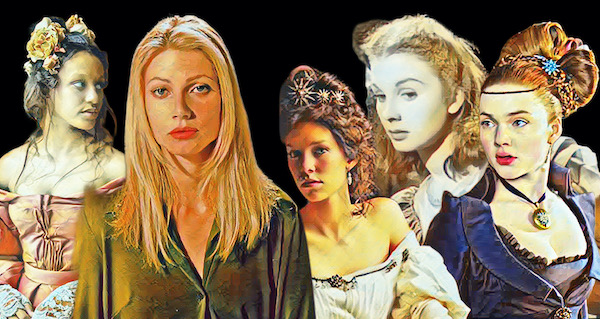
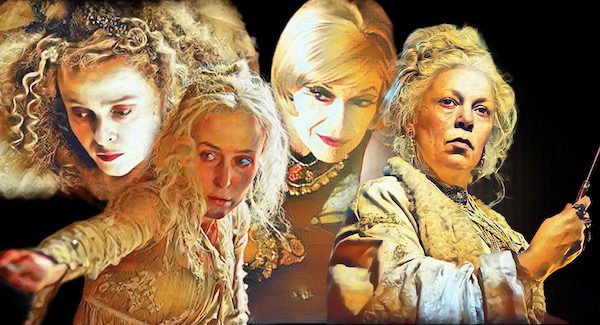
Great Expectations is one of the greatest classics of world literature, especially English, which highlights the social problems of the Victorian era through the maturation of an ambitious young orphan, navigating through scenarios of poverty, prisons, and chains as well as those of luxury and debauchery, themes Dickens favorites, which also include love and rejection. It’s also a film and TV favorite, with adaptations by David Lean, Alfonso Cuarón, and Mike Newell, among others. Actors such as Ralph Fiennes, Robert De Niro, and Ethan Hawke gave life to Pip and Magwitch, and among actresses, Claire Bloom, Vanessa Kirby, and Gwyneth Paltrow created famous Estellas, but it is precisely the role of the complex Miss Havisham that challenges women the most: from Martita Hunt to Charlotte Rampling, Helena Boham-Carter, Anne Bancroft, Gillian Anderson or Olivia Colman (the most recent) gave exciting interpretations.
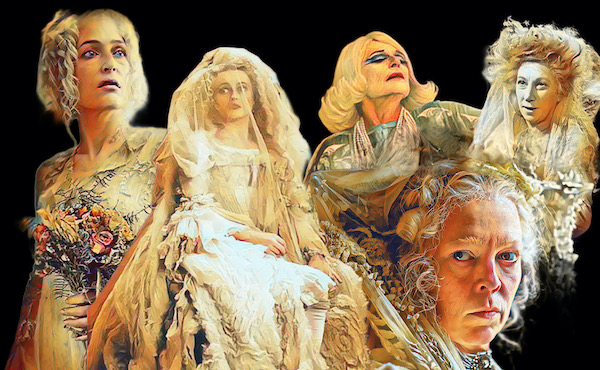
Called elderly, crazy, vindictive, embittered, opium-addicted, and manipulative, she is a wealthy woman who lives in a decaying mansion with her adopted daughter, Estella, obsessed with taking revenge on the men she considers all evil. The fact that her house has clocks broken at the same time, that she wears an old wedding dress every day of her life only reinforces the fragile mental state she was left with after being rejected by the groom at the altar, in front of everyone. More than if you promise never to have your heart broken again, you want to break those of all the men who really fall in love. For this, she uses the beautiful Estella.
Manic and obsessive, Ms. Havisham is almost always shown to be ugly. In the book, a kind of ‘corpse bride’ who manages to achieve her goal with Pip, falls into the trap of loving Estella but realizes that her revenge doesn’t “correct” the past, it only causes more pain. It’s a role that demands nuance because it’s at once pathetic, scary, and empathetic. With the exception of Biddy, women in the book’s universe are generally negative. In addition to Ms. Havisham, Estella is also distant and cruel and Pip’s sister is domineering and aggressive towards him (for some leaving the boy to associate abuse with love). Some readers identified implicit pedophilia in Havisham’s relationship with Pip, in a claustrophobic seduction. I don’t know, but all women are somehow “punished” in the end.
Although there is no documented proof, there is universal acceptance that Charles Dickens was inspired by a true story to create the iconic Ms. Havisham. It would be a wealthy Australian, Eliza Emily Donnithorne whose public humiliation of being abandoned at the altar caused her to have a nervous breakdown and isolate herself from any personal relationships until her death. Others believe that it was the English Margaret Catherine Dick who would have been the sad muse of the character, as she lived a reclusive life after being abandoned at the altar, but there is a current that suggests that it was Alice Pinard-Dôges, who committed suicide in 1894, that would be the real source. The fact that we have at least three women marked by abandonment. and humiliation is even sadder.
Most popular, however, is that Eliza is the ‘real Ms. Havisham’ as her story is documented and approximates that of the book and the author would have heard about her through her friendship with Caroline Chisholm, her personal friend who was a neighbor of the Donnithornes. Be that as it may, the drama is touching.
Eliza Emily had two sisters but was the only one to survive a cholera outbreak that took their lives while they were still living in Calcutta. Her father attempted marriages between her and the children of former East India Company colleagues in India, but she refused to accept all candidates, bringing tension into the household. On a trip to church, he met a young Englishman, George Cuthbertson, who was an employee of the shipping company and the two quickly fell in love, although his being of the lower class was a problem and they tried to keep the relationship a secret, but soon Eliza’s father found out, forbidding her to go with George. Of course, she didn’t comply. After many unsuccessful attempts to separate them, Mr. Donnithorne gave permission for the courtship in the hope that it was just Eliza’s rebellion. Once again she was wrong. When George asked her to marry him, the girl’s father then ensured that he resigned from his job and lived on an allowance with Eliza, which would effectively be a material reduction, but, as she had already faced more obstacles, she never saw money as a problem. Because on their wedding day, he just disappeared.
Eliza was dressed as a bride, the guests were present, and the wedding breakfast was ready to be served. In a nervous breakdown, she would demand that everything be exactly as it was, including the food. Some say she was pregnant and gave her daughter up for adoption, hushing up the even bigger scandal of being a single parent. There is a version that the child would have died in childbirth, worsening the mental state of the girl. Unsurprisingly, she began to avoid any company or even leave the house. She drew down the curtains in her house and lived as a hermit, but with her front door ajar in case George ever came back to her. His end, by the way, is uncertain, saying that he died a year later in Delhi.
Eliza inherited her father’s fortune and went on to live alone in the house where the garden was no longer cared for and looked more like a ghost than a living person. She died in 1886, aged 60, of heart disease (broken heart?) and a legend has it that she was found still dressed as a bride. In the dusty house, there were traces that the wedding feast had been untouched since the day of abandonment.
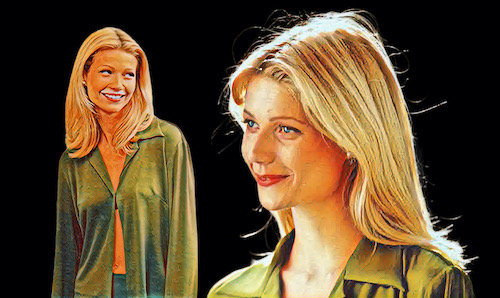
Being a classic, of course, Great Expectations has been adapted for stage, film, and TV. The first on-screen was from 1917, but the most famous is from 1946, by David Lean, but all of them, in one way or another, alter history. The beautiful version by Alfonso Cuarón transports the story to contemporary New York and has a moving soundtrack by Patrick Doyle (I have an interview with the composer at the time and he sang the central theme to me before I even recorded it) and a Gwyneth Paltrow at the height of her youth and fame, in an iconic ’90s outfit, all in green. And a cameo by the legendary Anne Bancroft as “Nora Dinsmoor” instead of calling her Havisham. Another commented version was the 2011 BBC one, with Gillian Anderson and Vanessa Kirby, a year before Mike Newell‘s film with Helena Boham Carter. Currently available on Starplus is the 2023 version of the story, adapted by Steven Knight and Olivia Colman performing as Havisham. I’ll talk more soon!
Descubra mais sobre
Assine para receber nossas notícias mais recentes por e-mail.

