
A consensus that has only been strengthened over the years is that Heath Ledger delivered the most iconic Joker in Batman history. Of the 17 actors who have been linked to the antagonist, whether in games, TV, animation, or cinema, the names most compared are Jack Nicholson, César Romero, Mark Hamill, Jared Leto, and Joaquin Phoenix, among others, but until Barry Keoghan comes into focus (we only saw a few frames of him at the end of Batman 2022), no one questions the fact that Heath was empathetic, scary and unforgettable in The Dark Knight (2008).
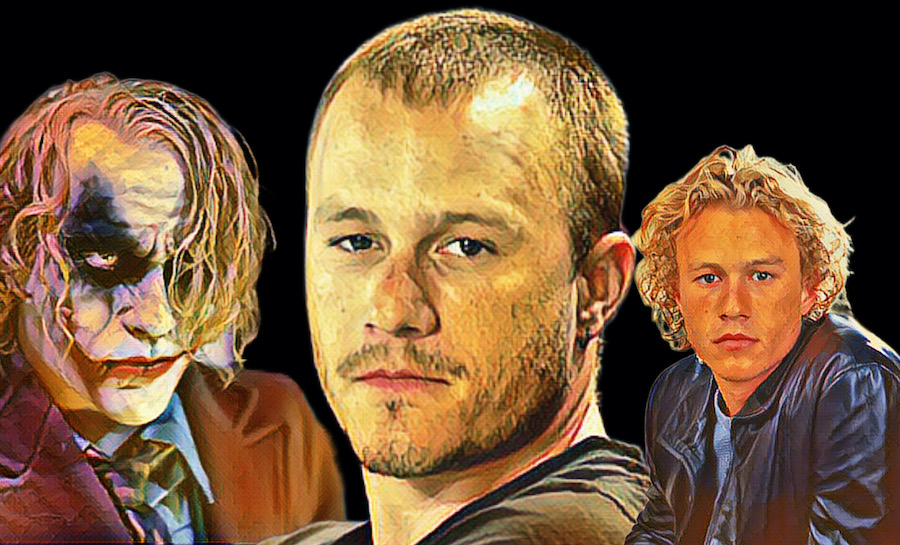
The performance would have earned him the Oscar, which he received posthumously, in life. No one doubts it, and it was so shocking that to this day some associate the actor’s tragic and unexpected death with the role. It has nothing to do with it, we must emphasize.
The fact that in 2019 Joaquin won his Oscar for Best Actor precisely as the Joker, generated a kind of discussion/competition between the two performances, which gained new momentum, tortuously, with the scandalous failure of Joker: Follie à Deux.
Many, impressed by Joaquin, equally deserving of the praise and awards he received for the role, considered that he modeled himself on Heath Ledger to give a new version of the most popular antagonist in the Batman franchise, but the surprise is that according to the actor, he modeled his Joker after what he saw of the actor, Ray Bolger, better known to the public as the Scarecrow in The Wizard of Oz. “There’s this strange arrogance almost in his movements, and I really stole it completely from him,” he told the AP in 2019. “He does this thing where he lifts his chin,” he continued, “That was probably the biggest influence.”
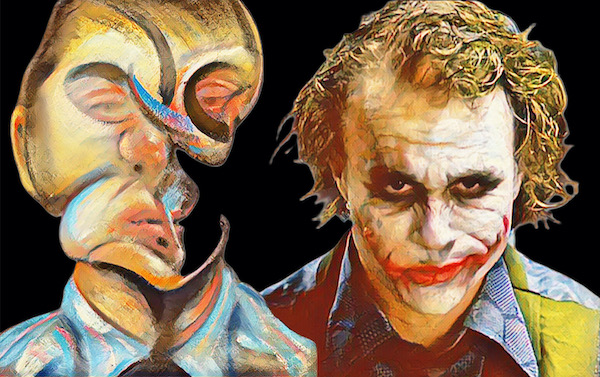
In light of this, this week several websites and newspapers reported on the information provided by director Christopher Nolan, who explained that Heath Ledger’s Joker was born from the brushstrokes of none other than the controversial painter Francis Bacon. And it really is fascinating information.
Bacon and the features of the human figure
Francis Bacon was one of the most important painters of the 20th century and his paintings are praised for being both “bizarre” and “iconic”, creating unforgettable images of human pain and trauma in post-war art.
Born in Dublin (and named after his ancestor of the same name), he had a turbulent childhood due to the war between Ireland and England. His homosexuality also attracted abuse and repression (he was whipped by his father) and he was thrown out of the house when his father caught him trying on his mother’s clothes. He was only 17 years old.
Surviving on a shoestring, he traveled around Europe and, after returning home, began painting.
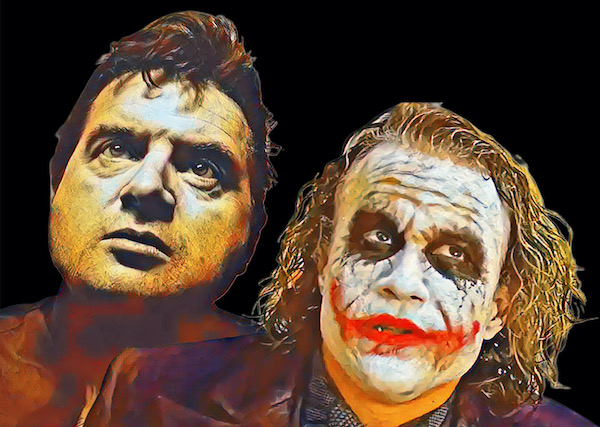
His self-taught style was a mix of surrealism from photographs, paintings, and films, making him completely original. His portraits, immortalizing figures he saw in bars and on the streets of Soho, London, were violently distorted. They looked like raw, suffering meat, isolated in geometric, monstrous, and tormented structures. His violent brushstrokes contrasted with his contemporaries and their passion for the abstract.
Nonconformity and rebellion
The images that impacted Christopher Nolan come from the post-war period, with images of contorted people, suffering from the impact of the war that engulfed the world. In particular, his famous triptychs, are currently the most expensive pieces in the world (in 2020, they broke auction records with values over 100 million reais).
“The pale, striped features grabbed me and never let go, adorning several walls in different apartments until they became a tattered mess. Years later, I showed the image to Heath Ledger as he was preparing to play the Joker in Batman: The Dark Knight and he was immediately drawn to its tortured, torturous humanity. “It informed the character’s composition in the most tactile way possible,” he told The Guardian, ahead of the National Portrait Gallery’s exhibition, Francis Bacon: Human Presence.
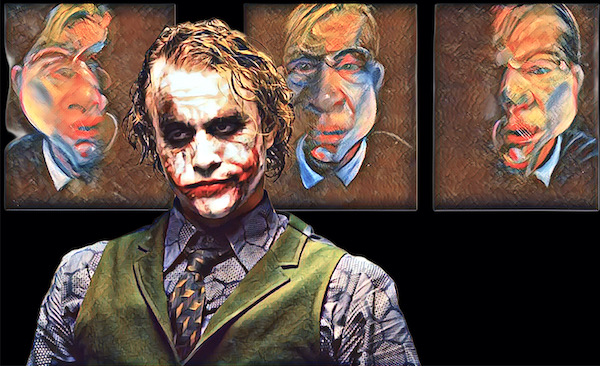
According to the director, what the actor achieved in the film was to transform the Joker into “a Bacon in the flesh”. The connection only confirms the genius of Nolan, one of the greatest auteur directors of our time. He believes he learned from Francis Bacon that the power of Art lies precisely in the physical and temporal distortions that, together, arouse emotion in the audience.
“Maybe that’s why I see Bacon as cinematic — distortions of matter and time evolve from the oil and canvas itself,” he told the English newspaper, comparing the director’s trilogy to triptychs and the study of the rise of a hero, the struggle between good and evil and the final legacy of Batman. All filled with characters and images of suffering. The truest Art in its essence.
Descubra mais sobre
Assine para receber nossas notícias mais recentes por e-mail.

