
We’ve said it more than once, and it’s true: Although espionage has never gone out of “fashion,” there is definitely a “new” trend that ensures that every platform has a spy to call its own.
Although it seems that Vienna is indeed the capital of espionage (a comment made by Michael Fassbender when preparing for The Agency), in film and TV, the city of London is often portrayed as the capital of espionage. This is due to a combination of historical, cultural, and aesthetic factors that make the city an ideal setting for plots of intrigue and conspiracy.


Why London?
The series Slow Horses, The Diplomat, The Agency, and Black Doves, not to mention The Day of the Jackal, is based in the English capital, leaving us to wonder how, after so many explosions and attacks, the agents of the CIA, MI5 and MI6 do not run into each other more often.
The History and Relevance of Royal Espionage begins with the fact that London is the headquarters of the British secret services, MI5 (internal security) and MI6 (international intelligence), which are global references in the history of espionage. This began in the Second World War and the Cold War, periods in which London was a center of strategic operations, including the work of legendary figures such as the Cambridge Five double agents and the famous Bletchley Park work in codebreaking. As the capital of the British Empire, London was the central point of a vast network of information and agents spread throughout the world.
The city’s mix of modern and classic architecture, with architecture ranging from contemporary skyscrapers like The Shard to historic landmarks like the Houses of Parliament, provides an ideal backdrop for spy stories, which often veer between the traditional and the futuristic. What’s more, areas like the Barbican, Regent’s Canal, and the City’s narrow alleyways evoke the sense of mystery and intrigue that are essential to the genre.

Of course, the ultimate pop spy icon – James Bond – also makes London immediately spring to mind. The world’s most famous fictional spy operates from the capital, and the franchise popularised both MI6 and the idea of London as an epicenter of espionage. But, in addition to Ian Fleming, writers such as John le Carré (The Spy Who Came in from the Cold) contributed to solidifying London’s image as a city of spies.
Choose your spy and you’ll have a different London
The interesting thing about the series that today takes us to the world of London espionage is that it’s not always where tourists imagine going. Yes, there are several “traditional” spots, but there are also spots that may seem “new”. In any case, there are several options for guided tours. Here are some of the spots to visit.
Slow Horses
- Regent’s Canal:
Jackson Lamb loves to meet Diana Taverner in some public places and the canal that runs through neighborhoods like Camden and Islington, the Regent’s Canal, is his favorite place. The Regent’s Canal was once a busy industrial route, used to transport coal and goods. Today, it’s one of the city’s most peaceful retreats, where even boat trips are available.
It’s also a perfect choice for the dark and introspective atmosphere of the series. A stroll through this area reveals charming bridges, houseboats, and hidden cafes, but also a quieter, more marginal side to the city.
The area around King’s Cross, which the canal runs through, has undergone a major regeneration in recent years, transforming derelict warehouses into cultural spaces and modern offices.
Famous for its tranquility and beauty, it contrasts with the chaos of central London. It is ideal for walking.
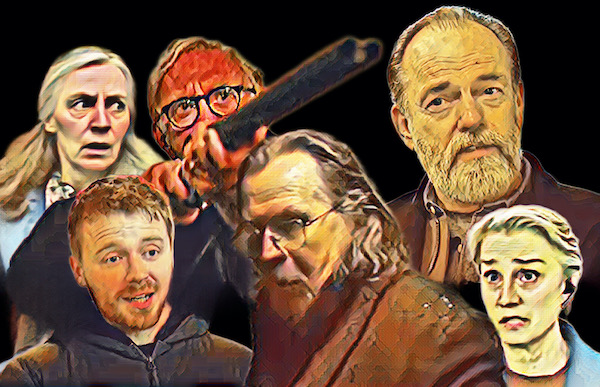
Be aware that the real MI5 is not based here, but is located at Thames House, on the west side of the River Thames, near Lambeth Bridge, and just a 10-minute walk south of Westminster Abbey. It is not open to visitors, of course.
However, the agency’s headquarters at Slow Horses is close to Marylebone train station, as well as Madame Tussauds London and the Sherlock Holmes Museum on Baker Street.
- Farringdon (Slough House):
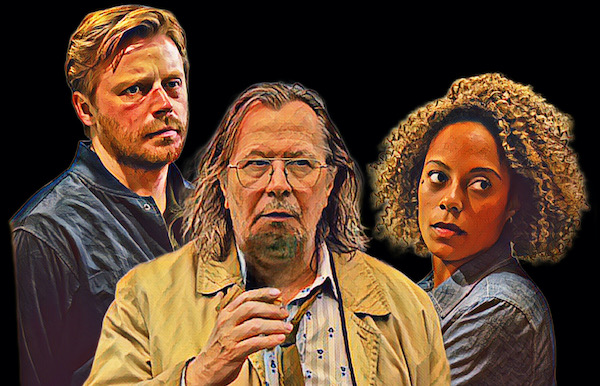
The location of the fictional “Slough House” is deliberately bland, a reflection of the condition of its spies. It is in a central area and goes unnoticed by tourists, but if you want to visit, it is close to the Barbican, known for its brutalist architecture.
The area, however, is historically rich, with a mix of medieval and modern architecture. The exact location is close to Smithfield Market, one of London’s oldest meat markets, which has been operating since the Middle Ages.
- Barbican Estate:
Built after the Second World War in an area devastated by bombings, the Barbican is an example of brutalist architecture that divides opinions. Its austere appearance often symbolizes isolation and dystopia in cultural productions, but the modernist complex of residential and cultural buildings is also an architectural masterpiece. In the series, it reinforces the oppressive atmosphere and the idea that the characters live in a dehumanized world.
Tip: Take a tour of the hanging gardens or watch a performance at the concert hall, one of the best in the city. The Barbican Library is one of the largest public libraries in London and a place little known to tourists.
- Bunhill Burial Ground
The morbid meeting point of the team, at William Blake‘s grave, is close to Barbican station, home to the fictional Slough House and the not-so-fictional Smithfield Market. On the tour, you can walk through the local streets and pass by Bank Junction, the church of Ghosts, and other important places seen on screen.
- The Shaftesbury Tavern
Near Crouch Hill station, this is the pub where the nags go after work. Or during, if you’re Jackson Lamb.
- The Langham Hotel, Portland Place
One of London’s most elegant and tallest apartments, and the setting for several Sherlock Holmes stories – The Langham appears in Slow Horses.
- Granary Square, King’s Cross
The main location for season 4 of Slow Horses is King’s Cross train station. The final scene was filmed at the Lighterman pub in Granary Square.
Black Doves
- Shoreditch and Hackney
The vibrant neighborhoods of East London are perfect for nightlife scenes and clandestine encounters, with their graffiti-covered streets and mix of sophisticated and alternative bars, representing the duality between luxury and danger explored in the series. The settings for several nighttime scenes, the locations convey the contrast between luxury and the underworld.
Cafes and bars that appear are real, such as the Nightjar where Black Dove agents hang out.
Tip: Visit Boxpark or Columbia Road Flower Market, which captures the creative spirit of the area.
- Borough Market
This market was once the gateway for fresh produce from all over England and still retains an air of authenticity. Scenes from films such as Harry Potter and Bridget Jones’s Diary have also been filmed here.
Representing London’s mix of modernity and tradition, the historic market is the backdrop for tense moments in Black Doves and is one of the oldest markets in London, dating back to the 13th century. As a tourist attraction in the city, sample the delicacies of local vendors, such as artisanal cheeses and dishes from around the world, after all, it is famous for supporting local producers and sustainable practices, a reflection of contemporary London.

- Southbank
Areas close to the National Theatre and the Oxo Tower capture the artistic and urban face of London.
- Pubs
The series features several traditional pubs, including the historic The Coal Hole in Covent Garden, said to have been a regular haunt of Charles Dickens, with its dark wood interiors and magnificent stained glass windows, and The Market Coffee House & Bar in Spitalfield.
They also filmed at the favorite pub of British MPs, The Westminster Arms in Whitehall, and The Palm Tree in Mile End, an area that was destroyed during the Blitz of World War II, so the pub now stands alone in a park. It also features in the Bad Sisters series. Another prominent location in Black Doves is The English Restaurant in Spitalfields, East London. The 17th-century building has been restored with wood-paneled interiors and is renowned for its traditional British cuisine.
- Golden Jubilee Bridges and Park
The Golden Jubilee Bridge is one of London’s most popular tourist attractions and is located near Jubilee Gardens on Queen’s Walk.

- Somerset House
The late 18th-century neoclassical palace is now a cultural hub. Highlights include the Nelson Stair, the spiral staircase designed by architect Sir Robert Taylor in the late 18th century.
- Liberty
The iconic department store in the heart of London is known for its Tudor-style architecture and is located on Regent Street. Established in 1875, the building was only completed in 1924 and is famous for its dark wooden beams and intricate detailing inspired by traditional Tudor architecture.
- Black Doves Bingo
Located in Granada Tooting in Wandsworth, it is considered one of the most spectacular historic cinemas in the UK, having opened in 1931 with an Art Deco design. It was once a theatre where Sinatra and the Beatles performed, but today it is a bingo hall known as Buzz Bingo and The Slots Room Tooting.
The Agency
- Mayfair
Representing the glamorous side of the series, Mayfair is often featured in scenes involving power and elegance. Restaurants like The Connaught and designer shops contribute to the sophisticated tone.
Stop at Mount Street Gardens, a small oasis hidden away from the busy streets.
- Westminster Bridge
A symbol of power and control, it is often often used as a backdrop. In addition to its architectural importance, the bridge symbolizes the connection between parliament and the people. In the series The Agency, it is used as a backdrop for moments of decision and introspection.
Tip: Walk across the bridge at dusk for stunning views of Big Ben and the Thames.

- Tower Bridge
It appears as a symbol of London, but also as a strategic location for encounters and chases.
You can visit the interior of the bridge, with glass walkways that offer unique views of the city.
The Diplomat
- 10 Downing Street (or its replicas)
Although interior shots are recreated in the studio, the exterior scenes feature the iconic residence of the Prime Minister, with its iconic facade (which is authentic) and often appears as a symbol of British power.
Fun fact: It is not possible to visit the interior, but the street can be seen up close during tours of parliament.
- The Strand and Somerset House
Somerset House was once the headquarters of the United Kingdom’s General Registry Office, where marriages, births, and deaths were recorded. This neoclassical palace serves as the setting for fictional diplomatic meetings. Today, it is a cultural center that hosts art exhibitions and events.
In addition to its art exhibitions, the venue hosts outdoor concerts in the summer and an ice skating rink in the winter, making it a dynamic cultural hotspot.

- Victoria Embankment Gardens
A space used for more introspective moments by the characters, this is a peaceful park in the heart of London. It is a great place to escape the hustle and bustle of the city.
Tip: Explore the sculptures and historical monuments scattered throughout the garden.
The Day of the Jackal
- Ladbroke Grove
A central neighborhood that mixes the charm of West London with more industrial areas. Charming, it is famous for its colorful houses and the Portobello Road market. In the series, its vintage aesthetic reflects the tone of espionage.
Tip: Take time to explore the antique shops and cafes in the area.
- Leadenhall Market
One of the most aesthetically striking locations, used for clandestine meetings, is a covered market that mixes Victorian architecture with a magical vibe because it is also known for its appearances in productions such as Harry Potter and the Philosopher’s Stone, where it served as “Diagon Alley”.
Dating back to the 14th century, Leadenhall Market is a true trip back in time, with its wrought iron ceiling painted in vibrant colors.
Have a coffee or explore the luxurious shops that occupy the space.

- Whitehall
Always present in stories of espionage or politics, it marks the heart of British power and appears in scenes involving high-risk decisions.
Fun fact: Take a guided tour of the Churchill War Rooms for a unique historical experience.
Descubra mais sobre
Assine para receber nossas notícias mais recentes por e-mail.


Reality like exploding pagers and walkie-talkies or even exploding toothbrushes and razors is leaving espionage fiction in the ashtray of history. Why not forget about fictional agents like Bond and Bourne dashing to save the world from disaster and forget about CIA and MI6 officers reclining on their couches dreaming up espionage scenarios to thrill you. Check out what a real MI6 and CIA secret agent does nowadays. Why not browse through TheBurlingtonFiles website and read about Bill Fairclough’s escapades when he was an active MI6 and CIA agent? The website is rather like an espionage museum without an admission fee … and no adverts. You will soon be immersed in a whole new world which you won’t want to exit.
After that experience you may not know who to trust so best read Beyond Enkription, the first novel in The Burlington Files series. It’s a noir fact based spy thriller that may shock you. What is interesting is that this book is apparently mandatory reading in some countries’ intelligence agencies’ induction programs. Why? Maybe because the book is not only realistic but has been heralded by those who should know as “being up there with My Silent War by Kim Philby and No Other Choice by George Blake”. It is an enthralling read as long as you don’t expect fictional agents like Ian Fleming’s incredible 007 to save the world or John le Carré’s couch potato yet illustrious Smiley to send you to sleep with his delicate diction, sophisticated syntax and placid plots!
See https://theburlingtonfiles.org/news_2023_06.07.php and https://theburlingtonfiles.org/news_2022.10.31.php and https://theburlingtonfiles.org/news_2024.08.31.php.
CurtirCurtido por 1 pessoa
I wasn’t aware but I will definitely look into it! Thanks!
CurtirCurtir
Well worth reading the recent news articles for starters at TheBurlingtonFiles
CurtirCurtido por 1 pessoa