
We’ve often talked about Abby Anderson’s (Kaitlyn Dever) entry into The Last of Us, but even more frightening than that has always been her leader and mentor: Isaac Dixon (Jeffrey Wright), whose official entry into the plot happened now in episode 4 of the second season. So it’s time to meet the “General of Survival,” the ambiguous figure within the game’s universe and the series.
Although his screen time is limited, his presence and influence are deeply felt throughout the game and the story, especially through his impact on Abby’s narrative and the conflicts involving the WLF (Washington Liberation Front) and the Seraphites (also known as Scars).

Identity and position within the universe
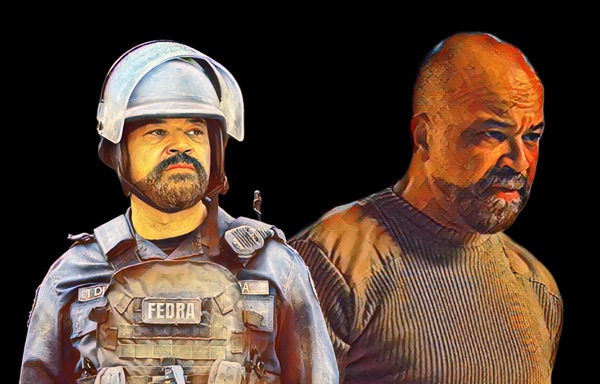
Isaac Dixon is the leader of the WLF, the main organized military force in Seattle. Little is known about Isaac before the Cordyceps outbreak; even those who know him from the game only know that, before assuming leadership of the militia in Washington state, he was a war veteran who survived the quarantine.
When he was a Sergeant at FEDRA (Federal Disaster Response Agency), disillusioned and fed up with the corruption and overwhelming control of the group, he led a successful rebellion, betraying his team without mercy. He joined other ex-military and civilians, transforming the W.L.F. into a powerful and disciplined militia. Although Ellie’s (Bella Ramsey) energy is dedicated to hunting and killing Abby, Isaac functions as a secondary but no less important villain, hindering Abby in her part of the narrative.
Thus, in both the series and the game, we follow the story of Isaac as he deserts FEDRA and joins the guerrilla group Washington Liberation Front, with its founders Emma and Jason Patterson, in the early days of the W.L.F.

Character and ideology
Isaac is, above all, a pragmatist. He believes in force as a way to preserve order and survival, which makes him a controversial figure. To his allies, he is a firm, strategic, and visionary leader who has brought security to the citizens of Seattle. To his enemies — and even to some within his own group — he is an authoritarian who does not hesitate to make brutal decisions in the name of a greater good.
Despite his coldness, Isaac is complex. There are signs that he carries a certain emotional burden for his choices. His leadership is marked by a sense of purpose, but also by a moral hardening that brings him closer to historical military figures willing to sacrifice lives for “peace”.
In other words, as George R. R. Martin would say, as a villain, he is the hero on the other side. No one in The Last of Us is exactly “pure,” and apocalyptic survival eventually challenges everyone’s humanity. We will clearly see the same thing with Isaac.
Conflict with the Seraphites
If in season 1 the fear was of FEDRA, now we understand that there are more conflicts out there. In this case, Seraphites (Scars) and Wolves hate each other.
Isaac leads the WLF in a bloody war against the Seraphites, a religious and isolationist group that opposes the WLF’s military dominance in Seattle. The Scars are led by a charismatic woman known only as “The Prophet”, who claims to have visions of a new path for humanity.
The war between the two groups is one of the central plots of Abby’s part in the game and demonstrates the failure of any attempt at coexistence or diplomacy — Isaac believes that only the complete elimination of the Seraphites will guarantee the safety of the WLF.
There are mentions of frustrated negotiations between Isaac and the Seraphites before the all-out war, which suggests that, despite being a militarist, he considered diplomacy but gave up when he understood that the fundamentalism of the Seraphites would not allow concessions. This is because the unstable peace ended quickly after a group of Seraphite teenagers were killed after provoking a WLF patrol. When the war reignited, the WLF finally arrested the Prophet and, under Isaac’s command, executed her.

His relationship with Abby
Isaac has a relationship of trust and authority with Abby Anderson, whom he treats as one of his main soldiers and, in a way, as a protégé. He seems to see Abby as an extension of his own military values and her willingness to do whatever it takes—including acts of extreme violence—to protect the WLF and defeat the Seraphites.
Isaac sees Abby as one of his best soldiers—disciplined, efficient, and loyal to the WLF. He values her for her strength, resilience, and commitment to the group’s mission. Throughout the game, there are hints that he views her almost as a mentee, someone he bets on as the future leader of the organization.
In turn, Abby admires Isaac as a strong and determined leader. For much of the narrative, she believes in the Wolves’ mission and follows their orders with conviction, even when they involve violent actions. Isaac, it seems, is a father figure to Abby after the death of her father (the Firefly surgeon killed by Joel).
The conflict between the two emerges when Abby begins to question the purpose of the war against the Seraphites and, especially, when she meets Yara and Lev. Isaac represents the hard line of the WLF: there is no room for empathy, only for order and victory. Abby, on the other hand, begins to break with this logic, especially after developing a bond with Lev.
Isaac notices this change and, although he still respects Abby, sees her actions as a betrayal. He tries to bring her back under control, offering her a chance for redemption — but does not hesitate to order the execution of Lev and Yara, when Abby refuses. Thus, they become enemies (and our perception of Abby changes as well).
SPOILER: His fate in the story
Before dying violently during the mission led by Abby to rescue Yara and Lev, Isaac leaves a trail of blood and fear in his wake. And that is precisely what changes Abby’s trajectory, making her more personal and redemptive.
Isaac Dixon’s most memorable scene in The Last of Us Part II occurs during the final attack on the Seraphite island, when Abby and Yara are captured by the WLF. Surrounded by his soldiers, Isaac personally comes to execute the prisoners, demonstrating absolute control of the situation.
Because he has an emotional connection with her, Isaac still tries to convince Abby to hand over Lev, stating that he still trusts her, even after her desertion. But Abby refuses. Unmoved, Isaac decides to execute the siblings right there, but before he can fire his weapon, Yara shoots Isaac, killing him, before being machine-gunned by the soldiers.
This scene is remarkable because it shows the limits of Abby’s obedience and the collapse of the authority that Isaac represents, determining the point of no return for Abby, who breaks with the WLF once and for all and chooses a personal path, far from the war between factions. Visually and emotionally, the scene sums up what Isaac represents: the empire of fear, broken by an act of disobedience driven by love and loyalty.
Even dead, Isaac remains present in the memory of the WLF and in the ruins of Seattle, representing the figure of the leader who chose the path of strength until the end. His fall also symbolizes the disintegration of the WLF as a unified power, giving way to a new form of chaos.
It is worth explaining that in the game, Abby and Ellie’s trajectories are parallel (until the confrontation between them) and Ellie always attacks the WLF in a stealthy and decentralized manner, killing figures such as Nora, Jordan and Mel, but she does not interact with the group’s high hierarchy. Isaac is killed before she gets close to him.

Symbolism
Isaac is an embodiment of post-apocalyptic militarism. He represents what happens when survival becomes dogma, and strength replaces empathy. In contrast to characters like Ellie (driven by revenge) and Abby (seeking redemption), Isaac is not emotionally engaged in moral dilemmas — he acts as a stabilizing but unyielding force.
He is also a counterpoint to the religion of the Seraphites: while they indulge in spiritual fanaticism, Isaac clings to military order as a faith. Both extremes collapse, showing that neither path is sustainable. The fact that an actor of the caliber of Jeffrey Wright, who was nominated for an Oscar and was leading the cast of Westworld, gives the character an imposing presence, even with little screen time.
Isaac Dixon is thus a fundamental piece in the construction of the morally ambiguous universe of The Last of Us. His rigidity, leadership and choices resonate far beyond his death, profoundly affecting Abby’s arc and the collapse of the organized structure in Seattle. Although he is never a protagonist, he represents one of the most realistic and disturbing forces in the game: the belief that, at the end of the world, only order imposed by fear can guarantee survival.
Descubra mais sobre
Assine para receber nossas notícias mais recentes por e-mail.

