
Since emerging from the shadows of Transylvania in 1897, Dracula, the novel by Bram Stoker, has never left the Western imagination. Not merely as a vampire myth, but as a reflection of cultural obsessions: fear of the Other, Victorian sexual anxiety, the fantasy of immortality, the clash between science and superstition. Over a century later, the Count continues to haunt literature, cinema, and the collective psyche—mutating, undying, constantly reborn in new forms. The latest: Dracula: A Love Tale, Luc Besson’s lavish production featuring Caleb Landry Jones in one of the strangest and most lyrical incarnations of the character.
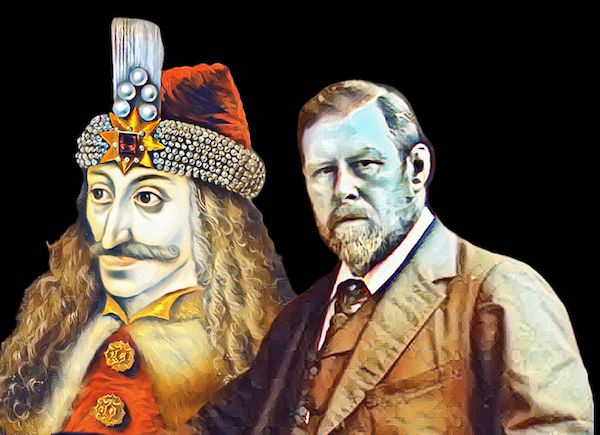
But before reaching Besson’s operatic delirium, it’s worth remembering where it all began. Bram Stoker’s Dracula is an epistolary collage: letters, diaries, and newspaper clippings. There is no omniscient narrator, only fragments of voices witnessing the advance of an indecipherable entity. The vampire himself barely appears—and when he does, he’s grotesque, animalistic, cadaverous. Unlike the seductive aristocrat of later versions, Stoker’s original Dracula is more a symbol of colonial terror and bodily degeneration—the very things the British Empire feared most. And yet, the character transcends his Victorian roots to become an archetype.
It was the cinema that gave this archetype a face and body. First with Max Schreck in the expressionist Nosferatu (1922), an unauthorized version directed by F. W. Murnau. Then, with Bela Lugosi in 1931, he established the accent and the iconic black cape. In the 1950s and ’60s, Christopher Lee turned the Count into a symbol of desire and violence in Hammer’s horror cycle. And in 1992 came what many considered the definitive version for years: Bram Stoker’s Dracula, directed by Francis Ford Coppola.
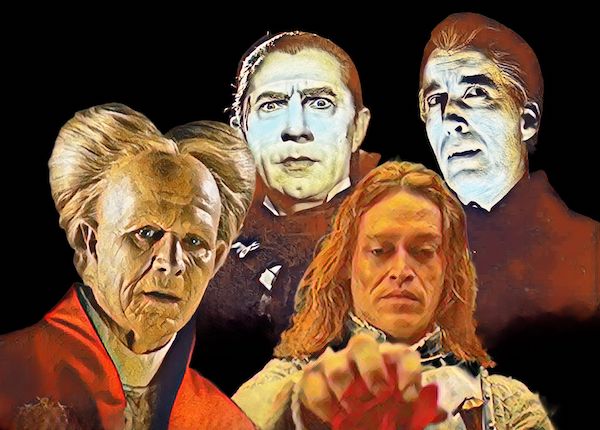
The title promised fidelity to the original text—and in many ways, it delivered. But Coppola’s film went further, transfiguring Victorian horror into a baroque tragedy about love that spans centuries. Gary Oldman, cloaked in organic armor, insane hairstyles, and the eyes of a wounded animal, portrayed the Count as a figure devastated by grief. The film’s most striking addition: the explicit connection between Mina Harker (Winona Ryder) and Elisabeta, Dracula’s wife, lost centuries ago. This reincarnated love isn’t in Stoker’s novel—but it has since become part of the emotional canon of the character.

Coppola fused eroticism, death, romance, and theatricality into a film where everything teeters on the edge of excess: Wojciech Kilar’s sweeping score, hand-crafted makeup, layered shots, and shadows that move on their own. The result is a gothic opera in which the vampire is, above all, a wounded man, seeking an impossible absolution. Coppola himself, after years adrift in lesser projects, seemed to seek in the film an artistic redemption. Like the protagonist, he wanted to love—and be loved—once more.
Three decades later, Luc Besson appears to be following a similar path. After years marred by commercial failures and serious allegations (from which he was legally cleared, though not without controversy), Besson returns with what’s already being called his most personal project since Léon: The Professional. Dracula: A Love Tale makes no pretense of faithfulness to Stoker, nor does it try to outdo Coppola in baroque grandeur. Instead, it bets on a complete reinvention of the myth—closer to fable, romantic fantasy, and passionate psychosis.
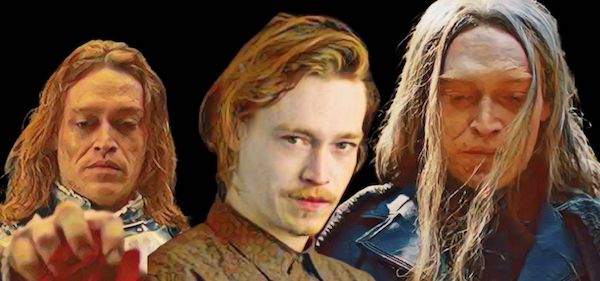
Here, Dracula is not the villain invading London, but a solitary figure, cloistered in his castle, waiting for four centuries for the reincarnation of Elisabeta. When he discovers Mina, he believes he’s found her again. The plot moves between Transylvania and a reimagined Paris during the centennial celebrations of the French Revolution. The story is no longer about good versus evil, but the fragile line between eternal love and madness. The horror stems from waiting, from fixation, from the idea that time heals nothing—it only accumulates.
In the role of the Count is Caleb Landry Jones, an actor known for disturbing, fragile, and intense performances. With four hours of daily makeup, platform shoes, and Renaissance-inspired costumes, Caleb embodies an androgynous, morbid, and devout Dracula. He is neither the classic seducer nor the animalistic monster: he is a kind of Christ of love, condemned to live too long. His pain is ancient, his delirium almost childlike. Besson, who has said he wrote the script specifically for Caleb, is not trying to tell the story of Dracula, but of a man in love who doesn’t know how to die.
This version shifts the vampire myth from its traditional axis—and perhaps because of that, it works as a synthesis of all that came before. From the fear of the foreigner in the original novel, to the torment of the eternal lover in Coppola, and now to Besson’s dreamlike fantasy. Dracula ceases to be a threat or a symbol and becomes almost a martyr, a walking poem. A reflection of cinema itself: condemned to repeat stories, searching for an image that might save it.
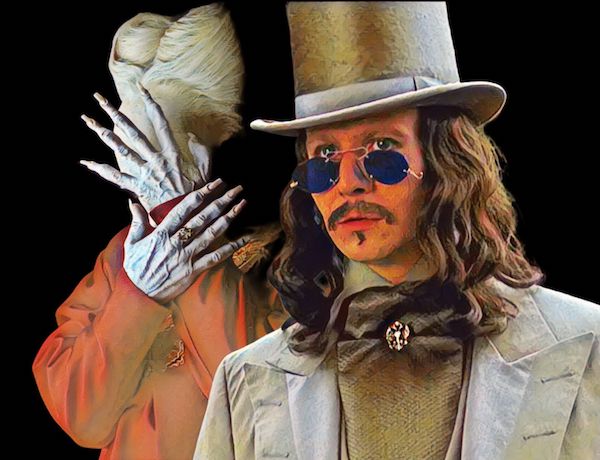
Over the decades, each Dracula has reflected the desires and anxieties of its time. Stoker’s Dracula spoke to a declining empire. Lugosi embodied the fear of the foreign. Lee’s mirrored the repressed desire of postwar Britain. Coppola expressed the trauma of the 20th century. Besson’s, perhaps, is the first to speak to the emotional collapse of a liquid era—obsessed with lost loves, where everyone wants to live forever, even at the cost of their own humanity.
Dracula, after all, has never been only about blood. It’s about what we’re willing to do not to die. And about what we lose, precisely, by not dying.
Descubra mais sobre
Assine para receber nossas notícias mais recentes por e-mail.

