
As I anticipated, in July my focus will be on what is currently the best air show: The Gilded Age. In the spectacular and unforgiving society of that period, few characters hold as much power—and poison—as Bertha Russell. She is a woman who climbed to the top through sheer ambition, but who seems incapable of allowing her children to walk paths beyond her control.
Bertha is the type of mother who still resonates today in many traumatic dynamics—a mixture of overprotection, projection, and control—which makes it both amusing and intriguing how fiercely actress Carrie Coon defends her.

In the show’s third season, her tension with the children reaches a peak: Gladys is finally pushed into a loveless marriage with the Duke of Buckingham, while Larry struggles to maintain even a shred of emotional independence in the face of a mother who sees him as both heir and extension of herself.
It’s worth drawing a psychological profile of Gladys and Larry, their relationships with Bertha, and the potential future consequences of this game of appearances, guilt, and control. We also observe how these conflicts mirror—or contrast—with Marian Brook’s trajectory and the surprisingly affectionate stance of her aunt Agnes van Rhijn, as well as the firm and autonomous posture of Peggy Scott.
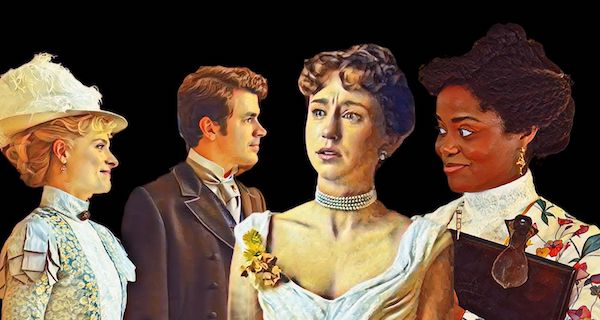
Gladys Russell: A Prisoner in Luxury
The third episode of Season 3, Love Is Never Easy, delivers a symbolic—and literal—portrait of the young Gladys. Painted by John Singer Sargent in a portrait that dazzles New York society, she is presented as Bertha’s visual triumph: beautiful, demure, desirable, admirable. But what the painting doesn’t show is the deep emotional defeat the image conceals.
After losing Archie in Season 1 (pushed away by threats from the Russells) and spending months dreaming of marrying for love—especially with Billy Carlton—she counted on her father George’s quiet support to follow her heart. But Gladys finds herself emotionally drained and yields to family pressure. She agrees to marry the Duke of Buckingham—a man who, though polished and respectable, means nothing to her emotionally.
Actress Taissa Farmiga described this moment as the result of emotional collapse: “She’s dealing with fear of the future, with the weight of external pressures, and the pain of a broken heart. There comes a point where you just want everything to stop.” It’s a silent, almost numb surrender, marked by the scene where her pearl necklace breaks and scatters on the floor—a clear symbol that something inside or around her has shattered.

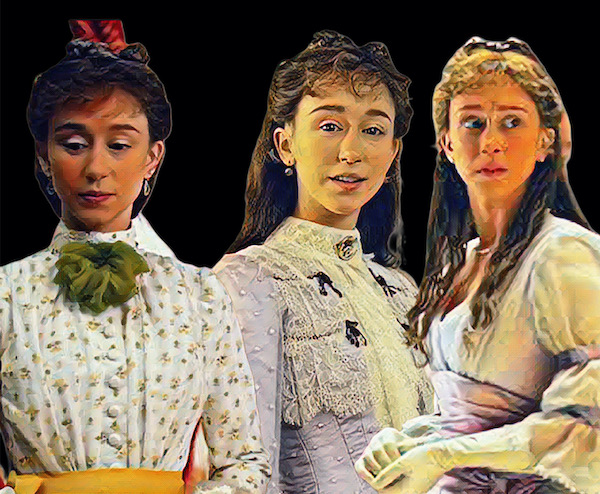
Gladys is clearly unprepared for adult life—but that unpreparedness is a direct result of the environment Bertha created. She was kept isolated, watched over, and prevented from developing emotionally or socially. When the mother remarks that her daughter “still has dolls in her room,” what sounds like a criticism of Gladys’ immaturity is, in fact, a confession: Bertha never allowed her to grow up. And the irony is that Bertha treats her like a doll herself.
Gladys wants a marriage based on love out of pure naïveté—not emotional maturity, but a lack of confrontation with reality. She has never truly suffered, never chosen, never faced the world as an adult. When the world finally reaches her, with its harsh rules and cruel arrangements, she collapses.
In that sense, Bertha is right when she says her daughter doesn’t know what she wants. Gladys knows that only by marrying and leaving her parents’ home will she become her own person, even if she has no idea who that is or how to survive. She acts like a spoiled girl who inspires no confidence.
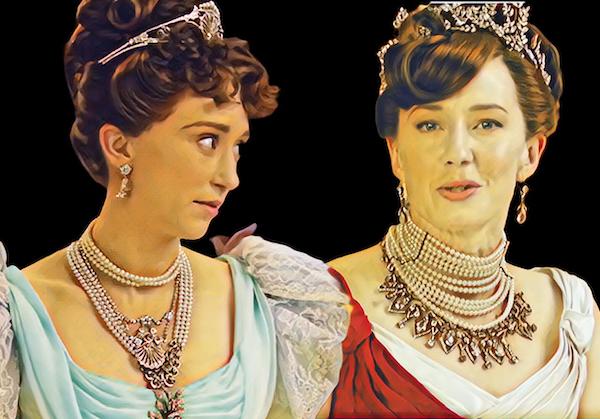
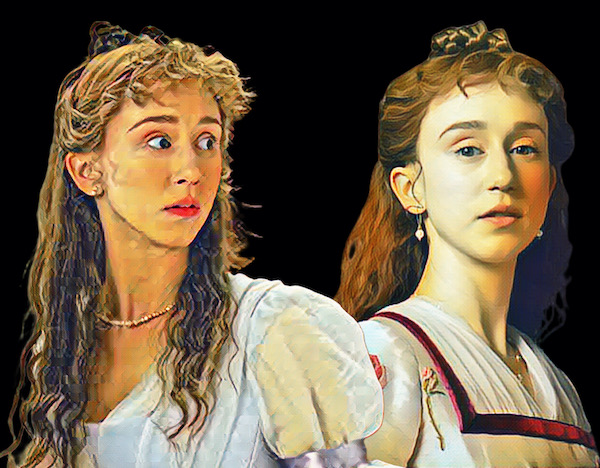
Both times she fell in love were with boys as weak as herself—on paper, good candidates, but with no real ability to confront George or Bertha. She nearly fell for Oscar, who understood the game but wasn’t good enough in Bertha’s eyes and was simply wrong in George’s.
George doesn’t think Hector, the Duke, is right or wrong. He’s an expensive match, but the title is powerful. What he wanted was for Gladys to choose—whether for love or practicality. But again, Bertha didn’t help her daughter develop any real personality. The result? She gave in, defeated, to a world far from rosy.
Larry Russell: The Hesitant Heir
At first glance, Larry appears freer. He mingles with architects, speaks openly with Marian, and even asserts himself against some of his mother’s wishes. But this freedom is only surface-level. In reality, he lives under the same emotional expectations—just less overt.
Bertha doesn’t demand an immediate marriage from Larry as she does with Gladys but surrounds him with implicit pressures. She wants him married to someone of “high social reach.” She expects him to run George’s businesses, to represent the Russell clan as the “model son,” the “man of vision,” the “proper heir.” This burden, though subtler than what weighs on Gladys, is wrapped in conditional affection, which makes it even more powerful: to receive love, Larry must follow his mother’s script.

And whenever he veers from that script—like getting closer to Marian Brook—Bertha responds with strategic coldness. She doesn’t forbid it outright but makes it clear she disapproves, doesn’t trust him, and expects more. She doesn’t shout or impose, but in families like this, silent disappointment is a very effective form of emotional violence.
She wanted him with Carrie Astor, and now perhaps with Martha Delancey, both daughters of traditional wealthy families. She opposed his relationship with widow Susan Blane, fearing he—less naïve than Gladys, but just as impressionable—might fall in love. When Larry refused to break it off, Bertha went straight to Mrs. Blane and dismissed her rudely (but honestly).

Now she sees Marian—though connected to a respectable family—as another obstacle since she has no fortune. How will she handle that and win? First, she wants Gladys married.
Deep down, Larry doesn’t break away from his mother because he’s afraid of losing her. His dependence is not just material—it’s emotional, symbolic, relational. And Bertha knows it.
Bertha Russell: The Mother Who Doesn’t Raise Children—She Shapes Mirrors
The key question, then, is not just what Gladys and Larry do—but what Bertha failed to do. Despite her talent for navigating society and forging powerful alliances, she failed to prepare her children for real life—or even for the very plans she made for them.
Psychologically, Bertha fits the mold of a “classic narcissistic mother” in the clinical sense: she projects onto her children (especially Gladys) the continuation of her own dreams and seeks, through them, confirmation of her own success.
The validation Bertha wants from the world—recognition, prestige, status—depends on her children’s performance, creating a subtle manipulation dynamic, often masked as “protection” or “motherly love.”
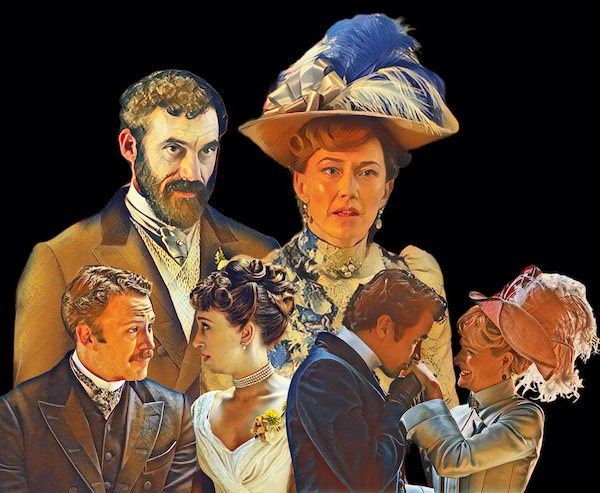
Bertha is not a one-dimensional villain, but a deeply ambitious, strategic, ruthless, and emotionally manipulative character—operating under her own logic of power and social ascent, even if it costs her daughter’s subjectivity. Her behavior can be described, in some ways, as relationally perverse, because she does not recognize her children as individuals with their own desires, but as tools to achieve the ultimate consolidation of the Russells in New York’s elite. This instrumentalization, done without guilt or visible empathy, is a hallmark of a perverse dynamic.
Bertha shows no genuine empathy for her daughter’s pain. When Gladys cries or hesitates, she responds with irritation, indifference, or emotional blackmail. This aligns with the perverse psychic structure, which denies the other’s autonomous emotional life. To Bertha, Gladys isn’t suffering—she’s being “difficult.”
The relationship between Bertha and Gladys is defined by a logic of total domination, where the mother tolerates no boundaries and allows no negotiation. The daughter’s will is constantly annulled, and any resistance is met with doubled force. This is typical of perverse structures, which cannot coexist with otherness—only with submission.

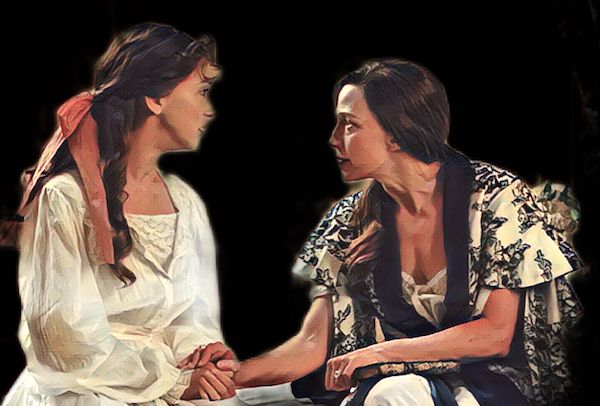
Bertha feels no remorse for pushing Gladys into a loveless marriage. On the contrary: she flaunts the match as a trophy. The absence of guilt or discomfort in the face of someone else’s suffering is central to perversity.
It’s important to note that Bertha Russell is not portrayed as a psychopath but as a woman shaped by a historical context in which a family’s success depended directly on the marriage alliances of its daughters. She is both a product and an agent of this system. Her “perversity” is partly a functional and strategic response to the patriarchal, classist world of the Gilded Age—but that doesn’t excuse her emotional responsibility.
Gladys lacks the maturity to face the Duke or deal with a broken heart. Larry hesitates in front of his mother even when he knows what he wants. In practice, Bertha raised two young adults who cannot exist outside her orbit. This immaturity isn’t an accident—it’s the result of a long-term control strategy beginning in childhood and continuing into adulthood.
Psychologically, Bertha Russell represents the maternal figure who loves her children as extensions of herself—not as individuals. She wants them to succeed, as long as it’s on her terms. She wants them to be happy, as long as they obey. Her love is conditional: do not defy her.
Agnes van Rhijn: The Possible Counterpoint
Though they live on opposite ends of New York’s elite, Agnes van Rhijn and Bertha Russell share a similar pragmatism regarding marriage and the fate of young women—but they differ profoundly in sensitivity and ambition. Agnes, while rigid and traditional, is not driven by social climbing, but by static values of class and honor.
“I don’t wish her to marry for money. Only to marry for security, support, and, God willing, affection.”
—Agnes on Marian, Season 1 of The Gilded Age
When Marian decides not to marry Dashiell Montgomery, it is Agnes who offers comfort: the usually stern aunt shows genuine affection and understanding, acknowledging her niece’s pain without blame or judgment. It’s a moment filled with empathy, starkly different from Bertha’s cold manipulation of Gladys’ decision.
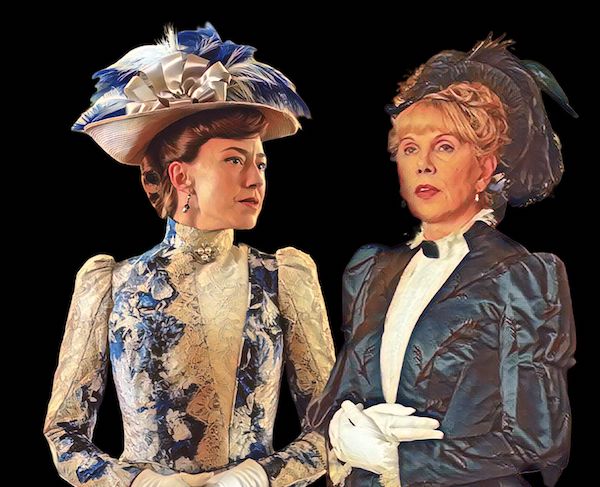
Both young women—Marian and Gladys—want to marry for love, but come from very different places: Marian, shaped by her parents’ failed marriage, still believes love is worth the risk; Gladys, shielded from real pain, idealizes romance as if it guarantees happiness.
The essential difference is that Agnes sees Marian as a woman capable of learning and choosing, while Bertha still views her daughter as a pawn on her board.
Peggy Scott: The Woman Who Dares to Say No
If Gladys Russell is the image of resigned obedience and Larry lives trapped in the illusion of autonomy, Peggy Scott represents the harder—but perhaps more honest—path of refusal. The daughter of a powerful man within the Black community and raised to be a respectable Brooklyn lady, Peggy also bears the weight of familial expectations. Her father, Arthur Scott, wants her to obey, to follow a “safe” path, and to abandon writing and activism in favor of marriage and stability.
But unlike Gladys, Peggy has faced devastating losses, been betrayed by her parents, lived far from home, and made painful choices—yet they were hers.
That’s what sets her apart: pain made her conscious, not submissive. She rejects marriage for convenience, chooses her vocation over family expectations, and keeps seeking a place where she can exist freely. While Gladys accepts the Duke with tears in her eyes, Peggy faces the altar like a prison—and therefore doesn’t go.
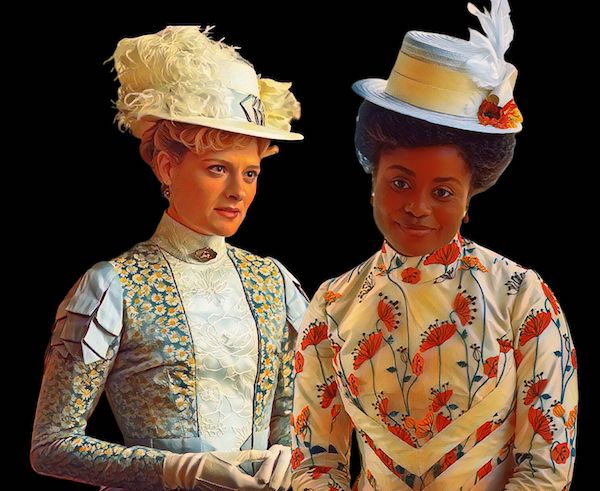
She is Gladys’ mirror opposite: equally well-raised, equally burdened by expectations, but with the courage to say “no” when everything and everyone demand a “yes.”
Peggy’s story shows that it’s not enough to have resources or education—you must have inner space for autonomy. Bertha suffocates, Mr. Scott overprotects, but Peggy, alone, finds room to breathe. And maybe that’s why, among so many women shaped to obey, she is the only one who already knows exactly who she is.
What Now? Is There Still an Escape Route?
Gladys, at this point in the story, seems defeated. Her engagement to the Duke of Buckingham doesn’t signal a personal victory, but a surrender. The scene where she accepts the proposal without emotion—and the symbolic breaking of the pearl necklace—point to the emotional void of someone who gave in because they could no longer fight. The question now is: will the wedding really happen? Or will she still find the strength to flee before the altar? (Spoiler: yes, she marries him.)
More interesting, though, is Larry’s crossroads.
He has yet to make his final choice. He is in love with Marian Brook, a woman his mother sees as socially unacceptable—but who represents the only genuine affection in his current emotional landscape. If he follows that path, he’ll have to confront Bertha directly for the first time—and likely face emotional and material consequences.
The central question is: Will Larry be able to break the myth of the perfect mother? Will he realize that the love Bertha offers is conditional on obedience—and therefore limited? Or will he remain trapped in a relationship that slowly suffocates him while pretending to protect him?
Everything points to the Russell siblings’ fates diverging. Gladys has already been led to sacrifice. But Larry still has a choice. He can be the heir who finally breaks the mirror—who stops repeating his mother’s story and begins to write his own.
If The Gilded Age has taught us anything so far, it’s that even the best dressed can be imprisoned. And sometimes, the greatest act of freedom is to disobey in silence—or love who society, and your own mother, say you must not.
Descubra mais sobre
Assine para receber nossas notícias mais recentes por e-mail.

