
Long before it became inseparable from the universe of Peaky Blinders, Red Right Hand already carried within it an atmosphere of myth.
Written by Nick Cave for the 1994 album Let Love In, with Nick Cave and the Bad Seeds, the song was not conceived as a soundtrack for film or television, nor as the portrait of a specific character. Yet since the premiere of Peaky Blinders in 2013, it has come to exist for the wider public as the sound of Thomas Shelby, an association that only grows stronger now with the film The Immortal Man.
The expression that gives the song its title did not originate in post–First World War industrial Birmingham, but in the 17th century, in Paradise Lost by John Milton.
In the epic poem, the red right hand symbolizes divine vengeance, an instrument of punishment and absolute power. Nick Cave removes this image from its biblical context and transports it to an urban landscape marked by viaducts, railway tracks, and humming electrical wires vibrating over hidden secrets. The song begins as an invitation to cross the city’s invisible boundary and soon reveals its central figure, a tall, elegant man who appears as both promise and threat at the same time.
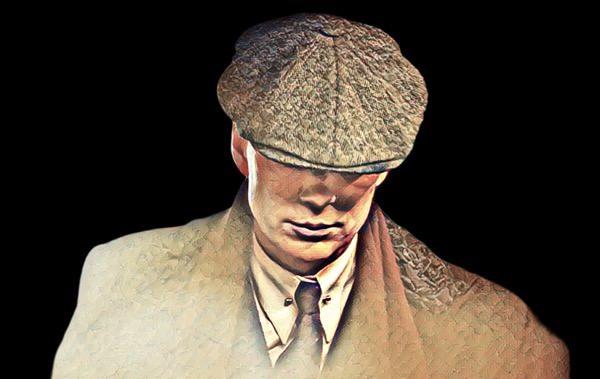
According to Mick Harvey, Cave’s longtime collaborator, the song portrays a manipulative personality who inspires admiration and fear in equal measure. Yes, like Tommy Shelby. This man offers whatever is lacking: money, a car, respect, and self-worth, yet the gesture of salvation conceals a logic of domination. He embraces, comforts, rekindles dreams, and, at the same time, imprisons. Ambiguity is the engine of the song. The character is described as a god, a man, a ghost, and a guru, someone who moves between planes and sees the individual as merely a microscopic cog in a larger design.
It is difficult not to recognize in this description the essence of Thomas Shelby, portrayed by Cillian Murphy. The series created by Steven Knight never aimed to be a traditional period drama, but rather a narrative about trauma, power, and reinvention after war, built upon a contemporary soundtrack that deliberately breaks with historical purism. The choice of Red Right Hand as the opening theme immediately established the tone of the series, creating a sonic identity that resonates with the contained violence, calculated charm, and constant sense of menace that define its protagonist.
Music director Anthony Genn has often stated that the artists selected for the soundtrack needed to possess an outlaw streak, and Nick Cave embodies that aesthetic naturally. Over the seasons, the song has received new versions and interpretations, including moments with a stronger female presence, expanding its reach without losing its dark core. The repetition of the song, reappearing as variation rather than simple replication, reinforces the idea that the figure described in the lyrics is an entity that adapts to time and circumstance, much like Tommy Shelby himself.
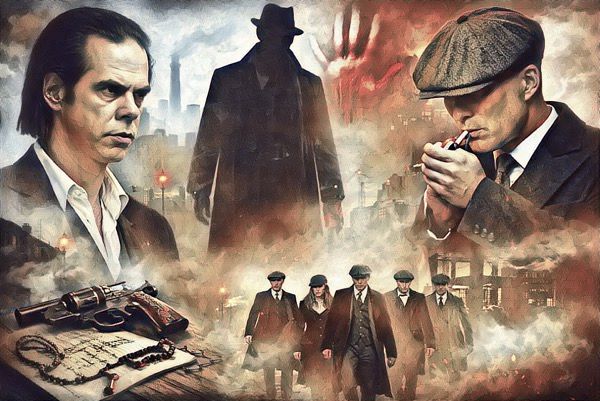
Even before becoming the unofficial anthem of Peaky Blinders, Red Right Hand had already secured cult status by appearing in the Scream franchise, where it functioned as a signal that something unsettling was about to unfold. It has also been covered by artists such as Arctic Monkeys, a band frequently associated with the series’ musical universe. This trajectory demonstrates that the song has always possessed a cinematic vocation, even when it was not tied to a specific narrative.
Nick Cave constructs his songs as compact stories charged with moral tension and powerful imagery, which explains his natural transition into other narrative forms, including novels and screenplays. In The Red Hand Files, the platform where he answers fans’ questions directly, he has commented with humor on the fact that Peaky Blinders introduced the song to a new generation, exponentially expanding its audience. What might have remained a cult piece became a global phenomenon without losing its symbolic density.
Red Right Hand is not merely an opening theme. It anticipates the character before he appears, functioning as both omen and warning. When we hear its first chords, we understand that we are entering a territory where power and destruction walk side by side. Perhaps that is why, even after the series has ended and the story transitions to cinema, the song remains current. The figure described by Cave does not belong to a specific decade, but to a timeless logic of seduction and control.
Thomas Shelby is not a god, yet he builds his own mythology with the cold awareness that every promise carries an implicit threat. He offers protection and prosperity, but demands absolute loyalty. Ultimately, the song is not only about a man, but about a structure of power that presents itself as inevitable. And as long as that structure continues to fascinate audiences, the red right hand will keep echoing, reminding us that every rise contains within it the seed of downfall.
Descubra mais sobre
Assine para receber nossas notícias mais recentes por e-mail.

