
Published on March 3, 2026, and updated on April 15, 2026
Not even eight seasons, 73 episodes, and nearly 80 hours of storytelling seemed enough to end the feeling that Game of Thrones never truly finished. The series ended, but the cultural phenomenon remained. And now, in the same media landscape where franchises are assets and narrative universes are long-term strategies, Westeros is approaching a step that for years lived somewhere between rumor, fan fantasy, and industry speculation: a film.
This time, it is not a rumor. A Game of Thrones feature film is officially in development at Warner Bros., with writer Beau Willimon — known for Andor and House of Cards — attached to the project.
The story chosen is revealing and, for that very reason, powerful. Instead of trying to “fix” what the series concluded or recreate what audiences already lived through for years, the film would look toward an origin point: the conquest of Aegon I Targaryen, the event that united six of the Seven Kingdoms and created the Iron Throne roughly three hundred years before the 2011 pilot of Game of Thrones.
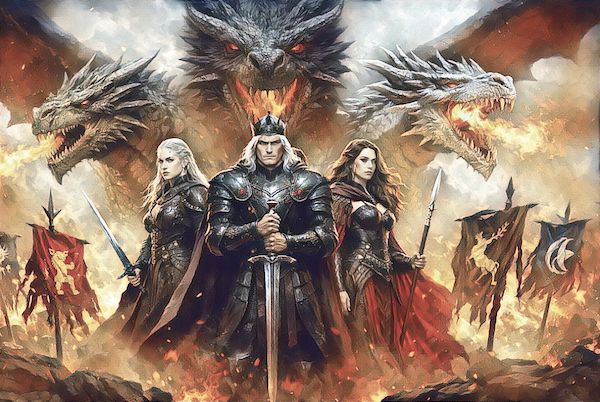
A film the size of Westeros and the decision to go backward, not forward
The most revealing detail is not only the subject but the ambition behind it. The film version is being envisioned as a massive spectacle, described internally as a “Dune-sized” production. That comparison says a great deal about what the Game of Thrones brand has become: almost a certificate of scale, budget, and visual grandeur, but also an attempt to recreate in cinematic form what television once achieved with patience, political complexity, and narrative time.
There is also a quiet rivalry embedded in the choice of story. The same historical event — Aegon’s conquest — is reportedly also in early development as a series at HBO. The situation creates a symbolic scenario in which cinema and television are simultaneously competing to define which medium is the “natural” one for telling Westeros’ foundational myth.
There is also a curious detail behind the scenes. Before the film began to take shape inside Warner Bros., HBO had already been exploring an adaptation of Aegon’s Conquest as a television series. At one point, writer Mattson Tomlin was involved in the early development of that project and began teasing fans on social media with cryptic posts suggesting he was researching events tied to the North.
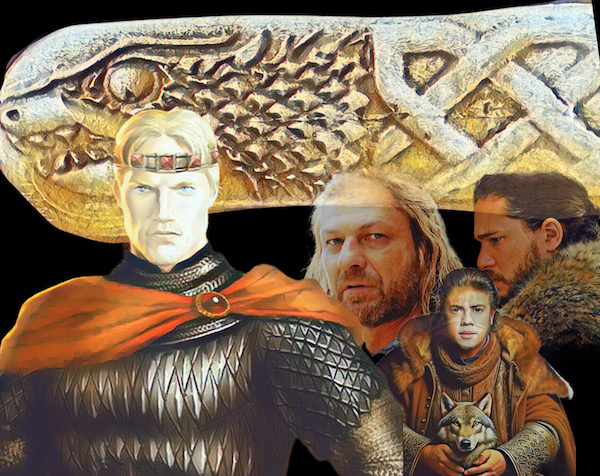
In one of them, he simply wrote that he was “in the North,” which led part of the fandom to speculate that the writers’ room was examining moments such as the submission of Torrhen Stark to Aegon Targaryen, the episode that transformed the former King in the North into the figure remembered as the “King Who Knelt.” The fact that the story first circulated as a potential series and now appears as a film reinforces something Hollywood still seems to be deciding: which format can truly sustain the founding myth of Westeros.
And if the question is why cinema now, the answer lies partly in memory. The idea has circulated for years. In 2013, the original showrunners even discussed with HBO the possibility of ending Game of Thrones with three feature films, modeled after The Lord of the Rings. The network declined at the time, preferring to focus on its subscription business.
Today, the context is different. The market itself is different.
The empire Martin built and the book he is still trying to finish
There is an unavoidable irony in this shift. In 2015, George R. R. Martin confessed to having two fears. The first was that HBO might never produce spin-offs, and that Westeros would fade as a single hit. The second was that the television series might overtake the books.
Ten years later, the first fear has vanished. The second has become an open wound.
In a recent profile, Martin describes with unusual candor the burden of managing a universe that has grown beyond him. He speaks about exhaustion, age, public pressure, and the real difficulty of the writing process. And also about the cruelest paradox of all: he succeeded in turning Westeros into a multimedia empire, yet remains stuck on the chapter fans most want to read, The Winds of Winter.
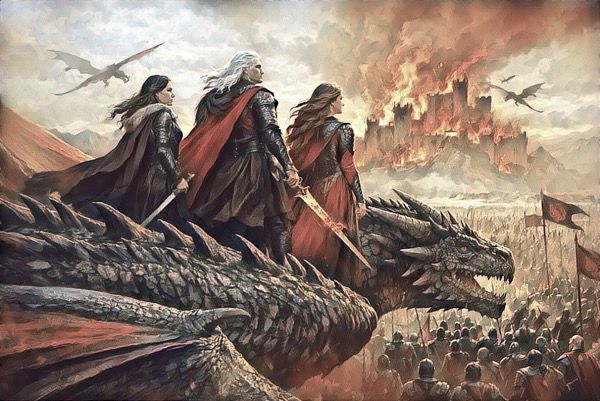
Martin says he has roughly 1,100 manuscript pages completed, but he also describes a creative process that feels almost like an emotional maze: rereading, rewriting, abandoning chapters, switching viewpoints, opening a page, and thinking simply, this isn’t good enough.
That detail helps explain the film choice. The conquest of Aegon is vast, epic, cinematic, but also relatively safe from a continuity standpoint. It does not require the main saga’s ending to exist yet. It avoids touching the most sensitive part of the franchise: the divergence between what the series concluded and what Martin still intends to write.
The fear of canonizing a controversial ending
Martin has made another point that complicates everything further. According to him, the ending of the books will be significantly different from the one shown on television. Characters alive in the novels may die, and those who died on screen might survive.
That difference helps explain why Martin has long resisted direct sequels to Game of Thrones. Continuing the story on screen risks turning the television ending into official canon, even though it does not represent the conclusion he ultimately plans for his own narrative.
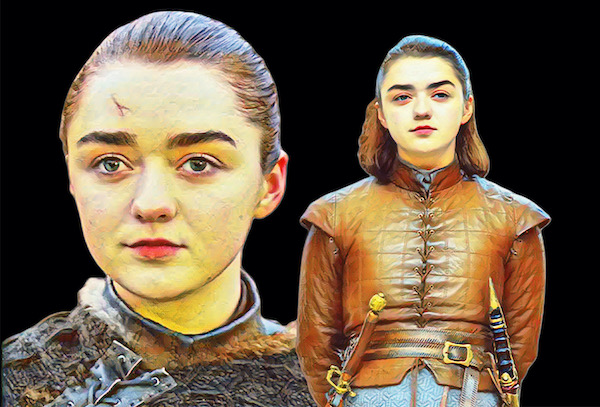
Still, the universe is expanding so aggressively that once-discarded ideas are returning to discussion. The same profile mentions renewed internal interest in a sequel concept that had previously been shelved. The earlier version explored Jon Snow living in isolation beyond the Wall, traumatized and broken. More recently, sources suggest a new writer may be exploring a version that shifts the focus to Essos and potentially includes Arya Stark.
Everything remains early and sensitive, and Martin himself refuses to comment on projects in development. Yet the fact that such conversations exist reveals the extraordinary level of corporate appetite for Westeros.

A studio in transition and the politics of conglomerates
There is another factor that adds uncertainty to the project. The film emerges at a moment when Warner Bros. itself is navigating corporate upheaval, including discussions about a potential sale involving Paramount Skydance.
In that context, the phrase “officially in development” carries a quiet asterisk.
Still, one symbolic detail has not gone unnoticed. During public remarks about the company’s future, media executive David Ellison was asked about his favorite HBO series. His answer was simple: Game of Thrones.
It is not a guarantee of anything. But it is exactly the sort of signal the industry interprets as an informal blessing for the machine to keep running.
The question cinema cannot avoid: how to retell the myth.
Even by going backward in the timeline, the film cannot escape contemporary debates. Game of Thrones was admired for its political complexity, its brutal medieval realism, and its willingness to treat power as something corrosive. But it also carried years of discussion about representation, the use of sexual violence as narrative shorthand, and the challenge of sustaining female leadership without falling into narrative shortcuts.
The final seasons, ironically, the ones that placed women closest to ultimate power, were also where some viewers felt the writing shrank the world to force a destination.
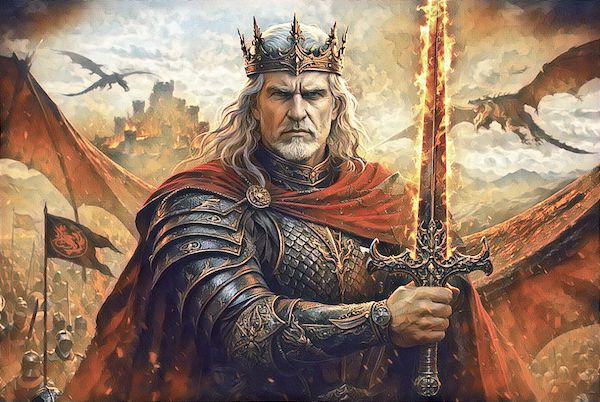
The story of Aegon’s conquest opens both an opportunity and a risk. The opportunity is to revisit the founding myth of Westeros with a complexity that goes beyond the image of “a man and his dragon.” The risk is repeating the oldest habit of all conquest narratives: turning violence into aesthetic inevitability and calling it epic.
And that leads to the dilemma you raised at the beginning of the piece, perhaps the hardest one of all. How do you adapt something that was designed to resist adaptation?
Martin wrote A Song of Ice and Fire to be too large for the television of the 1980s. The television of the 21st century managed it. Now cinema wants to prove it can do it even better.
But Westeros, unlike many franchises, is not merely a set of characters.
It is a world built on detail, consequence, and time.
And time is precisely what a film always has to borrow.
Descubra mais sobre
Assine para receber nossas notícias mais recentes por e-mail.


1 comentário Adicione o seu