
For years, the possibility of a Game of Thrones film existed as a recurring rumor, almost an inevitable idea that never fully materialized. The series ended, the cultural phenomenon remained, and Westeros continued to expand within television, with spin-offs exploring different moments in its history. The confirmation of Game of Thrones: Aegon’s Conquest, now with a working title and included in Warner’s “2027 and beyond” slate, shifts that axis. For the first time, the universe moves beyond television and begins to operate in cinema.
The official move to cinema, and the breaking of a paradigm
The confirmation matters on multiple levels, not just because of the announcement itself. It marks the franchise’s official entry into cinema, breaking a long-standing assumption: that Westeros simply wouldn’t fit this format. The series has always relied on time, accumulation, politics, and consequences. Turning it into a film seemed to reduce a world that is fundamentally sustained by duration. The fact that this is now happening changes not only the project, but the logic of the franchise itself.
A single film or the beginning of a trilogy?
At the same time, it raises questions that are just as important as the confirmation. Is this a standalone film or the beginning of a trilogy? The format will define the kind of story being told. Aegon’s Conquest is not a simple event, but a process involving campaigns, alliances, resistance, and the construction of power. A single feature would require aggressive compression. Expanding into more than one film would bring the project closer to the contemporary epic model, where scale and time work together.
Who tells this story matters
There is also a creative question still open. Who directs this film matters deeply. Not only for the technical ability to handle battles and dragons, but for the capacity to turn what is, on the page, almost a historical record into drama. The script is in the hands of Beau Willimon, which suggests a focus on politics and the construction of power, but cinema demands more: point of view, intimacy, and clear narrative choices about who drives the story.
Cinematic scale and the casting effect
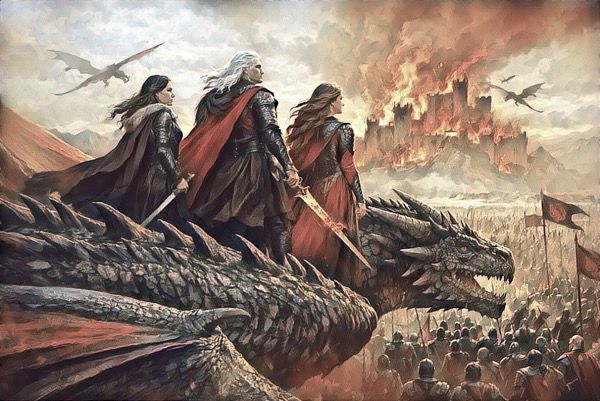
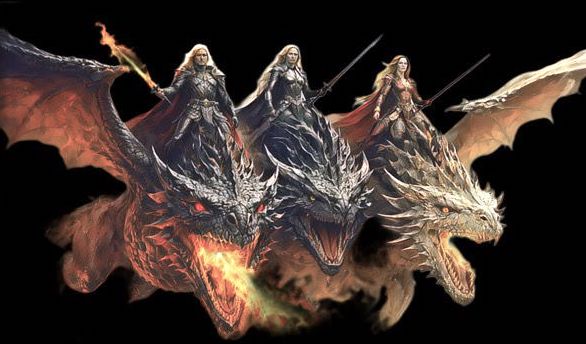
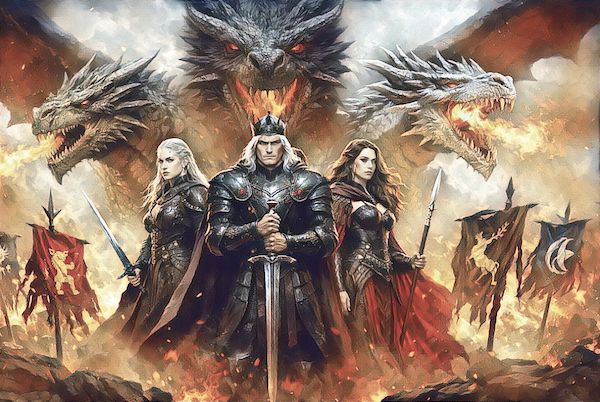
From an industrial standpoint, the format brings clear advantages. Depending on the budget, telling the story of Aegon I Targaryen — alongside his sister-wives Visenya and Rhaenys — conquering Westeros with dragons could reach a level of visual scale that television, even at its most ambitious, cannot always sustain. There is also an interesting side effect: as a film, it increases the likelihood of attracting major stars, names that orbit this kind of production and inevitably re-enter speculation. Henry Cavill, for instance, resurfaces in these conversations almost automatically.

The unavoidable risk: simplifying complexity
But this gain in scale comes with a potential loss. Even with a three-hour runtime, a film will have to simplify a story that is, by nature, complex. The strength of Game of Thrones was never just in its battles, but in how power, fear, strategy, and negotiation intertwine. Aegon’s Conquest contains all of that. Reducing it to a more direct narrative centered on spectacle is a real risk.
Fire & Blood: a source without a point of view
The adaptation will likely draw from Fire & Blood, but that brings its own challenge. Unlike the main novels, the book does not offer a traditional dramatic structure or a clear point of view. It is a story told as a record, not as a lived experience. Adapting it requires inventing intimacy, building characters, and deciding who Aegon, Visenya, and Rhaenys are beyond legend.
A connected universe or a new interpretation?
Another open question remains: how closely this film will connect to existing series such as House of the Dragon, or whether it will function more independently. Integration reinforces a cohesive universe, but also ties the project to established decisions. Distance allows greater creative freedom, but risks fragmenting the identity of Westeros.
What is really at stake
In the end, the confirmation answers an old question but shifts the center of the discussion. It is no longer about whether Aegon’s Conquest will happen, but about how it will be told, and what happens when a world built on the duration of television is condensed into the logic of cinema.
Descubra mais sobre
Assine para receber nossas notícias mais recentes por e-mail.


1 comentário Adicione o seu