
Without spoiling Michael, one confirmation: when the narrative reaches the Thriller era, it revisits one of the most fascinating and iconic stories in pop culture. The single Beat It, which Michael Jackson chose as one of the pillars of the album, emerges not just as a song, but as a visual and cultural turning point.
More than the track itself, with the striking guitar by Eddie Van Halen, the Beat It music video was absorbed into pop culture in an almost definitive way. Over the years, it has been framed as a direct act of intervention: Michael Jackson going out to meet gangs, bringing rivals together, and using music as a tool for pacification.
It is a seductive reading. Clean. Almost perfect.
And precisely because of that, incomplete.
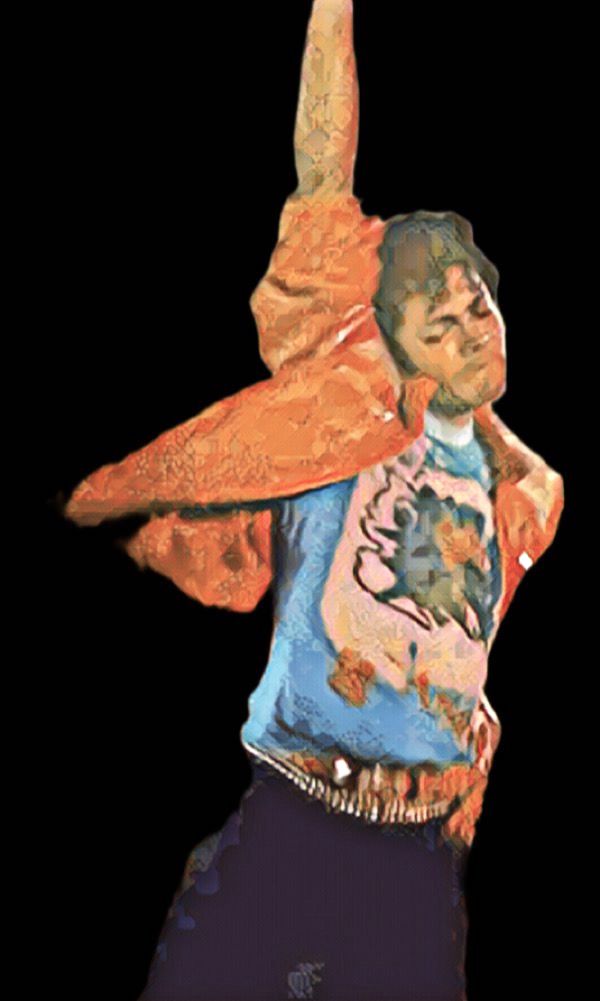
Because yes, there is truth in it. But what actually happened is more complex, more ambiguous, and, ultimately, far more interesting than this version organized by collective memory.
Filmed in March 1983, in the heart of Skid Row in Los Angeles, the video was born from a decision that blended aesthetics with cultural instinct. Alongside director Bob Giraldi, Michael chose a path that, at the time, was far from obvious: to take pop out of the studio and place it in a space charged with real, unfiltered tension. And that inevitably meant working with people who actually belonged to that world.
Around 80 real gang members took part in the shoot, alongside professional dancers and performers who helped structure the choreography. The result carried a dual effect. On one hand, it ensured visual authenticity. On the other hand, it created a near paradox: individuals tied to rival groups sharing the same space under a completely different logic than the one that defined their reality.
This is where the myth begins to take shape.
Yes, accounts are suggesting that Michael supported the inclusion of members from groups like the Bloods and the Crips as a way to add authenticity and, in a broader sense, encourage a moment of peaceful coexistence. But that does not mean there was a structured effort, planned as a direct social project. The gesture was more intuitive than programmatic, more symbolic than interventionist.
And still, it had an impact.
The video builds a simple, almost allegorical narrative. News of a fight spreads, tension escalates, leaders confront each other, and knives are drawn. And then, at the moment when violence seems inevitable, it is interrupted. Not through force, but through displacement. Dance replaces confrontation. The group, once organized around rivalry, begins to move in sync.
This “mass choreography,” which would later become one of Michael Jackson’s trademarks, is not merely aesthetic. It is narrative. It is a way of rewriting conflict in visual terms.
What is most striking is that this operation does not eliminate violence. It suspends it. The threat is present at all times, but it never fully materializes. And perhaps that is precisely what makes the video so enduring: it does not solve the problem, it imagines a pause within it.
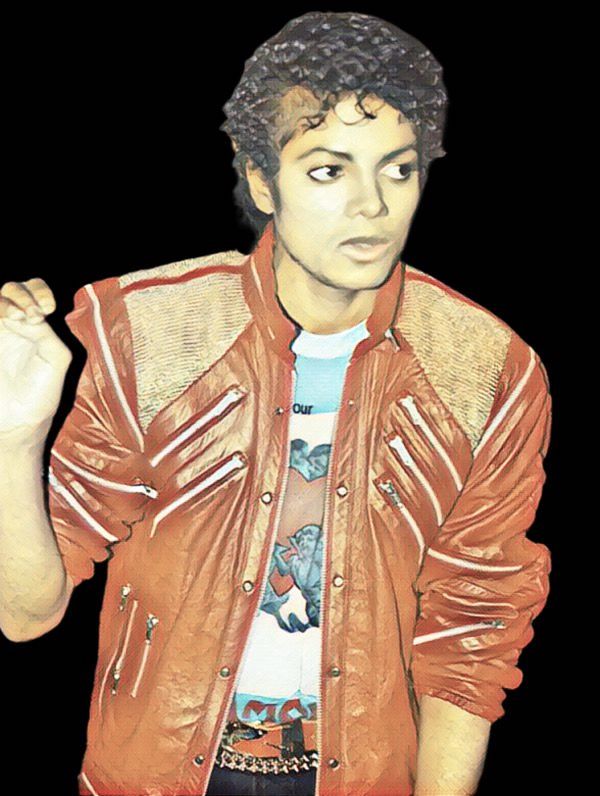
And there is one visual element that captures all of this almost perfectly: the red jacket.
Designed by Michael Bush and Dennis Tompkins, it does not function as a costume in the traditional sense. In a dark, industrial setting filled with tension, red is not just an aesthetic choice. It is a visual interruption. It isolates Michael within the chaos even before he interrupts it narratively.
There is also an unavoidable symbolic layer. Red, a color associated with danger, violence, and blood, is reclaimed and reframed. He enters the space of conflict wearing the color of aggression, but not to reproduce it. To redirect it. The jacket operates almost like performative armor, not for protection, but for presence. It marks territory without resorting to force.
And in doing so, it anticipates something that would become central to Thriller: the construction of an image that must work instantly, even in stillness. The Beat It jacket does not depend on the full video. A single frame is enough to communicate everything.
There is also an important industrial context that the film tends to treat only briefly. The video cost around $150,000, which Michael paid out of pocket after CBS refused to finance the project. It was a risk. And it paid off. The video helped solidify Thriller as a global phenomenon and expanded the possibilities of what a music video could be.
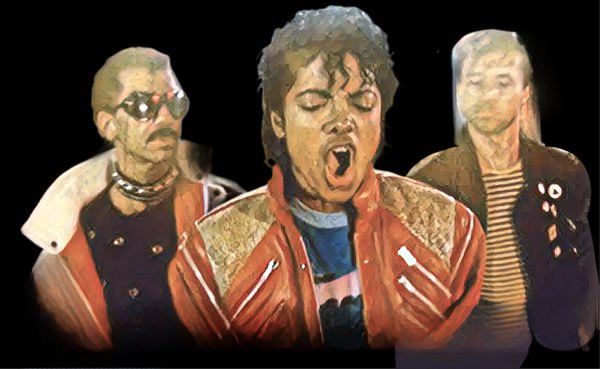
Its prime-time premiere on MTV on March 31, 1983, also marked a turning point. Not because it was the first video by a Black artist to air on the channel — that is a common misconception — but because it helped expand that presence in a lasting way.
And, as with so much surrounding Michael Jackson, the impact was immediate and cumulative. Awards, rankings, critical recognition, canonization. Decades later, the video surpassed one billion views, reinforcing a longevity that few pop culture artifacts can sustain.
But perhaps the most important element lies not in the numbers, but in the image the video constructs.
Ultimately, Beat It is not really about gangs. Nor strictly about pacification. It is about the possibility of interruption. Of refusing a script. Of proposing, even if only for a few minutes, that confrontation does not have to be completed.
The film organizes this story into something clearer, almost didactic. Reality is more diffuse. Michael did not resolve the conflict, did not create a structured social project, and did not directly transform the lives of those affected.
He did something else.
He created an image so powerful that, over time, we began to believe it could be real.
Descubra mais sobre
Assine para receber nossas notícias mais recentes por e-mail.


2 comentários Adicione o seu