
Social media was built on the promise of connection, but it quickly became something else. By turning attention into currency, it created a system in which visibility gained economic value. OnlyFans is the most direct outcome of that logic.
The numbers help explain the interest. With around 377 million registered users and more than 4 million active creators, OnlyFans does not depend on mass audiences to function, but on more intense and financially committed relationships. A relatively small number of subscribers can generate significant income, making the platform especially attractive for those able to build a loyal audience.
It is precisely this combination — global scale with direct individual monetization — that explains why OnlyFans has moved beyond curiosity to occupy a central place in both the digital economy and contemporary culture. It is no coincidence that two recent series, on different platforms, now orbit this same universe: Margo’s Got Money Troubles and Euphoria.
How it started
Created in 2016, OnlyFans is built on a simple, almost primitive economic idea. Creators produce content, users pay to access it, and the platform acts as a technical intermediary, retaining a share of the revenue. The promise is direct, seductive, and, for many, transformative: financial autonomy, control over one’s own image, and the absence of institutional mediation. There is no studio, no magazine, no producer. There is only the individual and the audience.
This structure alone does not explain the phenomenon. What is the way it found a landscape already shaped by years of social media, algorithms, and constant exposure? OnlyFans did not invent performance, but it intensified it. It did not create the idea of monetizing image, but it radicalized it by placing it in a space where intimacy and consumption are no longer separate categories.
Platform as language and adult content
Although it was not created as a platform exclusively for adult content, OnlyFans has effectively become the primary space for direct monetization in that market. Its original proposal was broader, closer to services like Patreon or even paid features within Instagram. Creators could charge for any type of content: fitness, music, behind-the-scenes material, classes, or lifestyle. In practice, however, something else happened.
This was no accident. It was the result of three factors aligning at the right time: the absence of strict censorship seen on other platforms, the possibility of direct payment without traditional intermediaries from the adult industry, and a digital culture already accustomed to consuming intimacy as entertainment.
From that point on, the association became inevitable.
Today, when OnlyFans is mentioned, the collective imagination almost automatically points to sex and pornography, even though creators exist in many other fields. It functions as a cultural shortcut. It does not fully describe the platform, but it accurately reflects what it represents in public discourse.
And it is precisely this ambiguity that makes it so narratively powerful, whether in series like Margo’s Got Money Troubles or in the more diffuse and emotional universe of Euphoria.
Different realities, similar critiques
OnlyFans is no longer just a space where money is made. It is a space where identity is constructed. And, like any identity shaped through an audience, it depends on a constant negotiation between what one chooses to show and what is expected to be shown.
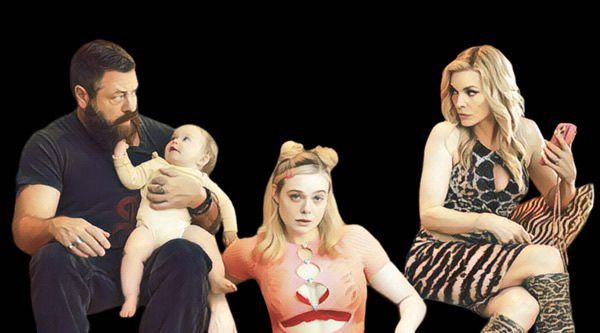
In Margo’s Got Money Troubles, OnlyFans does not appear as provocation, but as a solution. The central character, played by Elle Fanning, does not enter the platform out of transgression, but out of necessity. That shift is crucial. The series is not interested in moral shock, but in practical consequence. Money comes, and with it, something that initially feels liberating. But that sense of liberation is immediately complicated by new forms of dependency, mediated by the gaze of others, by engagement metrics, and by a subscription model that demands consistency, exposure, and adaptation.
What the series captures with precision is that OnlyFans does not just offer income. It demands an ongoing performance of the self. And that performance, while theoretically controlled, becomes shaped by external expectations that cannot be ignored without cost.
In Euphoria, the movement is different, but deeply connected. Cassie, played by Sydney Sweeney, frames her decision as a path toward financial independence, or at least that is how she presents it. In a series that has always treated bodies as language and exposure as the norm, OnlyFans feels almost inevitable. It turns into a transaction that was already performed. It assigns value to what was previously just visible.
The criticism around Euphoria
By turning Cassie into an adult content creator, the series makes explicit something that had long been implicit: it brings that emotional universe directly into the economy of intimacy.
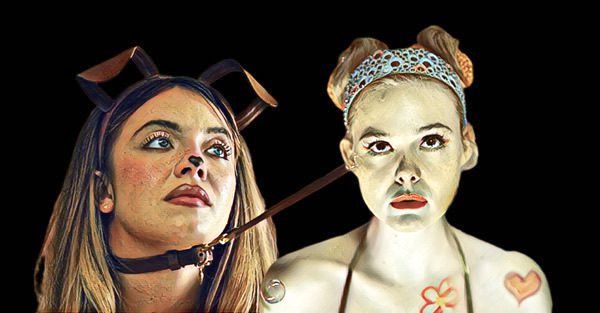
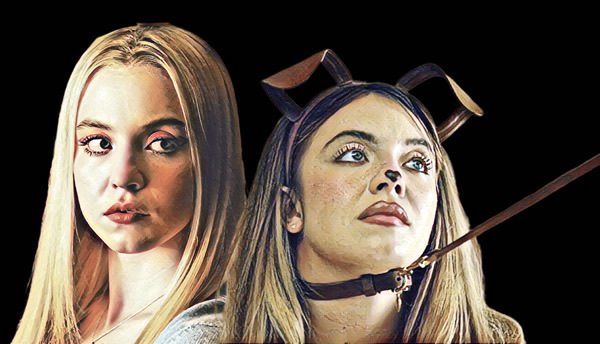
The audience reaction, often negative, focused on the most unsettling scenes. Cassie performs exaggerated versions of herself that verge on the grotesque, at times infantilized, at others animalized, in images that feel deliberately excessive. It is discomforting, and it could easily be dismissed as gratuitous provocation. But creator Sam Levinson points in another direction.
According to him, the intention was not merely to shock, but to faithfully reproduce the logic of these platforms while also creating distance, allowing the viewer to see beyond the surface. There is, in his words, an attempt to place the audience inside Cassie’s performance and then step back to reveal how deeply depressing it is.
That choice is more revealing than it seems.
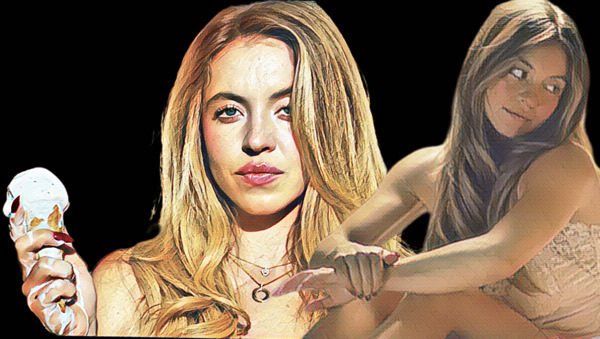
Instead of stylizing or softening, the series exposes discomfort. What could be framed as empowerment or control appears instead as repetition, effort, and the constant attempt to meet expectations that never stabilize. Cassie is not simply creating content. She is trying to sustain an identity that depends on the gaze of others to exist.
This is where Euphoria finally meets OnlyFans, not as a reference, but as a mirror.
Everything the series had been building — the relationship between desire, validation, and exposure — gains a concrete dimension. The body is no longer just symbolic language. It becomes part of a market logic, where every gesture, image, and performance carries value.
And perhaps that is why these scenes are so unsettling.
Not because they are extreme, but because they are recognizable.
Before OnlyFans, Euphoria had already explored sexualization
Cassie may be central to the third season, but she is not the first to monetize her image. In the first season, Kat Hernandez, played by Barbie Ferreira, followed a similar and pioneering trajectory. She begins working as a camgirl after a private video leaks, discovering both the financial potential and the validation that her sexuality can attract online.
Under the pseudonym “Kitten,” she streams for submissive male audiences, using fetishes such as financial domination to earn money and reshape her image. In 2019, when the series premiered, OnlyFans had not yet taken center stage in the cultural conversation, and Kat relied on webcam sites and Skype to interact with clients.
What changes now is that Cassie expresses the desire to be “huge” and famous. One of the most controversial scenes involves her dressing in infantilized elements to produce adult content, pigtails, a pacifier, and sheer lingerie. In another, she records videos wearing dog ears and a nose, behaving like an animal to attract attention across TikTok and OnlyFans. All of it aimed at maximizing profit and financing a lavish wedding with Nate, played by Jacob Elordi.
Humor as critique in Margo: as problematic as Euphoria?
While Euphoria leans into its signature darkness and has been criticized for its misogynistic undertones, Margo’s Got Money Troubles takes a lighter, more ironic approach to examine similar issues.
Rufi Thorpe’s novel was praised for its human, comedic, and empowered take on sex work and single motherhood, and the series operates as a direct counterpoint to Euphoria. While Cassie turns to OnlyFans out of desperation and a search for external validation, Margo does so out of pragmatic necessity, to support her child.
Her strategy is striking because she treats OnlyFans as entertainment rather than purely erotic content. Uncomfortable with traditional pornography, she draws on her father’s background as a professional wrestler to build a persona.
Margo applies the concept of kayfabe, the wrestling practice of maintaining the illusion that what happens in the ring is real. She constructs a persona with narrative, conflict, and continuity, treating subscribers as an audience. Instead of simply posting images, she builds storylines. If she is angry, she expresses that anger, turning emotion into engagement.
She also recognizes that her audience consists largely of young, nostalgic men. She incorporates references like Pokémon into her content, creating shared points of connection that increase both retention and tips.
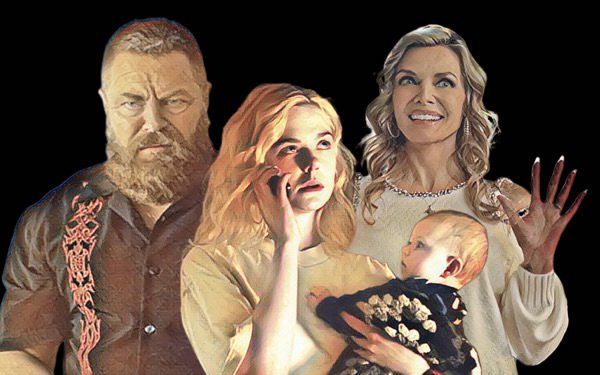
Rather than hyper-produced aesthetics, Margo embraces a homemade look combined with discipline. She studies peak hours, analyzes which interactions generate more income, and uses humor to defuse discomfort.
The result is that she earns enough to sustain her child and maintain her life, transforming what began as a financial problem into a form of personal branding.
Still, many critics argue that the story simplifies the platform’s risks. By portraying empowerment and control, it can obscure the mental exhaustion and pressure many creators face to remain relevant, as well as real-world risks such as data leaks, stalking, and social stigma.
In that sense, while Euphoria is overtly confrontational, Margo’s Got Money Troubles risks being disarmingly naive.
The narrative shift: why Hollywood is interested
Placing OnlyFans at the center of two major series signals a deeper shift in how contemporary narratives approach desire, power, and money. Where stories about sexuality and exposure were once framed as marginal or exceptional, they are now presented as part of everyday experience.
That is why OnlyFans becomes such a powerful narrative element. It concentrates, in a single space, the key tensions of digital culture: the monetization of intimacy, the construction of identity under constant observation, and the promise of autonomy coexisting with new forms of pressure.
There is, undeniably, a discourse of empowerment surrounding the platform, and it is not insignificant. For many, OnlyFans offers a real alternative to traditional structures of labor and exploitation. But that discourse coexists with a more complex reality, where autonomy depends on visibility and visibility depends on continuous exposure, creating a cycle that cannot sustain itself without cost.
Perhaps that is precisely what makes the subject so compelling for fiction. There are no simple answers, no single reading, and no comfortable conclusions.
The question is no longer why someone joins OnlyFans.
But why, increasingly, does it feel like a plausible choice?
Descubra mais sobre
Assine para receber nossas notícias mais recentes por e-mail.

