
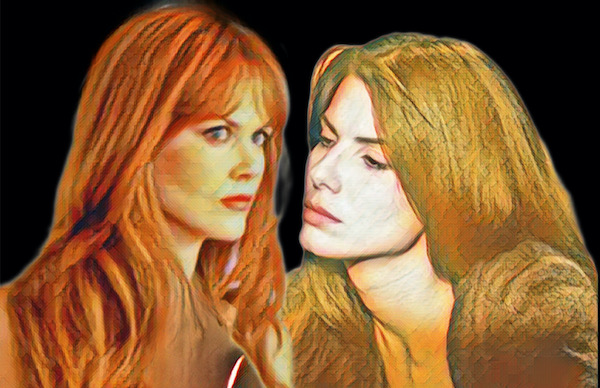
I wasn’t following every behind-the-scenes detail of Practical Magic 2, but now that the film’s trailer has been shown at CinemaCon and will soon be released publicly, we are about to see for the first time how the Owens sisters return nearly 25 years later. But can I admit something? More than revisiting Nicole Kidman and Sandra Bullock, I am curious to see the chemistry between the two new witches in town: Joey King and Maisie Williams, playing the new generation of the Owens family.
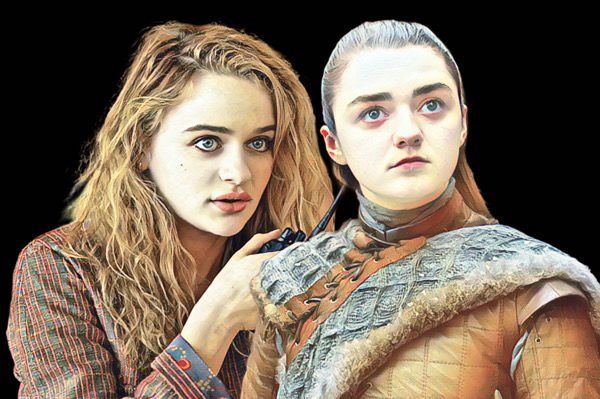
They are not only popular and recognizable actresses, capable of attracting different generations of audiences, but their very presence already signals a shift in perspective that the film seems willing to embrace: the story moves away from sisters trying to survive a curse and becomes, inevitably, about daughters who grow up within it.
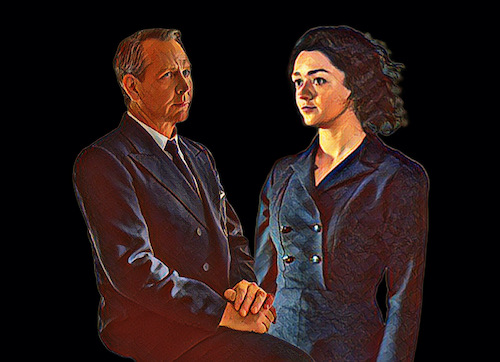
King arrives from a particularly visible phase, consolidated through high-profile streaming projects and more dramatic roles that reinforce her range, while Williams, indelibly marked by Game of Thrones, has built in recent years a more selective career, drawn to characters that explore psychological limits and shifting identities, such as Catherine Dior in The New Look.
There is also a detail that does not go unnoticed and adds an almost metalinguistic layer to this casting: Joey King has already played Nicole Kidman’s daughter in The Family Affair, creating a kind of symbolic continuity that now shifts into a different universe, reinforcing the idea of generational transmission that Practical Magic 2 seems intent on exploring.

This change in perspective reshapes the way we revisit the world introduced in Practical Magic, since the sequel does not begin from a fresh start but from accumulation, with the cliffside house rebuilt and a lingering sense that the past has not been resolved, only reorganized into new layers that continue to shape the characters’ lives.
Sally Owens, once again played by Sandra Bullock, now appears as the mother of two daughters and still single, a condition that carries an almost inevitable weight for anyone familiar with the family curse, while Gillian, portrayed by Nicole Kidman, remains present but repositioned, no longer only a sister but now an aunt, which subtly alters the emotional and narrative dynamic by transforming what was once a mirror into an influence.
In this context, the characters played by King and Williams are not discovering magic as Sally and Gillian once did, but instead grow up already aware of it, which shifts the conflict away from accepting or rejecting a legacy and toward understanding how to live with something that was never a choice, especially when that inheritance carries the unsettling idea that love can be fatal. This early awareness pushes the drama into a quieter, more complex territory, where the weight of inheritance does not arrive as revelation but as a condition of existence, creating tension not through major events but through the inevitability of what is already known.

The return of Sandra Bullock and Nicole Kidman functions, therefore, less as a nostalgic gesture and more as a point of emotional continuity, further reinforced by the presence of Dianne Wiest and Stockard Channing, who return as Aunt Jet and Aunt Franny and preserve the family structure that has always defined the Owens story, now expanded into three generations coexisting within the same space.
At the same time, the addition of names such as Lee Pace, Xolo Maridueña and Solly McLeod signals an expansion of the film’s universe, particularly through the way Pace’s character is introduced as already shaped by the curse, summarized in the idea that everyone they love eventually dies, while Gillian responds with the sharp humor that has always worked as a counterpoint to tragedy.
In the original film, Sally was already the mother of two girls, played by Evan Rachel Wood and Alexandra Artrip, and the decision to bring in new actresses for these roles in the sequel suggests less a concern with strict continuity and more an attempt to reinterpret this new generation, as if the story were being told again from a different perspective, one more interested in the meaning of inheritance than in fidelity to specific faces.

There is also an inevitable layer that extends beyond fiction, as Sandra Bullock and Nicole Kidman return to these characters at a completely different stage in their careers, after decades of leading roles, recognition, and reinvention within the industry, which reshapes how Sally and Gillian are perceived and interpreted. If they were once women trying to understand their own limits, they now carry the weight of time and experience, making this return less about repetition and more about redefinition.
In this sense, Practical Magic 2 seems less interested in recovering the past and more in understanding what remains of it, especially when that past stops being a personal story and becomes a shared inheritance, passed almost inevitably from one generation to the next, transforming magic into something that exists not only in spells, but in what is carried forward, even when it is not chosen.
Descubra mais sobre
Assine para receber nossas notícias mais recentes por e-mail.

