
As published on Blog do Amaury Jr./Splash UOL
Brazilian cinema has traditionally stood out in comedy and drama, but high-quality action films that reach theaters are still relatively rare. Even rarer are those led by two female protagonists. In that sense, the Disney production Rio de Sangue already stands apart. Starring Giovanna Antonelli, Alice Wegmann, Antonio Caloni, and Felipe Simas, the film unfolds through a series of twists that move across themes of family, loyalty, and commitment, while also touching on drug trafficking, environmental issues, illegal mining, and Indigenous Brazilian culture, all tightly held together by director Gustavo Bonafé’s precision.
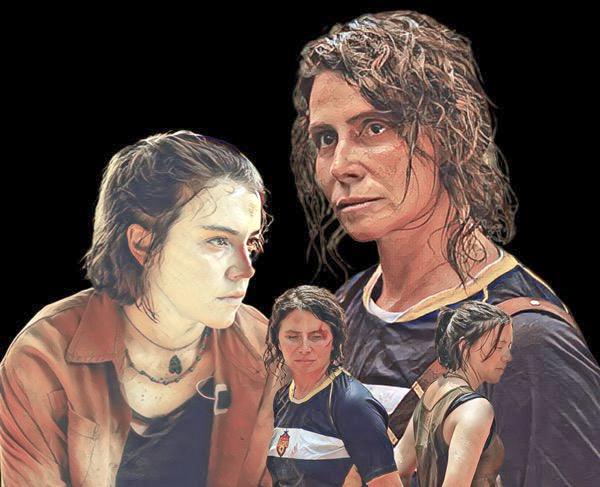
Before any action sequence takes place, Rio de Sangue is structured around a rupture. A woman loses what once defined her identity, a daughter follows a path that distances her from that past, and between them lies a space that was never resolved — only postponed. The thriller begins there, in that emotional gap, rather than at the moment violence erupts.
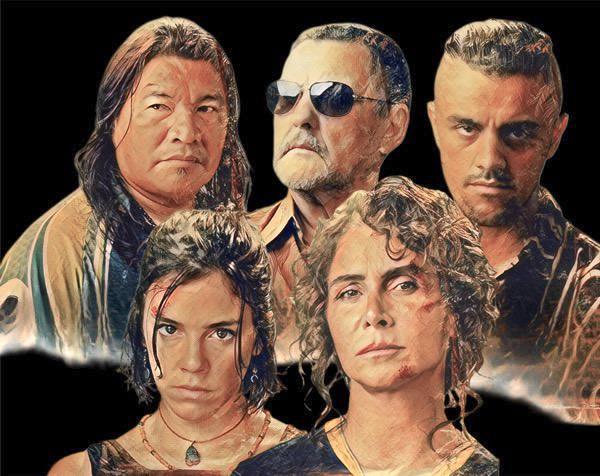
The film builds on a familiar structure — a rescue mission — but shifts the focus toward something less obvious: what happens when that journey is shaped by a broken relationship that must, at the same time, survive and be rebuilt. By moving the story away from the urban axis to the region between Santarém and the Alto Tapajós, the film turns the setting into more than just a backdrop. It becomes a constant source of tension, intersected by real issues such as illegal mining and the presence of Indigenous communities.
In conversation with Antonelli, Wegmann, and Simas, this dimension emerges clearly. What could have been just another action film is described by them as an experience of displacement — physical, emotional, and even spiritual — where the intensity of the scenes coexists with a process of personal transformation. Shot over several weeks in Brazil’s North region, the project becomes both a technical challenge and an attempt to look at the country without easy mediation.
Throughout the conversation below, the trio discusses career choices, the weight of portraying characters who do not seek immediate empathy, and the impact of performing in an environment where fiction, at times, feels uncomfortably close to reality.
MISCELANA: How did this project come to you, and what made you choose it?
Giovanna Antonelli: I received the script from Gustavo Bonafé. I had never worked with him before. We spoke, and he said, “Giovanna, I have a character — would you read it?” I did, and I fell in love because I love action thrillers. When I read it, I thought, “How are they going to shoot this in five weeks?” It’s a very action-heavy film. And he also said he wanted people to see me in a way they never had before in my career. That challenged me. It was an opportunity to step out of a box, to make my debut in this genre with two women leading the story, with that emotional backbone of a mother-daughter relationship.
Alice Wegmann: The invitation came through my agent, as an availability check. When he told me it was directed by Gustavo Bonafé and would be filmed in Pará, I wanted to do it before even reading it. My work had taken me to almost every region in Brazil — the North was the only one missing. That’s how Rio de Sangue entered my life. We filmed for two months between Santarém and Alter do Chão, and it was transformative. I was looking for roles with purpose that would take me to places I hadn’t explored before. And this character brought all of that — plus, she’s a doctor, which I had never played.
Felipe Simas: I was invited to do an online audition, which is one of the worst things for an actor. You depend on the other person’s presence — their breathing, their gaze. I thought, “I’m never getting this part.” And I did. I was really happy, because Baleado is a seductive villain — not in a sexual sense, but in a personal one. He descends into madness, but he has that layer. Few characters allow you to explore that kind of space. I was very happy playing with him.
MISCELANA: Antagonists always carry complexity. What was Baleado’s purpose?
Felipe Simas: I think every human being needs approval. And when it’s missing, you look for it in the references around you. He needed his uncle’s approval, wanted to prove he was the rightful heir to that territory, even while seeing that his cousin had no connection to the mining world. There’s love and hate there. And in the uncle’s absence — without giving spoilers — it’s as if he becomes possessed by that same drive for domination. Something shifts. There’s no one left to hold him back.
MISCELANA: Giovanna, there’s a striking balance between femininity and toughness in Patrícia. How did you build that?
Giovanna Antonelli: What drew me most to her is that she is introduced through failure. She’s an anti-heroine. She doesn’t try to please the audience. And that’s rare, because most characters are designed to win the viewer over. Here, she’s in survival mode. She’s a woman who has collapsed and needs to rebuild herself. The relationship with her daughter is not superficial either — they are very different people, who don’t try to please each other. They needed an extreme event to reconnect. I like that imperfection, because it makes everything more human and relatable.
MISCELANA: The action scenes are impressive. How were they done?
Giovanna Antonelli: It’s important to say that the guns were unloaded. Everything was added in post-production. So you have to act without the real sound, reacting to cues. It requires a lot of concentration and coordination.
Alice Wegmann: Many times, we received instructions over the radio.
Felipe Simas: “Right!” (laughs)
Giovanna Antonelli: It’s difficult, but it’s also a lot of fun. We really enjoy it.
MISCELANA: Leaving the urban environment and filming in nature changes everything. What was that like?
Alice Wegmann: For me, it was about asking permission. Permission to enter the river, the forest, the igarapé. It’s a space that is much bigger than we are, with a very strong spiritual presence. Even in the most intense scenes, once we cut, we would laugh and play around. Giovanna always brings lightness. And every moment to breathe and look around — the forest, the animals — felt like a gift. It was a transformative period.
Giovanna Antonelli: None of this would be possible without passion for what we do. Being there is a privilege. What could be seen as hardship felt like a gift to us. Cinema is also a social tool. And when you’re passionate, everything shifts. We even joked about making Rio de Sangue 2.
MISCELANA: And the experience with Indigenous communities?
Alice Wegmann: It was very special. We were warmly received, with care on both sides. We filmed with the Munduruku, and there’s deep respect there. The film brings attention to the exploitation of the Amazon, illegal mining, and the extermination of Indigenous populations. Their presence is fundamental, and the film gives them visibility — the narration, for example, is done by Fidelis.
Giovanna Antonelli: I’ve always been passionate about learning about different cultures. Since O Clone, that has been part of my journey. Being there was a spiritual connection. I have a strong relationship with nature — I’ve been planting trees for over 20 years, and I keep bees. This film came in and out of my life several times, and at some point, I understood that it meant I needed to be there. I believe in that — being where you are meant to be.
Felipe Simas: There was one very powerful moment for me. During a scene in the village, Indigenous people were watching, and my character was saying very harsh, oppressive things. That weighed on me. It was the only time I left the set feeling heavy, because fiction was being heard by people who actually live that reality.
MISCELANA: What do you take from this experience?
Felipe Simas: A deeper connection with nature and the simplicity of existence. I return more aware of our fragility and our connection to the Earth.
Giovanna Antonelli: Connection — with everything and with people.
Alice Wegmann: Brazilianness. It’s a film about our Brazil.
MISCELANA: And a sequel?
Giovanna Antonelli: Of course. Where to? When?
Alice Wegmann: You can already schedule it.
Descubra mais sobre
Assine para receber nossas notícias mais recentes por e-mail.
 miscelana.com