
Just as Henry Cavill has become something of the internet’s default answer for any open role — from Superman to James Bond — there is another informal consensus that has persisted for years: that Lana Del Rey should, inevitably, be given the chance to sing a 007 theme.
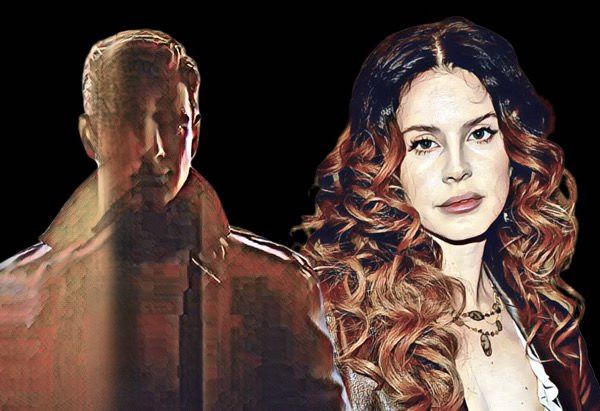
It’s not a recent or isolated idea. It’s almost a collective reflex. And, interestingly, it makes sense. There are very few artists whose aesthetic identity aligns so naturally with the Bond universe. Glamour with cracks, romance already doomed from the start, a melancholy that never quite resolves, all of this has always been present in her music, long before any official invitation ever existed.
There is also an interesting detail in this history: the franchise rarely chooses American artists for its main themes. Over more than six decades, names like Nancy Sinatra, Tina Turner, Madonna, Alicia Keys, and Billie Eilish appear almost as exceptions within a strongly British tradition. This has always made Lana’s absence even more curious, as if she were the obvious choice within a logic that, in the end, prefers a different path.
Now, somewhat ironically, that changes.

While the films have yet to decide who the next Bond will be — and the role continues to orbit rumors, speculation, and expectations — it is in the game 007: First Light that we see a different version of the character. Younger, still in formation, far from the fully realized agent. Here, Bond is given the face and voice of Patrick Gibson, the Irish actor known for Dexter: Original Sin and The OA, who brings a compelling mix of vulnerability and intensity, something essential for this early stage of the character.
And this context matters more than it seems.
Because First Light, developed by IO Interactive, is not just another spin-off. It proposes something that cinema rarely allows: returning to the moment when Bond is not yet Bond. At 26, he is less defined, more impulsive, still operating on the edge between instinct and construction. Without the weight of established iconography, there is room for different choices, including in the music.
It is in this space that Lana Del Rey enters.
First Light, composed in collaboration with David Arnold — one of the composers most closely associated with the franchise’s classic sound — feels immediately familiar. There are sweeping strings, a sense of gravity, a progression that echoes the great Bond ballads. At the same time, the song avoids the most obvious gesture. It does not aim for the immediate impact of Skyfall or the confessional drama of No Time to Die.
It operates in a different register.
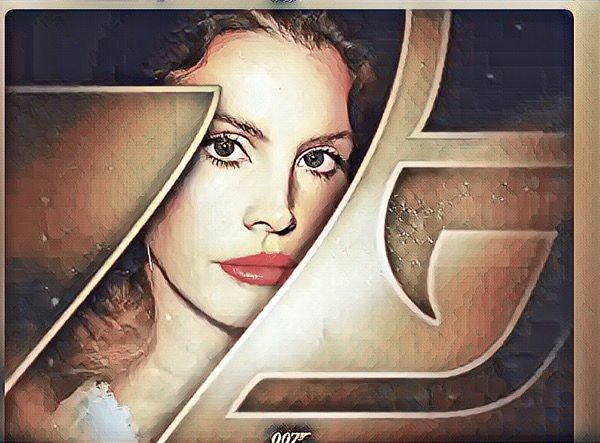
And this is not accidental. In the promotional material, Arnold himself noted that Lana brought to the song “an elegance and atmosphere perfectly suited to the Bond tradition,” while also “introducing something fresh for a new era.” In his words lies an important key: the Bond theme is not just a song, but a storytelling moment that must condense scale, drama, and intrigue, while also carrying the weight of a musical lineage that must be both honored and renewed.
The lyrics make this clear from the beginning. There is no closed narrative, but rather a movement of observation and provocation. Someone — or something — follows this young Bond as he runs toward his own destiny, “like a moth to a flame.” People try to stop him, but larger forces simply watch. And at the center of it all, the question that repeats like a ritual:
Will you play your life like a game?
It is precisely here that Lana’s choice becomes more interesting than it might have seemed in a film. Because, unlike recent entries in the cinematic franchise, which needed to synthesize emotionally loaded arcs, First Light functions as a prelude. It resolves nothing. It simply places the character before the decision that will define him.
The fan reaction mirrors this ambiguity.
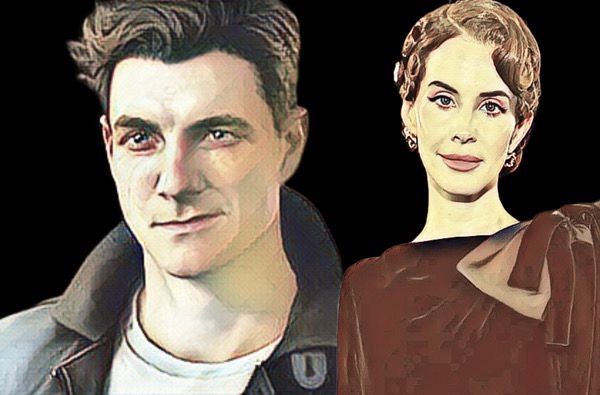
There is, immediately, a sense of validation, as if years of insistence have finally been answered. Many point out that Lana did not need to adapt to the Bond universe because she was already part of it, and the song simply makes that explicit. Her collaboration with David Arnold reinforces this sense of legitimacy, bringing the track closer to the franchise’s most classical tradition.
But that same recognition comes with a slight frustration.
Part of the audience expected something more grand, more definitive, something that could compete directly with Skyfall or deliver a more immediate emotional climax. In that sense, the criticism emerges that First Light is too restrained, almost deliberately understated for what had long been imagined as “Lana’s Bond song.” Nonsense. The track is perfectly suited to the world of the British spy, with echoes of Shirley Bassey and Paul McCartney.
What is most interesting is that these two reactions do not cancel each other out.
Because what is being judged is not just the song, but the idea of the song that has been built over the years. And perhaps no track could ever fully live up to that accumulated expectation.
This shift also helps explain why the project found a freer space within the world of games. First Light, described as a bold reimagining of Bond’s origin, follows the character “at the very beginning of his journey in the world of espionage,” reducing the need for a theme that functions as a conclusion and allowing for a more atmospheric approach. The game is scheduled to launch on May 27, reinforcing this moment of expansion for the franchise beyond cinema.
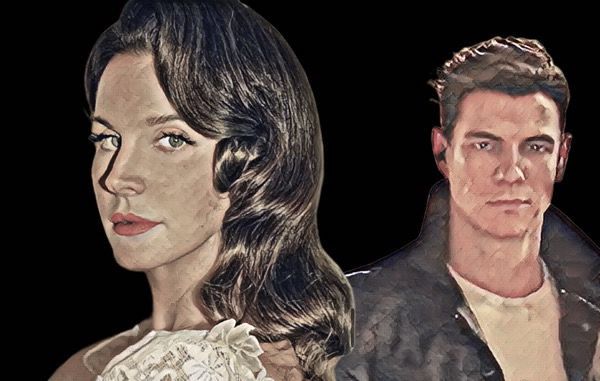
Within Lana’s own trajectory, this collaboration does not come out of nowhere. Over the years, she has built a consistent relationship with audiovisual projects, contributing songs to films like The Great Gatsby (Young and Beautiful), Maleficent (Once Upon a Dream), Big Eyes, and even more overtly pop projects like Charlie’s Angels. More recently, as she prepares her next album — still without a confirmed release date — she has been releasing singles that maintain this same atmosphere, making First Light feel less like a departure and more like a continuation.
In the end, First Light does not simply fulfill a long-standing pop culture fantasy; it reshapes it. Instead of delivering the grand, definitive moment many had imagined, it offers something more subtle, and perhaps more coherent: the moment when James Bond could still choose not to become who he will be.
Descubra mais sobre
Assine para receber nossas notícias mais recentes por e-mail.

