
In 2019, when he drew attention at the Edinburgh Festival by transforming deeply personal trauma into an unpredictable narrative about abuse and obsessive stalking, comedian Richard Gadd did more than a kind of “public therapy.” What emerged there was one of the most compelling, dramatic writers and actors of recent years. Baby Reindeer, adapted for television by Netflix in 2024, not only surprised audiences worldwide but became one of the most awarded titles of the period, consolidating a form of storytelling that refuses comfort and demands engagement. The path that takes him from stand-up to one of the most discussed names in contemporary television is not marked by a sudden shift, but by a steady deepening, and now he returns with a new series that promises to provoke.
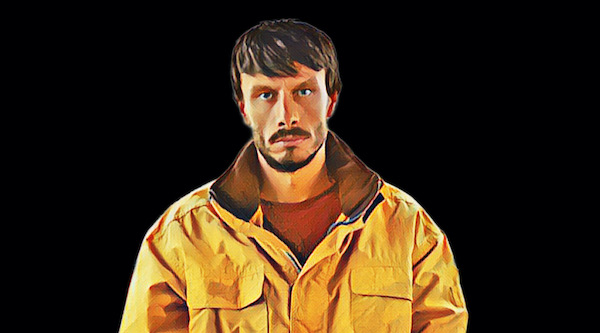
Before Baby Reindeer, Gadd was already orbiting drama. His work on the British stage had long been shaped by personal experiences that, rather than seeking easy identification, unsettled audiences in precisely the right way. There was a clear refusal to turn trauma into a comfortable catharsis. What Baby Reindeer did was amplify that logic on a global scale. The series not only accumulated awards but also established a narrative approach that directly challenges the idea of entertainment as a space for relief. Discomfort does not emerge as a side effect, but as the very engine of the work.
That is precisely why Half Man arrives surrounded by expectation. Not only because of what came before, but because there is, in Gadd’s work, a rare coherence between theme, form, and intention. If Baby Reindeer stemmed from a deeply personal experience to explore obsession, trauma, and exposure, Half Man shifts its focus to a question that has come to dominate contemporary discourse: what does it mean to be a man today, in a world that has changed faster than many can process.

The premise of the new series already points the way. The relationship between Niall and Ruben, two men who are not brothers by blood but become inseparable over the course of their lives, serves as the axis for a narrative that spans three decades, from the 1980s to the present. Their initial encounter, shaped by difficult circumstances, establishes a dynamic that never fully resolves. There is dependence, admiration, rivalry, and, above all, a persistent inability to express emotion.
By structuring the story across thirty years, Gadd does more than follow his characters; he observes the world around them as it transforms. This choice is not merely narrative, but conceptual. Masculinity, as he suggests, cannot be understood without this temporal shift. What was expected of a man in the 1980s is not the same as what is expected today, yet formative marks remain, often as ruins the characters carry without being able to name.
In this sense, Half Man seems to deepen one of the most compelling movements in Gadd’s work: the refusal to offer easy answers. Rather than building characters that represent clear positions within a debate, he chooses to explore contradictions. Ruben is violent, unpredictable, almost threatening, yet also carries a distorted sense of loyalty. Niall, more restrained and seemingly sensible, reveals fragilities that translate into passivity and self-erasure. Neither can be easily categorized as victim or perpetrator, and it is precisely within this ambiguity that the series finds its strength.
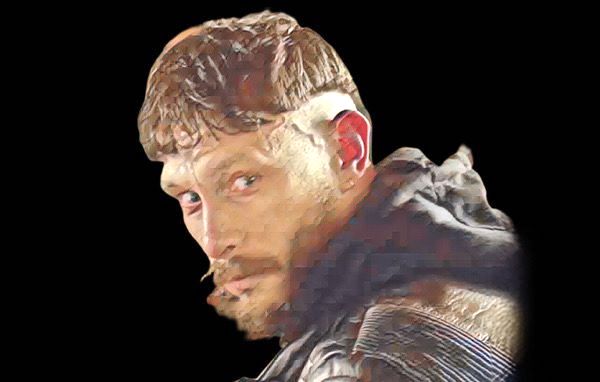
This narrative choice speaks directly to the present moment, in which discussions about masculinity often become too simplified to account for real complexity. Gadd himself points out that, while terms like “toxic masculinity” have gained visibility, there are still aspects that remain underexplored, particularly when it comes to men’s difficulty in expressing affection, vulnerability, and intimacy.
If there is controversy surrounding Half Man, it seems to stem precisely from this willingness to show what many narratives avoid. Violence, for instance, does not appear as spectacle, but as consequence. To address emotional repression, Gadd understands that it is necessary to show its extremes, not as gratuitous shock, but as part of an attempt at an honest portrayal. This approach, which already provoked intense reactions in Baby Reindeer, is likely to repeat here, perhaps in an even more direct form.
Another element that reinforces the interest around the series is Gadd’s own movement as a performer. Once again, he does not limit himself to writing. He takes on one of the central roles and transforms his body in the process, revealing a level of commitment to the physicality of the character. This transition from comedian to dramatic actor is no longer a surprise, yet it remains one of the most striking aspects of his trajectory. There is a precision in the way he inhabits these roles that suggests something beyond technique, as if each performance were an extension of an ongoing personal investigation.
Alongside him, Jamie Bell emerges as an essential counterpoint, bringing to Niall a complexity that avoids any simplistic reading. The relationship between the two, marked by long, intense, almost theatrical scenes, signals a commitment to a kind of dramaturgy that privileges time, silence, and direct confrontation between characters. In a television landscape often driven by speed, this choice is, in itself, a form of distinction.

Perhaps the most interesting point, however, lies in recognizing how Gadd has been building a body of work that insists on looking at zones of discomfort without turning them into spectacle. At a moment when many narratives seem preoccupied with anticipating audience reaction, he moves in the opposite direction. He does not soften, over-explain, or offer immediate relief. And precisely because of that, he creates a form of engagement that is less about identification and more about recognition, even when that recognition is difficult to sustain.
Half Man arrives, therefore, not merely as a new project, but as the continuation of an investigation. If Baby Reindeer established Richard Gadd as one of the most singular voices in contemporary television, the new series seems ready to test the limits of that position. The expectation is high, and not without reason. There is, in his trajectory, a consistency that rarely falters.
And perhaps that is exactly what explains the curiosity surrounding Half Man. It is not simply about what Gadd will do next, but about how far he is willing to go.
Descubra mais sobre
Assine para receber nossas notícias mais recentes por e-mail.
 miscelana.com