
In 2026, Top Gun turns 40 from a rare position in Hollywood history. It is not merely a classic preserved by nostalgia, nor a title remembered by a specific generation. It is a film that continues to operate as an active reference point, capable of speaking to the present without needing to be reconfigured. To mark the anniversary, Top Gun (1986) and Top Gun: Maverick (2022) return to theaters on May 13 in a double feature that transforms celebration into experience.
The announcement was made by Tom Cruise himself, confirming that both films are heading back to the big screen. The decision to present them as a double feature is not incidental. It acknowledges that Maverick does not function merely as a sequel, but as a direct extension of an imaginary first film shaped in 1986.
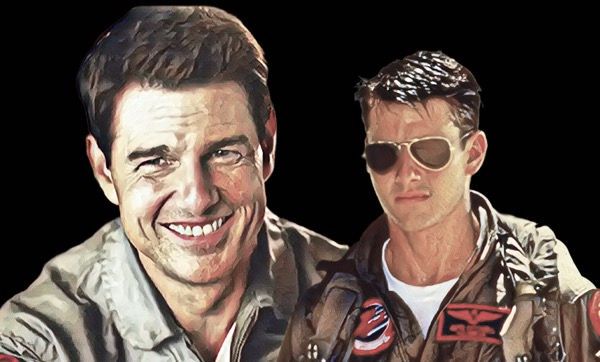
In practice, what audiences will see is the full arc of Pete “Maverick” Mitchell, one of the most enduring characters in contemporary cinema. In the original film, he emerges as the embodiment of an impulsive youth, defined by talent, risk, and a constant need to prove himself. In Top Gun: Maverick, that same drive does not disappear, but is reframed by time, loss, and responsibility.
When it premiered in 1986, Top Gun was not just a box office hit. It was a turning point in cinematic language. Tony Scott crafted a kind of filmmaking that blended advertising aesthetics, simple storytelling, and sensory intensity in a way that felt almost unprecedented at the time. The plot itself is straightforward: a gifted pilot enters an elite training school, faces rivals, deals with loss, and must prove his worth. But the film’s impact has never been limited to its story.
It lies in its form.
The gliding camera, the golden light, the editing that turns training into spectacle, the soundtrack integrated into the narrative — all of it creates an experience that goes beyond the script. Top Gun does not simply tell a story. It sells a feeling. And that feeling is built on speed, desire, competition, and image.
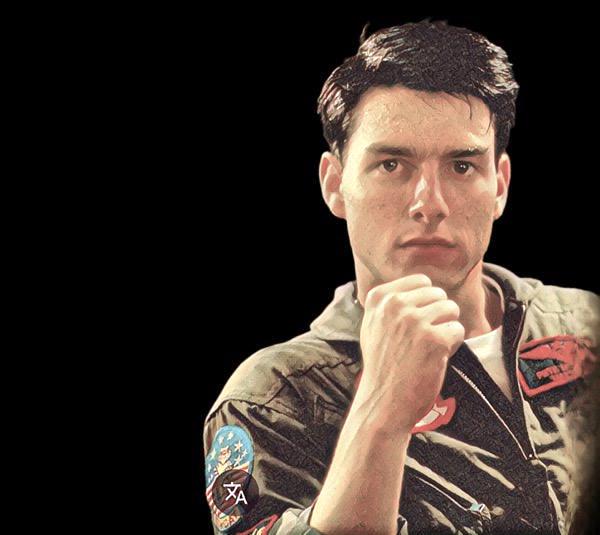
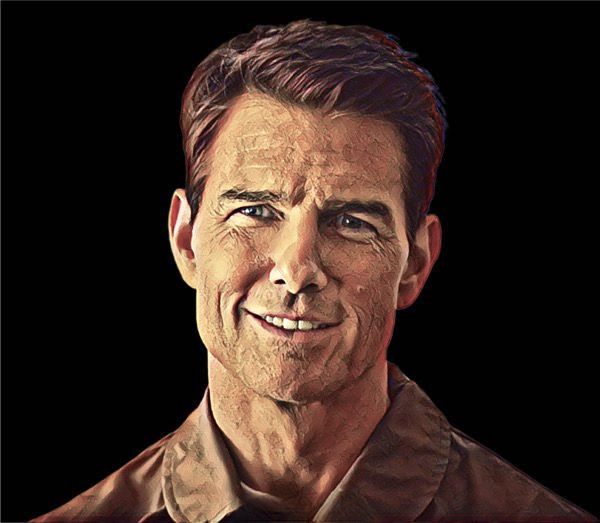
That is why the film has always existed closer to an imaginary than to a traditional drama. The famous volleyball scene, often dismissed as a superficial symbol of the 1980s, reveals something more structural: a construction of masculinity rooted in performance and exposure. The body becomes language. And that helps explain why the film was so influential not only in cinema, but in advertising, fashion, and music.
Four decades later, what stands out is not only that Top Gun remains relevant, but how it has been reactivated by the very system it helped shape. Top Gun: Maverick, released in 2022, did more than continue the story — it repositioned the original within a contemporary conversation.
By grossing around $1.5 billion, the sequel achieved something that seemed unlikely: it proved there is still space for a kind of cinema built on physicality, real risk, and collective experience. At a time dominated by digital effects and fragmented consumption, Maverick restores a sense of spectacle that many believed had been exhausted.
And in doing so, it sheds new light on the original.
Watching Top Gun today reveals that what once seemed like style was, in fact, language. The insistence on physical presence, on a direct relationship with the audience, on sequences driven by visual impact rather than narrative complexity — all of this anticipates debates that would only become central decades later.
There is also an inevitable element in this lasting relevance: Tom Cruise.
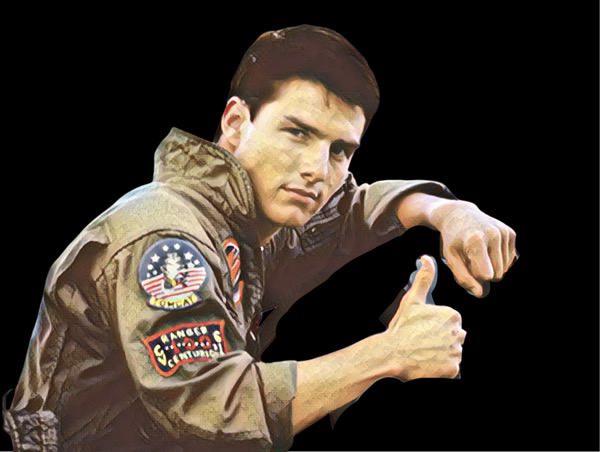
Few actors have managed to sustain not only relevance but coherence across four decades. In Top Gun, he embodies an impulsive youth defined by the need to constantly prove himself. In Maverick, that same energy remains, but reframed by time, loss, and responsibility. The character is not reshaped to fit the present. He resists it.
And perhaps it is precisely that resistance that sustains Top Gun’s legacy.
Rather than following the transformations of the industry, the film — and the franchise as a whole — preserves a very specific idea of cinema. One rooted in scale, presence, and direct impact. The fact that this approach still works, forty years later, says less about nostalgia and more about the gaps within contemporary cinema itself.
Because, in the end, Top Gun is not just an 80s film that continues to be remembered.
It is a model that has never stopped being current.
Descubra mais sobre
Assine para receber nossas notícias mais recentes por e-mail.

