
All the hype surrounding the long-awaited Michael Jackson biopic has turned Michael into an event. The film works, and works well, on a very specific level, as a piece designed both to introduce Michael Jackson to new generations and to rekindle the emotion of those who grew up with him as the biggest pop star in the world.
In that sense, there is something undeniably true about what appears on screen.
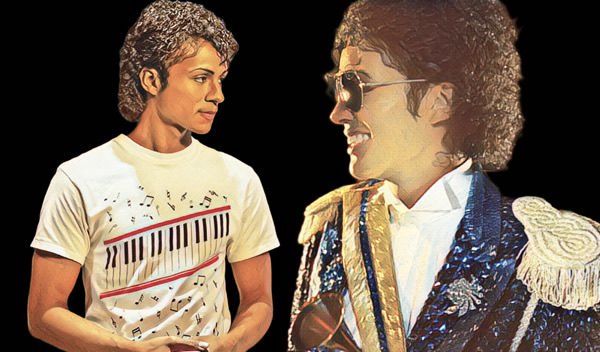
Michael Jackson remains unique as an artist, even nearly twenty years after his death. The flawless pitch, the stage charisma, the almost obsessive precision of his movements, the intelligence behind his musical choices, the visual construction of each era, all of it is present in a way that reminds us this is not simply nostalgia, but the work of an artist who operated on a rare level, even within the industry he helped shape. He was always larger than life.
And that is precisely where the film begins to reveal its limitations.
Michael is a sanitized film to a degree that goes beyond the obvious controversies. It is not only about what it chooses to leave out, but also how much it simplifies even aspects that are not directly tied to them. The transition from poverty in Indiana to the success of the Jackson 5 happens quickly, almost compressed, as if that entire trajectory could be resolved in a matter of minutes. The narrative repeatedly relies on musical montages because the temptation to include the greatest hits outweighs the need for dramatic development, turning moments that could carry emotional weight into an efficient, but ultimately superficial, sequence of clips.
Of course, this is a dramatized film, not an investigative documentary, and expectations should be aligned accordingly. Even so, within its own intention as a tribute, key figures are noticeably diminished. Michael’s younger sister Janet is not even mentioned on screen. Diana Ross, who was both an inspiration and a guiding figure for the Jackson 5 and for Michael himself, appears only briefly, almost as decoration, as if there were no room to develop relationships that might have added complexity to the story.
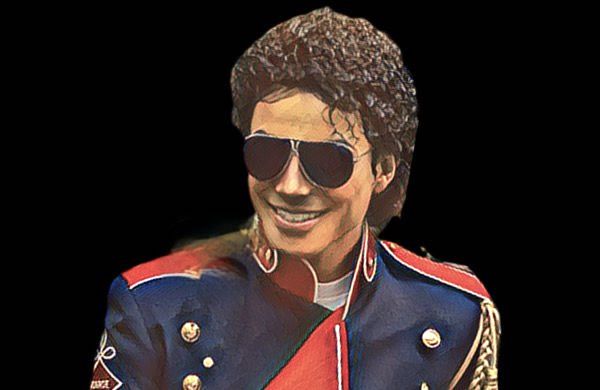
The film chooses a clear organizing axis, and that axis is the father. Joseph Jackson emerges as the central antagonist, and the narrative is built around Michael’s attempt to break free from his control. It is a valid perspective, but a limited one, because by concentrating the conflict so narrowly, the script overlooks other equally important dimensions of the artist’s life and career, reducing a complex trajectory to something more predictable.
Technically, the film impresses. The period reconstruction is careful and immersive, and the performances carry much of what the script does not fully achieve. Nia Long, Colman Domingo, and especially Jaafar Jackson, Michael’s real-life nephew, deliver strong work. In Jaafar’s case, there are moments when the performance moves beyond imitation into something closer to embodiment. Colman Domingo, in turn, already feels like a potential contender for the next awards season.
Even so, there is a sense of restraint that runs through all of it, as if the film lacks the willingness to go beyond what is already known, to demand more from its actors and from itself as a narrative.
Still, none of this prevents Michael from succeeding as exactly the film it chooses to be. Antoine Fuqua promised a definitive biopic that would not shy away from the most delicate aspects of Michael Jackson’s life, yet what reaches the screen suggests the opposite. The film aligns with the wishes of the singer’s estate, except for Janet and his daughter Paris, who have both expressed criticism, and ultimately presents itself as a love letter to Michael Jackson. This becomes especially clear in its most defining structural decision, which is where it ends. The film stops just before the turning point in his life, when the first abuse allegations emerge, avoiding any attempt to confront or process that moment.
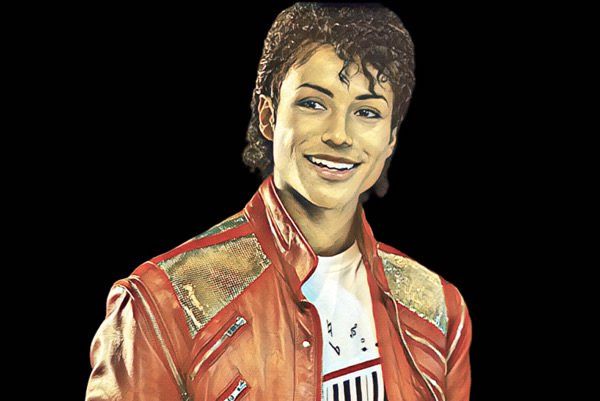
For that reason, if the goal is to find a complete, complex, and definitive portrait, Michael is not that film. Perhaps that version will never exist. But if the intention is to revisit the artistry, the power, and the cultural impact of an artist who redefined what it means to be a pop star, then it fulfills its purpose effectively.
And perhaps that is why the final feeling is inevitably ambiguous, because despite its omissions and the choices that limit its depth, it remains difficult to leave the theater without singing, without remembering, and without once again feeling the impact of someone who, for a long time, seemed larger than any narrative could fully contain.
That said, as a fan, if you love Michael Jackson’s music, you will love this film.
Descubra mais sobre
Assine para receber nossas notícias mais recentes por e-mail.

