
Few recent projects have arrived in theaters with as much accumulated anticipation as Michael. It is not just another biopic, but a film that carries the promise of definitively shaping the story of one of the most inescapable figures in pop culture.
A mission that almost everyone anticipated would be impossible, even given director Antoine Fuqua’s commitment to not leaving out any sensitive subject. The film went through years of reshoots and script revisions, only to reach the screen exactly as many feared it would: so controlled that it hardly seemed to require that much effort to arrive at this result.
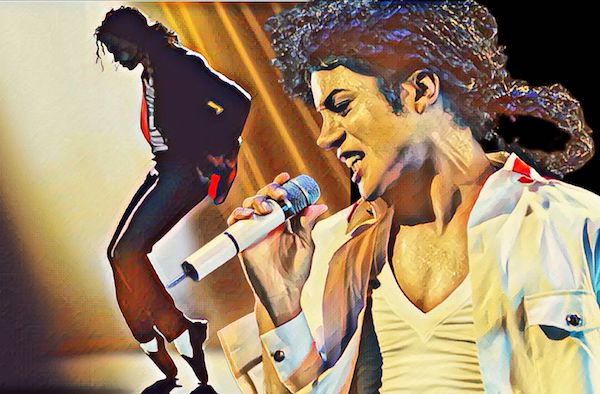
The film focuses on the music and the singularity of Michael Jackson as an artist and knows how to translate that onto the screen with a force that crosses generations. For those who did not live through the peak of his career, it works as an introduction. For those who did, it functions as a direct return to the experience of watching him dominate stage, image, and sound with almost absolute control. In the end, it is also a succession of major musical moments.
There is something the film makes clear: Michael was not just a success. He was an exception.

The vocal precision, the physical command, the aesthetic construction of each era, and the ability to turn music into a visual event. All of this appears consistently and, at times, impressively.
The problem is not what the film shows.
It is what it chooses to simplify.
The early trajectory, from his childhood in Indiana to the phenomenon of the Jackson 5, is handled in an accelerated, almost procedural way, as if it were merely a necessary step before getting to what really matters. The narrative moves forward through musical blocks that favor immediate recognition but sacrifice dramatic development.
This logic repeats itself throughout the film.
Key figures in Michael’s life appear in reduced form or are practically absent. Janet Jackson is not even mentioned. Diana Ross appears briefly, without her influence being meaningfully developed. Relationships that could have added depth are treated as background. Even Michael’s work in film is only suggested indirectly, through subtle references that may go unnoticed by those unfamiliar with his trajectory.
Instead, the script concentrates its conflict on a single axis: his father.
Joseph Jackson becomes the central antagonist, and the narrative is structured around Michael’s attempt to break free from his control. It is a valid perspective, but it is limited. By concentrating the conflict in this way, the film leaves out other equally important tensions, both personal and professional.
There is, therefore, a reduction of complexity that goes beyond the more widely known controversies. Even later aspects that helped define the final years of the artist’s life, such as his use of painkillers following the burn accident, are not addressed. These are absences that the film does not even attempt to suggest.
This does not prevent it from working on other levels.
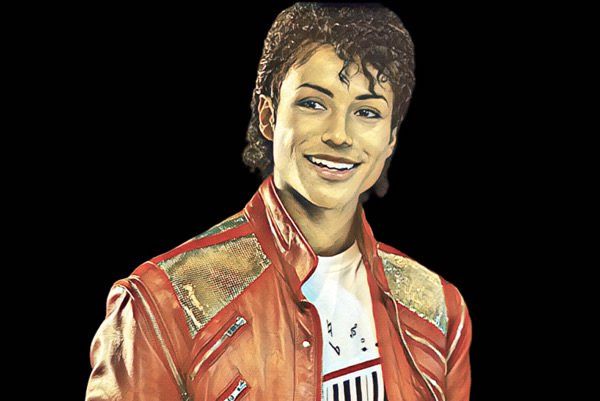
The period reconstruction is precise, there is clear aesthetic care, and the cast sustains the viewer’s interest even when the script does not move forward. Nia Long and Colman Domingo bring depth to their roles, while Jaafar Jackson, in his debut, surprises by moving beyond mimicry and achieving moments of genuine screen presence.
Even so, there remains a sense that the film operates within a very clearly defined boundary.
As if it knows exactly how far it can go.
This impression is confirmed by the most important structural decision of the narrative. The film chooses to end its story before the point at which Michael Jackson’s life becomes more complex, when the allegations begin to redefine his public image.
Without even mentioning this moment, there is no confrontation. There is an interruption.
And that interruption says a great deal, because the film’s objective seems to be to preserve Michael’s memory as he and his family would want it. Michael does not attempt to resolve the contradiction that defines its subject.
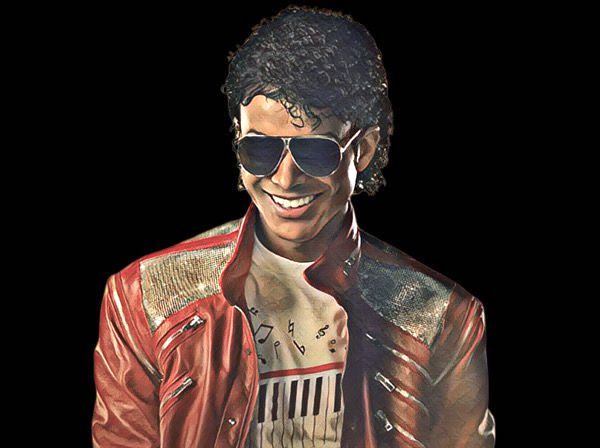
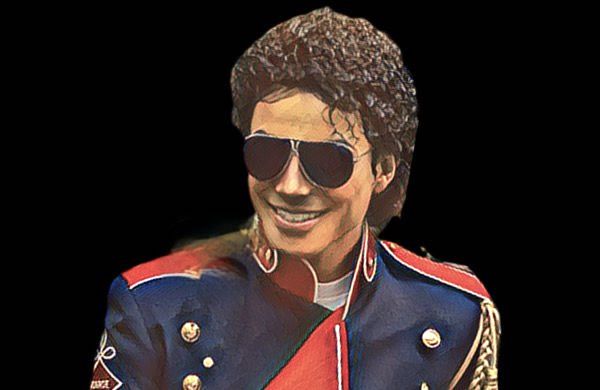
From that point on, it functions as a celebration. A return to the cultural and artistic impact of someone who redefined what it means to be a pop star.
But that choice comes at a cost.
By avoiding discomfort, the film also gives up the complexity that would make this story truly singular.
And perhaps that is why the experience feels so ambiguous.
The film moves, impresses, and engages. And yet, it leaves behind a sense of incompleteness that is difficult to ignore.
It is hard to leave the theater without singing, without remembering, without recognizing that, regardless of any narrative, Michael Jackson remains a phenomenon that cinema is still trying to grasp.
But, at least for now, it still cannot fully decipher him.
Descubra mais sobre
Assine para receber nossas notícias mais recentes por e-mail.
 miscelana.com
1 comentário Adicione o seu