
It is important to remember that the release of Michael, directed by Antoine Fuqua, arrives wrapped in a promise that has followed the project from the beginning: that it would not avoid any dimension of Michael Jackson’s life, including those that remain the most difficult to sustain publicly. That promise, however, is not fulfilled, because throughout the film’s development, the direct involvement of the family and the artist’s estate imposes a clear limit on what can and cannot be dramatized, with the justification centered on legal restrictions, defamation risks, and the impossibility of portraying accusations that never resulted in conviction, ultimately leading the final version to exclude precisely what could be most problematic.
The narrative effect of that decision is precise, as the film concludes a few years before the first public accusation, displacing the issue outside its own scope and turning a legal constraint into a dramatic solution that reshapes what can be seen and, above all, what can be forgotten.
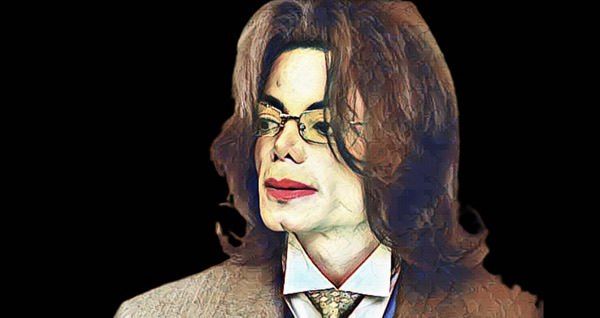
This displacement does not operate merely as a chronological choice, but as a form of editing memory, in which the most uncomfortable part of the story is not directly denied, yet also not confronted, resulting in a portrait that preserves the artistic trajectory, the construction of the myth, and the personal conflicts up to a point before the rupture that would permanently alter how Michael Jackson would be perceived.
In increasingly binary times, this is also what divides fans between those who believe absolutely in Michael, who died insisting on his innocence, and those who remain deeply connected to his music but have come to see him through a different lens, shaped by a doubt that can no longer be ignored. What is no longer in dispute is that this shadow followed him through his final years and continues to weigh on his image, irreversibly marking the way his legacy is remembered. And it is necessary to revisit it.
1993: when doubt begins to exist
To understand the weight of this absence, it is necessary to return to 1993, when the Jordan Chandler case publicly introduced an accusation of sexual abuse against the singer, initiating an investigation that did not result in a criminal conviction but ended in a significant financial settlement, something that, in itself, was never enough to close the matter.
Over the following years, new accusations emerged and accumulated, culminating in the 2005 trial in which Jackson was acquitted of all charges, creating a legal trajectory that produced a kind of permanent suspension, in which the absence of conviction coexists with the persistence of accusations, without one ever fully eliminating the other.
Leaving Neverland and the shift toward testimony
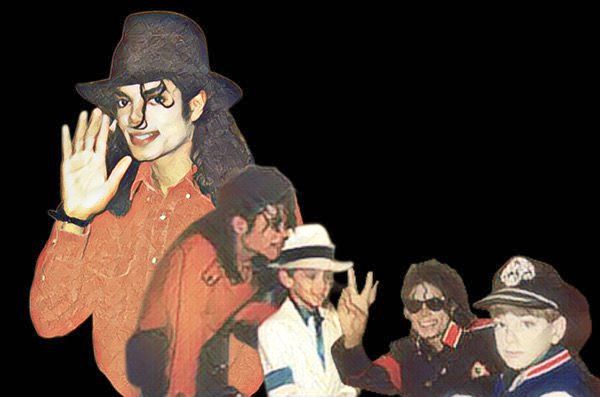
Decades later, Leaving Neverland, directed by Dan Reed, reopens this discussion from an entirely different position, abandoning the reconstruction of Jackson’s public trajectory and legal battles to focus on the accounts of Wade Robson and James Safechuck, who allege they were abused by the singer during childhood and only came to understand those experiences as abuse in adulthood.
Reed’s choice is radical because it shifts the narrative axis toward prolonged, detailed, and insistent testimony, creating an experience that does not function as a balanced debate, but as a continuous exposure of memory in which the viewer is not easily offered a point of neutralization.
The impact of the documentary stems precisely from this structure, which demands sustained listening and produces an effect that is difficult to erase, explaining both its critical recognition, with awards and strong reception, and the criticisms of its one-sided nature, widely contested by Jackson’s estate.
The contradiction that sustains the impasse
The central point of tension remains the contradiction that runs through the accusers themselves, as Wade Robson and James Safechuck had previously defended Michael Jackson, including under oath, at key moments such as the 2005 trial, only to change their accounts years later.
This shift is used by the family and its defenders as a primary argument to discredit the allegations, often framed as financially motivated or opportunistic reconstructions, while the documentary proposes an alternative reading based on the idea that the recognition of abuse can be delayed and shaped by denial, emotional attachment, and the difficulty of naming what occurred.
Neither interpretation resolves the impasse, but both help explain why it persists.
Dan Reed and the radicalization of the argument
Dan Reed publicly defends the credibility of what he filmed, stating that he began the project with skepticism and, over the course of his investigation, became convinced of the consistency of the accounts after cross-referencing them with documents and records, while also directly rejecting the idea of financial motivation by emphasizing that those involved were not paid for the documentary and that compensation would only occur in the event of a legal victory, which has not yet happened.
In his most recent interview with The Hollywood Reporter, however, his position becomes explicitly confrontational, as he states that, in his view, Michael Jackson was “worse than Jeffrey Epstein,” a comparison that amplifies the scale of what he believes he documented and helps explain why the debate remains so polarized.
Reed also addresses the most fragile aspect of the case, the change in the accusers’ narratives, arguing that it should not automatically be read as proof of falsehood, but rather as part of a delayed process of recognizing abuse, in which the act of speaking out implies admitting that one previously lied, including under oath, something that, according to him, tends to completely destabilize the individual’s life.
At the same time, he dismantles one of the most frequently repeated justifications, the idea of Jackson’s lost childhood, by questioning the logic that this could explain or mitigate his intimate proximity to children, insisting that nothing in that argument answers the most basic question about the limits of that relationship.

Perhaps the most unsettling aspect of the interview, however, is not the accusation itself, but Reed’s reading of the public response, as he argues that, in light of everything presented, the most evident conclusion is that people simply do not care enough to stop consuming the work, choosing instead to preserve their emotional connection to the music despite the ethical discomfort surrounding it.
This perspective shifts the focus from the artist to the audience, turning the debate into not only a clash of narratives but also a reflection of how culture chooses to deal with what it cannot fully integrate.
The documentary that disappears
The circulation of Leaving Neverland itself becomes part of this dispute when the documentary is no longer available on HBO following a legal battle with Jackson’s estate, based on a non-disparagement clause signed in the 1990s, even though the film continues to exist in fragmented form and has generated a follow-up released in 2025.
The symbolic effect of its removal is significant, as it reduces access to one of the most forceful narratives surrounding the case, while not erasing its impact on those who have already seen it.
What the film shows, and what that implies
It is in this context that Fuqua’s biopic becomes particularly revealing, not only for what it includes, but for how it organizes what is left out, as by portraying Michael Jackson’s relationships with children without any indication that this proximity was historically perceived as sensitive and controversial, the film removes the ambiguity that has always surrounded these images outside of fiction.
What, in reality, was for decades the subject of debate, suspicion, and defense, appears here as a neutral fact, disconnected from what would later become the center of a crisis of image and legacy, creating a specific discomfort for those deeply affected by Leaving Neverland.
An industry that can no longer claim an exception
This contrast becomes even more significant when placed within a broader context in which the music and entertainment industries have moved from treating cases of abuse and exploitation as exceptions to recognizing them as part of a recurring pattern, something made visible by the exposure of multiple figures and structures over recent years, from R. Kelly — convicted after decades of systemic abuse — to the case of Sean “Diddy” Combs, currently facing a series of allegations pointing to similar dynamics of power and coercion, alongside accusations involving managers, producers and other less visible but equally central figures within the industry.
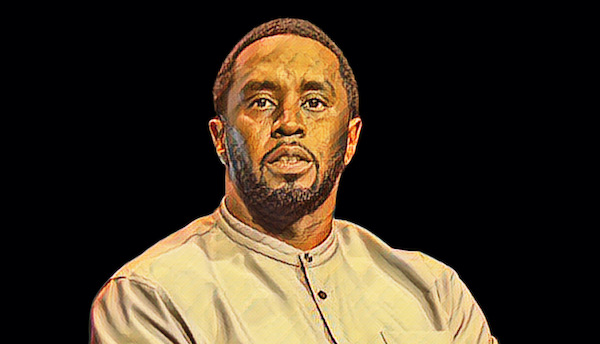
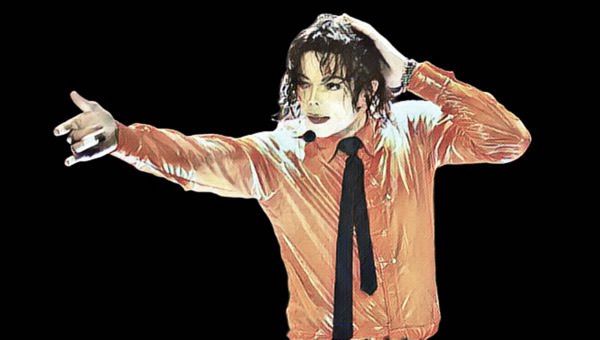
This accumulation does not resolve Michael Jackson’s case, nor does it serve as retroactive proof, but it significantly alters the lens through which his story is interpreted, shifting the focus from the exceptional to the structural and making it more difficult to sustain the idea that certain behaviors could exist in isolation, detached from a system that has repeatedly demonstrated its capacity to protect, silence and normalize deeply asymmetrical relationships.
Between memory, image, and what remains unresolved
In the end, here we are, nearly 20 years after Michael’s death, without a definitive answer and, more than that, faced with an unavoidable coexistence with ambiguity, as the legal trajectory does not eliminate the accusations, the documentary does not establish legal proof, the film does not absorb the conflict, and the artistic work continues to be consumed on a global scale, with none of these elements being sufficient to bring closure.
The question that remains, inevitably, is another one: is it possible to separate the art from the artist?
Descubra mais sobre
Assine para receber nossas notícias mais recentes por e-mail.

