
As published in CLAUDIA
In 2025, when Running Point premiered, I revisited the real story that inspired it: Jeanie Buss, the first woman to become the controlling owner of an NBA team, the Los Angeles Lakers. If you read my column in CLAUDIA at the time, it included spoilers for the second season, which does indeed follow that trajectory as inspiration. Rest assured: there is nothing here that anticipates a possible third season, still unconfirmed by Netflix.
What interests me now is Isla Gordon, a character brought to life by Kate Hudson with a comic timing that doesn’t soften what is at stake — it sharpens it. Ageism, misogyny, generational conflict, and structural sexism do not appear as themes. They appear as routine.


What Running Point builds across its first two seasons is more sophisticated than a narrative about power in sports or a comedy about family disputes. The series operates on another level, where Isla’s central conflict is not merely administrative or emotional, but structural.
Nothing she faces appears as an isolated episode. Everything returns, with slight variations, across different spaces.
Isla remains the ignored voice when her brothers gather, almost always orbiting around Cam. They acknowledge that she is right, yet resist trusting her business instincts, which are consistently the most accurate. There is always a gap between what Isla sees and what others are willing to recognize.
More unsettling than that is the effect this dynamic has on her. When Cam destabilizes her, when he makes her doubt a reading we know to be correct, the series exposes something deeper than a power struggle. External questioning seeps inward. Isla is not only discredited. At times, she begins to discredit herself.
There is no single scene that resolves this. There is repetition.
Among the siblings, the dispute is never just about decisions. It is about the right to be taken seriously. They are allowed a margin for error. They improvise, retreat, contradict themselves. With Isla, every choice carries more weight. Success does not stabilize her position. Failure is not absorbed.

This pattern extends to the team. With the players, sexism does not appear as direct confrontation, but as quiet resistance. There is a constant sense of testing, as if her authority were still under evaluation. Simple decisions need to be reiterated. Tactical changes meet hesitation before acceptance. Respect, when it comes, does not accumulate. It must be constantly reasserted.
In the media, this dynamic becomes narrative. Isla is not evaluated solely for what she does, but for how she occupies the space she holds. Questions that appear neutral carry subtext. Wins do not consolidate authority. Losses amplify doubt. While her male counterparts are discussed in terms of strategy, she is framed as a character. When she is exposed, it is always through the worst possible images. There is a persistent effort to ridicule her, to erode her credibility, to undermine her confidence.
And it is not only men who sustain this logic. There is ageism, there is a lack of solidarity. Isla could stand alongside Christina Pagniacci in Any Given Sunday, Rebecca Welton in Ted Lasso, Sansa Stark, Daenerys Targaryen, or Cersei Lannister in Game of Thrones, or Shiv Roy in Succession. Different universes, the same mechanism. Isn’t it unsettling how easily these examples come to mind?

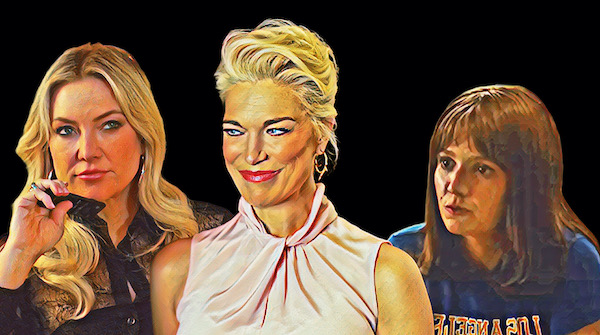
With investors, the starting point is never neutral. Isla enters every negotiation having to prove she belongs there. It is not enough to have the best insight. She must validate her presence before she can validate her proposal. Authority is not presumed. It is negotiated.
None of this is exceptional. It is an environment.
And it is precisely within this normalization that the series finds its sharpest layer.
Isla also fails — and that is essential. There is no attempt to sanctify her. On the contrary, Running Point allows her to make mistakes in order to expose the complexity of the system she inhabits.
Her relationship with Ali marks the first rupture. When she loses her closest ally and friend, who must leave the team to find recognition elsewhere, Isla is forced to confront something she had not fully processed: the need to sustain alliances between women within an environment that continually weakens them. Ali does not leave solely out of ambition. She leaves because staying also comes at a cost.
The same dynamic appears in the way Isla initially handles the cheerleaders. The strike exposes a blindness that is not individual. Women also reproduce the structures that limit them, even when they believe they are resisting them. The series does not correct Isla. It does not offer immediate growth. It simply reveals.
This gesture is rare.


In her personal life, the conflict reorganizes itself, but does not disappear. Isla has by her side a partner who seems almost unreal in his understanding, yet her desire shifts toward Jay. He moves forward with his life outside Los Angeles, while she remains. Isla does not freeze, but she also does not move forward. The choice between career and personal life does not present itself as an explicit dilemma. It imposes itself as a practical impossibility.
Ali, in a different way, navigates the same impasse.
When Jay returns and appears to embody the ideal partner, the series carefully constructs the moment of rupture. As long as he is in a position of advantage, there is space for Isla to exist. When they begin to compete directly, the structure reveals itself.
Isla asks for space to focus on her work. He accepts, but not without resistance. When she identifies the weakness in his strategy and wins — cleanly, technically, entirely legitimately — what breaks is not just the relationship.
What breaks is the possibility that he can sustain equality.
Jay accuses her of being too competitive, without recognizing the same trait in himself. The issue is not competition. It is her competing — and winning.

His final gesture, aligning himself with Isla’s main rivals, including Cam, shifts the conflict to another level. It ceases to be intimate and is reinscribed within the structure. Jay does not become an exceptional antagonist. He becomes one more element within a system that cannot absorb a woman in a position of power without destabilizing that position.
This is what brings Running Point closer to reality than to fiction.
And perhaps this is the most compelling aspect of the narrative. Beneath its lightness and humor, the series constructs something remarkably precise. There are no grand speeches. No explanatory scenes. No resolution.
There is repetition.
Sexism does not appear as an event. It appears as an environment.
And Isla is not just trying to win games.
She is trying to remain within a system that constantly demands she justify why she is still there.
Descubra mais sobre
Assine para receber nossas notícias mais recentes por e-mail.


1 comentário Adicione o seu