
Five days remain until the moment when Nick Reiner’s defense will finally be heard in court. Since December 2025, when Rob and Michele Reiner were murdered inside their Los Angeles home, the case has evolved into something far more complex than a criminal proceeding. It has become a narrative struggle, one that resists closure.
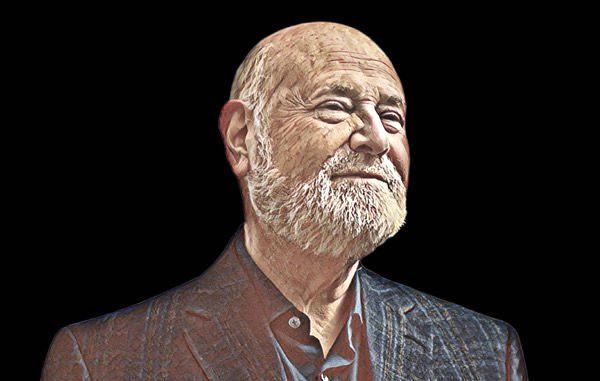
Rob Reiner was not just another public figure. As the director behind some of Hollywood’s most enduring films, from When Harry Met Sally to Misery, he represented a kind of institutional stability within the industry. Michele, his wife since 1989, remained largely outside the spotlight, yet she was part of that same image of continuity.
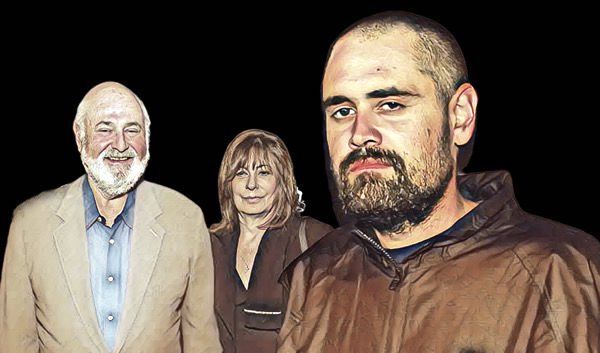
That image collapsed on December 14, 2025, when the couple was found dead in their Brentwood home. Soon after, their son Nick, 32, was arrested and charged with two counts of first-degree murder. He has pleaded not guilty and remains in custody awaiting trial.
Since then, what has taken shape is not just a legal case, but a growing anticipation. And it now converges on April 29, when the defense is expected to present its first structured argument.
Responsibility and its limits
Nick’s claim of innocence is only the starting point. What follows is where the case becomes more complex. Much of the speculation surrounding the defense centers on how his mental health will be addressed in court.
Rather than an “alibi,” the more precise legal framing would be a defense based on insanity or diminished capacity, shifting the focus away from whether the act occurred and toward whether the defendant can be held fully responsible for it.
Reports indicate that Nick had a history of substance abuse and had been diagnosed with schizophrenia prior to his parents’ deaths. This element alone has the potential to fundamentally reshape the case.
But it may not be the only narrative path.
The Menendez shadow
There is also a less formal, yet persistent expectation: that the defense might adopt a strategy reminiscent of the Menendez brothers, reframing the parents as perpetrators to alter the perception of the crime.
At this stage, this remains speculative. Yet its mere presence in public discourse reveals how contemporary cases are often pre-narrated before they unfold in court.
To reposition the victim and the aggressor is not only a legal maneuver. It is a deeply media-driven act, one that transforms how the case is received as much as how it is argued.

When silence becomes the only possible language
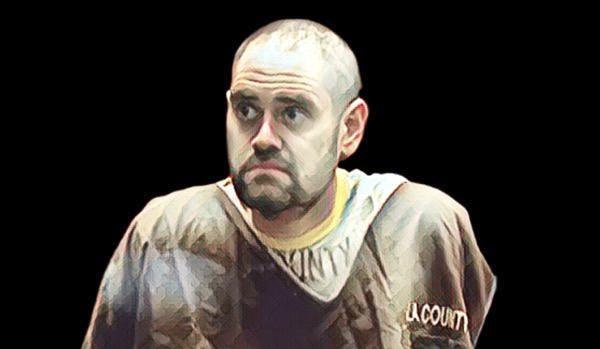
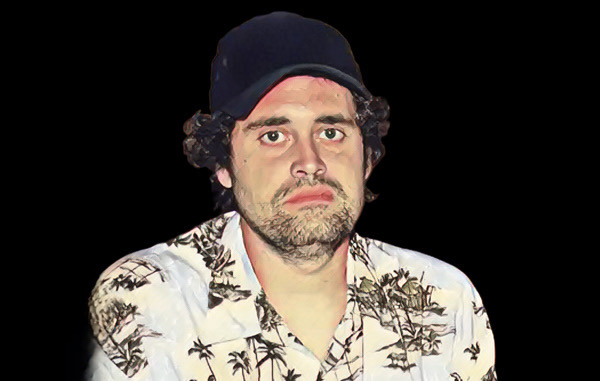
It is here that Jake Reiner’s text fundamentally alters the case.
Not by offering answers, but by refusing to organize them.
He recounts the moment he learned of his parents’ deaths not as a story, but as a rupture. The call from his sister. The second call minutes later. The unbearable car ride that no longer functions as movement, but as suspension.
What emerges is not an explanation, but an experience that resists coherence. He writes about waking up each day and having to convince himself that it is real. About imagining his parents’ fear. About the impossibility of mourning while the world demands action and explanation.
And most devastatingly, he names what the legal process cannot fully absorb: not only the loss of both parents, but the fact that his brother stands at the center of that loss.
This does not structure the narrative. It disrupts it.
What the court cannot resolve
Jake acknowledges that some answers may come in time, but others belong only to the family.
That boundary defines the case.
The trial can determine responsibility. It can construct a legally coherent version of events. It can deliver a verdict.
But it cannot contain everything this case represents.
What Jake’s text makes clear is that some dimensions of this story cannot be translated into argument, strategy, or resolution.
What is at stake now
What approaches are not only the defense of Nick Reiner.
It is the moment when all versions of this story collide. The legal narrative. The anticipated defense. The public imagination. And the version that refuses to be organized at all.
The Reiner case is not difficult simply because it remains unresolved.
It is difficult because it may never be fully resolved.
Descubra mais sobre
Assine para receber nossas notícias mais recentes por e-mail.


1 comentário Adicione o seu