
There is no real surprise in the early numbers for Michael, but something is revealing in the way they take shape. What once seemed like a risky bet, marked by long-standing controversies and behind-the-scenes decisions that suggested a project in constant adjustment, quickly establishes itself as a box office event. In doing so, the film accomplishes something that perhaps no critical debate has managed to resolve over the past two decades: it translates into numbers the persistence—not of consensus, but of force—of Michael Jackson as a central figure in pop culture.


The initial data is striking enough to dismiss any cautious reading. In the United States, Michael opened with around $40 million on its first day, surpassing Oppenheimer and setting the biggest opening day ever for a biopic. In South America, the projection moves beyond strong performance into symbolic territory: the film is on track to deliver the biggest opening ever for a non-IP title, something that, on its own, redefines what “brand” means in contemporary cinema. In Brazil, expectations for a 45–50 million opening weekend in local currency place it among the ten biggest openings of all time, surpassing franchise-driven titles like The Batman, Deadpool and Wolverine.
These numbers are not just high. They are displaced from the current industry context, which increasingly relies on recognizable franchises, tested intellectual properties, and serialized storytelling to secure audiences. Michael operates outside that logic while simultaneously confirming it through another route. Because if it is not a franchise, it is something even more powerful: a name that functions as a system on its own.
The idea that Michael Jackson transcends the need for context is not new, but it has rarely been demonstrated so clearly on a contemporary scale. For decades, he was the biggest pop star in the world, not only in terms of sales or reach, but in his ability to concentrate global attention almost absolutely. That centrality never fully disappeared, but it became increasingly strained by a succession of competing narratives that fragmented his public image. The film emerges precisely within that fracture, and what the box office suggests is that, when faced with the choice between engagement and refusal, the audience still chooses to look.
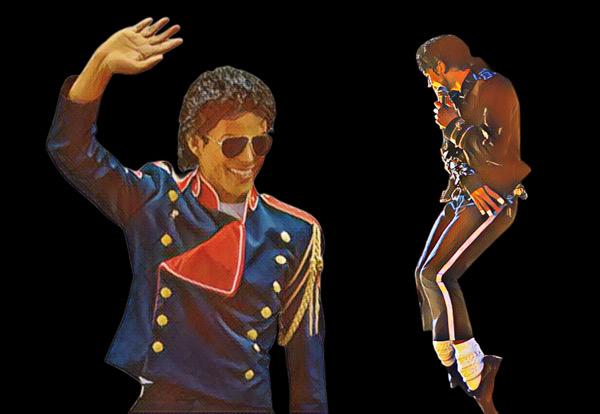
This does not imply unquestioned endorsement, and perhaps that is where the most interesting insight lies. The success of Michael does not resolve the controversy, reorganize the debate, or offer a definitive version of who its subject was. It does something else: it confirms that Michael Jackson continues to operate even without a possible synthesis. There is something in his trajectory that resists closure, and that resistance converts itself into interest, into curiosity, and ultimately, into box office.
The film’s behind-the-scenes history helps explain why this operation was never simple. The production underwent a significant round of reshoots, including a complete restructuring of its third act. The decision was not merely creative, but legal. Attorneys for Michael Jackson’s estate pointed to a settlement clause involving Jordan Chandler, one of his accusers, which prevented his direct depiction in the narrative. This led to the removal of the original ending and the construction of a new conclusion, requiring the cast to return for an additional 22 days of filming. The financial impact was also notable, as shooting in Los Angeles did not qualify for tax incentives, adding an estimated $10–15 million to the budget, a cost reportedly absorbed by the estate itself, which holds an equity stake in the film.
This set of decisions reveals a project that does not simply tell a story, but constantly negotiates the limits of what can be told. And yet, even with these constraints and adjustments, the result meets its audience at a massive scale. There is a kind of displacement here between what the film is able to say and what the viewer is willing to seek. Interest does not depend on narrative completeness, but on proximity to the myth.
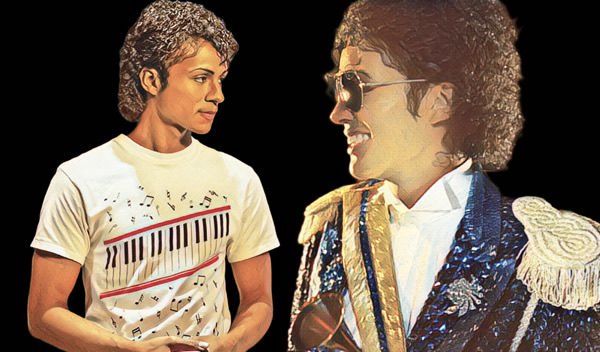
It is at this point that more traditional critical readings tend to fall short. Evaluating Michael solely as a film—isolating its narrative choices, omissions, and framing—may be insufficient to account for the phenomenon it represents. The film is not just a text. It is a device that reactivates a figure who never stopped circulating, even as his image became increasingly difficult to organize.
What the box office confirms, then, is not Michael Jackson’s innocence, nor the validity of any single version of his story. It confirms something more uncomfortable, and therefore more enduring: the impossibility of neutralizing his impact. Even shaped by accusations, revisions, and strategic silences, he remains an inescapable presence. And in cinema, that presence translates in the most direct way possible. Into numbers.
Descubra mais sobre
Assine para receber nossas notícias mais recentes por e-mail.


1 comentário Adicione o seu