
There is a moment when a series stops building toward conflict and begins to exist inside it. House of the Dragon has reached that point.
HBO chose CCXP Mexico, in Mexico City, to unveil the first substantial look at the third season. On stage, Matt Smith, Olivia Cooke, and Fabien Frankel led the panel, while showrunner Ryan Condal appeared via video from the U.K., where post-production is still being finalized. That detail matters. The season is still being completed, but it has officially entered its final promotional phase.
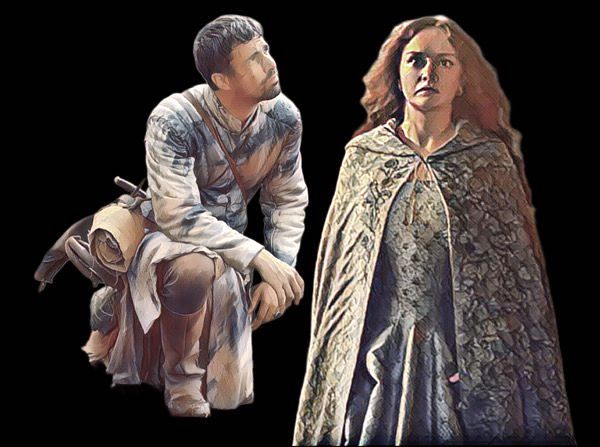
The teaser screened at the event has not yet been released online, but it will debut globally tomorrow. The move structures the timeline with precision. The premiere is set for June 2026, and the teaser’s release now signals the beginning of the final countdown.
What the footage shows, however, does not follow the traditional logic of previewing the plot.
There is no attempt to situate the viewer or outline specific events. What emerges, according to those who saw it, is a world no longer on the brink of war, but fully inside it. Armies in motion, environments under constant strain, and dragons filling the sky — not as an isolated spectacle, but as a structural, continuous presence.
Corlys Velaryon’s line anchors that perception: all that remains is to decide what one wants from this war. There is no ambiguity left. War is no longer a possibility. It is the only reality.
Criston Cole reinforces that shift by warning that doom and ruin surround them. The language changes. Political maneuvering gives way to consequence.
Visually, the expansion in scale is evident. More battles, more dragons, with particular emphasis on Caraxes, but without framing that turns these moments into awe-driven spectacle. Fire is no longer a climax. It becomes a recurrence. War is no longer constructed behind closed doors. It takes over the frame.
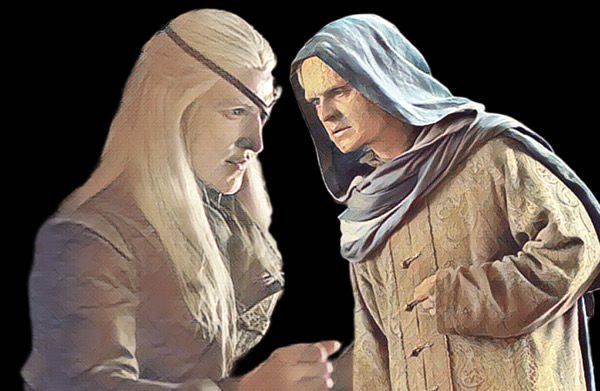
Ryan Condal defines the season as the biggest the series has made, darker, more emotional, and more action-driven. His emphasis on “lots and lots of dragons” no longer reads as a promise, but as a literal description of a world that has lost containment.
Matt Smith reinforces that reading, describing a season that is more brutal, more dangerous, and more direct, with a clear intent to return to the show’s core. He also highlights Daemon as a character who continues to operate outside any rule. In a collapsing world, that position no longer feels exceptional.
Olivia Cooke offers the most precise emotional shift. Speaking about Alicent, she notes that to hate someone, there must once have been love. That observation reframes the series’ central axis. The war is not only political. It is deeply personal. And what season three suggests is not simply a clash between sides, but the impossibility of returning to a bond that once existed.
Fabien Frankel points to another key change by stating that Criston Cole is now driven by survival. The move from conviction to instinct is not incidental. It is a symptom of a world in which structures no longer hold.
The reaction at the event was immediate. There is excitement about the scale, but also a clear sense that the series is entering a different phase, one less interested in building conflict and more committed to showing its consequences.
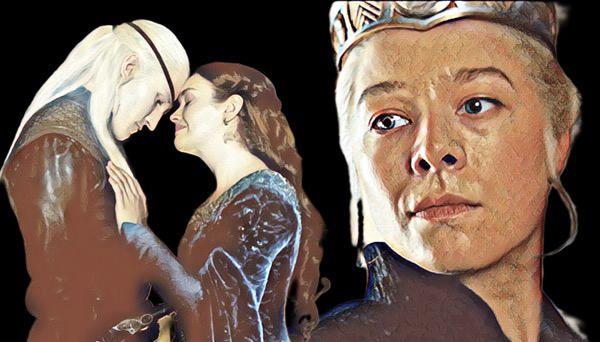
At the same time, HBO is expanding the reach of the series itself. On May 29, the platform will release new versions of the first two seasons featuring American Sign Language interpretation, placing House of the Dragon within a broader push for accessibility across its catalog. This is not a side note. It is part of how the franchise continues to grow.
From this first material, what emerges is not simply a bigger season.
It is a change of state.
House of the Dragon moves away from being a story about the beginning of a war and becomes a story about what happens once it has consumed everything.
And that shift changes the position of the viewer as well.
This is no longer about following strategies or possible victories. It is about witnessing what remains when none of those structures can hold.
In this world, it was never really about who wins.
Only about who manages to endure what is left.
Descubra mais sobre
Assine para receber nossas notícias mais recentes por e-mail.


1 comentário Adicione o seu