
Fans of The White Lotus tend to notice movements that often go unseen on the surface, yet quietly organize what the series does best. It is not simply about who joins or leaves the cast, nor about which new destination will be explored next, but about how Mike White works with memory, echo, and the reconfiguration of characters who never fully disappear.
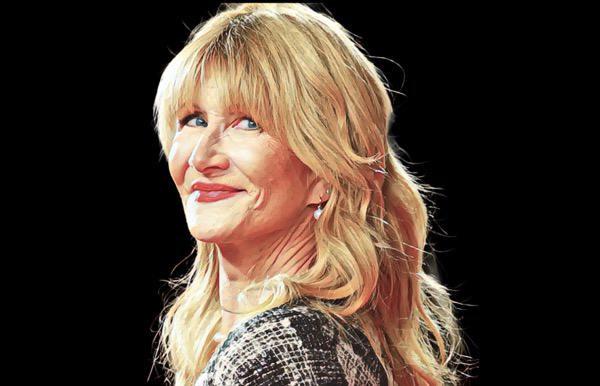
The news of Laura Dern joining season four might initially read as just another high-profile replacement following Helena Bonham Carter’s exit. A prestigious actress stepping into a central role in a new setting, now shifted to the French Riviera during the Cannes Film Festival. But that reading overlooks a detail that fundamentally changes the nature of this casting. Laura Dern is already inside The White Lotus. Her uncredited voice is that of Abby, the estranged wife of Dominic Di Grasso in Season Two.
And that changes everything.
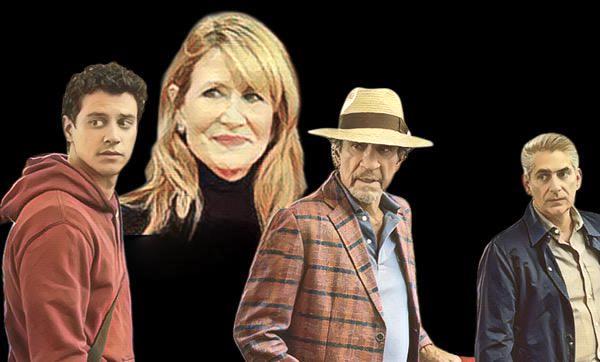
Abby was never just a distant reference. The construction of season two makes it clear that she is the axis around which the Di Grasso storyline revolves. Dominic is not in crisis by accident; he is dealing with the consequences of a history of infidelity that ultimately destroyed his marriage. Albie articulates this throughout the episodes, describing his father as someone incapable of sustaining relationships without sabotaging them, while trying to position himself as the mediator between both sides of the family.
Abby’s presence operates in layers. First, as a voice, in a phone call marked by anger and rupture. Then, as a narrative, constantly invoked by Dominic, Albie, and Bert, who cling to the illusion that the marriage can still be repaired and even suggest that Abby and their daughter should be in Sicily. This is not a casual mention, but an expectation embedded within the season itself. The possibility of her appearance is never dismissed; it is quietly set up as something that could happen.
That matters because it reframes her weight as a character. Abby is not a functional device to explain Dominic’s behavior; she is the reason that behavior exists. Her absence is active, structuring the conflict even without occupying physical space.
There is also a revealing detail when we look back. In 2022, right after season two, a curious speculation began circulating within what Mike White himself described as a kind of “expanded universe” for the series. The idea that characters could move across seasons as part of a shared ecosystem. Within that context, one of the most talked-about rumors involved Abby. The hypothesis suggested she could reappear in a future season alongside Nicole Mossbacher from season one, with an even more unexpected twist, that the two could be sisters.

None of this was ever confirmed, but the fact that Abby appeared in this kind of speculation shows she was never treated as disposable, not even outside the show. She was already being imagined as someone who could circulate, connect, return as a piece that had not yet been fully played.
When the series brings Laura Dern back and frames her as a new character, an interesting friction emerges between the official narrative and the internal logic of the show. Because The White Lotus does not tend to abandon this kind of groundwork. Characters may leave the frame, but they continue to operate. And Abby is one of those presences that never stopped existing.
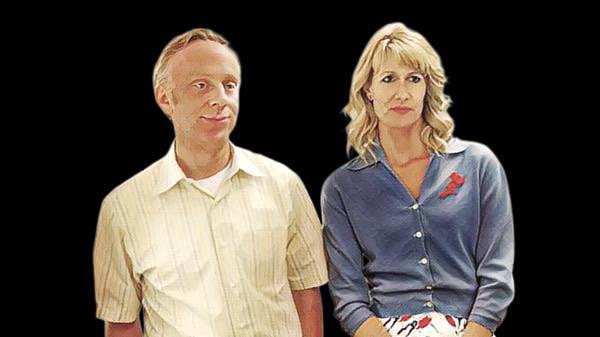
There is also an off-screen element that helps explain why this choice is unlikely to be accidental. Laura Dern and Mike White share a long and close creative relationship. They worked together on Enlightened, the HBO series they co-created, which already explored characters trying to reorganize their lives after a collapse. Before that, they collaborated on Year of the Dog. This is not just prestige casting; it is a shared language. When Mike White writes a character for Laura Dern, he is writing within a space he knows intimately.
The decision to set the season in Cannes reinforces this sense of continuity. It is not merely a new destination, but a different kind of environment. If previous seasons explored money, desire, and death in relatively enclosed spaces, the Cannes Film Festival introduces a public, mediated dimension. This is where stories are shaped, packaged, and sold, where lived experience is transformed into narrative, and exposure becomes part of the system.
This opens a layer the series has not yet fully explored, but has been moving toward. The moment when the events we watch are no longer simply lived by the characters, but are appropriated as narrative material within that same universe.
At that point, the idea of Abby in Cannes stops being a stretch and starts to make sense within the show’s internal logic. Dominic is not just another guest; he is a film producer. That detail, which once seemed incidental, gains new weight when the story moves to the world’s most prominent marketplace for storytelling. If there has been a definitive break between him and Abby, she is no longer just a consequence of his actions, but a subject operating within that same system.
Abby could be in Cannes for reasons entirely independent of Dominic. She could be involved in a project, reshaping her public image, or actively engaging with her past. And there is a more compelling possibility that aligns perfectly with the new setting. The idea of a film, or a narrative project, is inspired by the deaths and events linked to the White Lotus hotels.

In that case, the series would begin to observe itself without breaking its own logic. It would not be a gratuitous meta gesture, but a natural extension of what it has always done. From the beginning, The White Lotus has examined behavior, exposed contradictions, and revealed how its characters deal with the consequences of their choices. Bringing that material into a space like Cannes allows the show to explore the next step, when those stories stop being lived experience and become shaped, edited, and sold.
Laura Dern occupies a strategic position within this shift. Whether as Abby or as a formally new character, her presence points toward a reorganization of the narrative. There is the possibility that the series maintains a nominal distinction while relying on the audience’s recognition. There is also the possibility of a direct return, in which Abby moves from voice to physical presence, from absence to action.
What matters most, however, is not which option proves correct, but what this casting reveals about the direction of the series. For the first time, there is room for someone who previously existed only as a consequence to assume control of her own story. And doing so within a festival that transforms experience into symbolic and financial capital amplifies the reach of that shift.
If earlier seasons showed characters trapped in patterns that repeat themselves, season four appears interested in something more complex. Not in abandoning the past, but in using it as raw material. Abby, in this context, would not simply be a return, but the point at which the series acknowledges that its stories do not end when they leave the frame; they continue, they are retold, and eventually, they become something to be contested.
But in the end, there is a question the series never abandons. The White Lotus is not just a hotel; it is a system that absorbs those who enter it and returns a transformed version of them, sometimes unrecognizable.
Because beyond connections between seasons or narrative games within the narrative, there is a silent rule that has been repeating since the beginning. No one passes through the White Lotus without paying some kind of price. And in many cases, that price is final.
If Cannes now turns experience into story, perhaps season four will push that to its limit. Not just observing what happens, but deciding who controls what gets told afterward and who will no longer have a voice to tell it.
In the end, the question remains the same.
Someone enters The White Lotus, but never leaves alive.
Who will it be in season four?
Descubra mais sobre
Assine para receber nossas notícias mais recentes por e-mail.
 miscelana.com