
490 years later, the question remains
Anne Boleyn‘s execution in 1536 not only ended a reign of roughly one thousand days but also inaugurated one of the most unstable narratives in the history of the English monarchy, shaped by fragile accusations, political rearrangements, and an almost immediate rewriting of who she was.
Nearly five centuries later, what is striking is not only that her guilt or innocence, her ambition or her role in the break with Rome are still debated, but that an even more basic question remains unresolved: what did Anne Boleyn’s face look like?
Her story does not begin or end at the scaffold. It begins to be constructed days earlier.
On May 2, 1536, Anne was formally accused of the crimes that, weeks later, would lead to her death. The charges of adultery, incest, and treason did not merely organize her downfall in legal terms; they also established the version of her that would outlive her.
This uncertainty is not an effect of time, but of how her story was shaped from the moment of her fall. Executed under accusations that are now widely considered politically constructed, removed in a context that involved the urgent need for a male heir and a reorganization of power within the court, Anne was not only eliminated as a political figure but also as an image.
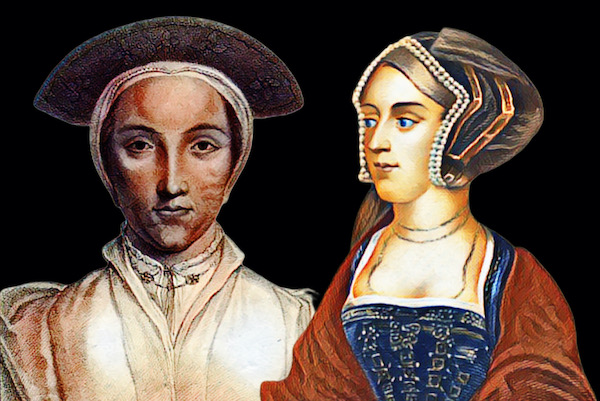
It is from this point that the new attempt to identify her using artificial intelligence gains traction, because it does not emerge from an ordinary gap, but from a constructed absence.
With each new study on Anne Boleyn comes the recurring sense that, this time, we may be closer to closing a story that has stretched across centuries without settling into a definitive form. The most recent proposal follows this path, but with a striking difference: the use of artificial intelligence to try to identify, among Tudor-era drawings, what would be her true face.
The work, led by Karen Davies in collaboration with Professor Hassan Ugail from the University of Bradford, is based on the analysis of portraits attributed to Hans Holbein, digitally comparing facial features to identify patterns of similarity. The hypothesis that has drawn attention is both direct and compelling: a drawing long classified as an unknown woman could, in fact, be Anne Boleyn.
This idea carries weight because it answers a question that has never disappeared. Who was this woman whom we write and talk about still in the mid-21st century, and whose appearance has never been securely established?
The promise, therefore, is clear: to offer a face where there has always been doubt.
The problem is that this promise meets an immediate obstacle, and it is not technological but inherent to the material itself.
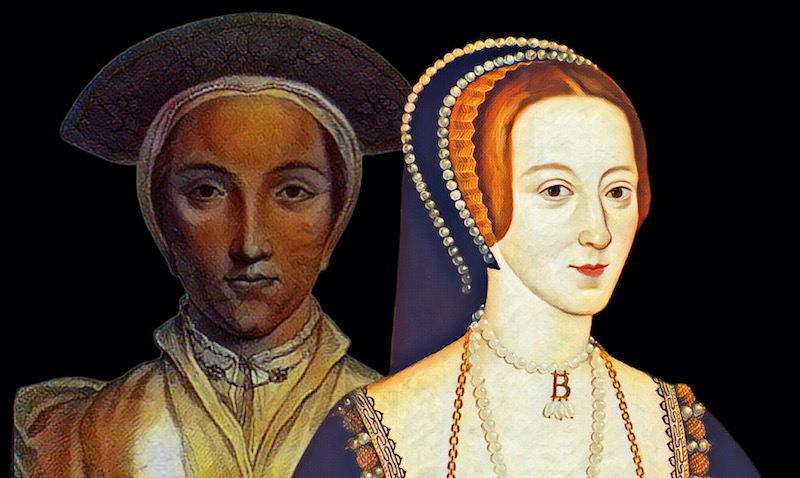
There is no confirmed portrait of Anne Boleyn made during her lifetime. Every image that has come down to us was produced after her execution, when her figure was already being reinterpreted through political and dynastic interests.
This fundamentally alters the starting point of the analysis. Facial recognition depends on a reference, on a minimally stable base from which correspondences can be identified. In Anne Boleyn’s case, that base does not exist.
What the algorithm does, therefore, is not recognize a known face, but organize similarities within a set of images that are, by definition, constructed representations. Even when it turns to known relatives, such as Elizabeth I, to establish family relationships, the result does not go beyond approximation.
It is a powerful tool, but one applied to a problem that cannot be solved through the comparison of features alone.
There is a prior question that helps explain why this absence persists. As already mentioned, many historians consider it plausible that portraits of Anne Boleyn were deliberately destroyed after her execution. The most widely known image of Anne Boleyn, the one in which she wears the “B” necklace, seems at first glance to offer an answer. It is this face that recurs in books, exhibitions, and adaptations, consolidating a visual identity that has become familiar.
But this very image is also under question.
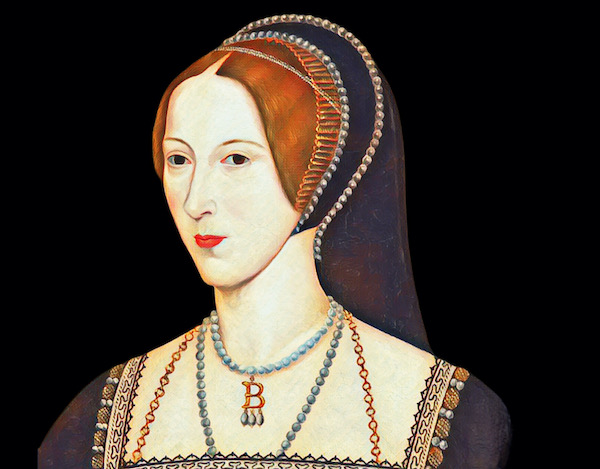
Historian Owen Emmerson, co-author of Capturing a Queen: The Image of Anne Boleyn, suggests that this portrait may not represent Anne directly. According to his reading, it may have been produced decades after her death and could incorporate features of her daughter, Elizabeth I, as a way of reinforcing the legitimacy of the Tudor line.
This hypothesis fits within a known pattern of the period. Many royal portraits were produced in workshops, often years after the events they depict, with faces and visual elements adjusted according to political needs. In this context, fidelity to the individual portrayed was not necessarily the primary goal.
If this is the case, the implication is clear: the most recognizable image of Anne Boleyn may not be hers.
The research conducted by Davies and Ugail engages with this context by questioning the traditional identification of a Holbein drawing often associated with Anne. Davies points to inconsistencies such as the style of dress, hair color, and even the inscription of the name, which may have been added later.
From this point, artificial intelligence emerges as an attempt to reorganize the available material without relying on established historical labels. The system compares faces, identifies clusters, and suggests possible relationships.
The most widely publicized result is the identification of a previously anonymous portrait as Anne Boleyn.
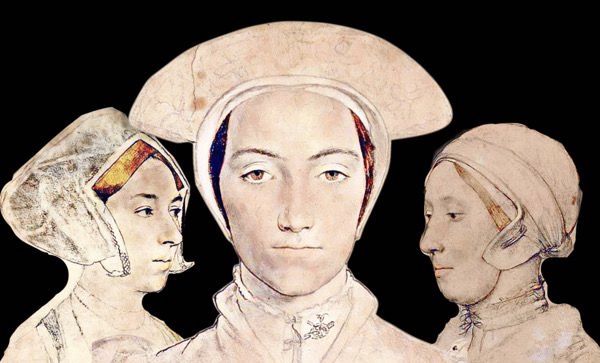
But this conclusion is not unanimous. Art historians such as Bendor Grosvenor have challenged the methodology, noting that sixteenth-century portraits cannot be treated as objective records comparable to photographs. They are, above all, interpretations shaped by style, convention, and intention.
The attempt to identify Anne Boleyn’s face through artificial intelligence does not resolve the central question, but it helps clarify it.
It shows that the issue is not simply the absence of technology or adequate tools. It lies like the subject itself. Anne Boleyn did not leave behind a stable visual record, and there are historical reasons for that.
Her trajectory, marked by rapid ascent, political influence, and abrupt downfall, was accompanied by a process of narrative construction that continues to operate today. Her image is part of that process.
This is why each new attempt to identify her produces more interpretation than conclusion.
Anne Boleyn’s face, across the centuries, has never been only about appearance. It has always been tied to the way her story has been told, disputed, and reshaped.
Descubra mais sobre
Assine para receber nossas notícias mais recentes por e-mail.


2 comentários Adicione o seu