
Copacabana has established itself as a space capable of gathering crowds on a rare scale. In recent years, the beach has also come to function as a stage where scale itself becomes part of the narrative, where each new show is measured not only by what happens on stage, but by an artist’s ability to occupy that space, physically and symbolically.
Shakira arrived in this context with a quiet advantage. Unlike Madonna and Lady Gaga, she did not need to build a relationship with the Brazilian audience. That relationship already existed. She speaks Portuguese, understands the cultural codes, and positions herself within that encounter, not as someone performing for Brazil, but as someone engaging in dialogue with it.
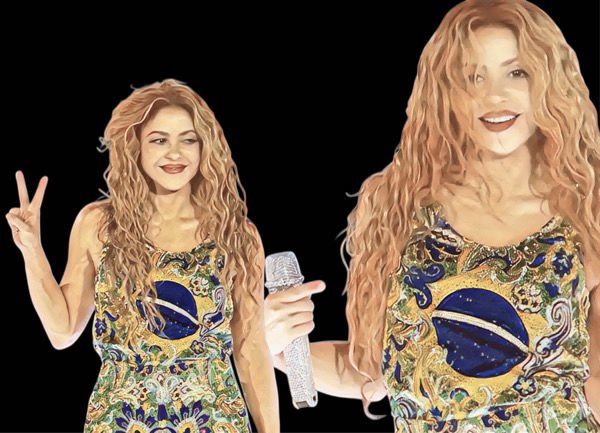
Visually, the show asserted itself with ease, sustained by more than two hours of performance and by a crowd already predisposed to embrace whatever came from the stage. What set it apart was not only its scale, but the way that scale was structured.
By including Brazilian guest appearances and songs in Portuguese, Shakira altered the internal logic of the show. Madonna and Lady Gaga, even with more rigid and highly choreographed productions, did not open space for this kind of shift. Here, the structure allowed itself to be shaped by the place it inhabited, creating the sense that the performance could not unfold in the same way elsewhere.
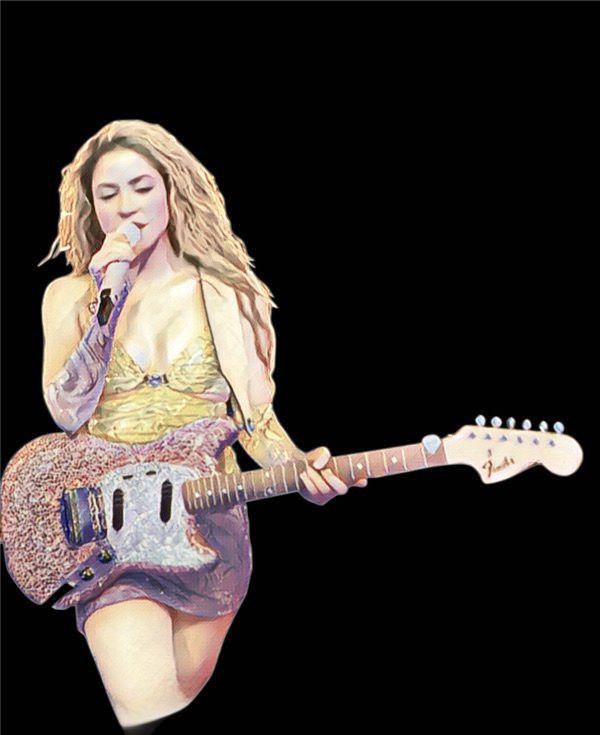
That difference also extended to the body. Although she worked with dancers, her movement was not built around the choreographic precision that defines other large-scale pop shows. There was more freedom, more variation, more risk. She did not occupy the stage as a dancer who sings, but as a singer who dances, and that distinction defined the kind of presence she constructed throughout the night. It was not semantics, but language.
The delay and the silence: when charisma was not enough
There was, however, a point that could not be absorbed by audience enthusiasm alone. The show began more than an hour late. For those closer to the stage, this was received with patience. For a crowd of millions, it carried a different weight.
Television reports mentioned “personal issues,” but there was no acknowledgment from Shakira. No apology, no explanation, no attempt to incorporate the delay into the collective experience that was being built.
Her charisma, warmth, and commitment throughout the performance were enough to sustain audience engagement and turn the night into a celebration. Even so, the absence of any response remained. At this scale, time is part of the structure of the spectacle, and ignoring it inevitably shifts responsibility onto those who waited.
The duets: when the encounter failed to find the right tempo
The guest performances reinforced the idea of a show designed for Brazil, but they also revealed the limits of that ambition when preparation time did not match the scale of the concept. The duet with Maria Bethânia exposed a mismatch that was not only musical, but conceptual.
Bethânia worked with the expansion of time, with phrasing that stretches and breath that shapes each line. Shakira operated within a different logic, more tied to continuous rhythm and movement.
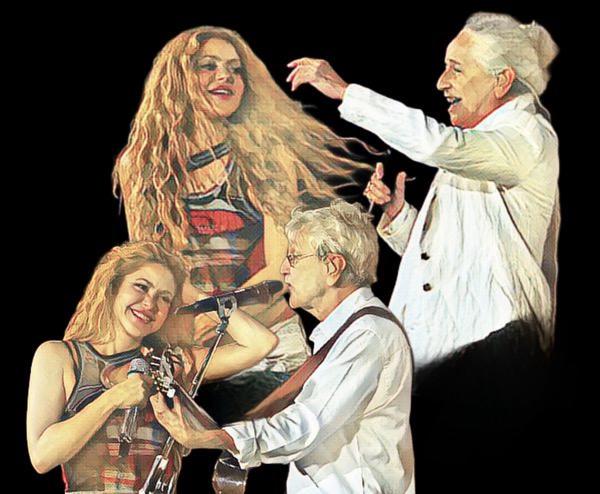
In “O que é, o que é,” these two approaches did not meet. The difference appeared in the way the song unfolded, in the imbalance between intention and execution, and in Shakira’s own relationship with the lyrics, where she seemed more secure in the chorus and less grounded elsewhere. The result did not compromise the show, but it created a moment that did not fully integrate into the experience being built.
Other encounters worked better, particularly with Caetano Veloso, Anitta, and Ivete Sangalo, where there was greater alignment of energy and presence, allowing for a more organic exchange.
The setlist: the structural flaw of a show that could have been definitive
The show’s main fragility lay in its structure. The setlist presented gaps, uneven pacing, and difficulty sustaining a coherent emotional line.
Bringing “Estoy aquí” to the beginning suggested an attempt to anchor the performance in a recognizable emotional trajectory, but that intention did not hold. The major hits took time to appear, and the progression failed to build a clear crescendo.
At several points, the show seemed to reorganize itself live, rather than follow a carefully structured design. In a performance of this scale, the musical structure is not a detail, but the axis that organizes perception, and it was precisely here that Shakira missed the chance to reach a higher level of precision.
Still, the audience response revealed another layer. The lack of structural rigor did not compromise the collective experience, reflecting both the strength of her catalog and the audience’s desire to take part in that moment regardless of its flaws.
The numbers: between data and narrative
The figures followed the now-established pattern in Copacabana. Madonna drew around 1.6 million people, Lady Gaga was estimated at about 2.1 million, and for Shakira, the official estimate stood at roughly 2 million, with more than seven blocks occupied.
The accuracy of these numbers was frequently questioned, but their function extended beyond measurement. They constructed a narrative, established hierarchies, created the idea of a record, and projected a competition that went beyond the event itself.
With each new show, what was measured was not only attendance, but the ability to symbolically occupy that space. The conversation immediately moved forward, and the discussion about who would take the stage in 2027 began to organize itself around that same logic, driven by the expectation of surpassing what came before.
The final discomfort: the VIP area as a contradiction
Finally, there was an element that disrupted the idea of a popular event. The VIP area occupied nearly an entire block of the beach, concentrating invited guests and public figures in a space separate from the crowd that defined the spectacle.
This division was not only logistical, but symbolic. In an event constructed as open, massive, and collective, the existence of such a large privileged space reintroduced a hierarchy that the format itself seemed to resist.

Shakira delivered a show that spoke directly to Brazil and, at many moments, turned scale into proximity. That was her main strength throughout the night: creating the sense of a real encounter within an event designed for millions.
Copacabana has established itself as a stage for record-breaking crowds, but also as a space where the experience is never fully shared.
In the end, the audience accepts, celebrates, and moves on. But the question remains, increasingly unavoidable: what is actually being delivered when a show promises to be for everyone?
Descubra mais sobre
Assine para receber nossas notícias mais recentes por e-mail.

