
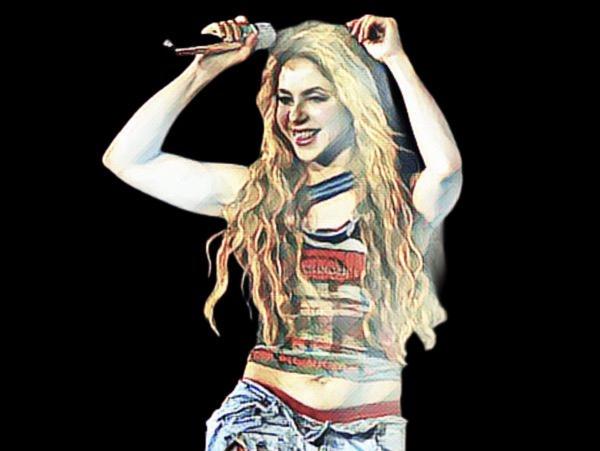
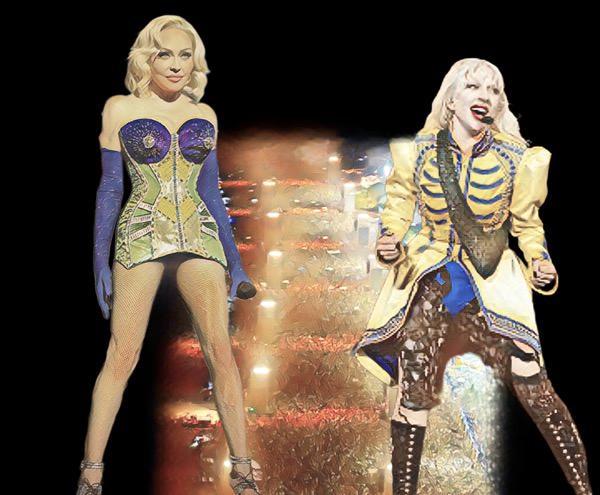
There is something symbolic about Copacabana that goes beyond the logistics of gathering massive crowds. In recent years, the beach has become a stage that measures not only popularity but also an artist’s ability to engage with different layers of an audience at once. Madonna inaugurated this new phase with a show built around legacy. Lady Gaga turned her very presence into a cultural event. Shakira enters this space with a quiet but decisive advantage: she does not need to build a relationship with Brazil, because that relationship has existed for decades.
As the third artist to face this kind of scale, the conversation inevitably drifts toward numbers, audience size, and comparisons. But in Shakira’s case, the most interesting point lies less in competition and more in coherence. Copacabana is not just a test of crowd size for her. It is a return to a territory that helped shape the beginning of her international career.
A connection that dates back to the beginning
Before becoming a global name, Shakira had already found in Brazil one of her first major markets outside the Spanish-speaking world. In the late 1990s and early 2000s, when she was still navigating between Latin rock and a more raw form of pop, the country responded with an intensity that anticipated what would come later. That response was not only commercial. There was an aesthetic and emotional identification that crossed language, rhythm, and image.
At that moment, Brazil functioned as a space of validation. Not in an institutional sense, but in terms of audience reception. It was a market that embraced foreign artists organically, especially those who carried a blend of tradition and experimentation. Shakira fit precisely into that intersection. Her music held Latin references but also a clear desire for global dialogue. Brazilian audiences recognized that early on.
That memory does not disappear. It is renewed with each return, each tour, each gesture that signals this exchange was never incidental. It is within this context that the decision to include a song by Gonzaguinha gains a different weight.
The Copacabana rehearsal is a key to understanding
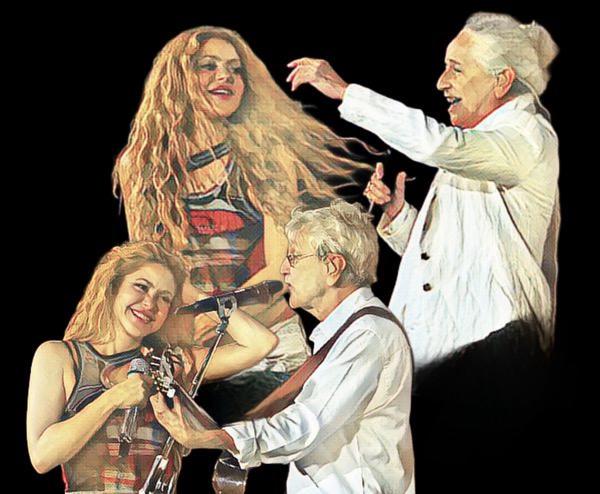
The Copacabana rehearsal does not function as a simple warm-up. It already reveals the core of the show and, perhaps more importantly, confirms an intuition that runs through Shakira’s entire relationship with Brazil. Opening with “O Que É, O Que É?” by Gonzaguinha, alongside Maria Bethânia, and repeating it as an encore, suggests this is not a passing reference. It is a structural choice. By insisting on the song right at the beginning, Shakira signals that she wants to anchor the performance in an affective reading of Brazil.
The sequence continues with “O Leãozinho,” alongside Caetano Veloso, deepening that decision. These are not obvious songs for an international audience, nor are they superficial gestures. They are pieces that demand listening and carry a very specific idea of Brazil. Placing them at the heart of the show creates a layer that was not present in the recent Copacabana performances by Madonna and Lady Gaga.
At the same time, the rest of the rehearsal already points to a balance between this local immersion and the pop identity that sustains her global career. “La Fuerte,” even in a shortened version, “Loca” in English, “Chantaje,” “Can’t Remember to Forget You,” returning to the setlist for the first time since 2018, and “Addicted to You” function as immediate recognition points. “Objection (Tango)” appears as a link to an earlier phase when Shakira was already experimenting with the stylistic blend that now feels natural.
What emerges from this rehearsal is less about alternating hits and more about building a narrative. The Brazilian songs do not appear as an interlude. They reorganize how the show is perceived.
Gonzaguinha as gesture and audience reading
Singing Gonzaguinha is not just a curious choice for an international show. It is a decision that reveals a specific understanding of place and audience. Gonzaguinha occupies a very particular space in Brazilian music, associated with emotional intensity, social critique, and a certain idea of Brazil that is not commonly exported.
By bringing this repertoire to a stage like Copacabana, Shakira is not only paying tribute. She is inserting herself, even if temporarily, into a tradition that is not her own. That requires more than goodwill. It requires context awareness.
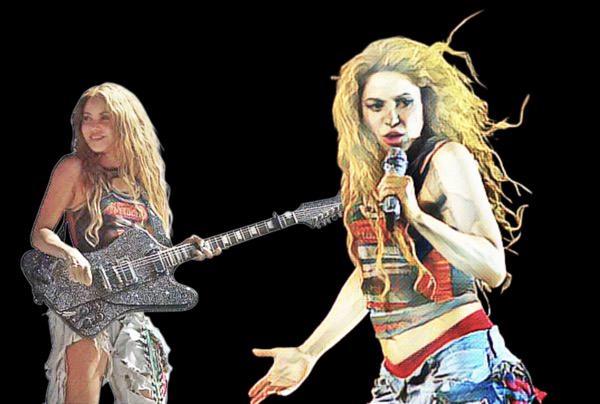
This kind of gesture also distinguishes her performance in Rio from recent experiences on the same beach. Madonna operated within a framework of celebrating her own career. Lady Gaga turned the show into an extension of her aesthetic narrative. Shakira, by incorporating such a specific local element, shifts the focus to the relationship between artist and audience.
Between the global and the local
Shakira’s career has always been built on this balance between belonging and displacement. She is, at once, deeply marked by her origins and highly adaptable to different markets. In Brazil, that equation finds particularly fertile ground.
The audience’s familiarity with her music does not eliminate the sense of novelty. There is always a layer of rediscovery, as if each performance updates a relationship that never fully belonged to the past. That helps explain why her presence in Copacabana carries a different kind of expectation.
This is not just about seeing a global star on an iconic stage. It is about watching an artist who has gone through multiple reinventions revisit one of the places that helped sustain her early expansion.
The setlist is confirmation of this structure
The rehearsal points to the concept. The full repertoire confirms it. The structure presented throughout the “Las Mujeres Ya No Lloran” tour, combined with the adjustments made in Rio, suggests a show that moves across different phases of her career while keeping Brazil as its narrative axis.
The likely setlist includes:
“Hips Don’t Lie”
“Whenever, Wherever”
“Suerte”
“Estoy Aquí”
“Antología”
“Inevitable”
“Día de Enero”
“La Tortura”
“Chantaje”
“TQG”
“BZRP Music Sessions #53”
“Monotonía”
“Te Felicito”
“Copa Vacía”
“Don’t Wait Up”
“Me Enamoré”
“Underneath Your Clothes”
“Illegal”
“Empire”
“Objection (Tango)”
“She Wolf”
“Loba”
“Addicted to You”
“Rabiosa”
“Loca”
“Perro Fiel”
“Girl Like Me”
“Can’t Remember to Forget You”
“Ojos Así”
“Choka Choka” with Anitta
ENCORE
“O Que É, O Que É?” with Maria Bethânia
“O Leãozinho” with Caetano Veloso
More than a sequence of hits, this setlist maps out a trajectory. It begins with Brazil, moves through her Latin roots, crosses into global consolidation, and arrives in the present, shaped by an artist who has turned her own personal narrative into musical material.

What is at stake in this show
More than repeating a recent model of success, Shakira’s show in Copacabana highlights a broader question within contemporary pop. What sustains a global artist is not just reach, but the ability to build relationships that withstand time and shifts in language.
In her case, Brazil is not a side chapter. It is structural. It is one of the places where her music moved from promise to phenomenon.
Performing for a massive crowd on the country’s most emblematic beach, after Madonna and Lady Gaga, could be just another milestone in an already consolidated career. But in Shakira’s case, it also works as a kind of narrative return. A moment where past and present meet not as nostalgia, but as continuity.
Descubra mais sobre
Assine para receber nossas notícias mais recentes por e-mail.

