
The story that was heading toward becoming one of Hollywood’s most exposed trials comes to an end before ever reaching the courtroom, as Blake Lively and Justin Baldoni opted for a settlement that formally closes the case, which, over nearly a year and a half, evolved from a legal dispute into a broader conflict over competing versions, strategy, and control of public image on a large scale. The timing of this resolution is not incidental, because it arrives just weeks before the trial in New York was set to begin, at a moment when both parties would have faced each other under oath in a setting that promised not only to revisit what had already surfaced through documents and messages, but to significantly expand the level of exposure surrounding behind-the-scenes decisions, relationships, and power dynamics that, until now, had been managed in fragments.
The settlement, in practice, does more than end the lawsuit; it reshapes the meaning of the case itself, replacing the expectation of a judicial ruling with a negotiated conclusion that avoids the point at which both narratives would have been fully tested. What is avoided here is not simply a verdict, but the possibility of a complete and public reconstruction of events, with all their contradictions, gray areas, and competing interpretations.
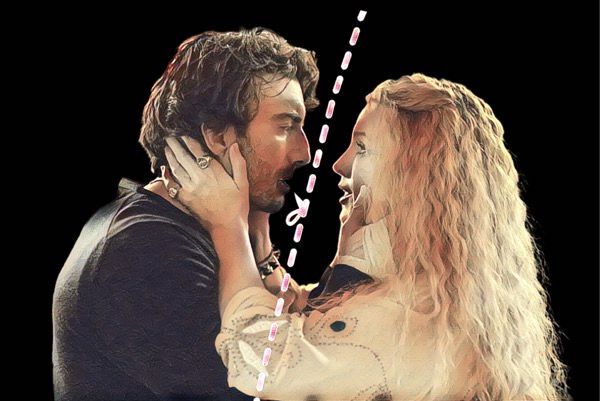
A carefully constructed ending designed to avoid clear winners
The joint statement released by both sides functions less as a conclusion and more as a balancing act, reaffirming It Ends With Us as a project of shared pride and social impact, while also acknowledging that the process presented challenges and that the concerns raised by Lively deserved to be heard. This formulation is deliberate, as it validates the existence of conflict without assigning direct responsibility, creating an institutional form of closure that avoids any definitive reading of fault or innocence.
The absence of a direct apology from Baldoni reinforces this approach, as does the lack of any indication of financial compensation, even after Lively alleged losses that could reach $161 million as a result of what she described as a smear campaign. What emerges from this settlement is not a clear resolution, but a structured suspension of the conflict, in which both parties preserve their positions while agreeing to end the formal dispute.
What the settlement interrupts at the most sensitive moment of the case
Up to this point, the case had already been partially reshaped by the court, which dismissed most of the initial claims, including those of sexual harassment, allowing only the most complex and contemporary allegation to move forward: retaliation through manipulation of public image and influence over perception. This was the claim that would have defined the trial, and at the same time, the element that extended the case beyond a personal conflict, because it required examining communication strategies, public relations practices, and potential mechanisms for shaping narrative at scale.
Taking that issue to trial would have meant exposing, in unprecedented detail, how this machinery operates, which helps explain why this specific stage of the process posed the greatest risk for both sides. By settling now, the agreement interrupts precisely that trajectory, preventing the dispute from entering a phase where exposure would no longer be manageable.
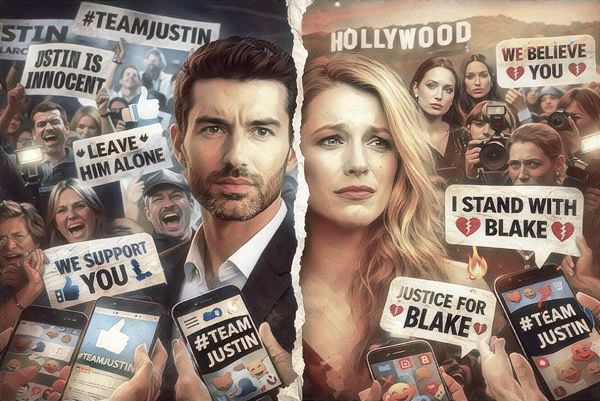
Why the trial posed a greater risk than the lawsuit itself
The prevailing assessment among legal analysts had long been that this trial would not produce clear winners, as the volume of documents, messages, and accounts already revealed suggested that any continuation would only deepen the public damage for all involved. For Lively, the risk was directly tied to the weakening of her position following the dismissal of the most serious allegations, potentially undermining the strength of the narrative she had constructed. For Baldoni, the risk was different but equally significant, as the trial could have solidified the perception that there had been an organized response to the allegations, even if that response operated within the ambiguous norms of the industry.
For both, there was also a structural factor that makes this kind of dispute particularly volatile, which is the impossibility of controlling how information, testimony, and interpretation circulate in real time between the courtroom, the press, and social media, creating an environment where the legal process becomes not just a forum for judgment but an ongoing event of narrative production. Ending the case before reaching that stage is, therefore, a strategic decision aimed at regaining some degree of control over what can be said, interpreted, and amplified.
The end of the case does not resolve its central question
While the settlement formally closes the dispute, it does not answer the question that sustained the case from the beginning, which is the attempt to determine what actually happened, both during production and in the period that followed, when the conflict moved into the arena of public image. That answer remains fragmented across competing versions that were never tested through a full courtroom confrontation, leaving the case in a state of unresolved ambiguity that, in many ways, extends its relevance.
What remains, therefore, is not a conclusion, but a broader portrait of how the industry operates when conflicts move beyond internal boundaries and into the public sphere, involving communication strategies, networks of influence, and the active construction of perception. In that sense, the case ceases to be only about Blake Lively and Justin Baldoni and instead becomes an example of a model of conflict in which ending a dispute does not necessarily clarify it, but simply acknowledges that the cost of pursuing it to its conclusion may be greater than the cost of stopping.
By choosing to settle, both sides stop short of the point at which the story would become uncontrollable, which leaves the case without a definitive ending, but with a clear consequence: in Hollywood, control over the narrative can be as decisive as the facts themselves.
Descubra mais sobre
Assine para receber nossas notícias mais recentes por e-mail.


1 comentário Adicione o seu