
Blake Lively’s decision to appear at the Met Gala just hours after settling a dispute that, for months, had been framed as another chapter in Hollywood’s ongoing war of narratives cannot be read as an isolated gesture, nor as a sufficient response to the moment she is navigating. It functions, first and foremost, as a transitional marker. A settlement ends a case, but it does not organize public perception. On the contrary, it creates a narrative vacuum that is quickly filled by external interpretations, many of them already inclined toward erosion.
By choosing not to disappear, not to adopt the classic strategy of temporary silence that so many careers have used as recalibration, Blake takes on the risk of exposure in an environment where every gesture is amplified. The Met Gala, far from neutral, is one of the most coded spaces in contemporary pop culture, where presence becomes a statement and where any attempt at image control is immediately tested. The reading of superficiality and arrogance emerges easily because the event itself operates within a logic of excess. But that reading also simplifies a move that, in practice, says more about urgency in repositioning than about detachment.
The central point, however, lies elsewhere. It shifts from events to projects. And within the set of titles currently associated with Blake, two in particular help clarify what direction this reconstruction might take.
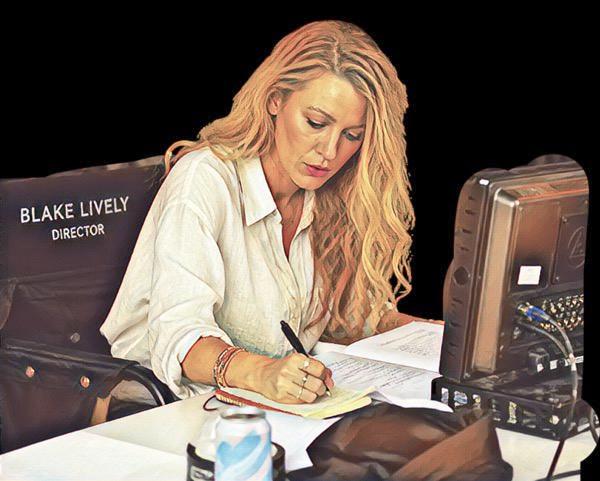
The Husband’s Secret: Liane Moriarty as a strategic and controlled ground
The adaptation of The Husband’s Secret is, among all listed projects, the one that appears most advanced in terms of industrial logic, even if not necessarily in schedule. That begins with the source material.
Published in 2013, Liane Moriarty’s novel is built on a premise that is both simple and highly effective: Cecilia Fitzpatrick, a woman whose life is structured around stability and predictability, discovers a letter written by her husband with explicit instructions to be opened only after his death. When she decides to read it while he is still alive, she uncovers a secret capable of reorganizing not only her marriage but the entire network of relationships around her. From there, Moriarty constructs a narrative that interweaves multiple female characters, exploring guilt, morality, choice, and the invisible consequences of decisions that appear private.
The book’s reception aligns with the kind of work Moriarty has consolidated over the past decade. It is not just a bestseller, but a bestseller with strong adaptability to the screen. That distinction matters. Moriarty has become particularly valuable to Hollywood because her stories occupy a very specific space: female-centered narratives with clear emotional conflict, efficient structure, and a balance between drama and suspense that translates well from page to screen.
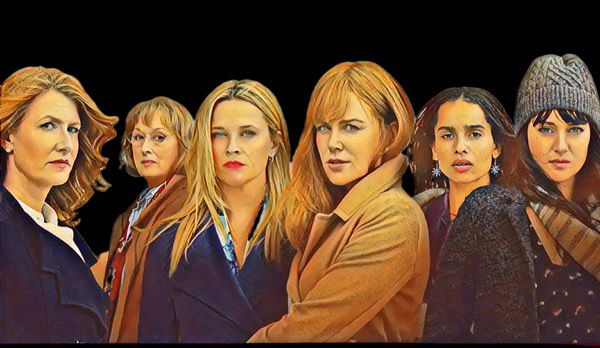
Big Little Lies is the most visible example of that successful transition, but not the only one. Nine Perfect Strangers followed a similar path, reinforcing her ability to sustain prestige projects with broad appeal. Apples Never Fall continues that pattern of family-centered narratives shaped by secrets and shifting perceptions. Across all of them, the common denominator is a predominantly female audience that responds not only to plot, but to the way these stories structure identification and moral ambiguity.
Positioning The Husband’s Secret at the center of Blake’s current slate, therefore, is not accidental. It points to a return through familiar territory, where risk is more controlled because the material has already been tested.

Christy Hall’s involvement as a screenwriter strengthens that reading. Having worked on It Ends With Us, Hall has demonstrated familiarity with adapting material aimed at the same audience and with balancing romantic framing against heavier thematic undercurrents. Her presence suggests continuity in tone and approach, which may help transition Blake from a project directly associated with controversy to one that engages the same audience in a less charged context.
What this project signals, then, is not boldness but precision. It operates as a re-entry point.
The Survival List: image shift through controlled risk
If The Husband’s Secret represents safer ground, The Survival List points toward a different kind of repositioning, still within controlled limits.
The premise—a snobbish TV producer and a supposed survival expert stranded on a remote island after a shipwreck, only for his skills to be exposed as fake, forcing her to take the lead—works through a clear inversion of expectation. The female character, initially coded through social perception, becomes the agent of survival, while the male figure loses his authority.
This kind of structure is not new, but it remains effective. It allows for a blend of comedy, romance, and adventure while subtly reconfiguring gender dynamics without presenting itself as overt commentary. For Blake, the potential gain is clear: moving away from characters centered on image and social control toward a role that demands action, adaptability, and a different register of vulnerability.
Tom Melia’s script, still largely under the radar, suggests an early-stage project, but the clarity of its concept may be an advantage. In moments of rebuilding, projects with strong, accessible premises often function better than narratives weighed down by excessive ambition or critical expectation.
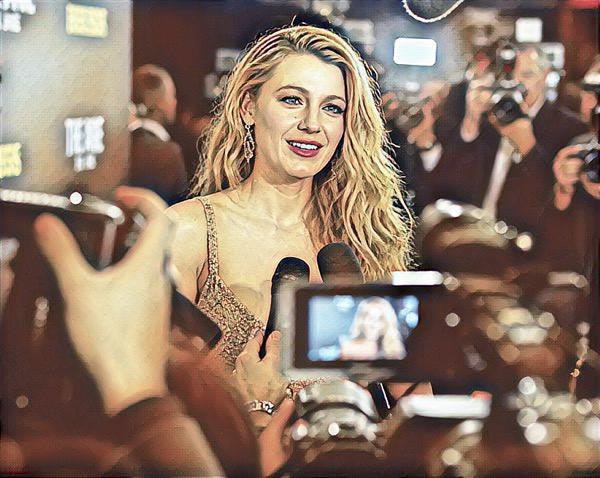
The absence of other names: fragility or recalibration?
One of the most revealing aspects of this slate is what is not yet visible. The absence of other major names attached to these projects can be read in two ways.
The immediate reading is industry caution. In moments of public instability, agents, directors, and co-stars often adopt a wait-and-see approach, avoiding associations that might carry additional risk. That does not necessarily signal rejection, but it does indicate that Blake’s symbolic capital is, temporarily, under review.
There is, however, a more structural reading. Blake’s presence across multiple projects, many of them involving creative control, suggests that she is not simply waiting to be cast but actively building her own pathways. That changes the dynamic. Rather than relying solely on immediate external validation, she positions herself as a producing force, creating conditions for others to join later, once the environment stabilizes.
What these projects ultimately point to
Taken together, The Husband’s Secret and The Survival List, alongside the broader slate, outline a path that is less about reinvention and more about recalibration.
On one side, there is the choice of established material with proven appeal, functioning as a stabilizing base. On the other hand, there is an effort to expand the range of roles and narrative registers, even if within accessible formats. Running through both is a clear movement toward greater creative control, whether through producing or directing.
What is still missing—names, timelines, firm attachments—is precisely what the current moment explains. The lack of concrete detail is not incidental. It reflects a system that is observing before committing.
In the end, these projects do not guarantee reinvention, but they do indicate that one is being constructed. And, as is often the case in Hollywood, that construction does not happen through a single defining gesture, but through a sequence of choices that gradually shift attention away from what happened toward what might still happen next.
Descubra mais sobre
Assine para receber nossas notícias mais recentes por e-mail.

