
The Bear has had a curious trajectory in streaming. It arrived quietly, built its reputation episode by episode, quickly turned into a phenomenon, and went on to dominate awards, all while carrying from the very beginning a classification that never quite fit. The insistence on framing it as a comedy, driven far more by formal criteria of runtime than by any real affinity with the genre, ends up producing a distortion that will likely follow its legacy, because what is at stake there has never been relief, but a continuous dramatic construction marked by pressure, repetition, and collapse.
A few weeks before what already shapes itself as its final season, the series returns to the center of conversation not because of an announcement or a trailer, but because of a gesture that speaks directly to the way it exists: the unexpected release of a standalone episode, outside the logic of the season, functioning simultaneously as prequel, commentary, and point of inflection.

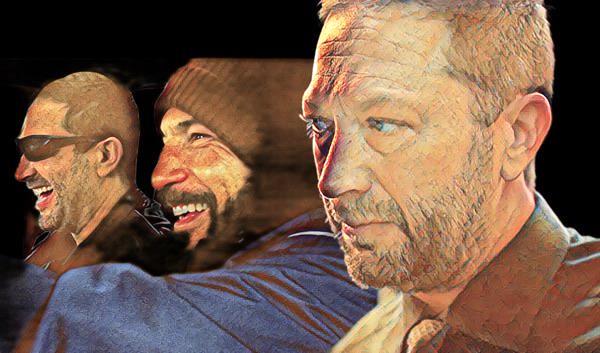
“Gary” does not emerge merely as extra material or character deepening, but as a piece that retrospectively reorganizes Richie’s trajectory, as played by Ebon Moss-Bachrach, while also abruptly repositioning the present of the narrative. By bringing back the “ghost” of Mikey, played by Jon Bernthal, the series returns to a mechanism that has been there from the beginning — it was Mikey’s death that brought Carmy back to Chicago and reshaped the lives of everyone around him — but now does so by inverting the direction, shifting the impact from the past into the present.
This time, however, the center of that operation is no longer Carmy but Richie, precisely the character who may have undergone the most consistent transformation throughout the series, moving from a state of near-constant disarray toward a tangible attempt at structure, in an arc that was not only narratively solid but widely recognized in awards. It is exactly for that reason that “Gary” feels less like a return and more like a provocation, because it places that trajectory at risk at the very moment it seemed, for the first time, to reach some degree of stability.
From this point on, spoilers come into play.
The choice to interrupt the past with an impact on the present
The surprise episode released on the eve of what is already being shaped as the show’s final season is not an isolated or merely promotional gesture. It occupies a strange space between prequel, epilogue, and narrative trigger.
Written by Ebon Moss-Bachrach and Jon Bernthal themselves, and directed by Christopher Storer, the episode does not simply revisit the relationship between the two characters, but attempts to reenact it from within, as if returning to the origin were necessary not to understand what happened, but why it continues to happen. Set before the events of the first season, “Gary” follows a work trip to Gary, Indiana, which quickly becomes a concentrated portrait of the impulses that define both men: excess, lack of control, distorted loyalty, and, above all, a dynamic in which Mikey occupies the role of disruptive force while Richie remains trapped in a pattern of failure he seems to anticipate himself.
Because The Bear understands drama so well, the episode builds this trajectory with uncomfortable clarity, culminating in two moments that function as the emotional axis of the narrative: the public humiliation of Richie, when Mikey aggressively confronts his tendency to ruin everything around him, and the direct consequence of that path, which is Richie missing the birth of his daughter. This loss does not appear as an accident, but as the inevitable result of a way of existing that the episode insists on exposing without mitigation, turning “Gary” into something more than a memory; it becomes a reinterpretation of the character from the very beginning of the series.
Up to this point, everything would suggest a movement of return, a kind of suspension of time allowing the viewer to revisit the origin of Richie and Mikey’s bond and, from there, better understand the weight that relationship carries throughout the series. The very design of the episode, isolated from the season and presented as a standalone piece in the catalog, reinforces this sense of displacement, as if we were facing a reflective interval before the final closure.
But The Bear does not sustain that logic until the end, and it is precisely there that “Gary” becomes more revealing than it might initially seem.
When the prequel stops being past and becomes a trigger for the future
The rupture occurs when the episode abandons the past and abruptly returns to the present, showing Richie alone in his car, staring at the empty passenger seat as if Mikey were still there, as if absence continued to operate in concrete terms, organizing his gesture, his gaze, and his very position in the world. That moment, which could have closed the episode within a register of mourning and memory, is interrupted by an event that completely shifts the meaning of everything that came before: as he moves through an intersection, Richie is struck by another car, in a hard cut that ends the episode without any resolution.
The impact of this choice goes beyond immediate shock, although that is clearly part of it, and lies instead in how it reorganizes the function of the entire episode, which ceases to be solely an investigation of the past and becomes a direct bridge to the final season. The question that emerges — did Richie die? — matters less than the reconfiguration produced by the crash, because from a narrative standpoint, it seems unlikely that the series would eliminate one of its central characters in a standalone episode released between seasons, especially when it is approaching an ending that depends on those characters to exist.
The accident, therefore, does not need to result in death to fulfill its function, because it already establishes a new axis for the narrative by creating an event severe enough to reorganize relationships and, above all, to reverse the movement that had been initiated at the end of the fourth season. But, frankly, bringing Richie back from this will not be simple.
The accident as a response to Carmy’s attempt at rupture
At the end of the previous season, Carmy makes a decision that, within the logic of the series, seemed almost impossible: he steps away from the restaurant, hands control to Sydney, Richie, and Natalie, and attempts to begin a process of personal reconstruction away from the environment that has always concentrated his anxiety. That departure, which could be read as an attempt to interrupt the cycle, is immediately put into question by Richie’s accident, which emerges as the kind of event capable of reattaching bonds that were about to dissolve.
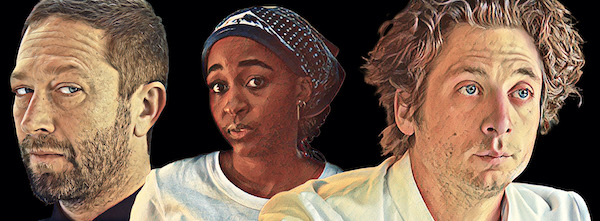
If Carmy was seeking distance, the possibility of an injured or endangered Richie creates the need for return, not out of professional ambition or commitment to the restaurant, but through a much deeper logic, that of connection between these characters. In that sense, “Gary” functions as the mechanism that prevents the story from moving toward dispersion, forcing everyone back to the point where conflict becomes inevitable.
Why place this event outside the season
The decision to position a potentially central event outside the regular season is both strange and revealing, because it breaks the expectation that decisive moments should be integrated into the main structure of the narrative. In doing so, The Bear creates a tension between two distinct functions within the same episode: on one hand, the attempt to elaborate the past and offer new layers to Richie and Mikey’s relationship; on the other, the need to propel the story forward through immediate impact.
This combination is not entirely stable, and that is precisely why the episode produces a sense of displacement, as the final cliffhanger interferes with the reading of what came before, replacing contemplation with urgency. Instead of remaining within the analysis of their bond, the viewer is pushed toward anticipation of what comes next, making the episode operate less as a reflection and more as a collision between different temporalities.
Repetition as structure rather than theme
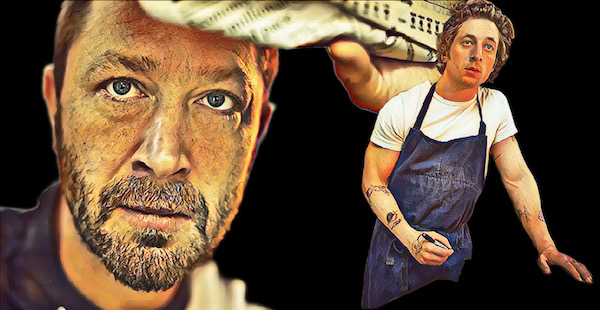
What sustains this choice is something the series has been building from the start, which is the idea of repetition as a structuring principle of the characters’ experience. In the past, Richie missed the birth of his daughter because he was trapped in a destructive dynamic with Mikey; in the present, even after his evolution, he continues to orbit that absence, alone in the car, looking at a space still occupied by someone who is no longer there. The accident emerges as an update of that logic, not as mere chance, but as a continuation of a trajectory that was never fully interrupted.
In that sense, “Gary” does not simply revisit the past, but demonstrates that it remains active, directly interfering in the present and preventing any definitive resolution.
A “comedy” that abandons relief
When observed as a whole, it becomes clearer why the classification of The Bear as a comedy grows increasingly insufficient, since what the series does is not offer relief but accumulate intensity. The humor, which once functioned as a way to organize chaos, gives way to a growing insistence on deepening emotional impact, progressively reducing the possibility of escape.
“Gary” makes this shift explicit by replacing any form of resolution with an abrupt interruption that allows no elaboration and instead projects the viewer directly into the instability of what is yet to come.

What this episode announces for the final season
If the fifth season truly marks the end of the series, “Gary” functions as a clear signal that the path ahead will not be one of orderly closure, but of confrontation with what has never been resolved. Richie’s accident, regardless of its physical consequences, already alters the narrative’s starting point, creating an urgency that pulls characters back together and reinforces the idea that, within that universe, attempts at rupture are always temporary.
What The Bear seems to assert, by releasing this episode at this precise moment, is that there is no clean exit for these characters, because the past does not end; it repeats, updates itself, and, when necessary, returns in the form of an impact that reorganizes everything around it.
Get the tissues ready.
Descubra mais sobre
Assine para receber nossas notícias mais recentes por e-mail.

