
Among the many crime series released by streaming platforms in recent years, few begin in such an unsettling way as Legends. The British production, released internationally by Netflix, could initially be mistaken for yet another thriller about international drug trafficking, dangerous undercover missions, and secret agents living double lives. But the series quickly makes it clear that its true interest lies not in the adrenaline of espionage, but in the psychological damage created by it.
And perhaps the most remarkable aspect is precisely the fact that almost everything in it is rooted in real stories.
The series is inspired by the covert operations conducted by HM Customs and Excise, Britain’s customs authority, during the 1990s. At the time, the United Kingdom was facing an alarming rise in heroin and cocaine entering the country, particularly through international trafficking networks connected to Afghanistan, the Middle East, and South America. The authorities’ response was to create an undercover unit made up not of cinematic James Bond-style spies, but of seemingly ordinary men transformed into living false identities.

The show’s original title helps explain much of that world. In the language of undercover operations, a “legend” is the false identity constructed for an agent to survive. It is not simply an invented name, but an entire carefully fabricated biography: profession, background, contacts, habits, financial history, personal anecdotes, and even emotional traits designed to withstand daily interaction with real criminals.
The logic was simple and terrifying at the same time: the persona had to feel so convincing that even the agent himself needed to believe in it. Otherwise, he would die.
That is exactly where Guy Stanton enters the story, the man whose life inspired one of the series’ central characters.
Stanton did not come from the military, intelligence services, or the glamorous universe usually associated with British espionage. A customs officer with HM Customs and Excise, he was recruited into the secret unit precisely because he seemed ordinary enough to disappear into that world without attracting attention.
One of his earliest missions involved infiltrating Turkish, Kurdish, and Cypriot trafficking networks responsible for moving massive amounts of heroin from Afghanistan into the UK. Just as in Legends, Stanton worked alongside an informant to gain access to the criminal organization. In the series, that partner becomes the character Mylonas, played by Gerald Kyd. In real life, it was a Greek Cypriot casino owner known by the nickname Keravnos, or “Thunderbolt.”
Through Keravnos, Stanton began operating alongside some of the world’s biggest drug traffickers in extraordinarily dangerous situations that eventually took him to South America. At one point, according to later accounts, he was blindfolded and taken to a remote warehouse by a cousin of Pablo Escobar. The meeting was part of negotiations tied to international cocaine trafficking and ultimately led to the seizure of a major shipment of cocaine in Brazil.
Although many details remain protected by secrecy, the episode reveals how Brazil was already emerging in the 1990s as a strategic point within the international narcotics routes monitored by European authorities. Decades before the country publicly became recognized as one of the world’s major cocaine corridors into Europe, British undercover agents were already operating within these extremely violent South American networks.
Stanton described these operations as some of the most dangerous experiences of his undercover life. In order to survive, he had to convince traffickers connected to international criminal organizations that he genuinely belonged to that world. Any hesitation, inconsistency, or mistake would have meant immediate death.

Over the years, Stanton narrowly escaped death countless times. In Curaçao, for example, while attempting to close a criminal deal, a man drove by and opened fire on him with a Uzi submachine gun. In recent interviews, Stanton admitted that he cannot even estimate how many times guns were pointed directly at his head.
But perhaps the most disturbing aspect of his story lies in the emotional dimension of undercover work itself. Surviving inside that world required forming genuine relationships with men he would eventually betray to the authorities. On several occasions, Stanton later had to testify in court against criminals he had spent years befriending. In The Hague, he even appeared in disguise to protect his identity while giving evidence.
The series understands something fundamental about infiltration that traditional thrillers often ignore: the greatest danger is not simply being exposed, but losing the ability to return to yourself afterward.
Stanton himself later described that transformation in painfully direct terms. At one point, he came under police investigation after being accused of accepting bribes from Keravnos, allegations he denied and which were ultimately dropped due to lack of evidence. Still, the situation effectively marked the end of his undercover career. “I was proud of being an undercover operative, but my persona, Stanton, became too notorious and had to die,” he told The Sun.
The line sounds as though it could have been written specifically for the series, but it reveals something much deeper about the psychological impact of that kind of life. Legends does not treat infiltration as a fantasy of power or glamorous adventure, but as the progressive erosion of identity itself. The agents spend so much time performing characters that the boundary between performance and existence slowly begins to disappear.
And perhaps that is exactly what Tom Burke captures so effectively in his performance.
Burke had already spent years building one of the most respected careers in contemporary British television, often portraying emotionally ambiguous, intelligent, and slightly detached men. The son of actors David Burke and Anna Calder-Marshall, he grew up surrounded by theatre and television, although he never followed the conventional path of the traditional British leading man.
Much of the public first came to know him through Strike, the adaptation of J.K. Rowling’s detective novels written under the pseudonym Robert Galbraith, where he plays detective Cormoran Strike. The character became enormously successful largely because Burke created something far more layered than the typical tortured genius investigator. His performance conveys physical exhaustion, emotional trauma, irony, and vulnerability in an understated way, often suggesting far more than it explicitly states.
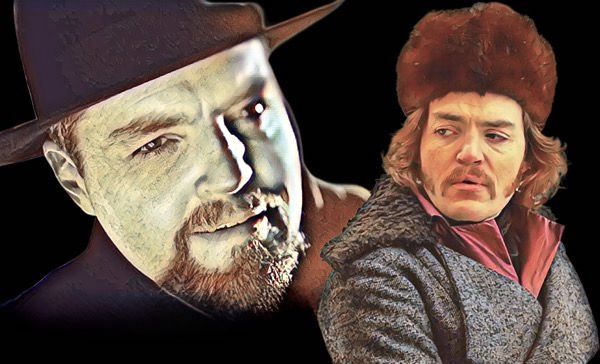

Before that, Burke also attracted attention in the BBC’s War & Peace and in David Fincher’s Mank, where he portrayed Orson Welles. Even in smaller roles, he often dominates scenes through a rare combination of quiet magnetism and introspection. There is something deeply connected to classic British cinema in his presence: actors who seem to think while performing.
That quality becomes essential in Legends because the series depends on a protagonist capable of conveying the sensation of someone permanently divided between the character he performs and the person he slowly stops recognizing within himself.
Today, Guy Stanton is in his sixties. After leaving undercover operations, he worked as a private investigator and later lectured foreign law enforcement agencies on covert tactics and undercover operations. He was also awarded an MBE, one of Britain’s honors for services rendered to the country.
Even decades later, he still avoids fully revealing his public identity. In recent interviews promoting Legends, Stanton noted that many of the criminals from that era are now dead or elderly. Yet he also admitted that he never emerged emotionally untouched from the experience.

“I always used to be the ultimate optimist,” he told The Times. “Now, sometimes, I’m a bit more of a glass-half-empty person. You look at the news, and instead of thinking we’ll get through this, you think the worst. It affected me. Knowing these people exist, knowing that world existed and still exists.”
Perhaps that is ultimately the true strength of Legends. At its core, it is not simply a series about international drug trafficking or covert operations. It is a story about identity itself. About what happens when someone spends years surviving through fabricated characters until the line between performance and existence slowly disappears.
Descubra mais sobre
Assine para receber nossas notícias mais recentes por e-mail.

