
Much has been written about the men Marilyn Monroe loved. Joe DiMaggio remains associated with silent, possessive devotion. Arthur Miller became a symbol of her attempt at intellectual legitimacy. The Kennedys remain trapped inside the conspiratorial dimension that still surrounds the final months of her life. Decades after her death, the narrative around Marilyn still tends to return to romances, abandonments, failed marriages, and relationships that seemed to promise some kind of emotional stability to a woman who rarely found it.
But perhaps no relationship was deeper, more constant, or more decisive in the making of Marilyn Monroe than her relationship with cameras.
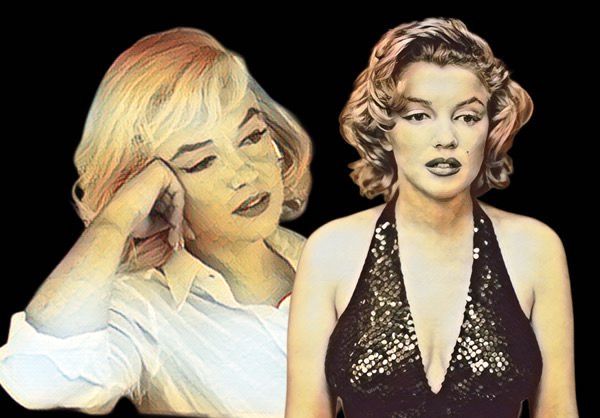
Not simply because she was photographed obsessively. Hollywood was full of beautiful women in the 1950s. Rachel Syme’s recent essay for The New Yorker points this out directly when it argues that Monroe possessed something rarer than beauty: projection. She understood the camera in a way that felt almost instinctive, yet also profoundly conscious. She knew exactly how to tilt her body, lengthen her neck, move her shoulders, and modulate an expression. She understood light, framing, silence, and anticipation long before those ideas became part of the contemporary vocabulary of celebrity culture.
There are thousands of photographs of Marilyn Monroe scattered across archives, private collections, studios, magazines, and museums. Milton Greene’s sessions alone produced more than five thousand images. Bert Stern shot around 2,500 photographs during “The Last Sitting,” taken just weeks before her death. Getty Images alone catalogs nearly 13,000 editorial images of Marilyn. And perhaps that explains something essential: Monroe was not simply photographed. She helped invent the modern idea of a person made to be photographed.
Because there is a difference between posing and existing in front of a lens.
Marilyn seemed to understand that the camera was not merely a recording device. It was a surface of translation. A way of reorganizing pain, desire, abandonment, and fantasy into a public image. In many ways, Marilyn Monroe may have been the first modern celebrity to fully understand that the world would know her more through images than through reality itself.
It is impossible to separate her legend from photography.
The white dress billows above the subway grate in The Seven Year Itch. The photographs of her reading James Joyce’s Ulysses, taken by Eve Arnold. Milton Greene’s minimalist portraits in “The Black Sitting.” Bert Stern’s almost spectral images at the Hotel Bel-Air. Even her earliest photographs by André de Dienes already carried something that seemed to transcend the pin-up image. There is always the feeling that Marilyn exists simultaneously inside and outside the frame. Present and distant. Available and unreachable.
And yet, among the countless photographs ever taken of Marilyn Monroe, the image she herself loved most was surprisingly intimate.
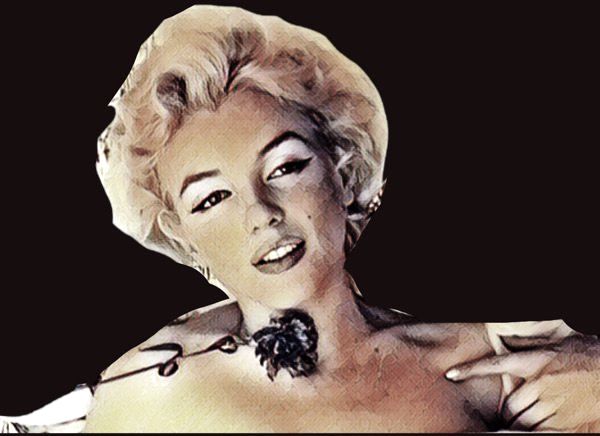
Her favorite photograph was taken by Cecil Beaton in 1956 at the Ambassador Hotel in New York. The portrait, now held by London’s National Portrait Gallery, hung on the wall of her home while she was married to Arthur Miller. Marilyn also reportedly carried copies of the image with her for the rest of her life to autograph for fans. In particular, the portrait in which she holds a single flower against her chest became her favorite image of herself.
That detail matters because Marilyn was notoriously demanding about her own image. She rejected negatives, approved sessions, and understood perfectly when a photograph merely reproduced “Marilyn Monroe” and when it reached something more vulnerable beneath the surface.
Cecil Beaton was already one of the most celebrated photographers in the world when he photographed her. Marilyn, by then, was the actress every great photographer wanted to capture. Their meeting felt almost inevitable. While she often suffered in front of movie cameras, still photography seemed to liberate her. Few stars in Hollywood were as unanimously adored by photographers as Marilyn Monroe. She knew how to relax in front of a lens, but more importantly, she knew how to create moments. That ability is one of the reasons her image still feels strangely alive decades later.
Biographers remain fascinated not only by the photographs Beaton produced, but by the analysis he wrote afterward. Initially irritated after waiting more than an hour for Marilyn to arrive, Beaton quickly became enchanted the moment she entered the room. Like so many before him, he too fell under the spell of her presence.
An expert in image-making, Beaton knew Marilyn’s screen persona relied heavily on innocence, sensuality, and the “dumb blonde” stereotype. At first, he wondered how much of it was manufactured. What he encountered, however, was something far more complex. His conclusion was startling: Marilyn Monroe was a genius.
“The real marvel lies in the paradox. Somehow we know this extraordinary performance is complete sham, a young caricature of Mae West.”
And yet, he added, it was “her own strange genius that sustained the flight.”
In other words, Marilyn was fully aware of what she was selling and how she was selling it. The performance was artificial, but the intelligence constructing it was entirely real.
Beaton’s description became so admired that director Joshua Logan later gifted Marilyn a triptych containing the photograph alongside two handwritten pages of Beaton’s reflections about her. In one passage, Beaton compared her to the muses painted by the eighteenth-century French painter Jean-Baptiste Greuze, except wandering through the contemporary world.
What also fascinated Beaton was her ability to transform herself endlessly in front of the camera. He described Marilyn as someone capable of producing thousands of “versions of herself,” without inhibition, without insecurity, and without losing a sense of genuine vulnerability. Even with what he called “incandescent beauty,” Marilyn carried a paradoxical indifference toward clothes, hair, or styling. She could appear simultaneously meticulously constructed and strangely free from vanity.
According to accounts from those present at the session, the flower in her favorite portrait was completely improvised. Marilyn had reportedly used the flower to imitate a cigarette before finally placing it against her chest, almost protecting it, cradling it like a gift.
Beaton ended his description of Marilyn Monroe by comparing her to Ondine, the mythological water spirit doomed to a brief existence:
“She only has fifteen years to live, but she will never die.”
Tragically, Marilyn would die only six years after those photographs were taken.
But perhaps Beaton understood something essential long before the rest of the world did: Marilyn Monroe was never simply a woman being photographed. She was actively participating in the construction of one of the most enduring visual myths in modern history.
Perhaps that is precisely why photographers so different from one another became fascinated by her.
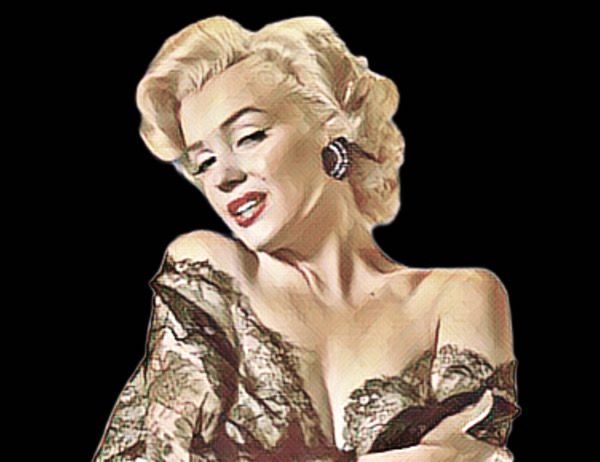
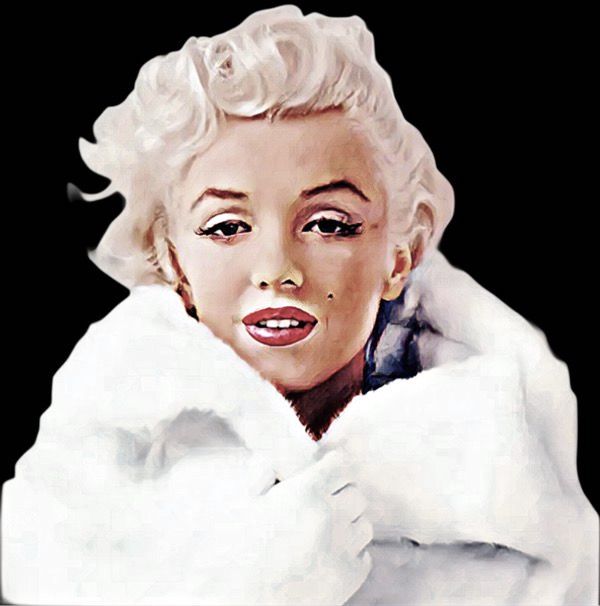
Eve Arnold perceived the intellectual vulnerability. Milton Greene saw the woman trying to control her own narrative. Richard Avedon understood the moment when Marilyn would “switch off” the character and Norma Jeane would emerge. And Henri Cartier-Bresson, a photographer famously resistant to manufactured glamour, recognized something even more complex during the filming of The Misfits.
Cartier-Bresson was the photographer of the “decisive moment,” of pure spontaneity, of the unposed instant. Marilyn Monroe may have been the most image-conscious woman of the twentieth century. And yet he was deeply struck by her.
According to various accounts, after recovering his Leica during filming in the Nevada desert, Cartier-Bresson jokingly asked Marilyn to “bless” the camera. She played along, pretending to sit on it and barely brushing the Leica with her hip while giving a mischievous smile. The story is amusing, but also deeply revealing. Even in casual playfulness, Marilyn transformed the technical object into part of the performance. Charisma seemed to leak out of her involuntarily.
And perhaps no one summarized her duality better than Cartier-Bresson himself when he said:
“The minute she saw you she posed. At the same time, she had such a vulnerable face.”
The moment she realized she was being watched, Marilyn began to perform. But the vulnerability remained there, impossible to fully conceal. The pose did not erase the truth. In Marilyn, performance was part of the truth.
He also described her as possessing “the greatest discipline as an actress” and argued that it was precisely the combination of beauty and intelligence that made her “not only a model, but a real woman expressing herself.”
That matters because much of the criticism of her era tried to reduce Marilyn Monroe to a biological accident, as though her magnetism were entirely physical, automatic, and involuntary. But photographers seemed to understand something Hollywood often refused to admit: Marilyn worked on her image the same way a method actor works on a scene.
She controlled photographers, approved negatives, rejected images, understood angles, and managed lighting. She knew when a photograph truly captured her and when it merely reproduced the character.
And perhaps there is something painful in all of this.
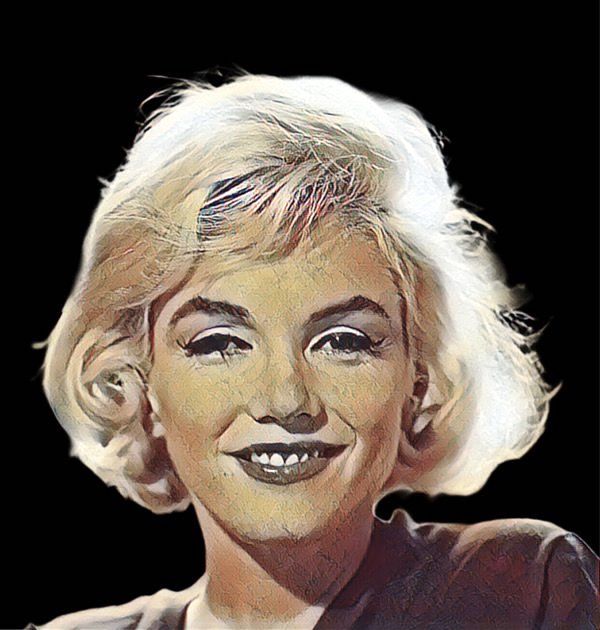
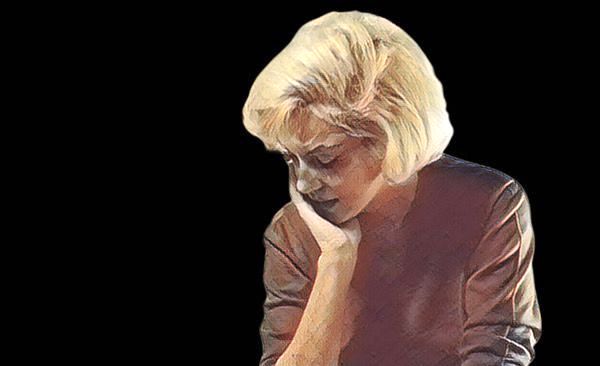
Because the more Marilyn mastered her own image, the less control she seemed to have over the way the world consumed her. Her relationship with the camera was intimate, but also exhausting. The camera gave her public existence, financial power, professional freedom, and cultural immortality. But it also transformed her into an endless projection surface for other people’s desires.
Decades after her death, the obsession continues.
Marilyn’s image moved through cinema, tabloids, posters, Andy Warhol’s pop art, digital culture, and now artificial intelligence. Perhaps no twentieth-century figure has been visually reproduced more than she has. And there is something almost cruel about that: the more images of Marilyn the world creates, the less it seems able to truly reach her.
Because the camera never completely captured Marilyn Monroe.
It captured fragments. Masks. Gestures. Light. Movement. Vulnerability breaks through the pose for a fraction of a second.
Perhaps that is exactly what keeps her image alive.
The men Marilyn loved aged within the familiar narrative of tragic Hollywood romance. But the camera was different. The camera did not merely witness Marilyn Monroe. It participated in creating her.
And perhaps it was the only relationship in her life in which she truly managed to control part of the story.
Descubra mais sobre
Assine para receber nossas notícias mais recentes por e-mail.


1 comentário Adicione o seu