
Rosalía has never seemed entirely anchored to the present. Since the beginning of her career, still deeply immersed in the rigorous study of flamenco, there has always been something distinctive about her relationship with intensity, theatricality, and emotional exposure. While much of contemporary pop moved toward aesthetic neutrality and recognizable formulas, Rosalía built the exact opposite: a body of work rooted in excess, risk, silence, discomfort, and constant reinvention. That may be precisely why her arrival in Euphoria feels less like an unexpected casting decision and more like an inevitable evolution.
The third season arrives after years of delays, backstage turmoil, creative shifts, and growing doubts surrounding the future of the series itself. In the process, something fundamental seems to have changed inside Sam Levinson’s world. The high school atmosphere that defined the earlier seasons has almost entirely disappeared, replaced by something far harsher, more criminalized, and undeniably adult, where the characters are no longer simply living through stylized adolescent crises but finally confronting real consequences.
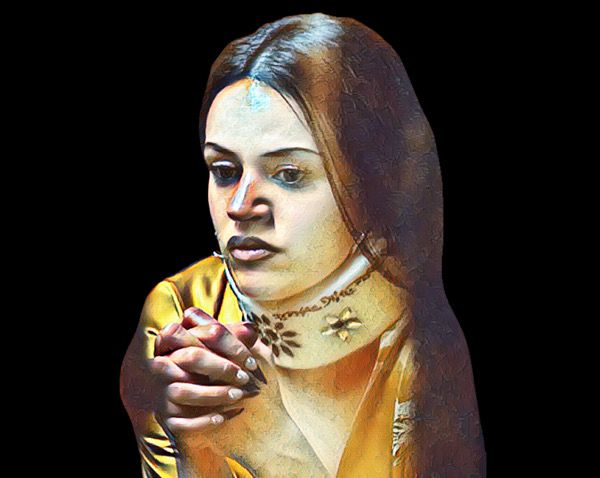
It is within that landscape that Magick emerges, Rosalía’s character and a stripper connected to the Silver Slipper club, a location that quickly becomes one of the season’s dramatic centers. At first glance, she could easily seem like another eccentric figure designed to expand the show’s excessive aesthetic. But the more details that surface, the clearer it becomes that Magick serves a far more significant purpose: she operates as a distorted mirror of Rue herself.
The dynamic between them is tense from the very beginning. When Rue bumps into her in the club hallway and receives a sharp “watch where you’re going” in response, the scene immediately establishes something essential about the relationship the season intends to explore. There is no curiosity, no seduction, no gradual connection. What exists instead is hostile recognition, as though Magick instantly sees something in Rue that feels far too familiar to be comfortable.
And that may be exactly what makes her such an interesting antagonist.
Euphoria has never relied on traditional forms of antagonism. Jules represented idealization and escape. Elliot symbolized destructive complicity. Fezco functioned as an emotional refuge amid chaos. Magick seems to operate on an entirely different level: she is someone who fully understands the codes of self-destruction but has apparently already learned how to survive inside them. While Rue still oscillates between guilt, addiction, and impulsiveness, Magick carries the unsettling energy of someone who crossed that threshold long ago and reorganized her identity around it.
That idea becomes especially powerful in one of the first scenes revealed from the season. Magick is shown arguing violently with her pimp over the neck brace she wears. She insists she could win a lawsuit over the accident that left her injured, only to be immediately silenced when he demands she remove it because it “kills the mood” for the club’s customers. The sequence brutally encapsulates the world this new season appears determined to explore: one where female bodies exist simultaneously as spectacle, commodity, and physical deterioration.
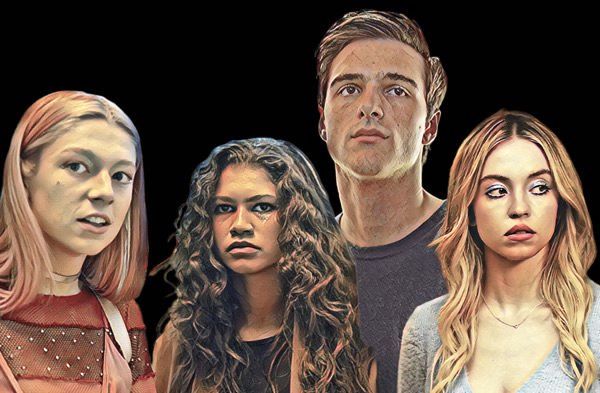
There is something deeply cruel about the scene because it strips away whatever traces of glamour may still have lingered around the decadent world Euphoria has often aestheticized. Magick’s body arrives already marked before the character has even been fully developed psychologically. Her presence carries exhaustion, violence, and survival all at once.
Visually, Rosalía seems to have been absorbed into the series without needing to alter the artistic identity she has already built throughout her career. Magick appears wrapped in heavy makeup, excessive glitter, performative sensuality, and accessories that oscillate between protection and injury. There is something almost ritualistic about her, as though she carries within her body all the emotional excess that Euphoria has always transformed into visual language.
And Rosalía intuitively understands this type of construction because her own artistry has always existed precisely at the intersection of pain and performance. In previous pieces for Miscelana, I wrote about how what she inherited from flamenco was not merely vocal technique, but a visceral relationship with theatricality, emotional exposure, and total surrender. Her music frequently transforms suffering into something almost liturgical, creating an aesthetic where vulnerability never appears as simple fragility, but as artistic language itself. In Euphoria, that logic seems to have been directly absorbed into Magick.
What makes the character especially compelling is that she does not appear designed to save Rue, nor to destroy her in any conventional sense. Her narrative function feels far more unsettling than that. She exists to force Rue to confront a possible version of herself.
That perception deepens in another important moment, when Magick notices the discomfort of Kitty, a newly arrived stripper at the club, and quietly asks whether she feels “forced” to work there. The moment is brief, but revealing: beneath Magick’s constant hardness exists someone fully aware of the violence surrounding them. Yet the instant Rue interrupts the conversation, Magick immediately abandons any emotional openness, walking away whistling, almost as though vulnerability has become something she no longer knows how to sustain.
That movement is essential because it distinguishes Magick from many of the show’s other characters. She seems to exist permanently suspended between suppressed humanity and performative survival. She is someone who still recognizes suffering in others, but who can no longer remain in that emotional space long enough to truly confront it.
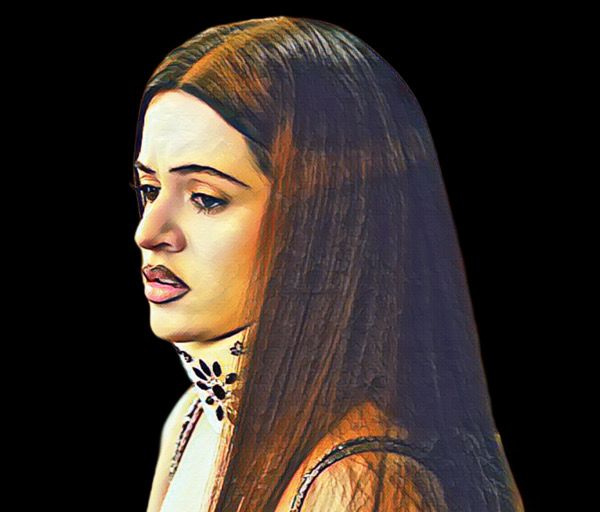
The relationship between her and Rue becomes even more explosive when Magick tells her pimp about the conversation she overheard between Rue and Kitty. Their conflict escalates rapidly before being interrupted by an armed robbery at the club. The sequence marks an important shift in the identity of Euphoria itself because the series openly dives into thriller territory for the first time. Rue and Magick end up held at gunpoint while drugs and money are stolen from the club, intensifying the sense that Laurie’s criminal network continues operating silently around Rue.
After the robbery, Magick unexpectedly takes on an almost investigative role. Watching the security footage while speaking to Bishop on the phone, she tries to identify the driver involved in the attack. The detail that catches her attention is the woman’s lips. Rue then realizes the driver works for Laurie: Faye Valentine.
From that moment forward, Magick definitively stops feeling like a stylish supporting character or a luxury cameo. She becomes directly involved in the season’s criminal core and helps reconnect Rue to the most threatening unresolved storyline left behind at the end of season two. The shift reinforces the feeling that this new phase of Euphoria is far less interested in teenage romance or school drama and far more invested in showing characters attempting to survive inside violent systems that have already emotionally consumed them.
That may be precisely why Rosalía feels like such an inspired choice for this specific stage of the series. Her public artistic persona has always balanced absolute control with the constant sensation of imminent collapse. Even when her music approaches pop, there remains something strange, ancestral, and deeply unsettling about her presence that resists fitting comfortably inside the mainstream.
In a previous writing for Miscelana, I described Rosalía as an artist who restores mystery to contemporary pop. And perhaps that is exactly what she brings to Euphoria: the feeling that some people have endured too much pain to ever return to existing merely again.
Magick seems built entirely around that idea. Not as someone who recently fell into ruin, but as a woman who transformed survival into identity and learned to inhabit her own emotional exhaustion as though it were the only language left available to her.
Descubra mais sobre
Assine para receber nossas notícias mais recentes por e-mail.

