
I didn’t expect that tedious and exhausting research for documents would lead to questions about women in general. And yet, it became inevitable.
What began almost as a bureaucratic investigation, initially motivated by an attempt to reconstruct family paths for children, nephews, nieces, and future generations, gradually became something much larger. Because once you begin searching for old names, forgotten certificates, towns erased by time, and records scattered across wars, migrations, and changes of language, what emerges are not merely data points. What emerges are interrupted lives, silent reinventions, and choices that, in many cases, could never truly be called choices at all.
And perhaps it is impossible to go through this process without realizing how much women’s history has been built around the idea of renunciation.
Renouncing one’s country. Renouncing one’s language. Renouncing one’s surname. Renouncing desire. Renouncing the body. Even renouncing the legal right to exist independently during many periods of history.
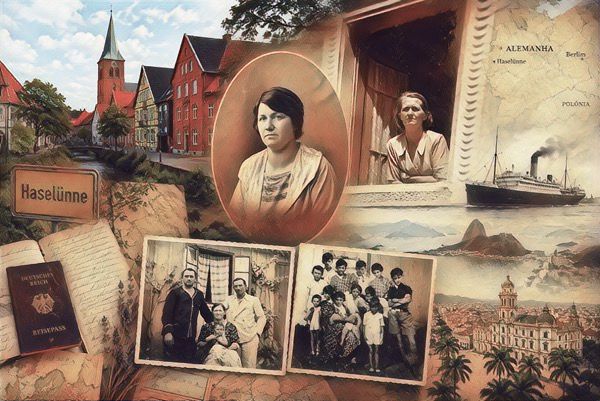
Over the past months, my research has crossed Germany, former Prussia — especially regions of Silesia that today belong to Poland — the countryside of Portugal, Italy, and Brazil. With every new document uncovered came a feeling that is difficult to explain rationally: the realization that entire families survived immense historical displacements without ever fully processing what they had lost.
There is something emotionally devastating about understanding that so many women crossed oceans without ever imagining that one day their descendants would attempt to reconstruct what had been taken from them or erased. Women who, in many cases, disappeared inside family structures because History recorded men, male surnames, male wars, and male inheritances. What remained of them were often only fragments: a crooked signature, a baptismal record, a name misspelled by a public official more than a century ago.
And perhaps that is precisely why this search has become so emotional.
Because it stops being merely about citizenship. It stops being merely about a passport or legal recognition. It becomes about recovering continuity. About looking at these women not simply as figures erased by official genealogy, but as complete human beings shaped by fear, displacement, desire, loss, and survival.
And it is impossible not to notice a powerful historical coincidence within all of this: while I search for nineteenth-century women in documents spread across Europe and Brazil, I am also studying a man who was born inside that exact same world.
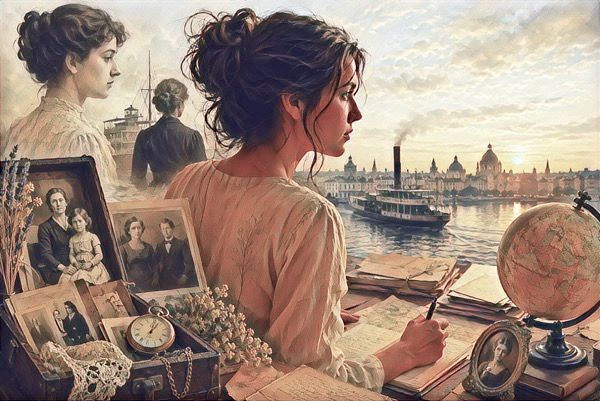
Sigmund Freud was Austrian. He lived within the same Europe shaped by nationalism, migration, rigid religious morality, and profoundly patriarchal structures. He was a contemporary of many of these women whose names I am now trying to recover. Women who, like my ancestors, lived during a time when female suffering was often dismissed as exaggeration, instability, or moral inadequacy.
Perhaps that is why there remains so much contemporary resistance to psychoanalysis whenever women are involved.
And the criticism does not emerge from nowhere. Freud did, in fact, write things limited by his own historical context. At times, deeply shaped by the masculine worldview of his era. Denying that would be intellectually dishonest. Psychoanalysis was born within a patriarchal society and inevitably carries marks of that structure.
But perhaps there is also an unfair simplification when psychoanalysis is reduced to an automatically misogynistic form of thought.
Because Freud’s radical gesture was not that he “explained” women perfectly. He did not. No theory fully explains human experience. What he did was perhaps even more revolutionary for that period: he listened.
At a time when the world treated women as hysterical, deceitful, or morally defective, Freud began from the assumption that real suffering existed there. That there was subjectivity. Psychic conflict. Desire. Trauma. Repression produces symptoms in the body.
That profoundly changed the way female suffering could be understood.
Hysteria ceased to be merely a feminine moral defect and instead began revealing something structural about society itself.
And perhaps this is precisely where many people overlook the most interesting aspect of psychoanalysis: it never stopped with Freud.
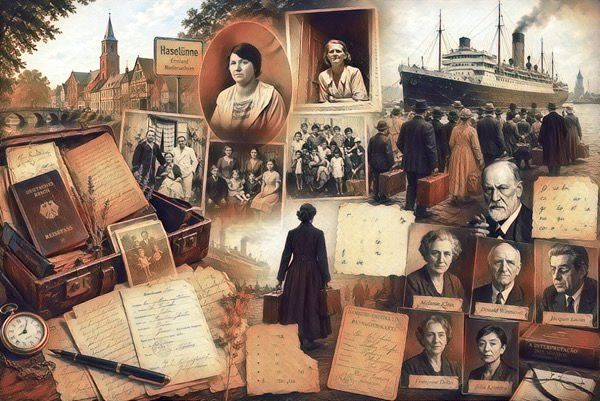
Melanie Klein shifted the discussion toward early emotional relationships and deep childhood experience. Winnicott wrote about care, environment, emotional failure, and the constitution of the self. Lacan transformed psychoanalysis into a discussion about language, lack, desire, and symbolic structure. Françoise Dolto approached childhood as a subject in itself. Julia Kristeva connected motherhood, language, and femininity in radically contemporary ways. Feminist thinkers spent decades revising, criticizing, and reconstructing psychoanalytic concepts from within.
Psychoanalysis itself survived because it allowed itself to be constantly dismantled.
Perhaps that is one of its most fascinating aspects.
Because, unlike what is often imagined, psychoanalysis does not function as a closed dogma. It exists precisely through the tension between theory, listening, and historical transformation. It must continually revisit its own limits.
And perhaps the greatest limitation of contemporary readings of Freud is forgetting that he himself was attempting to understand forms of suffering that society was not even willing to acknowledge.
That does not mean placing Freud above criticism. Quite the opposite. It means understanding that no form of thought is born outside its historical moment. Including our own.
As I immerse myself in these family histories, that feeling appears constantly. Women who had to continue living while everything around them changed. Women shaped by wars, migration, hunger, grief, cultural displacement, and religious uprooting. Women who probably never had the right to emotionally process what they had lost because survival itself was already labor enough.
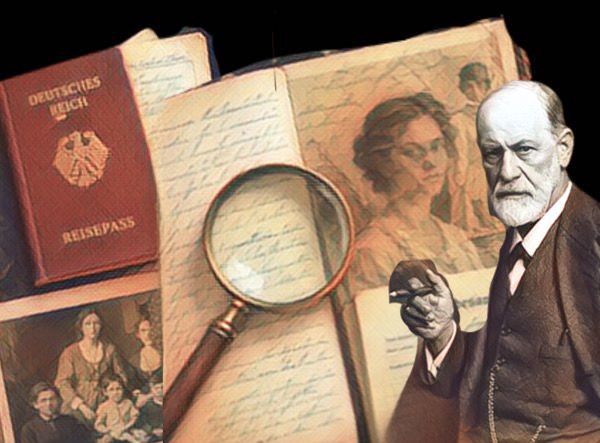
And perhaps this is exactly where documentary research meets psychoanalysis.
Because both attempt to ask the same question: what happens to what could never be spoken?
What happens to pain that crosses generations without ever being symbolized? To interrupt mourning? To displacements that never found language? To women who survived so much, could they no longer stop long enough to grieve?
I suppose that is why this research affects me so deeply.
Because it reveals something that goes far beyond documentation: the way trauma crosses generations even when nobody speaks about it directly. The way certain silences remain within families. The way certain absences continue to organize emotional life decades later.
There is something profoundly moving in realizing that, for many descendants, citizenship becomes almost a symbolic gesture of restitution. Not in the sense of erasing suffering or correcting History — because that is impossible — but in the sense of saying: you existed. We know you existed. And we managed to find your traces despite everything that attempted to erase them.
In the end, perhaps this search is less about returning to a country and more about rebuilding belonging.
Because belonging is also memory. Also transmission. Also, the refusal to allow certain lives to disappear simply because the world failed to record them properly.
Descubra mais sobre
Assine para receber nossas notícias mais recentes por e-mail.

